
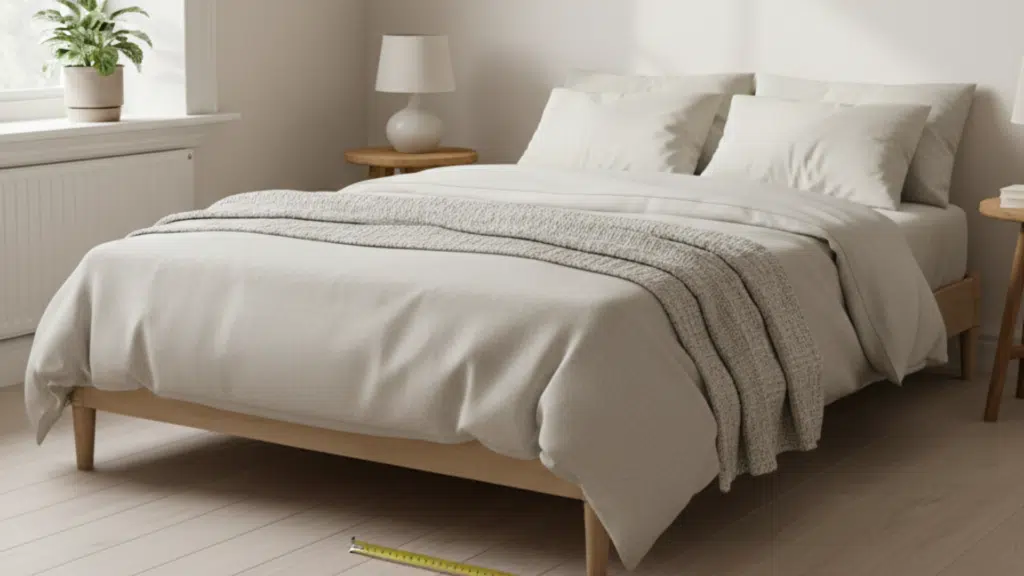
I still remember the first time I tried to fit a new mattress into a tight bedroom. You may have had the same moment where nothing seemed to match the frame you already owned.
That’s usually when people start looking into the 3/4 bed size, especially if the room is small or the frame is from an older home.
I want to make the whole process easier for you, because choosing the wrong size can lead to gaps, wasted money, and a setup that never feels right.
In this guide, you’ll get clear ideas, simple comparisons, and real examples that help you choose with confidence. So let’s take a steady look at what matters next with the 3/4 bed size.
Understanding a 3/4 Bed
A 3/4 bed is a mattress size that sits between a twin and a full. You get more room than a twin, but it still fits well in smaller spaces.
Many people call it a “small double” because it offers enough width for one adult who wants extra space. Some couples also use it for short-term sleeping, though it feels tight for two adults long-term.
This size first appeared in older homes where bedrooms were smaller. Antique frames were often built around this width, which is why many older beds match the 3/4 size.
You still see it today in small bedrooms, guest rooms, and older houses where the frame was made before modern sizes became standard.
3/4 Bed Dimensions
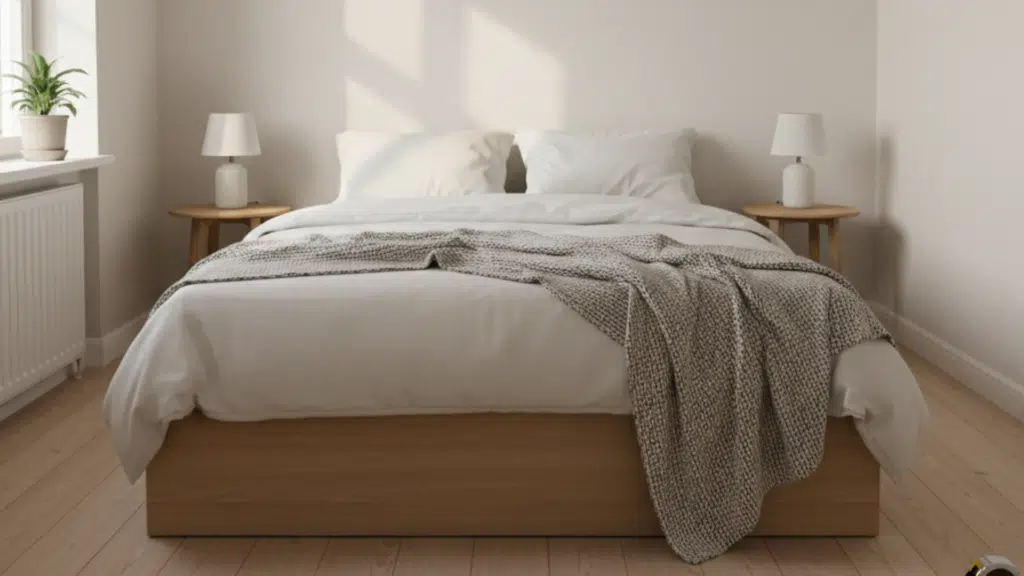
You’ll see the exact 3/4 bed measurements, regional naming differences that compare it to other common mattress sizes.
Standard 3/4 Mattress Size
A standard 3/4 mattress usually measures 48 inches wide and 75 inches long. That converts to 4 feet by 6 feet 3 inches, or 122 cm by 191 cm.
Some makers vary by an inch or two, especially in custom builds, so you should always measure your frame before buying. Many older frames match this size closely, but newer frames may have slightly different clearances.
Checking the internal frame width and length helps you avoid gaps or a mattress that sits too tightly.
Regional Differences
You may see different names for this size depending on where you live. In the US, a 3/4 bed is less common and is mainly found in older homes, cabins, or custom-made setups.
In the UK, the same size is often called a “small double,” and it’s easier to find both mattresses and bedding. Confusion happens because some stores group it with full-size beds, while others list it separately or treat it as a custom size.
3/4 Bed vs. Other Bed Sizes
You’ll see how a 3/4 bed compares to nearby sizes, including twin, twin XL, and full, so you can judge fit quickly.
3/4 Bed vs. Twin
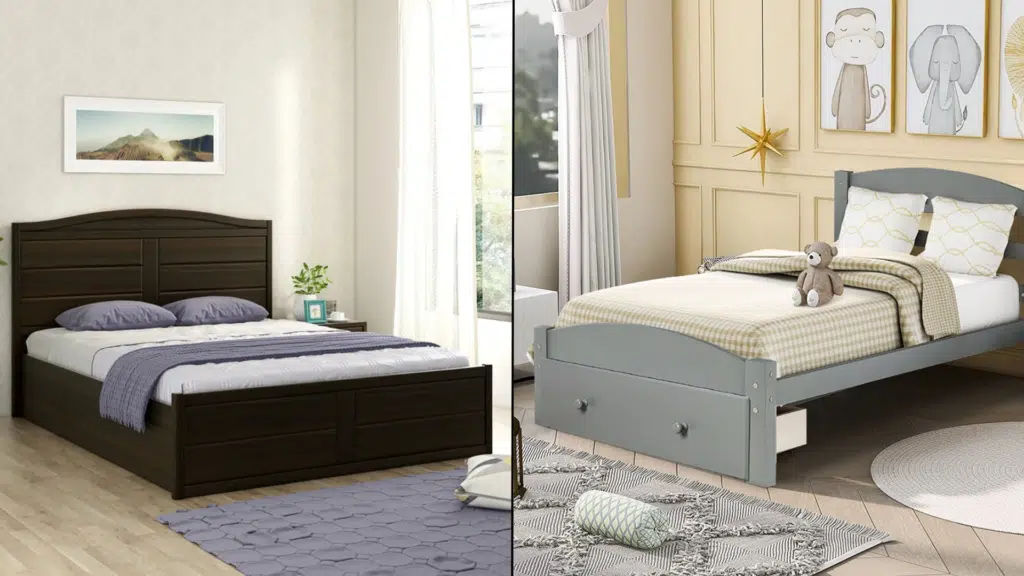
A twin mattress measures 38 inches wide and 75 inches long, while a 3/4 mattress measures 48 inches wide and 75 inches long. You get ten extra inches of width with the 3/4 size, which makes a big difference in comfort for an adult or teen.
Both sizes share the same length, so legroom stays the same. A twin works for tight rooms, but a 3/4 gives extra space without taking up as much room as a full mattress.
3/4 Bed vs. Twin XL
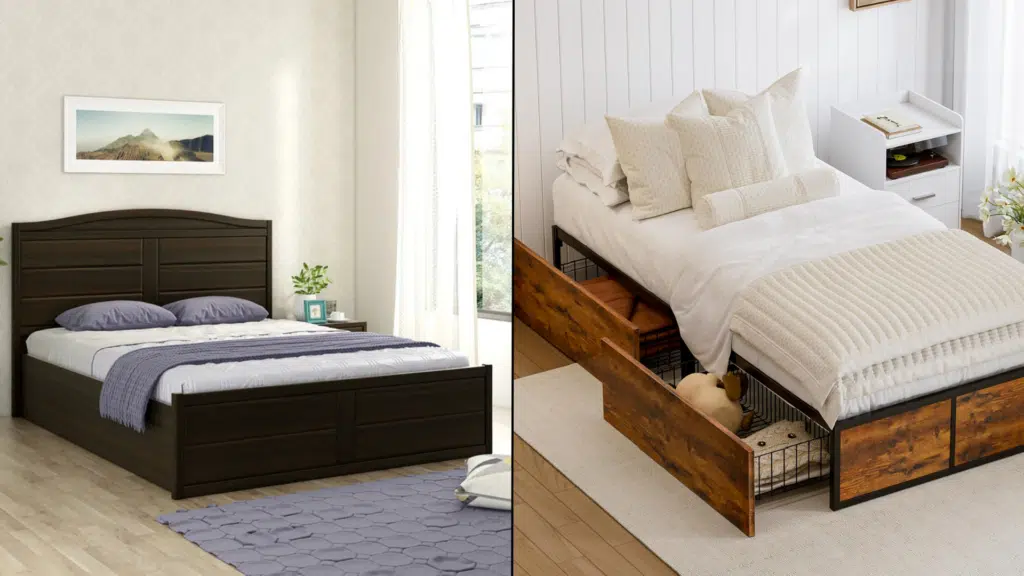
A twin XL is 38 inches wide and 80 inches long, while a 3/4 mattress is 48 inches wide and 75 inches long. The twin XL gives you more length, which helps if you’re tall, but it offers less width.
The 3/4 bed gives more shoulder room and overall sleeping space, making it more comfortable for most adults. If you want length, twin XL is better, but if width matters more, the 3/4 size gives a roomier feel without needing a large bedroom.
3/4 Bed vs. Full
A full mattress measures 54 inches wide and 75 inches long, while a 3/4 mattress is 48 inches wide and 75 inches long. The full offers six extra inches of width, which helps two people, but it can still feel tight.
A 3/4 mattress works well when you want more room than a twin but can’t fit a full in your space. Both sizes share the same length, so legroom doesn’t change. Many older frames match the 3/4 width, making it a practical choice in older homes.
Fit and Comfort Guide
You’ll learn how a 3/4 bed feels for daily use, including movement space, best user types, and simple pros and cons.
Fit Test Table
You get a quick view of shoulder space, movement room, sleeper spacing, and the room size needed for a comfortable setup.
- Shoulder room: Extra width helps you spread out more than a twin.
- Space per sleeper: Works best for one adult or teen.
- Movement room: Enough for light movement without feeling tight.
- Ideal room size: Fits well in small or medium rooms.
Comfort Profiles
These profiles help you decide if the 3/4 size fits your sleep habits and personal space needs.
- Solo adult: Good width for one adult who wants more room than a twin.
- Teen: Great fit for growth and extra turning space.
- Child: Plenty of space and long-term use as they grow.
- Occasional couple: Works for short stays but tight for nightly use.
Pros and Cons
You can compare the strengths and limits of a 3/4 bed here, so you understand how well it fits your daily comfort needs.
| Pros | Cons |
|---|---|
| More width than a twin | Tight for two people |
| Works well in small rooms | Limited bedding options |
| Fits many older frames | Width varies by maker |
| Good choice for solo sleepers | Not ideal for tall sleepers needing extra length |
A 3/4 bed suits many setups, but checking your room size, sleep needs, and frame measurements helps you avoid comfort issues later.
Who Should Choose a 3/4 Bed
A 3/4 bed works well for people who want more room than a twin but don’t need as much space as a full. You may find it helpful if you live in a small home or need a mattress that fits a narrow floor plan.
Many teens and solo adults like this size because it gives steady support and enough turning space through the night. It also suits guest rooms for short-term stays.
If you own an older frame from an older house, the 3/4 size often fits better than modern sizes. RV owners also use it because the width works well in tight layouts while still offering a comfortable surface for one person.
Bedding and Sheet Sizing
You can check this guide to see which sheet and duvet sizes match a 3/4 bed, so your bedding fits without slipping.
| Bedding Type | Recommended Size | Notes |
|---|---|---|
| Fitted sheet | 48 x 75 in | May need custom if your mattress depth varies |
| Flat sheet | Full size | Offers enough coverage without hanging too low |
| Duvet | Full size | Gives better side coverage than smaller options |
| Mattress protector | 48 x 75 in | Look for stretch sides for an easier fit |
Use these sizes when shopping so you avoid loose corners, tight edges, or bedding that shifts during regular use.
How to Measure Your Bed Frame
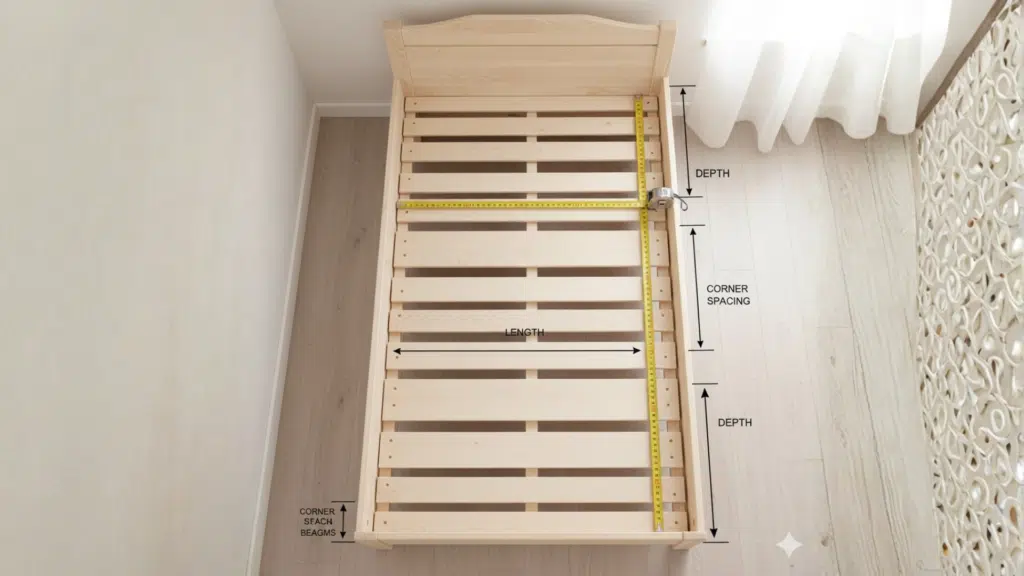
- Measure the Inside Width: Count the space between the inner sides of the frame so you know the true mattress width needed for proper support.
- Measure the Inside Length: Check the distance from headboard to footboard to confirm the mattress length fits without bending or leaving empty space.
- Check the Depth: Measure from the top of the frame down to the slats to make sure your mattress sits level and stays in place.
- Measure Slat to Slat: Note the width and spacing of the slats so you can confirm your mattress has the steady support it needs daily.
- Check Corner Clearance: Look at each corner inside the frame to confirm there’s enough room for the mattress to slide in without squeezing.
Checklist for Picking the Right Size
Choosing the right size starts with careful measuring, since even a small difference can affect how the mattress sits in your frame. Start by checking the inside width and length.
- If your frame measures close to 48 by 75 inches, a 3/4 mattress usually fits well. Older frames often stay near this size, so confirm the space before you order anything.
- If your frame falls between common sizes, you may need a custom mattress so it fits without gaps. Room size also matters. Make sure you have space to walk around the bed without feeling crowded.
- If you need extra length for tall sleepers, a different size may be better. Matching your frame, room layout, and sleep needs helps you avoid mistakes.
Where to Buy a 3/4 Mattress
You can find a 3/4 mattress through online shops like Amazon, Wayfair, Overstock, and Mattress Insider, which often carry 48×75 sizes or allow special orders. Some online makers, such as Brooklyn Bedding and Custom Mattress Makers, offer this size through their custom program.
Local mattress stores, including Mattress Firm or small regional shops, may carry one or two 3/4 options. If not, they usually let you place a special request.
Custom shops like Flexus Comfort, Sleep EZ, and Foam Factory can build a 48×75 mattress for older frames or RV layouts.
Always check return rules, delivery timelines, and extra charges for special orders.
Is a 3/4 Bed Right for You?
A 3/4 bed may work well if you want more room than a twin but don’t have space for a full. Start by checking the width of your frame and the layout of your room.
If you sleep alone and like extra turning space, this size usually feels comfortable without filling the entire room. It also helps if you own an older frame or an RV layout that matches 48×75 measurements.
Cost matters too. Standard models stay affordable, while custom builds cost more. If you’re taller and need extra length, another size might fit better. Use these points to decide if this size meets your daily needs.
Conclusion
We’ve covered everything you need to feel confident about choosing the right mattress, from measurements to comfort to how a 3/4 bed fits different rooms.
I hope the steps and comparisons gave you a clear path forward and made your choice feel easier. When you match your frame, room layout, and sleep needs, the right size becomes much simpler to spot.
If you feel ready to move forward with a 3/4 bed size, take a moment to compare your measurements again and choose what supports your routine best.
If you want more ideas for your home, I’d love for you to look through my other guides and keep finding what works for you.