

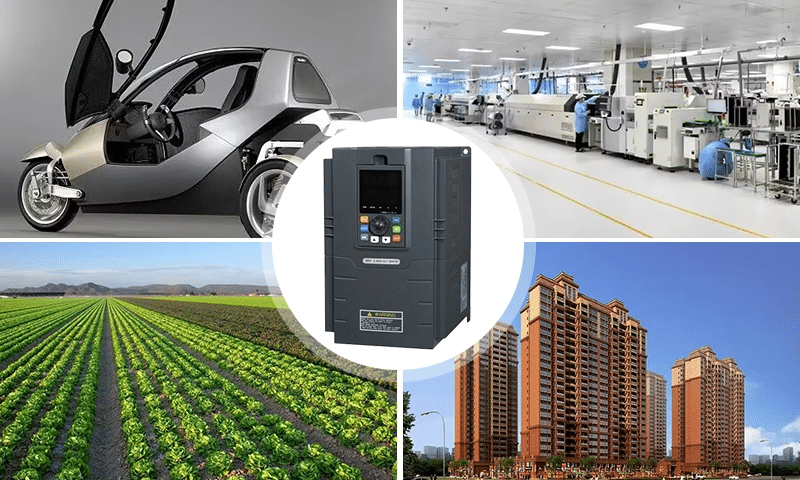
It may appear to be easy to run a motor directly off a standard wall socket but that covers several important problems. When the motor is started, the voltage applied to the motor is full voltage, and the current flowing in the motor is 5 to 10 times higher than the rated current, which may cause the insulation on the coils to burn and strain the shaft and couplings.
Additionally, direct connection does not provide a speed control option, i.e., the motor will always operate at the same speed whether small or heavy-load operations need to be adjusted. This translates to unnecessary energy use, which accrue to huge costs in the long run.
The best solution is a single phase output inverter, which offers safe and efficient operation, controlled starting, adjustable speed, energy conservation, and longer life of the motor.
Why Is Running a Motor Directly From the Wall Socket a Problem?
By connecting the motor directly to a wall socket you surrender or delegate absolute power to the power grid, and the grid does not care about what you need. The motor is started with full voltage, with five to ten times its rated current during the initial few seconds. That one gilds the coil of insulation, shocks each shaft coupling down the line, and peaks the energy usage in your circuit every time the motor is turned on.
Beyond the starting surge, there is no speed control whatsoever. The motor runs at one fixed speed determined entirely by grid frequency. You cannot slow it for a delicate operation, you cannot ramp it up gradually for a loaded conveyor, and you cannot protect it against sudden voltage drops from the supply. Every hour of unnecessary full-speed operation is wasted energy and over months, that waste compounds into a significant and entirely avoidable cost.
|
“Connecting a motor directly to the wall is not a neutral choice. It is a choice to surrender all control over speed, starting current, and motor protection.” |
|---|
What Exactly Is a Single-Phase Output Inverter?
A single-phase output inverter also referred to as Variable Frequency Drive (VFD) or frequency inverter or AC drive is a power electronics component that appears between your wall socket and your motor. It takes any normal single-phase AC supply (220 V, 230 V or 240 V) and supplies the motor with accurately regulated AC power at whatever voltage and frequency you programme.
Since the speed of the motor is directly related to the supply frequency, the frequency is regulated and the speed is regulated along a continuous and infinite domain.
Single-phase motors may have their output single-phase at 220 V, or three-phase at 380 V in three-phase induction motors supplied in a single-phase system. The inverter takes care of such conversion, no grid upgrade or the presence of a licensed electrician to install a three-phase service is necessary.
|
Electrical Specifications of KEY.
|
|---|
What Is the Three stage Conversion and Control of Power by the Inverter?
Understanding the three internal stages explains why an inverter can do things a simple transformer or autostarter never could. Each stage serves a distinct purpose, and together they give the device complete authority over the power reaching the motor.
Step 1: AC to DC: The Rectifier Stage
A diode bridge rectifier converts the incoming alternating current into raw direct current. This isolates the output side from the grid entirely, which is why the inverter can produce a completely different frequency at its output regardless of what the grid is doing.
Step 2: DC Smoothing: The Capacitor Bank
A bank of large electrolytic capacitors filters out ripple and holds the bus voltage steady. This energy reservoir supplies burst current instantly during acceleration while the rectifier catches up, ensuring a stable, clean output waveform at the motor terminals.
Step 3: DC Back to AC: The IGBT Inverter Stage
IGBTs are used to turn DC bus voltage on and off thousands of times a second in a process known as Pulse-Width Modulation (PWM). The control board varies pulse width to produce a smooth waveform of AC at the desired frequency and voltage.Change the frequency command and motor speed changes immediately smoothly, without mechanical shock.
What Practical Benefits Does a Single Phase Output Inverter
The case for a variable frequency drive is both financial and operational. Each benefit delivers measurable value that compounds over the working life of the installation.
|
SIX KEY BENEFITS
|
|---|
Single-Phase or Three-Phase Which is the configuration you require?
Each of the two configurations is based on a conventional single-phase wall socket. It is only the difference in the motor that you have connected.
Look at the nameplate of the motor: In case it has 220 V single-phase, use the single-phase output model. In case it reads 380 V in three-phase, then choose the three-phase output model with a single-phase input.
|
Feature |
Single-Phase Output |
Three-Phase Output |
|---|---|---|
|
Input Supply |
Single-phase 220–240 V |
Single-phase 220–240 V |
|
Output |
Single-phase AC, 0–220 V |
Three-phase AC, 380 V |
|
Motor Required |
Single-phase motor |
Three-phase induction motor |
|
Typical Setting |
Homes, light commercial |
Workshops, light industry |
|
Grid Upgrade? |
No |
No , inverter handles conversion |
How Do You Select the Correct Single Phase Output Inverter Size for Your Motor?
Sizing a frequency inverter incorrectly is the most common and most costly installation mistake. Select too small and the drive trips on overload constantly or burns out within months. Select unnecessarily large and you overpay upfront and lose precision at light loads. Follow these six steps carefully before placing your order.
Step 1: Read the Motor Nameplate : Do Not Estimate
The nameplate indicates rated power (kW or hp) full-load current (FLC) (amps), rated voltage, speed (RPM), insulation class, and duty cycle. All decisions of sizing start here. In case the name-plate is unreadable then actual full-load current should be measured with a clamp meter under actual working conditions prior to selecting any drive.
Step 2: Size by Current, Not by Kilowatts
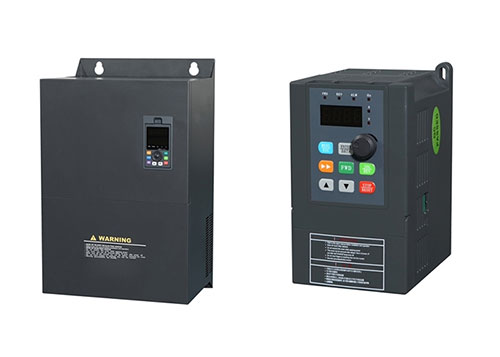
The first filter is kilowatt ratings but final drive should be chosen on current. Efficiency and power factor vary amongst manufacturers such that two motors both labeled 2.2 kW can have full-load currents that are 20 percent or more different. The inverter output current rating shall be the same or bigger than the motor nameplate FLC. Should the motor FLC be between two drive ratings, then always choose the larger drive.
Step 3: Account for Load Type and Starting Torque
Variable-torque loads have centrifugal pumps and fans, which require extremely low torques at low speed. Constant-torque loads demand all the torque at standstill including conveyors, compressors, mixers, and lathes. When using constant torque, choose a drive that has a 150, 200 percent overload current to be sure the motor does not start with over-current protection.
Step 4: Confirm Your Wall Socket Can Supply the Required Input Current
The inverter would consume around 1.4 to 1.6 times of the single-phase supply rated current because of power factors losses in the drive. Confirm that your socket, plug, wiring and circuit breaker have the capacity to remain in this current state. A special 32 A circuit is highly recommended in the case of the 3.7 kW and 5.5 kW models.
Step 5: Consider the Installation Environment
The major common enemy of power electronics is heat. Reduce the drive by 1 percent per degree Celsius over 40 o C, or go to a larger size at hot places. Where a dusty environment is needed (e.g. a woodworking shop), select an enclosure-rated IP-54 or IP-66, or place the drive beyond the dusty environment. In damp or acidic places, an enclosed enclosure is a must.
Step 6: Decide Whether a Braking Resistor Is Required
When the motor is decelerating, it gives energy back to the DC bus. When the load is characterized by high inertia, a flywheel, large fan or loaded conveyor the bus voltage may increase beyond the over-voltage level and break the drive before the motor comes to rest. It is that energy that is converted to heat by an external braking resistor.
Conclusion
Is a Single-Phase Output Inverter the Right Investment?
In the majority of single-phase installations, the answer is definitely the yes because of the high amount of energy reduction. Since power varies as the cube of speed, a motor running at half its maximum power will be using less than 35 percent of its peak power, and the system can by lowering utility charges drastically, pay back through this reduced consumption.
These drives are also a much-needed guard to your equipment, in addition to being cheaper. They prevent the stress and mechanical damage of the windings on the motors by removing harsh startup inrush currents, and increase the life expectancy of the equipment by a few years. These inverters can be used in home workshops or a business setting where three-phase power is not accessible; they will provide a professional level of controlling every aspect of the motor. You can upgrade your system by just aligning the drive rating with the full load current of your motor and have your machinery work at its optimum level.