


I used to think a duvet and a duvet cover were just two words for the same thing. But once I started shopping for better bedding, I realized they’re totally different and that difference matters.
I spent way too long feeling confused about which one I needed and how to use them.
If you’re wondering about duvet vs. duvet cover, I understand. It can be tricky to figure out what each one does, especially if you’re setting up a new bed or just want better sleep.
Here, you’ll learn what each term means, how they work together, and why it matters when choosing your bedding. It’s simple once you understand it, and you’ll be more confident about what to buy.
What is a Duvet, Really?
A duvet is the main part of your bedding that keeps you warm. Think of it as a soft, thick insert that you don’t usually see because it’s meant to be covered.
It’s filled with materials like down, feathers, or synthetic fibers that trap heat, making the bed feel cozy. The filling gives the duvet its warmth and weight, which helps you sleep more comfortably.
Most duvets are plain white and don’t have any designs or colors. That’s because they aren’t made to be shown off, they’re made to do a job. And that job is to keep you warm through the night.
Since the duvet isn’t meant to be washed often, it’s kept in a cover that protects it (kind of like a pillow inside a pillowcase). So when you think of a duvet, think of it as the “stuffing” part of your bedding that does all the heavy lifting.
What is a Duvet Cover and Why It Matters
A duvet cover is like a pillowcase, but for your duvet. It’s a removable, washable sleeve that protects the duvet inside. Since duvets can be bulky and hard to clean, the cover helps keep everything fresh without the hassle. You can easily take it off and toss it in the wash.
Duvet covers come in different materials like cotton, linen, bamboo, or microfiber. Each fabric feels different, so you can pick one based on comfort or what works best for your skin.
Most covers have zippers, buttons, or ties to keep the duvet in place, so it doesn’t bunch up while you sleep.
One of the best things about duvet covers is that you can change how your bed looks without buying a whole new comforter.
Want a new color or pattern? Just swap out the cover.
Duvet vs. Duvet Cover: Side-by-Side Comparison
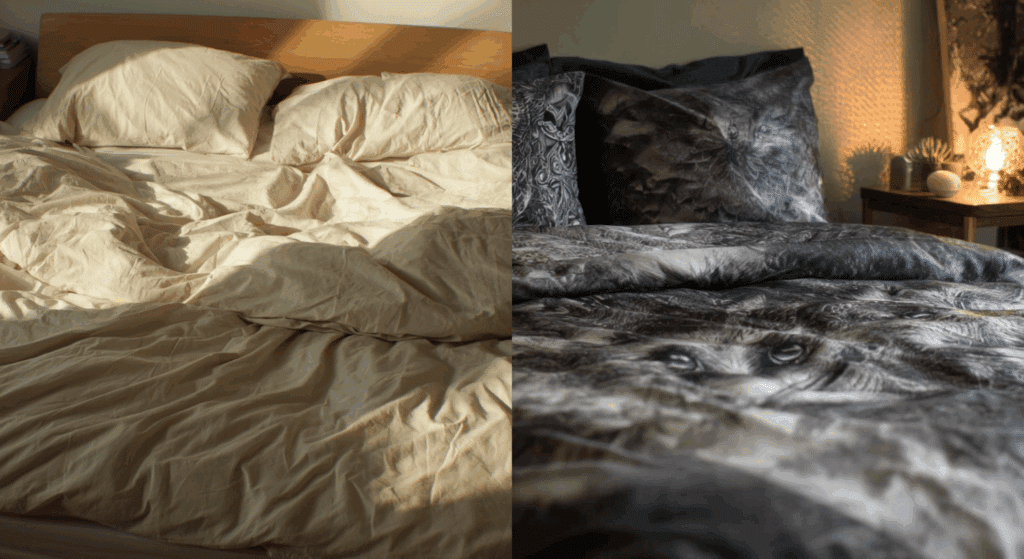
It’s easy to mix up a duvet and a duvet cover, but they serve different roles in your bed setup.
Here’s a quick chart to help you see the difference at a glance and understand which one affects how your bed feels and how it looks.
| Feature | Duvet | Duvet Cover |
|---|---|---|
| Purpose | Warmth and comfort | Protection and style |
| Cleaning | Dry clean or infrequently | Machine washable |
| Lifespan | 5–10 years | Replace as needed |
| Style | Plain white | Many colors and patterns |
| Use Alone | No | Can be swapped freely |
The duvet is what makes your bed feel warm and cozy; it’s all about comfort. The duvet cover, on the other hand, is what changes the look of your room and protects the duvet inside.
Duvet vs. Blanket: Which One Keeps You Warmer?
If you’re trying to decide between a duvet vs. a blanket, the biggest difference comes down to warmth. A duvet is built for colder nights.
It’s made with multiple layers and filled with materials like down, feathers, or synthetic fibers that trap heat and hold it close to your body.
This makes duvets much warmer than blankets. Blankets, on the other hand, are usually made from a single layer of fabric. They’re thinner, lighter, and better for mild weather or layering.
Here’s a side-by-side comparison to help you see the difference clearly:
| Feature | Duvet | Blanket |
|---|---|---|
| Layers | Multi-layer with fill | Single fabric layer |
| Warmth | Higher insulation | Moderate warmth |
| Cleaning | Requires a cover or dry cleaning | Easy machine wash |
| Look | Fluffy and plush | Flat and thin |
| Best For | Cold seasons | Mild or hot climates |
If staying warm is your top concern, especially in winter, a duvet is your best pick. But if you live somewhere warm or just need a light layer, a blanket is the simpler choice.
The right option depends on your sleeping habits and how much warmth you need at night.
How to Choose the Right Bedding for You
Picking the right bedding depends on how you sleep, the weather where you live, and what feels best on your skin. If you get cold at night or live in a cooler area, a duvet with a warm filling is a great choice.
Pair it with a soft, easy-to-wash duvet cover. If you sleep hot or live somewhere warm, go with a light blanket or a thinner duvet and a breathable cover made from cotton or bamboo.
Think about your skin, too. Some materials feel softer or cooler than others. Also, consider how often you want to clean your bedding. Duvet covers are easier to wash than the duvet itself, and blankets can go right into the washer.
Don’t just focus on how it looks, focus on how it feels. Your bed should help you relax, not make you sweat or shiver all night.
U.S. vs. Europe: Bedding Terminology Differences
In the U.S., the word “comforter” is often used instead of “duvet,” and it usually doesn’t need a cover. It’s quilted, ready to use, and often sold as part of a matching set.
In Europe, the duvet is standard and always goes inside a removable cover. Flat sheets are often skipped altogether, with the covered duvet doing all the work.
This matters when shopping online. A bedding set from Europe might not include a flat sheet, and sizes can differ.
Knowing these terms helps you avoid confusion and makes sure you get the bedding that actually fits your needs.
How Duvets, Covers, and Blankets Work Together

You don’t have to pick just one: duvets, covers, and blankets can work together to keep your bed comfy all year. In the winter, use a duvet with a cover for main warmth. Add a blanket on top if you need extra heat.
This combo traps warmth without feeling too heavy. In the summer, skip the duvet and just use the blanket for a lighter, cooler layer.
The duvet cover also protects the duvet, so you don’t have to wash the whole thing often. But sometimes, the duvet shifts around inside the cover, which can be annoying.
To fix that, look for covers with corner ties or use duvet clips. These hold the insert in place so it stays even and smooth.
Using all three: duvet, cover, and blanket, lets you adjust your bed easily. You stay warm when it’s cold and cool when it’s not.
Cleaning and Maintenance of your Bedding
Taking care of your bedding the right way helps it last longer and feel better. Here are some simple tips to keep your duvet, cover, and blanket in good shape:
- Wash duvet covers every 1–2 weeks.
- Wash blankets every 1–2 weeks, or more often if used daily.
- Spot-clean your duvet as needed between deep cleans.
- Deep-clean your duvet once or twice a year (dry-clean or check the label).
- Use a cover to protect the duvet from sweat and dirt.
- Shake out and fluff the duvet regularly to keep it even.
- Use corner ties or clips to prevent bunching inside the cover.
- Store extra blankets in a cool, dry place when not in use.
Keeping your bedding clean isn’t hard; it just takes a little routine care. These steps will help your bed stay fresh, soft, and ready for a good night’s sleep.
Conclusion
I used to mix up the whole duvet vs. duvet cover thing too, but once I understood how they work, making my bed felt way easier and way comfier.
Learning what to use and when helped me sleep better and keep my bedding clean without the stress.
Now it’s your turn. Think about what you’re using right now. Could switching to a duvet with a cover or adding a light blanket make your sleep setup better?
Just remember to wash your duvet cover often and use corner ties to keep things in place.
Want more easy tips like this? Check out other blogs on the website. There’s a lot more waiting for you!