
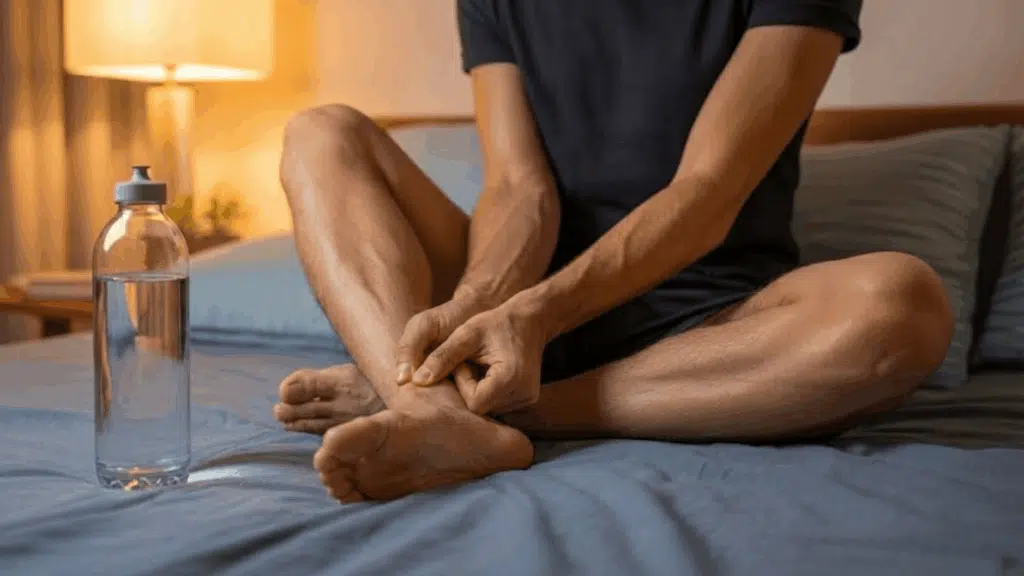
Minor leg pain during the day is manageable, but leg pain at night shouldn’t be tolerated, as it can quickly become chronic and impact your quality of life.
Nighttime leg pain changes restful sleep into an exhausting ordeal that ruins your next day. Whether it’s muscle cramps jolting you awake, circulation issues causing discomfort, or nerve problems creating burning sensations, the impact is profound.
Understanding what’s causing your leg pain at night is the first step toward finding relief and preventing future episodes.
Multiple factors trigger nighttime leg discomfort, ranging from simple dehydration and muscle fatigue to complex conditions that require proper identification.
I’ll walk you through common causes and share practical solutions to help you sleep better.
Why Does Leg Pain Feel Worse at Night?
Nighttime leg pain intensifies for several physiological reasons, transforming minor daytime discomfort into significant sleep disruption.
During the day, constant movement keeps blood circulating efficiently, keeps muscles engaged, and divides your attention among various tasks, making pain less noticeable.
When you lie down, everything changes dramatically. Your heart must work harder to pump blood against gravity to your lower extremities, exacerbating circulation problems.
Overworked muscles begin to tighten and cramp as they relax. Without distractions, your brain focuses more acutely on pain signals, amplifying discomfort significantly.
Certain sleep positions can compress nerves or restrict blood flow, while the horizontal position causes accumulated fluid to shift, increasing pressure.
Your body’s inflammatory responses also become more active at night, paradoxically increasing pain sensations even as healing occurs.
Common Causes of Leg Pain at Night

Nighttime leg pain stems from various underlying conditions, each with distinct characteristics and triggers. Identifying the specific cause is essential for effective treatment and determining whether professional medical attention is necessary.
1. Muscle Cramps (Charley Horses)
Muscle cramps deliver sudden, sharp spasms that jolt you awake from deep sleep, often targeting calf muscles but can occur in thighs or feet.
Typically triggered by dehydration, electrolyte deficiencies (particularly potassium, magnesium, or calcium), muscle fatigue, or prolonged standing, these cramps cause intense pain lasting seconds to several minutes.
2. Peripheral Artery Disease (PAD)
PAD occurs when narrowed arteries reduce blood flow to limbs, causing aching or cramping pain when lying down. Your heart works harder, pumping blood against gravity when you’re reclining.
This condition typically affects older adults with diabetes, high blood pressure, or high cholesterol. Pain improves with movement and worsens during rest.
3. Varicose Veins
These enlarged, twisted veins struggle to return blood efficiently to your heart, causing heaviness, achiness, and throbbing after long days. Blood pooling in damaged veins creates pressure more noticeable at night.
You may experience swelling, itching around veins, and leg restlessness that disrupts sleep and comfort throughout the evening hours. For individuals experiencing persistent symptoms, seeking specialized care such as Varicose Vein Treatment in Frisco can help address underlying venous insufficiency and improve nighttime comfort.
4. Sciatica
Sciatica occurs when your sciatic nerve gets compressed in your lower back from herniated discs or bone spurs. This compression sends shooting pain through your hip and leg, intensifying at night when still.
Certain sleeping positions worsen nerve pressure. Pain ranges from mild discomfort to debilitating agony with tingling or numbness.
5. Diabetic Neuropathy
High blood sugar damages nerves over time, causing burning, tingling, stabbing, or shooting sensations in the legs and feet. These sensations become more noticeable during sleep when external distractions are minimal.
The condition starts in the toes and spreads upward, causing numbness that can make injuries go unnoticed and potentially dangerous.
6. Restless Legs Syndrome (RLS)
RLS creates an overwhelming urge to move your legs, accompanied by crawling, itching, pulling, or electric sensations deep within your limbs. These feelings worsen during rest, making bedtime particularly challenging.
Movement provides temporary relief, but symptoms return quickly when remaining still, severely disrupting sleep quality and causing significant distress throughout the night.
7. Fluid Retention (Edema)
When your body holds excess fluid due to heart problems, kidney disease, venous insufficiency, or medication side effects, it pools in the lower legs. This swelling creates pressure and discomfort, more apparent when lying down.
Affected areas appear puffy, feel tight, and leave indentations when pressed, with symptoms typically worse in evening hours.
8. Muscle Strain
Overworking leg muscles through intense exercise, prolonged standing, or unusual physical activity can cause delayed-onset muscle soreness, which peaks at night.
The inflammatory response to micro-tears in muscle fibers increases during rest. Lack of movement allows stiffness to set in, leading to significant discomfort that interferes with sleep and recovery throughout the night.
9. Arthritis
Both osteoarthritis and rheumatoid arthritis cause leg joint pain that intensifies at night. The natural decrease in cortisol levels during sleep reduces your body’s anti-inflammatory response, which can lead to increased pain and stiffness.
Cool nighttime temperatures stiffen joints further, while accumulated daily stress on joints manifests as nighttime aching and discomfort that disrupts rest.
10. Deep Vein Thrombosis (DVT)
DVT involves blood clots forming in deep veins, usually in the legs, causing pain, swelling, warmth, and redness. This is a medical emergency requiring immediate attention.
Pain may worsen when lying down or elevating the leg. The affected leg may appear noticeably larger or more discolored than the other leg, indicating serious circulation problems.
11. Leg Pain During Pregnancy
Pregnant women frequently experience nighttime leg cramps and restless legs due to increased weight, circulation changes, nerve and blood vessel pressure, and shifting nutritional needs.
Hormonal changes affect muscle and joint function. The growing uterus compresses the inferior vena cava, reducing blood return from the legs and causing significant nighttime discomfort throughout pregnancy.
12. Drug-Induced Leg Pain
Certain medications, including statins, diuretics, blood pressure medications, and some asthma drugs, cause leg cramps, muscle pain, or restless legs as side effects.
These symptoms often emerge or worsen at night when medication levels fluctuate, and your body is at rest, creating unexpected discomfort that disrupts sleep patterns and overall nighttime comfort.
13. Vitamin and Mineral Deficiencies
Deficiencies in magnesium, potassium, calcium, vitamin D, or vitamin B12 trigger nighttime leg cramps, muscle weakness, and nerve-related pain.
These nutrients are essential for proper muscle contraction, relaxation, nerve function, and electrolyte balance. Inadequate intake or absorption issues lead to symptoms becoming pronounced during nighttime rest, significantly disrupting sleep quality.
14. Fibromyalgia
Fibromyalgia is a chronic condition characterized by widespread musculoskeletal pain, including leg discomfort that intensifies at night. The condition amplifies pain signals in the brain, making sufferers more sensitive to discomfort.
Nighttime symptoms include aching, burning sensations, and muscle stiffness, accompanied by fatigue and sleep disturbances worsening with stress, cold weather, and inactivity.
15. Growing Pains in Children and Adolescents
Despite the name, growing pains aren’t directly caused by growth but affect children aged 3-12, typically occurring at night. These pains manifest as aching or throbbing in the thighs, calves, or behind the knees after active days.
Discomfort affects both legs, lasting minutes to hours, often waking children from sleep due to muscle fatigue and low pain threshold.
These fifteen causes range from simple muscle cramps to serious conditions like DVT. Recognizing your specific symptoms helps you choose appropriate treatments and determine when to seek professional medical evaluation.
Effective Remedies and Prevention Strategies
Managing nighttime leg pain requires combining immediate relief techniques with long-term preventive measures.
Quick interventions address acute symptoms, while consistent daily habits tackle root causes to ensure restful, pain-free sleep.
| Approach | Immediate Relief | Prevention |
| Physical | Stretching, walking, and massage | Sleep position optimization, evening routine |
| Thermal | Heat/cold packs | Warm Epsom salt baths |
| Circulation | Elevate legs, movement | Compression socks, daily walking |
| Natural | Essential oils, pressure points | Acupuncture, anti-inflammatory foods |
| Nutritional | Quick hydration, electrolytes | Consistent hydration, nutrient-rich foods |
| Supplements | Emergency magnesium dose | Magnesium, potassium, calcium |
| Medical | OTC pain relievers, topical creams | Manage underlying conditions |
Consistently implementing these strategies creates a comprehensive approach to managing nighttime leg pain effectively. Experiment with different combinations to discover what works best for your specific symptoms and lifestyle.
When to Consult a Healthcare Provider
While many episodes of leg pain resolve with home care, certain symptoms require professional evaluation to rule out serious conditions. Recognizing warning signs early helps prevent complications and ensures appropriate treatment.
Key warning signs that need immediate medical attention:
- Severe, frequent, or progressively worsening pain unresponsive to home remedies
- Noticeable swelling, redness, or warmth in legs (possible infection or blood clots)
- Persistent numbness or tingling indicates potential nerve damage
- Difficulty bearing weight or walking normally
- Skin discoloration or ulcers suggesting serious circulation issues
- Pain accompanied by fever or shortness of breath (potential medical emergency)
If home remedies don’t provide relief within a few weeks, consult your doctor. Conditions like PAD, sciatica, and RLS require specific medical treatments beyond self-care measures for effective management and resolution.
Final Thoughts
You now understand that knowing the various causes of nighttime leg pain is crucial for finding relief and knowing when to seek medical help. From simple muscle cramps triggered by dehydration to serious conditions like DVT requiring immediate attention, each cause presents unique symptoms you should recognize.
Whether your discomfort stems from poor blood flow, compressed nerves, RLS, or medication reactions, pinpointing the exact cause allows for precise treatment. Listen closely to what your body tells you, how often pain occurs, its severity, and related symptoms offer important clues.
Armed with this knowledge, you can make informed decisions about managing your nighttime leg discomfort and determine when professional evaluation is necessary. Drop a comment below if you found this helpful.