Shopping for sheets, towels, or cleaning cloths raises the important question: microfiber vs. polyester.
What’s the real difference? I found that, while both are synthetic fabrics, they’re not identical, and knowing how they differ helps you make smarter buying decisions for your home.
Turns out microfiber is actually made from polyester (and sometimes nylon), but the fiber thickness, texture, and performance vary significantly between standard polyester and microfiber.
The ultra-fine construction of microfiber creates properties different from those of regular polyester, affecting everything from softness to absorbency.
Understanding what sets these materials apart means you’ll pick the right fabric for your bedding, clothing, or cleaning needs. I’ll walk you through everything you need to know to make a confident choice.
What is Microfiber?
I’ve found that microfiber is a synthetic fabric made from extremely fine fibers, typically polyester, sometimes mixed with nylon. The “micro” in the name refers to how incredibly thin each individual fiber is compared to standard fabrics.
These strands are much thinner than a human hair, creating an exceptionally soft texture that I really appreciate.
The manufacturing process splits these ultra-fine fibers, creating more surface area per strand. This unique structure gives microfiber distinct properties that regular polyester doesn’t have, and I’ve noticed the difference firsthand.
The densely packed fine fibers create a silky, smooth feel, almost like suede or peach skin. This makes microfiber comfortable for items that come into direct contact with my skin, which is why I often choose it for bedding and towels.
What is Polyester?
I’ve learned that polyester is a broad category of synthetic fabric made from petroleum-based chemicals. Chemists create polyester by combining an alcohol and an acid to form a polymer, which they then spin into fibers and weave into fabric.
It’s one of the most common textiles worldwide, and I see it appearing in clothing, furniture upholstery, and home goods everywhere I look. I’ve noticed polyester used in various products across different industries and applications.
The material resists shrinking, stretching, and wrinkling better than natural fibers like cotton or linen. It holds dye well, so the colors stay vibrant even after I’ve washed the items multiple times over the years.
The fabric costs less to produce than many alternatives, which keeps prices affordable for me as a consumer. This is one reason why I often encounter polyester in budget-friendly options.
Key Differences Between Microfiber and Polyester
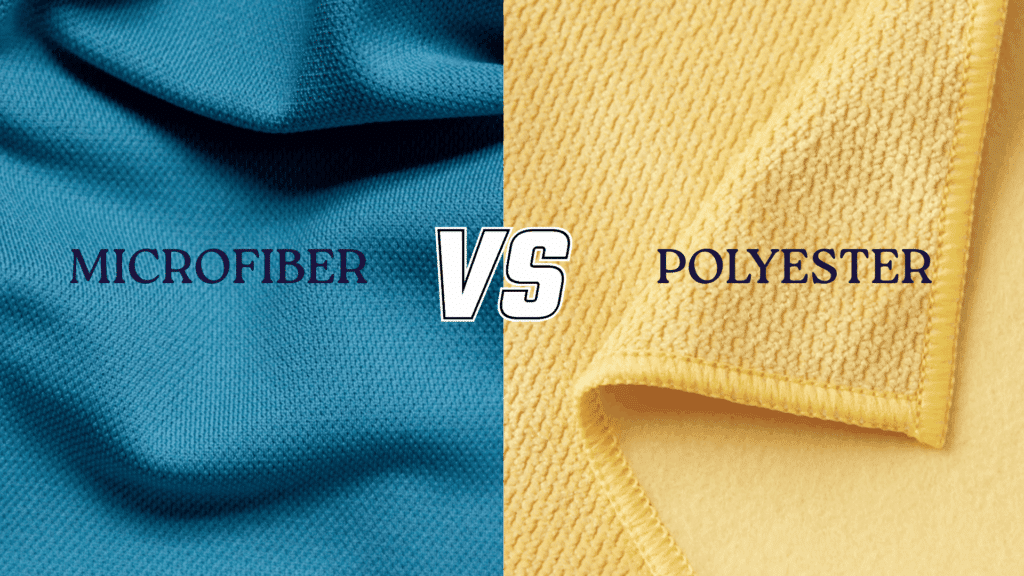
Now that you understand what each fabric is, let’s compare them directly across the factors that matter most when choosing between them. Each feature below highlights how these materials perform differently in real-world use.
1. Fiber Thickness and Construction
Microfiber: Consists of ultra-fine strands measuring less than 1 denier. This smaller fiber size packs thousands of tiny threads into the same space, creating more surface area for better interaction with moisture and dirt.
Polyester: Uses thicker fibers above one denier. The larger diameter makes individual strands stronger and more visible, resulting in a fabric that feels more substantial and handles rougher treatment without damage.
2. Feel, Texture, and Softness
Microfiber: Feels silky and smooth against skin, similar to suede or peach skin. The densely packed fine fibers create a plush, gentle texture that many people find more comfortable for bedding and clothing.
Polyester: Has a firmer, smoother feel that varies by weave pattern. It’s not rough or scratchy but lacks microfiber’s silky quality, offering a straightforward texture that feels smooth but less luxurious overall.
3. Absorption and Moisture Management
Microfiber: Highly absorbent and holds several times its weight in water. The tiny fibers create capillary action that pulls liquid into the fabric and traps it there, making microfiber towels exceptionally effective.
Polyester: Doesn’t absorb water into fibers but wicks moisture away from your body, allowing it to evaporate. This property works well for athletic clothing, but means polyester towels won’t absorb water effectively.
4. Breathability and Temperature Control
Microfiber: Limited airflow due to tight weave and dense fiber packing. Heat gets trapped more easily, which can make microfiber bedding feel warm and uncomfortable if you tend to sleep hot or live in warmer climates.
Polyester: Breathes better, especially when woven loosely. Air passes more easily through the spaces between thicker fibers, helping you stay cooler. This makes polyester ideal for summer sheets, warm-weather clothing, and outdoor use.
5. Durability and Pilling Resistance
Microfiber: Strong for its weight, but fine fibers can break down over time with rough washing or high heat. May develop pilling after extended use, though quality microfiber items last several years with proper care.
Polyester: Exceptionally durable with thicker fibers that resist wear and tear. Holds up through countless wash cycles without holes, tears, or thinning. Resists pilling better than microfiber and maintains its appearance longer without special treatment.
6. Sustainability and Environmental Impact
Microfiber: Sheds microplastics during every wash cycle that most wastewater systems cannot filter out. Washing less frequently and using a microplastic filter bag helps reduce the impact.
Polyester: Also sheds microplastics but at a lower rate. More widely recyclable, with many brands now using recycled plastic bottles in production.
7. Cost and Overall Value
Microfiber: Typically costs between $15 and $70 per item; bedding sets range from $25 to $70, and towels from $10 to $30. A budget-friendly option due to mass production, with softer,higher-thread versions priced slightly higher.
Polyester: Generally ranges from $10 to $60 per item, with bedding sets from $20 to $60 and towels from $8 to $25. Similar or marginally cheaper than microfiber, with a simpler weave keeping overall costs low.
Note: These are estimated costs for informational purposes only and may vary based on brand, quality, and retailer.
Care and Maintenance
I realised that both fabrics are relatively easy to care for compared to natural materials. Follow these simple guidelines to keep your microfiber and polyester items in great shape:
- Washing: Both do well with mild detergent in cool to warm water, though microfiber needs gentler handling than polyester.
- Temperature: Polyester handles higher heat comfortably, while microfiber performs best in cooler settings to avoid fiber damage.
- Drying: Air-dry or use low heat for microfiber; polyester handles moderate dryer heat without restrictions.
- Fabric Softener: Skip it for both, especially microfiber, where it coats fibers and reduces absorbency significantly.
- Bleach: Never use bleach on either fabric, as it weakens fibers and causes lasting damage to both.
Both fabrics are low-maintenance when you follow the basics. A little care goes a long way in keeping them performing well for much longer.
How to Choose Based on Your Needs
Your decision comes down to what matters most for the specific item you’re buying. This quick guide helps you match the right fabric to your priorities and intended use. Here’s a clear breakdown:
| Your Priority | Choose Microfiber | Choose Polyester |
|---|---|---|
| Texture and Feel | Silky and gentle against the skin | Functional and holds up through regular use |
| Allergies and Sensitivity | Hypoallergenic and less likely to irritate sensitive skin | Generally safe but may feel less gentle on very sensitive skin |
| Color Retention | Holds color well but may fade faster under high heat | Excellent color retention even after repeated washing and drying |
| Weight and Bulk | Lighter and thinner, making it ideal for layering | Slightly heavier and thicker, adding structure and body to items |
I appreciate both the fabrics and have their place in my home. Match the fabric’s strengths to your specific needs, and you’ll get better performance and satisfaction from your purchase.
Common Uses Around the Home
I have found that both fabrics naturally suit different tasks depending on how and where you use them. I reach for microfiber when cleaning because it traps particles without spreading them around.
It is also my go-to for bedding, bath towels, and eyeglass cloths where precision and care matter most. For everyday needs, I prefer polyester.
It works well for bed sheets, daily clothing, outdoor cushions, athletic wear, and curtains that need to hold their shape through regular use.
I have also noticed that some products combine both fabrics, like bedding with a microfiber top layer and a polyester backing, or clothing with microfiber panels in specific areas. That hybrid approach often gives the best results overall.
Final Thoughts
Microfiber and polyester aren’t interchangeable, even though microfiber is technically a type of polyester.
For me, the fiber thickness makes all the difference; microfiber’s ultra-fine strands create a softer, more absorbent fabric, while polyester’s thicker fibers offer durability and breathability at a lower cost.
Neither fabric is universally better. Your choice should depend on the specific item you’re buying and what properties matter most to you.
For bedding where comfort is key, I think microfiber might be worth the extra money for you. For everyday items needing toughness, polyester works great.
Now you have the knowledge to choose between these fabrics with confidence. Share your questions about microfiber or polyester in the comments below.