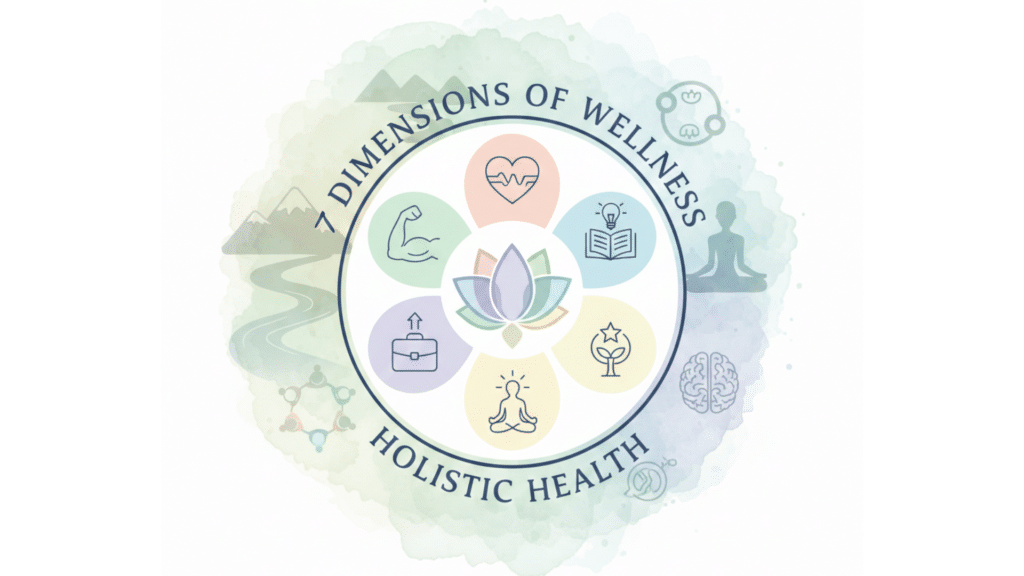
Taking care of your well-being isn’t just about hitting the gym or eating your veggies. It’s about balancing all aspects of life, your mind, body, and relationships.
The seven dimensions of wellness offer a framework that helps you take a more holistic approach to health, beyond just physical fitness.
Many people get stuck thinking wellness is only about the body, but emotional, social, and even environmental factors play huge roles. By understanding the interconnectedness of these dimensions, you can improve your overall well-being.
In this blog, I’ll break down each dimension, explain why it matters, and share tips on how to focus on each. Let’s dive into these practical ways to live a healthier, more balanced life.
Quick Overview of the Seven Dimensions
The seven dimensions of wellness are interconnected areas that contribute to overall well-being. Here’s a brief look at each:
- Physical Wellness: Caring for the body through exercise, balanced nutrition, and preventive health measures. Regular physical activity and good eating habits are key to maintaining health and energy.
- Emotional Wellness: Managing emotions and stress while maintaining a positive mindset. This includes practicing self-awareness, resilience, and emotional balance to cope with life’s challenges.
- Intellectual Wellness: Engaging in activities that stimulate the mind and encourage continuous learning and creativity. This includes reading, problem-solving, and exploring new ideas.
- Social Wellness: Building and nurturing healthy relationships with others. Strong social connections are vital for emotional support, communication, and social engagement.
- Spiritual Wellness: Connecting to a sense of purpose and meaning in life. This dimension encourages alignment with values, faith, and practices that promote inner peace.
- Occupational Wellness: Achieving satisfaction and balance in your work life. Finding purpose and fulfillment in your career or hobbies is vital for personal growth and happiness.
- Environmental Wellness: Creating a sustainable and healthy environment for living. This includes taking care of your surroundings, whether at home or in nature, for both mental and physical health.
Understanding the 7 Dimensions of Wellness
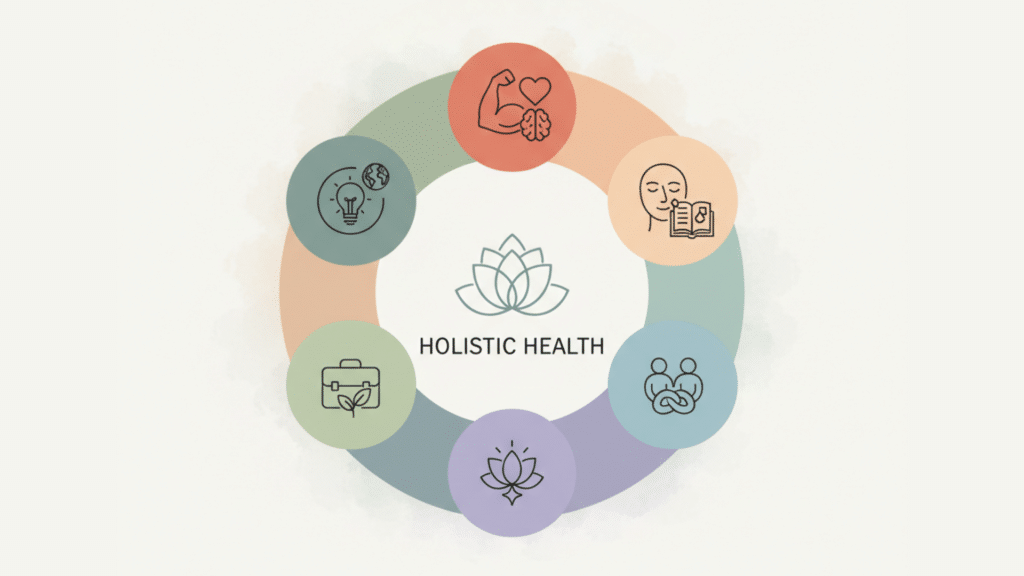
Each section below explains the meaning of each dimension, why it’s important, and how to integrate it into daily life. We’ll also address modern concerns and how wellness needs evolve through life stages.
1. Physical Wellness
Definition: Physical wellness involves caring for the body through regular exercise, balanced nutrition, adequate sleep, and preventive health measures to maintain energy, stamina, and overall functional health.
Why It Matters: Physical wellness impacts your overall energy, longevity, and ability to lead an active, fulfilling life. Good physical health forms the foundation for all other aspects of wellness, enhancing your strength, stamina, and emotional resilience.
Actionable Tips:
- Incorporate daily movement: Aim for at least 30 minutes of physical activity, such as walking, stretching, or light workouts, based on your fitness level.
- Improve sleep hygiene: Create a consistent sleep schedule, avoid screens before bed, and maintain a comfortable sleep environment to improve sleep quality.
- Healthy eating: Plan meals with balanced nutrition (proteins, fruits, vegetables) and prepare snacks that support energy levels. Small changes like swapping sugary snacks for fruits can have lasting effects.
2. Emotional Wellness
Definition: Emotional wellness is the ability to understand, manage, and express emotions in a healthy way, fostering mental clarity, emotional balance, and resilience to stress and challenges.
Why It Matters: Emotional wellness helps manage stress and emotional responses to daily challenges. It is essential for mental clarity, relationship health, and achieving a balanced life. By nurturing emotional health, you can reduce stress, build resilience, and cultivate better connections with others.
Actionable Tips:
- Journaling & meditation: Set aside 5-10 minutes each day for journaling your thoughts or practicing meditation to center your mind and manage stress.
- Develop coping strategies: Learn emotional regulation techniques like deep breathing or progressive muscle relaxation to respond calmly in stressful situations.
- Talk openly about emotions: Discussing your feelings with friends, family, or a counselor fosters emotional clarity and healthy expression.
3. Intellectual Wellness
Definition: Intellectual wellness is the pursuit of knowledge and creativity through activities that stimulate the mind, encourage lifelong learning, and foster problem-solving skills and cognitive flexibility.
Why It Matters: Intellectual wellness keeps the mind sharp and open to new ideas. It encourages mental stimulation, creativity, and continuous growth. This dimension helps improve cognitive flexibility, problem-solving, and learning, enhancing your ability to adapt to new challenges.
Actionable Tips:
- Make lifelong learning a habit: Regularly read books, attend workshops, or take online courses that challenge your thinking and expand your knowledge.
- Engage in creative activities: Try new hobbies like painting, writing, or learning a musical instrument to stimulate your mind.
- Brain exercises: Engage in activities like puzzles, logic games, or trivia to keep your brain active and engaged.
4. Social Wellness
Definition: Social wellness involves building and nurturing meaningful relationships, creating connections with others, and engaging in social activities that promote emotional support and a sense of belonging.
Why It Matters: Social wellness is key to maintaining emotional health and reducing stress. Healthy relationships provide emotional support, reduce feelings of isolation, and foster a sense of belonging. Strong social networks are essential for personal well-being and are linked to a longer, happier life.
Actionable Tips:
- Engage socially: Make time for phone calls, video chats, or in-person meet-ups with friends, family, or colleagues.
- Join community groups: Participate in clubs, volunteering, or local events to meet new people and strengthen social connections.
- Set boundaries: Learn how to distance yourself from toxic relationships and cultivate supportive, positive interactions.
5. Spiritual Wellness
Definition: Spiritual wellness is about finding purpose and meaning in life, aligning with personal values, and engaging in practices that enhance inner peace and a deeper connection to something greater.
Why It Matters: Spiritual wellness offers a deep sense of peace, purpose, and direction in life. It encourages individuals to reflect on their values, beliefs, and connection to something greater than themselves, which fosters inner peace and greater resilience during life’s challenges.
Actionable Tips:
- Practice mindfulness: Regular meditation, yoga, or simply spending time in nature can help you connect with your deeper sense of purpose.
- Engage in faith-based activities: Participate in activities that resonate with your personal beliefs, such as prayer, attending religious services, or reflecting on spiritual teachings.
- Gratitude practice: Start a gratitude journal where you note three things you are grateful for each day, enhancing your spiritual connection.
6. Occupational Wellness
Definition: Occupational wellness involves finding satisfaction and fulfillment in work or meaningful activities, maintaining a balance between professional responsibilities and personal life, and aligning career goals with personal values.
Why It’s Important: Occupational wellness is about finding personal satisfaction and balance in your career or activities. It promotes a sense of purpose and achievement and reduces burnout by aligning work with personal values and interests, leading to a healthier work-life balance.
Actionable Tips:
- Set work-life boundaries: Establish clear lines between work and personal life to avoid burnout.
- Seek fulfillment: Ensure your job or activities align with your passions and values, which leads to greater satisfaction.
- Professional growth: Continually improve your skills through mentorship, certifications, and career development.
7. Environmental Wellness
Definition: Environmental wellness is the care and stewardship of one’s surroundings, including creating healthy living spaces, adopting sustainable practices, and spending time in nature to foster physical and mental well-being.
Why It’s Important: A clean, safe, and sustainable environment is vital for both physical and mental well-being. Taking care of your surroundings can reduce stress, improve mental clarity, and foster a sense of peace. It also encourages sustainability, supporting the well-being of future generations.
Actionable Tips:
- Create a healthy home: Declutter regularly, ensure good lighting, and add indoor plants for cleaner air and a peaceful atmosphere.
- Support sustainability: Recycle, reduce waste, and choose eco-friendly products that promote a sustainable environment.
- Engage with nature: Spend time outdoors to connect with nature, reduce stress, and benefit from the calming effects of the environment.
Challenges to Maintaining Wellness and How to Overcome Them?
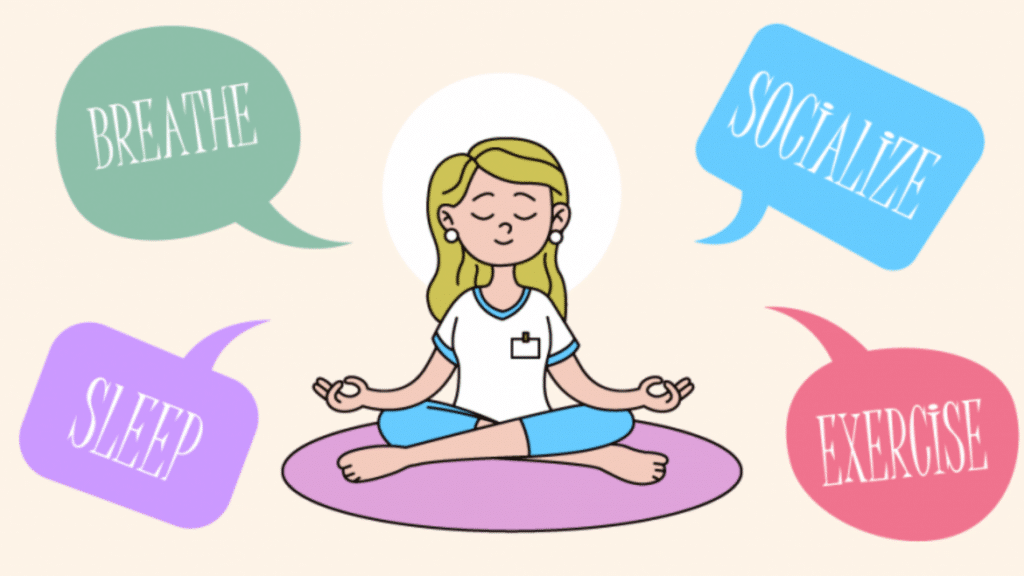
Maintaining wellness can be challenging due to various barriers, such as a lack of time, motivation, or knowledge.
Here are solutions to overcome them:
- Wellness Journaling: Keeping a wellness journal helps track progress, set achievable goals, and reflect on areas that need improvement, making it easier to stay focused on wellness routines.
- Breaking Down Dimensions: Tackling each wellness dimension in small, manageable steps makes it easier to integrate into daily life. Start with simple, achievable actions to build momentum.
- Accountability Buddies: Partnering with a friend or joining a support group helps maintain motivation and ensures consistency. Having someone to check in with can boost commitment and provide encouragement during challenging moments.
Wellness in Different Life Stages
Understanding wellness needs at various life stages helps tailor practices to suit evolving health and lifestyle priorities. Below is a table outlining how wellness dimensions vary across age groups.
| Life Stage | Physical Wellness | Emotional Wellness | Intellectual Wellness | Social Wellness | Spiritual Wellness | Occupational Wellness | Environmental Wellness |
|---|---|---|---|---|---|---|---|
| Young Adults | Focus on building fitness routines and healthy habits | Learning to manage stress and emotional regulation | Developing career and academic skills | Establishing friendships and networks | Exploring personal values and beliefs | Starting a career or education, finding balance | Setting up a stable environment for growth |
| Middle-Aged Adults | Maintaining health with regular check-ups and exercise | Managing work-life balance, dealing with stress | Lifelong learning, career advancement | Strengthening family and work relationships | Reflecting on life’s purpose, midlife shifts | Career progression, managing responsibilities | Creating a sustainable, comfortable home |
| Older Adults | Maintaining mobility and health, managing chronic conditions | Coping with aging, loss, or retirement | Pursuing hobbies, staying mentally engaged | Maintaining social ties, community involvement | Finding meaning in later life, spiritual growth | Volunteering, mentoring, and slowing down in work | Adapting living space for comfort and accessibility |
This table helps visualize the changing needs in each dimension of wellness based on life stage, providing insight into how to approach wellness at any age.
Conclusion
In summary, the seven dimensions of wellness show how interconnected our health truly is.
By paying attention to physical, emotional, intellectual, social, spiritual, occupational, and environmental well-being, we can lead more balanced and fulfilling lives.
Remember, no dimension stands alone, and improving one area often helps strengthen others. Start small by setting manageable goals in each dimension, and over time, you’ll see real changes.
Whether it’s incorporating more movement into your day or taking time to nurture your relationships, every step counts.
If you found this blog helpful, try out some of these tips and feel free to leave a comment. Also, check out my other posts for more practical wellness advice.