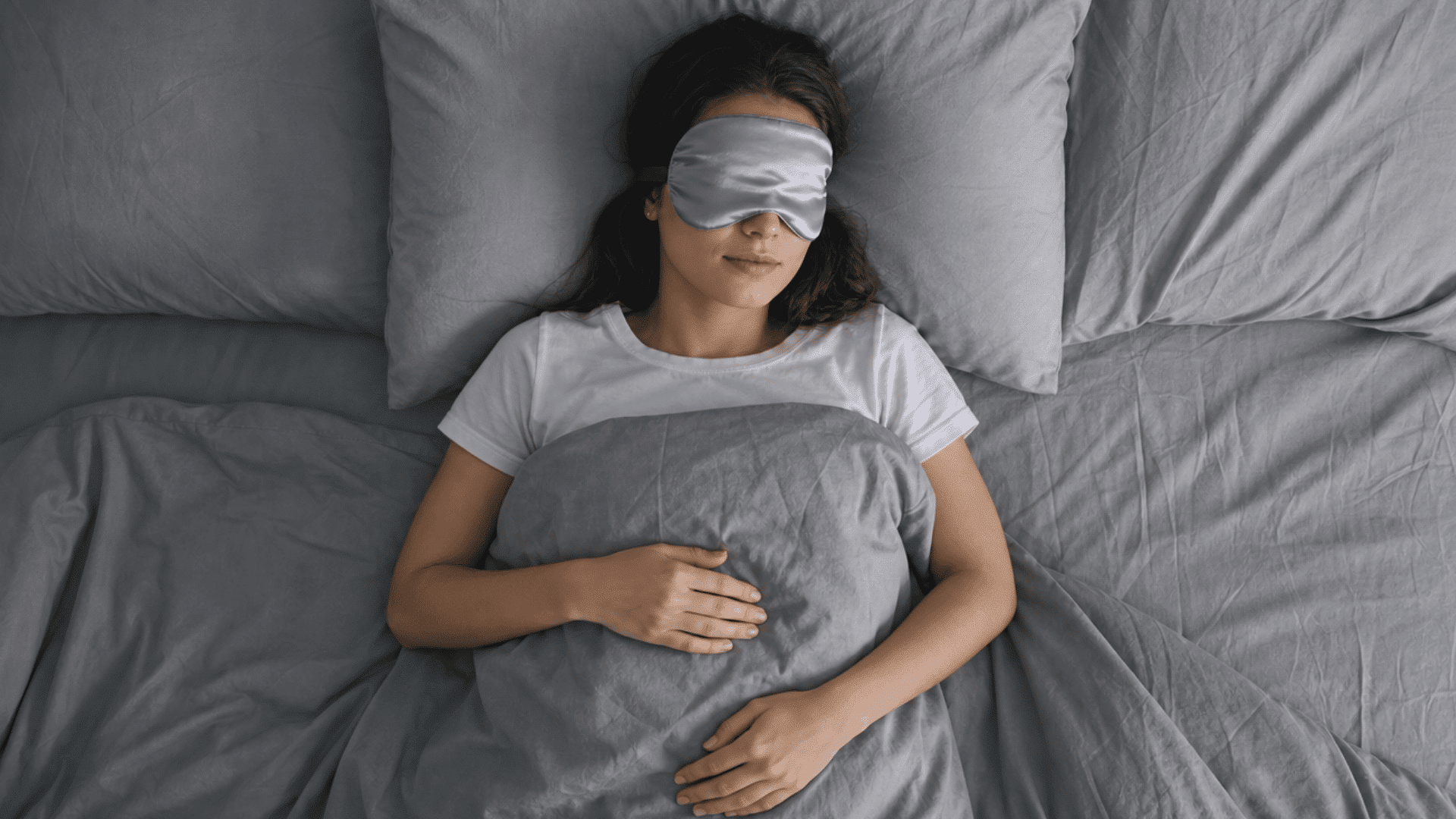

The first nights after surgery can feel long. You may be wondering how to sleep after a C-section without hurting, pulling, or feeling stiff the next morning.
Sleep matters more than comfort right now. It affects healing, energy, and how steady you feel during the day.
The problem is that common sleep advice does not always work after abdominal surgery. What helps one night may hurt the next.
This guide focuses on practical sleep positions, pillow setups, and small adjustments that reduce strain and support healing. By the end, how to sleep after a C-section should feel clearer and more manageable.
How Sleep Changes During C-Section Recovery
Sleep after a C-section usually improves in stages, not all at once. During the first week, rest often comes in short stretches with frequent waking due to pain, feeding, and limited movement.
Many people feel most comfortable sleeping at an incline or with extra support. By weeks two and three, turning in bed becomes easier, and incision pulling often lessens.
Sleep may still be broken, but comfort slowly improves. Between weeks four and six, longer rest periods are common, and position limits start to ease. After medical approval, many return to their preferred sleep positions.
Progress looks different for everyone, but gradual improvement is a normal part of recovery.
Best Sleeping Positions After a C-section
After a C-section, sleep position affects pain, movement, and healing. The right setup lowers pressure on the incision, limits muscle strain, and helps the body rest more comfortably at night.
1. Side Sleeping
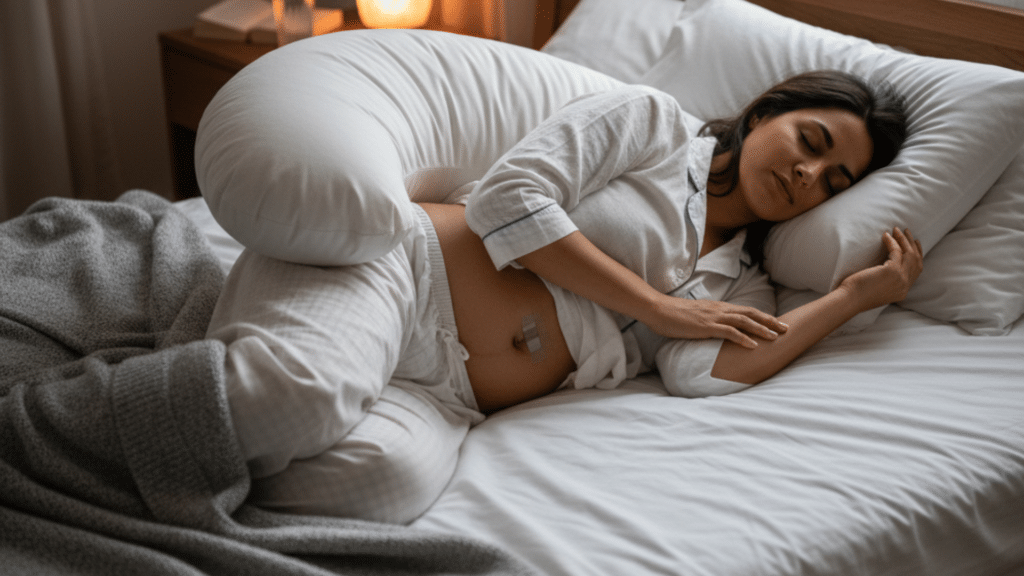
Side sleeping often feels easier because it keeps direct pressure off the incision. This position reduces the pulling feeling across the lower belly, especially during early recovery.
Many people prefer the left side because it can feel gentler on digestion and circulation, though either side can work. Comfort depends on support. Place one pillow between the knees to keep the hips level and protect the lower back.
Add another pillow behind the back to stop rolling during sleep. If there is a tugging feeling near the incision, a small pillow or folded blanket under the lower belly can help. Move slowly when turning to avoid sudden strain on healing muscles.
2. Back Sleeping
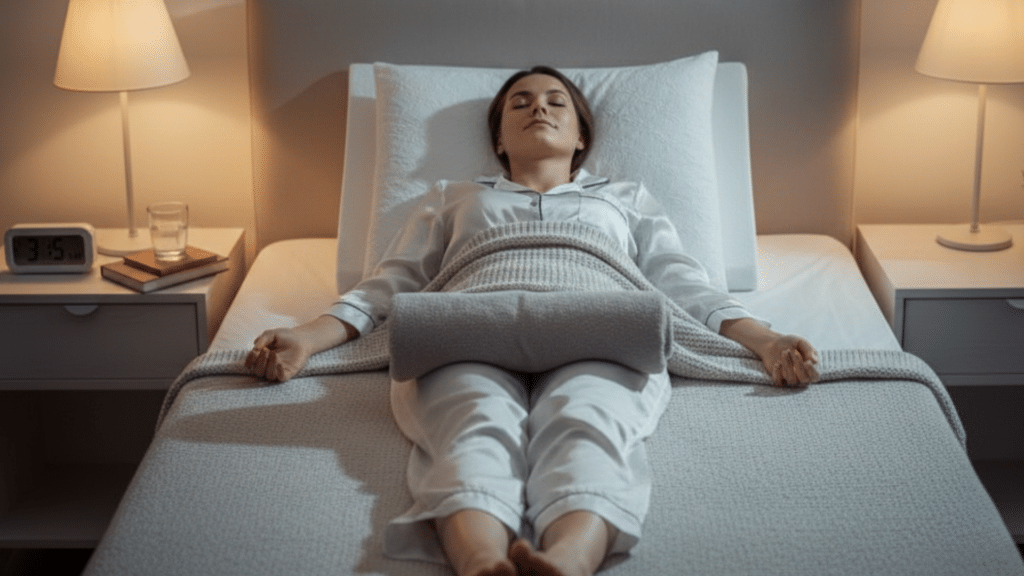
Back sleeping keeps the body in a straight, supported position, which is why doctors often suggest it after surgery.
It works well for people who feel sore when lying on one side or have uneven incision discomfort. This position can feel more stable, especially during the first weeks. Support is key.
Place a pillow or rolled towel under the knees to relax the lower back and reduce tension across the abdomen. Some people also feel better with a small pillow under each arm to prevent the shoulders from pulling forward.
When getting up, roll to the side first and use the arms to push upright instead of sitting straight up.
3. Back Sleeping at an Incline

Sleeping slightly raised can ease breathing and reduce pressure from gas, which is common after surgery. This position helps limit tightness across the belly and can feel more comfortable during the first one to two weeks.
It often works well for people who notice shortness of breath or bloating when lying flat. To set it up, use a wedge pillow or stack firm pillows behind the upper back and shoulders, not just the head.
Keep the neck in a natural position. Add a pillow under the knees to protect the lower back. Move carefully when changing positions to avoid sudden strain.
4. Upright Sleeping
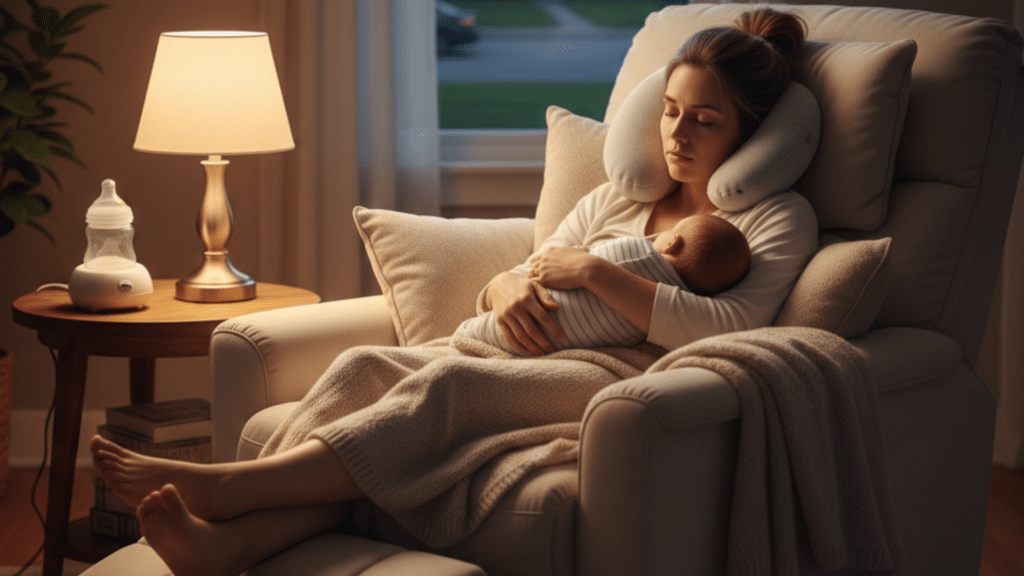
Upright sleeping can feel helpful in the early days when lying flat causes discomfort.
A recliner or well-supported seated position reduces pressure on the incision and limits the need to move often. This setup can be useful during the first few nights and during frequent night feedings.
Support matters here as well. Use pillows behind the lower back, under the arms, and beneath the feet if needed. This position is usually temporary, as it does not provide the same full-body rest as a bed.
Most people shift back to bed sleeping once pain and movement improve.
Sleeping Positions to Avoid After a C-Section
Some sleeping positions can increase pain or strain on healing muscles. Avoiding these early on helps protect the incision and supports a smoother recovery.
- Stomach sleeping: This position places direct pressure on the incision area and can cause sharp pain, pulling, or discomfort during early healing.
- Flat back sleeping without support: Lying flat without knee or back support can increase tension across the abdomen and make it harder to move safely.
- Twisting or uneven positions: Positions that involve twisting the torso or uneven hip support can strain healing muscles and worsen soreness.
Avoid these positions until movement feels easier and pain has eased. Choosing safer options helps reduce setbacks and supports steady healing.
How to Get In and Out of Bed Safely
Using controlled movements protects healing muscles, limits sudden pain, and lowers the risk of straining your incision during daily bed transfers.
The Log-Roll Method
- Roll to your side as one unit: Keep shoulders, hips, and knees moving together to avoid twisting the abdomen and placing uneven stress on healing muscles.
- Lower legs off the bed: Gently slide both legs over the edge while staying on your side to keep pressure off the incision area.
- Push up with your arms: Use your arms and hands to lift your upper body, keeping the belly relaxed and avoiding any sit-up motion.
- Pause before standing: Sit upright for a moment to steady yourself and reduce dizziness before placing weight on your feet.
Nighttime Movement Tips
- Keep essentials within reach: Place water, medications, diapers, and wipes nearby to limit repeated trips out of bed during the night.
- Avoid sudden movements: Quick shifts can cause sharp pain, so change positions slowly and with full control.
- Move slowly, even if the baby is crying: Taking a few extra seconds protects your body and prevents pain that can linger afterward.
Best Way to Sleep After C Section Based on Type of Pain
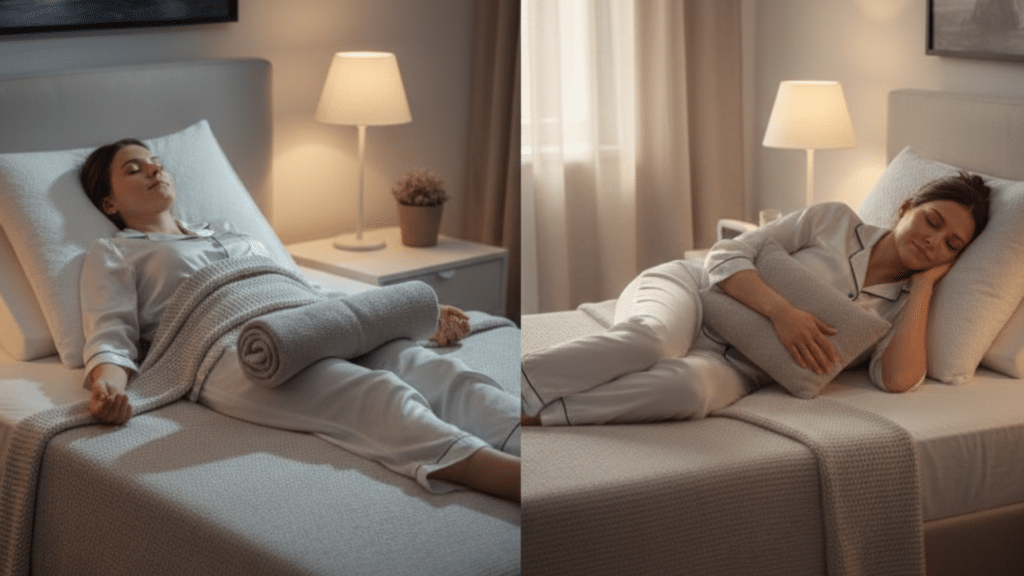
Different types of pain respond better to certain sleep positions. Matching the position to the pain source can reduce strain, limit discomfort, and make rest easier during recovery.
Finding the best way to sleep after C-section surgery often comes down to choosing the correct position and using a steady pillow support.
1. If Incision Pain is the Problem
Incision pain often feels like pulling, burning, or tightness across the lower belly. Positions that reduce direct pressure usually work best. Side sleeping or back sleeping with proper support can limit strain on healing tissue.
Pillows play a big role here. A small pillow or folded blanket placed gently over the lower belly can reduce pulling when moving. When side sleeping, a pillow between the knees keeps the hips steady.
For back sleeping, placing a pillow under the knees relaxes the abdomen and lowers tension across the incision area.
2. If Gas Pain is Keeping You Awake
Gas pain often causes bloating and pressure that feels worse when lying flat. Sleeping at a slight incline can help gas move more easily and reduce tightness. Raising the upper body also limits pressure against the abdomen.
A wedge pillow or stacked firm pillows behind the shoulders work well. Gentle movement can help before bed. Short walks, slow position changes, or bending knees while lying down may ease discomfort.
Avoid sudden twisting. Taking time to move carefully often reduces nighttime gas pain and improves comfort.
3. If Lower Back Pain Hurts More Than the Incision
Lower back pain is common after surgery and long periods of sitting or standing. Back sleeping often works best when adjusted correctly.
Placing a pillow or rolled towel under the knees helps flatten the lower back and reduce strain. Some people also feel relief with a small pillow under one hip to keep the spine aligned.
Avoid sleeping flat without support. Keeping hips level and knees slightly raised can ease back tension and prevent soreness from building overnight.
4. If Shoulder or Neck Pain Comes From Feeding
Shoulder and neck pain often come from holding feeding positions for long periods.
Arm support is key during sleep and feeding. Placing a pillow under the arm keeps the shoulders from dropping forward. Side-lying feeding can reduce strain if done carefully.
Keep the head and neck in a straight line, not bent forward. Use pillows behind the back to stay stable. After feeding, gently reset posture before sleeping to prevent stiffness and reduce next-day soreness.
How Sleep Usually Changes After a C-Section
Sleep often improves in stages as pain eases and movement feels safer. The table below shows common patterns during recovery.
| Recovery Stage | What Sleep Often Feels Like |
|---|---|
| Days 1–7 | Short sleep periods, frequent waking, discomfort with movement, preference for incline or recliner positions |
| Weeks 2–3 | Slightly longer rest periods, easier bed use, less incision pulling, still frequent night waking |
| Weeks 4–6 | Improved comfort, fewer position limits, easier turning in bed, and more stable sleep stretches |
| After 6 weeks | Better overall comfort, gradual return to normal positions with medical approval |
These changes vary by person, but steady improvement is common with proper support, careful movement, and patience during healing.
Pillow Setups for Better Sleep (Easy Guides)
Using pillows the right way supports healing muscles, lowers pressure on the incision, and helps the body stay comfortable during longer rest periods.
Side-Sleeping Pillow Setup
Side sleeping works best with steady support to prevent pulling across the lower belly. Place one firm pillow between the knees to keep the hips level and reduce lower back strain.
Add another pillow behind the back to stop rolling onto the incision during sleep. If there is a tight or pulling feeling near the scar, place a small pillow or folded blanket under the lower belly for gentle support.
Keep pillows snug but not tight. Move slowly when changing sides to protect healing muscles.
Back-Sleeping Pillow Setup
Back sleeping needs proper leg and arm support to stay comfortable.
Place a pillow or rolled towel under the knees to relax the lower back and reduce tension across the abdomen. This position helps keep the body straight and stable.
Some people feel less strain with a small pillow under each arm to prevent their shoulders from pulling forward. The head should stay level, not tilted down. When getting up, always roll to the side first to avoid stressing the incision.
Inclined Sleeping Pillow Setup
Inclined sleeping helps reduce gas pressure and makes breathing feel easier. Use a wedge pillow or stack firm pillows behind the upper back and shoulders, not just under the head.
The body should feel gently raised, not bent. Keep the neck in a neutral position to avoid stiffness. Add a pillow under the knees to protect the lower back.
Make sure pillows do not shift during the night. Move slowly when adjusting positions to avoid sudden abdominal strain.
Recliner Sleeping Setup
Recliner sleeping can feel helpful during early recovery or frequent night feedings. Adjust the recliner so the body feels supported without bending sharply at the waist.
Place a pillow behind the lower back for added comfort. Use pillows under the arms to prevent shoulder strain, especially after feeding.
A small footrest or pillow under the feet can reduce leg pressure. This setup works best for short rest periods. Transition back to bed sleeping once movement feels easier.
What to Do If You Wake Up in Pain at Night
Waking up in pain after a C-section is common, especially during the first few weeks of healing. The body can stiffen during sleep, making movement feel sharp or uncomfortable.
When this happens, pause before moving and take a few slow breaths to help the muscles relax. Adjust position gradually instead of shifting quickly. If lying flat feels painful, add pillows to raise the upper body or support the knees.
For incision discomfort, gently hold a pillow against the lower belly before changing positions. If gas pain is the cause, slow leg movements or a brief walk may help.
Take pain relief only as approved by a doctor. If pain keeps worsening or feels unusual, contact a healthcare provider for guidance.
What “Good Sleep” Looks Like After a C-Section
Good sleep after a C-section does not always mean long, uninterrupted hours. Early recovery looks different and changes over time as healing improves.
- Why broken sleep is normal early on: Pain, feeding schedules, and limited movement often cause short sleep periods. This pattern is expected during early healing.
- How to track improvement over weeks: Notice easier movement, less pain when changing positions, and slightly longer rest periods as signs of progress.
- Why total rest matters more than long stretches: Short naps, lying down often, and reduced activity still support healing, even without long nighttime sleep blocks.
Conclusion
Finding rest after surgery takes patience, and small changes often make the biggest difference.
The right sleep positions, steady pillow support, and careful movement can lower pain and protect healing muscles. I’ve shared what tends to help most during recovery, along with signs that show progress over time.
The goal is not perfect sleep but steady rest that supports healing and daily energy. As you adjust, listen to your body and move slowly. If something feels off, it’s okay to pause and reset.
Want more practical recovery tips like this? Take a look at the other blogs on the site and keep building confidence with how to sleep after a C-section.