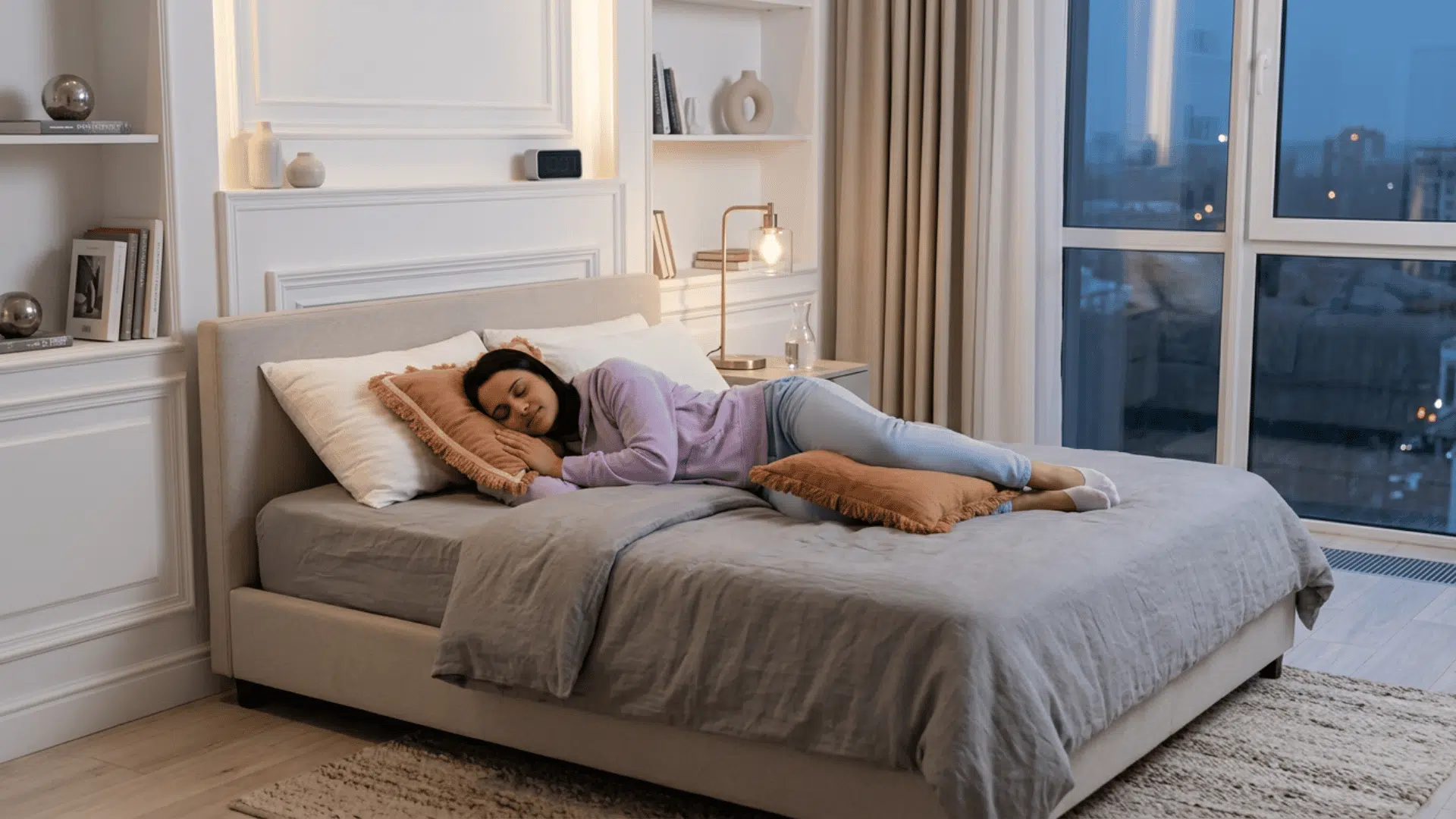
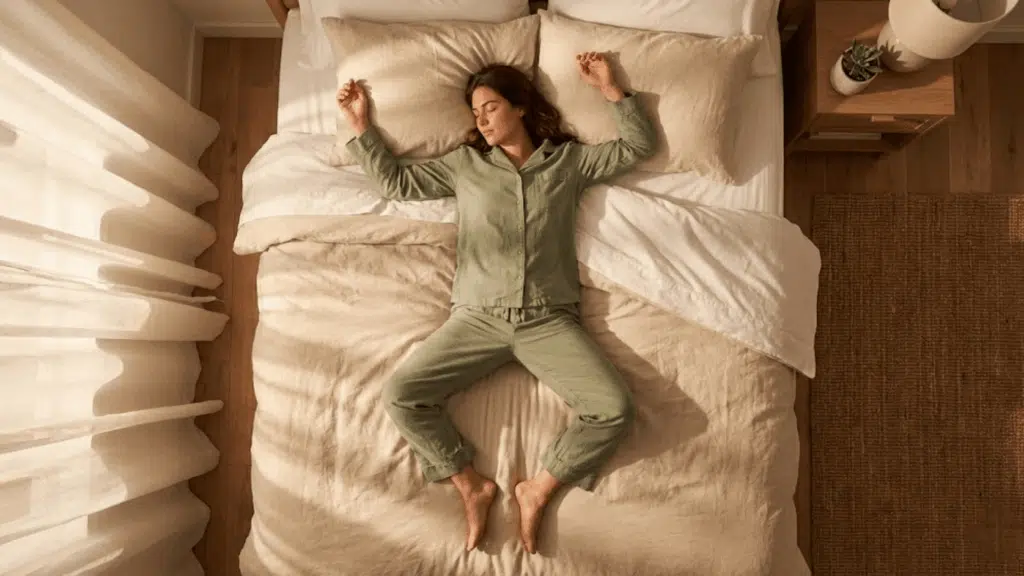
You know that feeling when you wake up sprawled across your bed, arms stretched above your head, legs comfortably apart?
That’s the starfish! This back-sleeping position gets its playful name from how you naturally spread out like a sea star across the mattress.
It’s particularly popular among those who crave space and freedom while they sleep, often appearing in children and adults who run warm at night.
While this open posture might look carefree, it actually carries some interesting implications for your health, comfort, and sleep quality.
Understanding what your starfish sprawl reveals can help you optimize your nightly rest.
Characteristics of the Starfish Position
The starfish position centers on back-sleeping with limbs extended outward, creating that signature spread-eagle look.
Your spine stays relatively neutral against the mattress while your arms and legs claim maximum bed real estate. This posture comes with natural flexibility depending on your comfort preferences and available space.
Common variations include:
- Full Starfish: Both arms stretched above your head, legs wide apart in complete symmetry.
- Half-Star: One arm raised while the other rests at your side, legs moderately spread.
- Relaxed Starfish: Arms positioned lower near your torso, legs casually apart without full extension.
Starfish sleepers tend to be generous, loyal friends who prioritize listening over talking and value deep connections.
Is the Starfish Position Good for You?
Like any sleep position, the starfish comes with its own set of advantages and potential drawbacks. Understanding both sides helps you determine whether this sprawling posture suits your body’s needs.
Benefits
The starfish position offers several compelling health advantages that make it a favorite among back sleepers. Your body gets to enjoy natural alignment and reduced pressure in key areas.
- Neutral Spine Alignment: Your back maintains its natural curve without twisting or bending unnaturally.
- Reduced Pressure Points: Weight distributes evenly, preventing hip and shoulder compression that causes morning stiffness.
- Better Digestion Support: Elevating your head slightly can minimize acid reflux symptoms throughout the night.
- Healthier Skin: Your face stays off the pillow, reducing wrinkles and preventing breakouts from fabric friction.
Downsides
Despite its benefits, the starfish position isn’t perfect for everyone. Certain physical conditions and body mechanics can turn this comfortable sprawl into a source of problems.
- Increased Snoring Risk: Gravity pulls your tongue backward, potentially blocking your airway and creating noise.
- Sleep Apnea Concerns: Back-sleeping can worsen breathing interruptions for those with this condition.
- Shoulder Tension: Arms raised too high can strain muscles and restrict circulation to your hands.
- Lower Back Strain: Without adequate mattress support, your lumbar region may arch uncomfortably.
How the Starfish Position Affects Health & Sleep Quality?
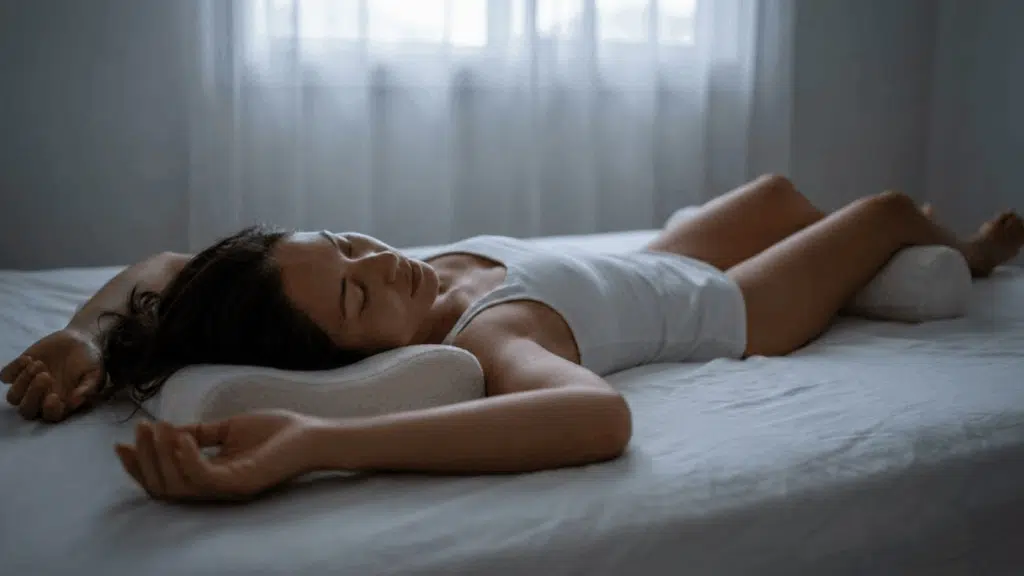
Your sleeping position influences far more than just comfort; it shapes your spinal health, breathing patterns, skin condition, and digestive function.
Here’s how the starfish position impacts different aspects of your well-being.
1. Back Health
The starfish position naturally supports your spine’s curves when done correctly. Your lower back maintains its natural lordotic curve, though some people need a small pillow beneath their knees to prevent excessive arching.
Neck alignment depends heavily on pillow height: too thick pushes your head forward, too thin lets it fall back. A medium-loft pillow that keeps your neck in line with your spine works best for most starfish sleepers.
2. Breathing & Airway Health
Back-sleeping positions your tongue and soft palate to fall backward due to gravity, partially obstructing your airway. This creates the vibrations we recognize as snoring and can significantly worsen obstructive sleep apnea symptoms.
People with existing breathing issues often experience more frequent and severe apnea episodes in supine positions. The starfish’s open arm position doesn’t offset airway changes, so side-sleeping is better for respiratory issues.
3. Skin & Facial Health
Your face stays off the pillow in a starfish position, preventing compression that causes sleep lines and wrinkles. This pressure-free sleep prevents pillow fabric from absorbing oils or transferring bacteria that cause breakouts.
Better yet, back-sleeping promotes optimal facial circulation throughout the night, allowing blood flow to nourish skin cells without gravitational interference that occurs in side or stomach positions.
4. Digestive Wellness
Starfish position can ease acid reflux when your head and torso are elevated, keeping stomach acid from flowing backward into your esophagus. However, lying flat may worsen symptoms for some, especially after heavy meals or with GERD.
The position’s effectiveness for digestion largely depends on the elevation angle and individual anatomy. Those with chronic heartburn should consider adjustable beds or wedge pillows to optimize their starfish sleeping angle.
Starfish Position vs. Other Sleep Positions
Choosing the right sleep position affects everything from your breathing to your spine alignment.
While the starfish falls under back-sleeping, understanding how it compares to side and stomach positions helps you make informed decisions about your nightly rest.
| Sleep Position | Spinal Health | Snoring/Breathing | Pain Relief | Pregnancy | Overall Comfort |
|---|---|---|---|---|---|
| Back (Starfish) | Excellent | Poor | Good | Not recommended | High |
| Side Sleeping | Good | Excellent | Best | Ideal (left side) | High |
| Stomach Sleeping | Poor | Moderate | Poor | Not recommended | Low |
| Fetal (Curled Side) | Fair | Good | Moderate | Safe | Moderate |
Who Should Avoid the Starfish Position?
While the starfish position offers benefits for many sleepers, certain health conditions make this back-sleeping posture problematic or even harmful.
Recognizing when to skip this position can prevent worsening existing symptoms and help you find a safer alternative.
- Moderate to Severe Sleep Apnea Sufferers: Back-sleeping significantly worsens airway obstruction and breathing interruptions throughout the night.
- Chronic Snorers: Gravity pulls your tongue backward in this position, intensifying snoring and disturbing both your sleep and your partner’s rest.
- People with Specific Spinal Conditions: Certain back injuries or disc issues require customized positioning that the flat starfish posture can’t accommodate.
- Those with Untreated Acid Reflux: Lying completely flat allows stomach acid to flow freely into your esophagus, triggering heartburn and discomfort.
- Pregnant Individuals (Second and Third Trimester): Back-sleeping can compress major blood vessels, reducing circulation to both mother and baby.
If any of these conditions apply to you, side-sleeping typically offers better support and symptom relief. Consult your healthcare provider about which sleep position best addresses your specific health needs.
When the Starfish Position May Improve Sleep?
The starfish position can offer specific benefits, especially for those dealing with certain physical or sleep-related challenges. Understanding when this position helps can guide you to better rest and comfort.
Anxiety-Related Muscle Tension Relief: Sleeping with arms up may ease muscle tightness caused by anxiety, promoting relaxation.
Prevents Overheating: Back-sleeping in this open posture allows better airflow around your body, reducing heat buildup.
Chronic Shoulder Pressure Issues: Elevating the arms can relieve pressure on the shoulders, benefiting those with chronic shoulder discomfort or pain.
If you experience any of these conditions, the starfish position could be a beneficial choice. However, as with any sleep posture, individual comfort and health status should guide your decision.
The Bottom Line
The starfish sleeping position offers real benefits for spinal alignment and facial health, but it’s not the right fit for everyone, especially if you struggle with snoring or sleep apnea.
I’ve walked you through the science, the pros and cons, and practical ways to optimize this posture if it suits your body.
The key is listening to how you feel when you wake up. If you’re refreshed and pain-free, you’ve found your match. If not, don’t force it; your body knows what it needs better than any sleep study.
Have you tried sleeping starfish-style? I’d love to hear what worked (or didn’t work) for you in the comments!