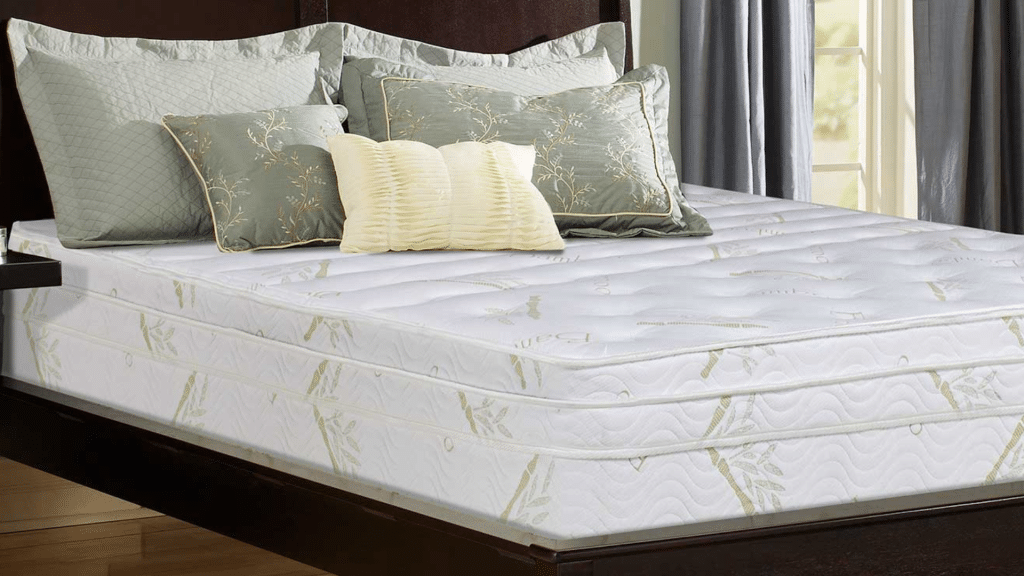

I remember trying a new mattress years ago and feeling lost after hearing so many different terms.
You’ve probably felt the same way when reading about beds and trying to sort out what’s real and what’s just noise. That’s why understanding what is an innerspring mattress actually matters.
You want something that feels steady, keeps your body supported, and works for your sleep style without adding confusion.
This type of mattress has a long track record, and knowing how it works can help you avoid common mistakes while shopping.
I’ll walk you through the key parts, the feel, and the comparisons that make the choice clearer. So, let’s take a simple look at what sets this option apart.
Learn What an Innerspring Mattress is
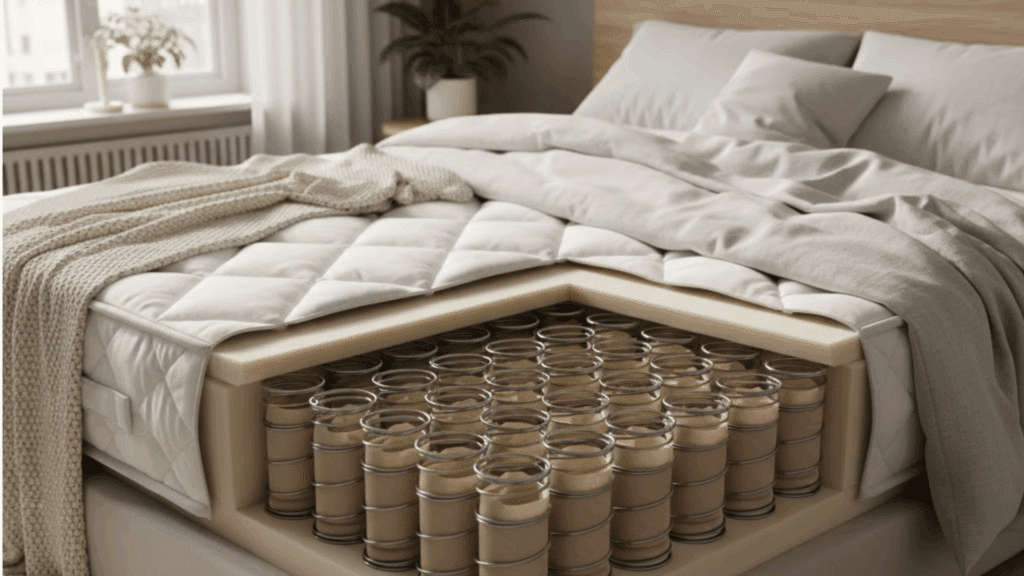
An innerspring mattress uses a metal coil system as its main support base. These coils sit under a thin layer of foam or fiber padding.
The coils support your body, while the top layer adds softness. This setup creates a firm and steady feel that keeps you from sinking too far into the bed.
The open space around the coils helps air move through the mattress, which can keep the surface cooler while you sleep.
The design has been around for many years, and it remains common because it’s simple, supportive, and offered in many firmness options.
Some versions use connected coils for a firm base, while others use coils wrapped in fabric to limit movement between partners. Overall, it’s a direct and practical design that focuses on steady support.
Innerspring vs. Other Mattress Types
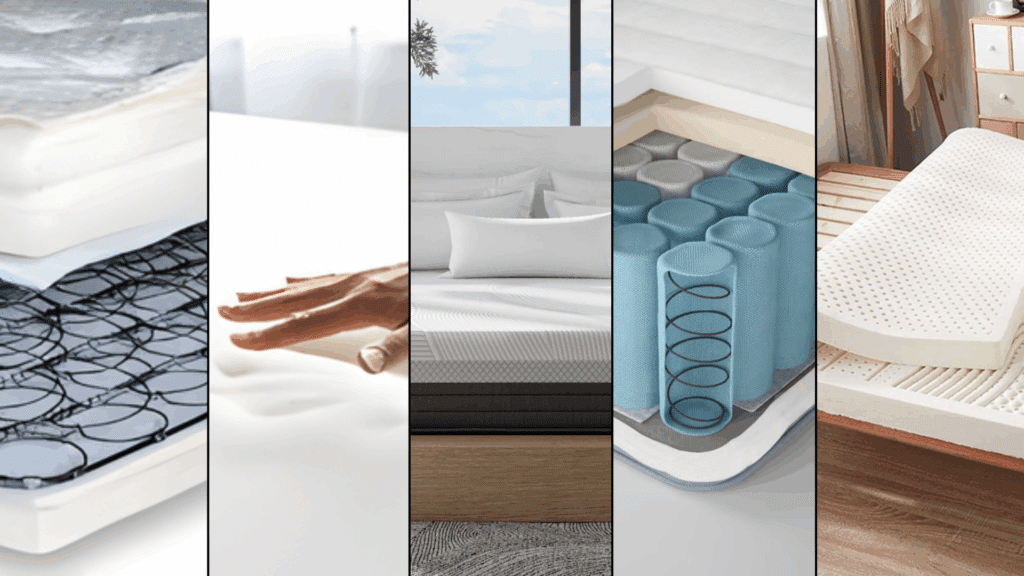
Many shoppers want to compare innerspring mattresses with other options, so this table shows the main differences in a clear and simple way.
| Feature | Innerspring | Memory Foam | Hybrid | Pocket Spring | Latex |
|---|---|---|---|---|---|
| Support Feel | Firm, steady surface | Deep body shaping | Mix of coil support and foam comfort | Steady support with better movement control | Firm and bouncy |
| Surface Feel | “On top” of the bed | “In the bed | Balanced feel | Slight body shaping | Raised, firm feel |
| Motion Transfer | Higher with connected coils | Very low | Low to moderate | Low | Low |
| Cooling | Good airflow | Can trap heat | Improved airflow | Good airflow | Good airflow |
| Pressure Relief | Light to moderate | High | High | Moderate | Moderate |
| Cost Range | Low to mid | Mid | Mid to high | Mid | Mid to high |
| Comfort Layer | Thin foam or fiber | Thick foam | Thick foam over coils | Thin to medium foam | Latex layer |
| Best For | Back sleepers, stomach sleepers | Side sleepers, pressure needs | Mixed sleepers | Couples, restless partners | Hot sleepers, firm feel |
| Durability | Moderate | Moderate to high | High | Moderate to high | High |
| Ease of Movement | Easy, strong pushback | Slower due to sink-in feel | Moderate | Moderate | Easy |
Key Parts of an Innerspring Mattress
An innerspring mattress uses a simple structure built from coils, padding, and edge support elements. Each part works together to provide steady support and a balanced surface.
Coil System Basics

- The coil base uses steel springs that bend and respond to body weight, creating steady support across the full surface.
- Air moves easily through the steel frame, helping the mattress stay comfortable by limiting heat buildup during long sleep periods.
- The strength and feel of the mattress depend on coil thickness, spacing, and layout, which influence firmness and movement control.
Comfort Layer
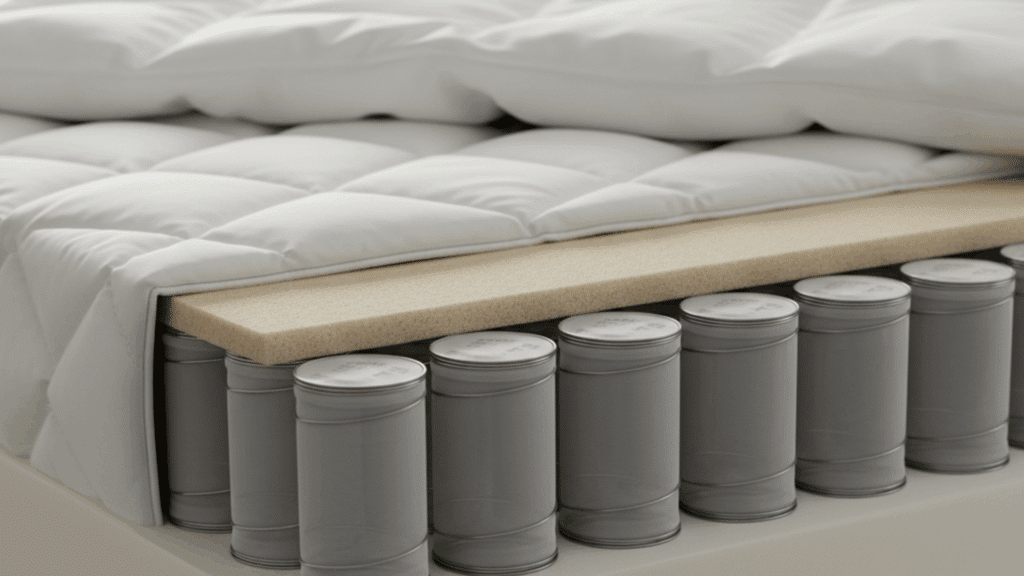
The comfort layer sits on top of the coils and adds softness where your body rests. It can include foam, fiber, or a blend of basic padding materials.
Thin comfort layers keep the surface firm and supportive, while slightly thicker layers help reduce pressure on the hips and shoulders. This layer is also the main difference between an innerspring and a hybrid.
Hybrids use much thicker foam sections that change the feel and make the surface smoother. Innerspring comfort layers remain thinner to keep a firmer overall design.
Edge Support
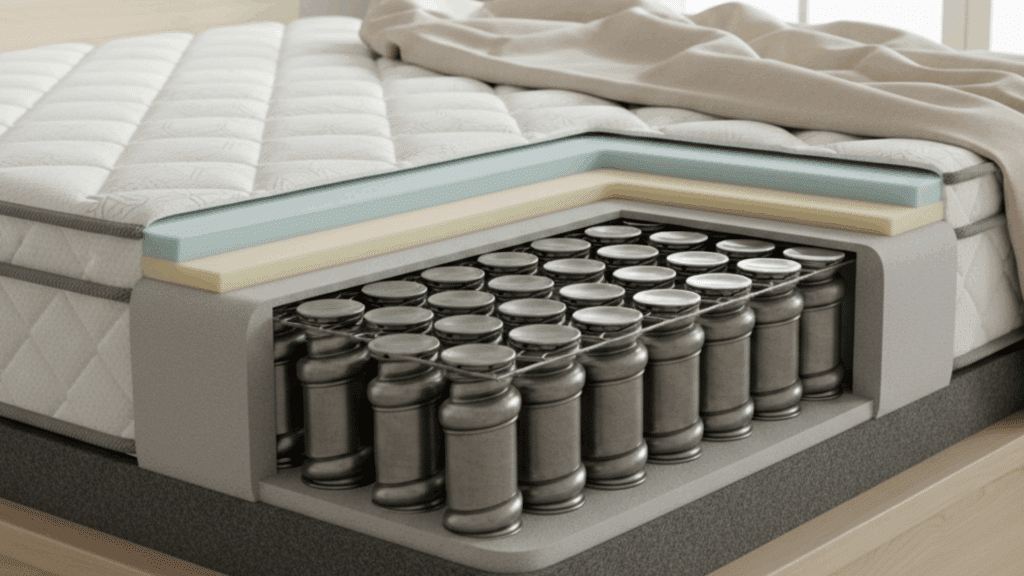
Edge support helps the mattress stay firm along the sides, so the edge doesn’t sink when you sit or rest near it. Some mattresses use a foam frame around the border, which keeps the shape steady and prevents dipping.
Others use stronger coils around the edge for extra strength and better hold when sitting. Coil edges feel firmer under weight, while foam edges offer a smoother feel for sleeping.
Strong edge support also helps keep the surface stable and prevents a roll-off sensation during the night.
What It Feels Like to Sleep on One
An innerspring mattress gives a steady surface with firm support, light padding, and noticeable airflow. The feel depends on coil style and comfort layers.
Firmness and Support
An innerspring mattress usually feels like you’re resting on the surface instead of sinking into it.
The coils push back against your body weight, which keeps your spine steady and prevents deep sinking. This firm support can help with body alignment, especially for back and stomach sleepers.
The comfort layer softens the top slightly, but the overall feel remains structured and steady. The coil base works to keep your body lifted through the night.
Cooling
Air moves easily around the coils, which helps the mattress stay comfortable through long sleep periods. This airflow keeps heat from building up under your body.
People who sleep warm often notice more comfort on an innerspring mattress because the surface does not trap heat the way thicker foam designs can.
The open structure allows heat to leave the mattress quickly, which helps maintain a consistent sleep surface. This cooling effect is one of the main reasons many choose this type.
Motion Transfer
Motion transfer depends on the type of coils used. Connected coils move as a single unit, so movement on one side can spread across the surface. This can be noticeable for partners with different sleep patterns.
Pocket coils improve this issue because each coil moves on its own instead of pulling the others with it. This reduces shaking and keeps movement contained in one area.
For couples, pocket coils usually offer a more stable sleep surface with fewer disruptions.
Noise
Older innerspring designs often squeak because the coils rub against each other when pressure shifts. Over time, metal parts can loosen, which creates more sound during movement.
Newer mattresses reduce this issue by using stronger coil layouts or fabric-wrapped coils that limit friction between metal parts.
While some sound may still appear in very old or worn mattresses, modern builds usually stay quieter for longer. Good coil design helps limit unwanted noise during sleep.
Pros and Cons of Innerspring Mattress
This table gives a simple view of what innerspring mattresses do well and where they may fall short for certain sleepers.
| Category | Pros | Cons |
|---|---|---|
| Cooling | Air moves through the coil frame, which helps reduce heat buildup during long sleep periods. | Cooling depends on coil design, and very thick padding can reduce airflow. |
| Price | Often more budget-friendly because the design uses basic coil construction. | Higher-end versions with pocket coils or extra padding can cost more than expected. |
| Feel | Firm pushback keeps your body lifted and makes it easy to change positions. | It can feel too firm for people who want a softer surface for the hips and shoulders. |
| Support | Strong coil base handles heavier weights and keeps the body from sinking too far. | Some low-grade coils lose strength sooner and may not support all body types. |
| Motion | Pocket coils reduce disruptions for partners by limiting movement spread. | Connected coils move as a single unit, which increases movement across the surface. |
| Durability | Strong steel coils can hold shape well when the build uses thicker materials. | Lower-cost builds with thin coils or light padding can wear down faster. |
Who Should Choose an Innerspring Mattress
An innerspring mattress is a good fit for people who want firm, steady support without a deep sinking feel. It works well for back and stomach sleepers who need a stable surface to keep their spine level during the night.
People who sleep warm may prefer this type because the open coil frame lets air move easily, which helps the surface stay comfortable.
Anyone who likes a lifted feel with easy movement will also find this design helpful, since the coils make it simple to turn or sit upright.
Heavier sleepers may prefer the stronger support from thicker coils, which keep the body from dipping too far into the mattress.
Couples may choose versions with pocket coils to reduce movement spread. This type is also a practical choice for shoppers who want support without paying for thick foam layers.
Do Innerspring Mattresses Require a Box Spring?
Most innerspring mattresses can work with a box spring, but it isn’t always required. A box spring helps absorb movement and adds height, which some sleepers prefer. It also supports the coils by spreading the weight evenly across the surface.
Many modern frames, such as platform beds or metal bases with strong slats, can replace a box spring without reducing support. The key is making sure the base is sturdy and doesn’t allow the mattress to sag.
Some brands list specific base rules in their warranty, so checking those details is important. If your frame already has solid support, you may not need a box spring. If your frame feels weak or flexible, adding one can help keep the mattress stable.
How Long Does an Innerspring Mattress Last?
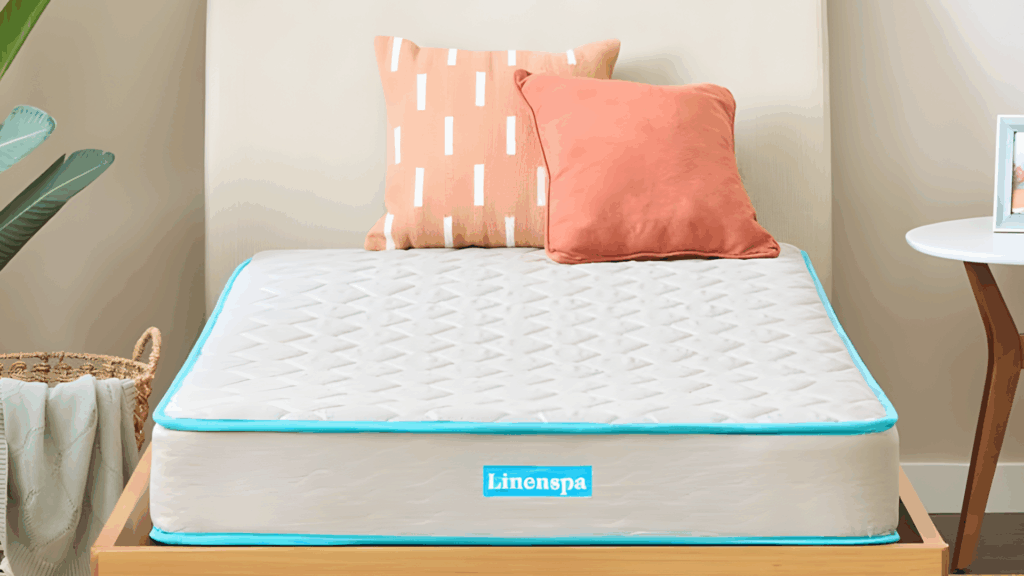
An innerspring mattress stays comfortable for several years, but its lifespan varies with coil strength, comfort layers, weight load, and daily use.
- Most innerspring mattresses last five to eight years with steady support and even weight spread.
- Sagging across the middle or under common pressure points
- Squeaks from metal parts rubbing during movement
- Soft spots that lose support when pressed
- Edges sinking when sitting or lying near the side
These signs help you decide when the mattress no longer supports your body correctly and when a replacement becomes the better choice.
What to Look for When Buying One
When choosing an innerspring mattress, start by checking the coil build, since this controls support, firmness, and long-term comfort. Coils should feel steady and strong, with enough resistance to keep your spine level through the night.
The comfort layer on top should match your sleep needs, offering either a firmer feel or a smoother surface with extra padding. Edge strength matters too, especially if you sit or rest near the sides.
A sturdy frame or coil border helps the mattress keep its shape. Check the base needs as well, since some models work best with solid platforms. Warranty terms also give clues about quality.
A clear, longer policy often signals better materials and more dependable construction.
Conclusion
We covered how an innerspring mattress works, how it feels, how long it lasts, and who it fits best.
The goal was to make everything clear so you can make a confident decision and avoid the stress that often comes with mattress shopping.
When you understand the support system, the comfort layer, and the basic strengths and limits, the choice becomes much easier.
If you’re looking for steady support and a simple setup, a breakdown of what an innerspring mattress is can guide your next step. I hope this helped you sort through the noise.
If you want more simple breakdowns like this, take a look at the other blogs I’ve put together.