I’ve often wondered who invented pillows and how they became a part of every bedroom. They seem so simple, yet their history stretches back thousands of years through different cultures and traditions.
I’ll take you from the very first stone pillows of ancient civilizations to the soft, supportive designs we use now.
You’ll know fascinating history, surprising facts, and even a glimpse at where pillow design might be headed.
So, how did a simple headrest turn into an everyday comfort we can’t imagine sleeping without? Let’s find out together.
Who Invented Pillows: The First Pillow in History
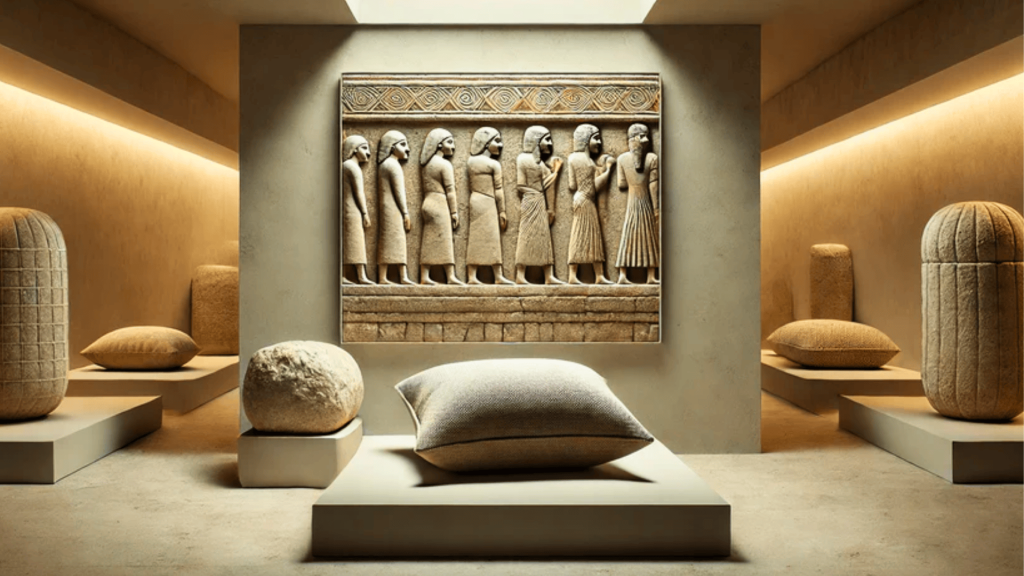
If you’ve ever wondered when pillows were invented, the answer takes us back to Ancient Mesopotamia (~7,000 BCE).
The first known pillows were made of carved stone and shaped to lift the head slightly, helping to protect the mouth, nose, and ears from insects during sleep.
These stone pillows have even been found in burial sites, showing their role in both daily life and ritual practices. Back then, pillows were functional tools, used to guard against pests, dirt, and the heat of the ground.
They also served as symbols of wealth and status, since only the rich could afford well-crafted, decorative versions. Comfort wasn’t the goal, but health, social standing, and practicality were the main reasons they existed.
Pillows Across Ancient Civilizations
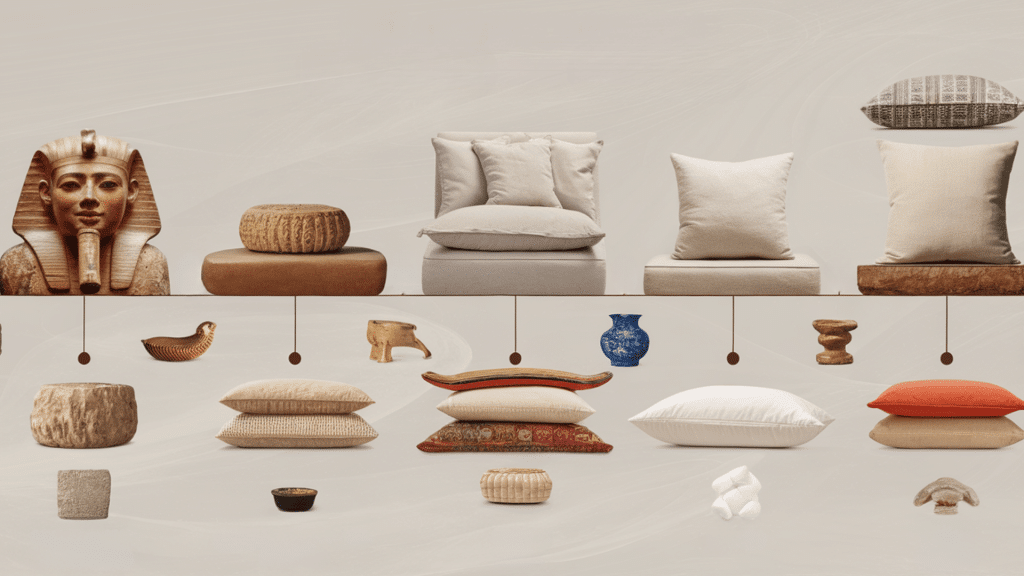
As civilizations advanced, pillows began to take on new forms, materials, and meanings. Different cultures used them in ways that reflected their environment, beliefs, and lifestyle.
Egypt
In Ancient Egypt, pillows were usually stone or wooden headrests. They weren’t just for sleeping; they carried religious and symbolic meaning.
Some were placed in tombs to protect and comfort the dead, showing their spiritual value. These headrests were often carved with designs meant to guard the sleeper from evil.
China
The Ancient Chinese crafted pillows from hard materials like bamboo, wood, bronze, and porcelain. Many were decorated with intricate patterns and motifs that reflected culture, art, and status.
Some designs were believed to bring health benefits, as certain materials were thought to improve circulation or energy.
Greece & Rome
The Greeks and Romans introduced the first soft pillows. They filled cloth cases with feathers, straw, or wool for comfort.
This idea spread across Europe, making soft pillows more common among the wealthy, and eventually influencing how we design pillows today.
These early innovations show how pillows evolved from hard, symbolic objects into soft, comfort-focused essentials, reflecting both the needs and values of each civilization.
The Medieval Pillow
During the Medieval period, pillows became far less common. For much of society, poverty and poor hygiene made them a luxury few could afford.
Many ordinary people slept without them, using only rolled-up cloth or blankets for head support.
Among the royalty and wealthy households, pillows remained a symbol of comfort and status. They were often decorated with fine fabrics and embroidery, showing off the owner’s rank and wealth.
By the late Middle Ages, this contrast between rich and poor in pillow use reflected the wider social and economic divide of the time.
Industrial Revolution & Modernization
The Industrial Revolution changed pillow-making forever. Advances in manufacturing allowed for mass production, making pillows more affordable and widely available. Cotton became the most common fabric, replacing the rougher materials of earlier times.
This era also saw the rise of feather-filled pillows, which offered a much softer and more luxurious feel.
By the mid-20th century, new materials like foam and synthetic fibers were introduced, giving people more choices in comfort, durability, and price.
These innovations turned pillows from a luxury item into an everyday essential found in homes around the world.
Pillows as Status Symbols & Decorative Objects
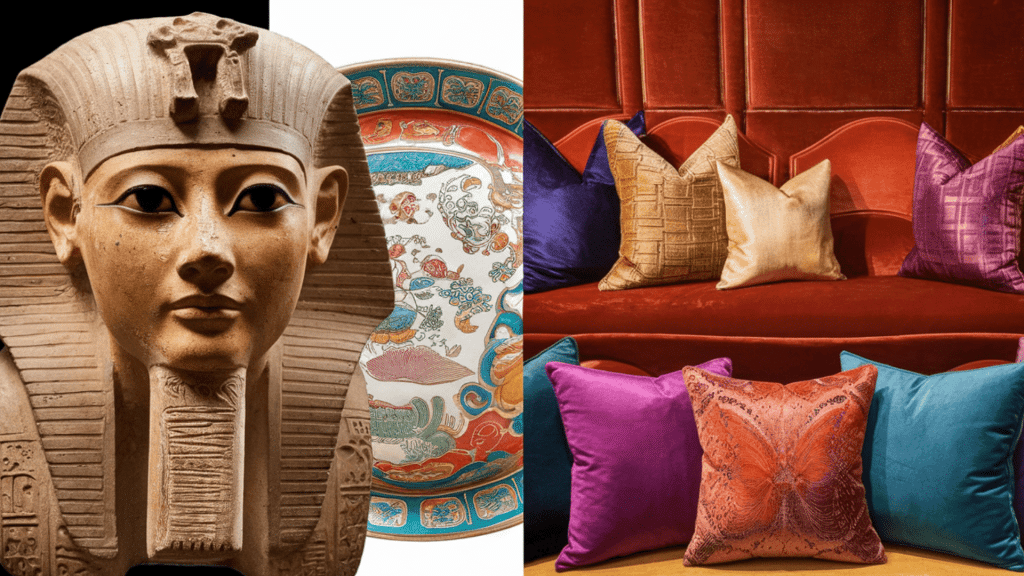
Pillows haven’t always been just for sleeping; they’ve long been used to show wealth, taste, and cultural pride.
In Ancient Egypt, decorative headrests were often placed in tombs as symbols of protection and honor.
In the Chinese imperial court, pillows made from fine materials and adorned with intricate designs reflected high status and artistry.
In modern times, this tradition has evolved into the throw pillow culture. These small, stylish pillows are used to add color, texture, and personality to sofas, chairs, and beds.
While they may no longer signal royal status, they remain a way to express style and individuality in the home.
Science & Ergonomics of Pillows
Modern research shows that the design of a pillow can greatly affect sleep posture and neck health. A pillow that’s too high or too flat can strain the spine, leading to discomfort or poor sleep quality.
This focus on ergonomic support has led to the rise of orthopedic and specialty pillows. These include memory foam designs, contour shapes, and adjustable fills, all aimed at keeping the head, neck, and spine in proper alignment.
Today, pillows are not just about comfort; they’re an essential tool for better sleep and overall health.
Fun Facts & Trivia
Pillows have a long and fascinating history, and some stories are too interesting to leave out. Here are a few fun tidbits that might surprise you:
- The oldest pillow ever found dates back over 9,000 years to ancient Mesopotamia.
- Some cultures have made pillows from unusual materials like bronze, jade, and porcelain.
- The largest pillow fight on record involved over 7,800 participants in the Netherlands in 2008.
These facts show that pillows have always been more than just functional; they’ve been part of art, tradition, and even entertainment. From ornate royal headrests to playful pillow fights, they reflect how human culture mixed creativity, comfort, and fun
Sustainability & Future of Pillows
The pillow industry is moving toward eco-conscious designs that are better for both people and the planet. New materials and production methods are changing how pillows are made, used, and disposed of.
Here are some of the most promising developments:
- Organic fabrics like cotton, hemp, and bamboo reduce chemical use and environmental impact.
- Biodegradable fillings such as buckwheat hulls or kapok fiber break down naturally over time.
- Recyclable components allow owners to reuse or replace parts, rather than discarding the entire pillow.
- Refillable designs allow fresh filling to be added, extending the pillow’s life.
- Low-impact manufacturing cuts down on water use, energy consumption, and waste.
With growing awareness of sustainability, the future of pillows will combine comfort, durability, and environmental responsibility in ways never seen before.
Conclusion
Now you know who invented pillows and how they’ve gone from stone headrests to the cozy designs we use today.
I’ve found that their story isn’t just about comfort, it’s about culture, creativity, and the way our needs have changed over time.
Next time you rest your head, you might think about the long history behind that simple pillow.
Check out my other blogs for other stories, useful tips, and ideas to make everyday life more comfortable and interesting!