
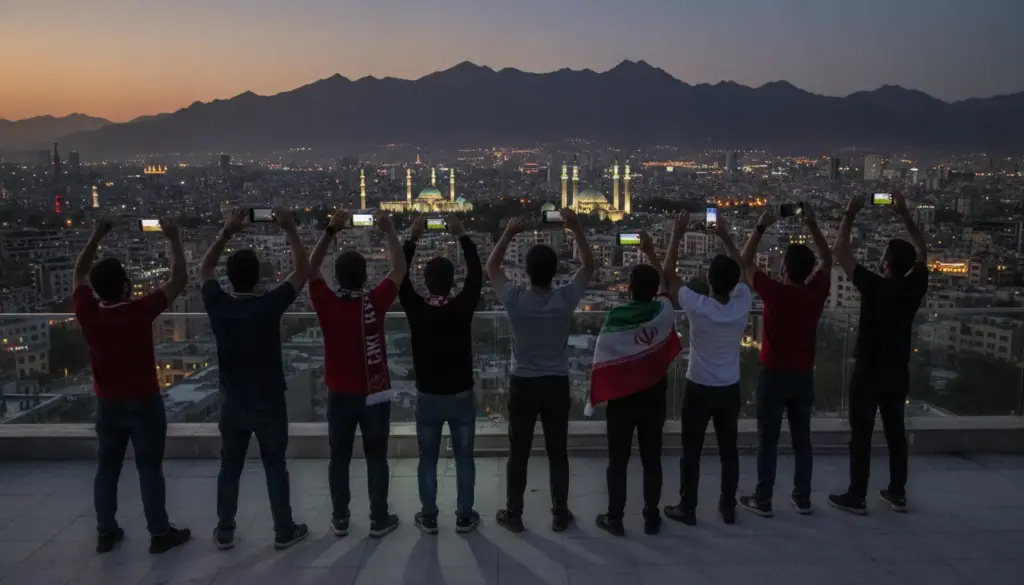
Classic football tradition in Iran was watching the match at the stadium on Friday, or watching the football game on TV via an IRIB Varzesh program. All of these are still there, but not anymore. What they are doing today is watching matches or teams via their mobile phones.
They use WhatsApp groups or short videos on social media. Less than ten years were needed for them to go through a process that takes much longer in many other football leagues of the same nature. Live streaming, Telegram messaging with live commentary, Instagram videos uploaded during the game itself, and even a grey market component of (Farsi: سایت شرط بندی با واریز مستقیم ) betting websites used by fans who are tracking the odds of their team winning in real time all fit into the mobile window. This shift has not broken Iranian football culture. It has transformed it.
This difference can be seen in the manner in which fans relate to a fixture alone. While two decades back, a match of the Persian Gulf Pro League would be just a one-screen affair with all the chatter taking place before and after the match, nowadays, the very same match will be a multi-stream affair. This involves the watching of the actual video of the game, the accompanying text updates on what is going on, the upload of clips from the game, as well as the chat between friends.

The Old Setup and the New One
There used to be a consistent format that characterised the experience of watching football in Iran for decades. IRIB Varzesh aired all cup games and league games, while Pro League Persian Gulf games were always scheduled for weekends on Saturday afternoons. Qualifiers, friendlies, and other games involving the national team were televised on IRIB Varzesh. Going to the stadium was an alternative choice for those who lived near the stadium.
A different format now emerges. The common football enthusiast uses up to three different applications in one game lasting 90 minutes. One is used to live-stream the game while another one is used for analysis and opinions. A third application will be used to see videos posted immediately by people on Instagram.
Three structural changes have made this possible:
- 4G coverage reached over 90% of Iranian urban areas by 2020;
- smartphone prices dropped enough for under-30s to own multiple devices;
- foreign and grey-market streaming options became more reliable through VPN.
Fans can enjoy Persepolis vs Esteghlal anywhere. They can watch at the metro station in Tehran, sip coffee in Mashhad, or even from their rooftop in Esfahan. No part of the game will be missed.
What Iranians Watch and Where They Watch It
The information about the watching of football in Iran is scattered due to the involvement of both official and non-official agencies. The polling agency APRIA and Cinet, which is an Internet company in Iran, have given overlapping statistics for the years 2022-2024. The split looks roughly like this:
Match category | Share viewed live on IRIB (TV+app) | Share viewed via online sources |
|---|---|---|
Persian Gulf Pro League regular fixtures | 38% | 62% |
Tehran derby (Persepolis vs Esteghlal) | 51% | 49% |
Team Melli World Cup matches | 73% | 27% |
Team Melli qualifiers | 44% | 56% |
Asian Champions League | 22% | 78% |
English Premier League | 4% | 96% |
The main difference between Farsi TV sports broadcasting and others is in how they cover overseas leagues. IRIB can’t show matches from the English Premier League, La Liga, or Serie A. So, most fans turn to grey market streams using VPNs. When it comes to covering domestic leagues, the official channel still leads. However, using a second screen is now a common practice.
This means that, for instance, on a typical weekend in the Persian Gulf Pro League, a fan watches the official stream on IRIB. They also check at least three to four other streams that provide commentary.

The Role of Social Platforms and VPN Channels
Telegram remains the backbone of Iranian football discussions. Although there was an incident where Telegram was blocked in 2018, the app still works via a VPN on most under-40 phones. Telegram discussion forums dedicated to matches between Persepolis or Esteghlal can have anywhere from 50,000 to 80,000 active participants during a derby.
The members discuss various opinions about the match while the game is being played. Professional Iranian football reporters like Behdad Bagheri and Reza Javdani mainly use Telegram for their posts. Their channels have more subscribers than all Iranian sports newspapers combined.
A newer layer involves foreign betting and odds services aimed at Iranians. They use platforms like Facebook and other social networks. MelBet Facebook Iran is one social media site where Iranians share odds comparisons, free match predictions, and links to streams of their favourite teams. These are based abroad in terms of their physical location but target Iranians in terms of language and content.
Match-day digital channels for the average Iranian football fan look like this:
- a live stream, either IRIB Telewebion or a grey-market source;
- one or two Telegram channels with running commentary;
- the official Instagram of the supported club;
- one or two Persian sport-news sites such as Varzesh3 or Tarafdari;
- a chat with friends on Telegram or WhatsApp;
- occasionally a foreign odds page or stat service.
The fan continuously alternates between these tabs. APRIA survey data indicates that an average of 47 digital actions per game, which includes notifications, switching, posting, sharing, and commenting, occur within 90 minutes. However, this figure exceeds 80 during derby days.
How Match Day Has Changed for the Average Fan
Family television consumption continues, but for matches in the World Cup only. Matches in the league format have changed. A usual under-35-year-old Iranian spectator of the Pro League match will keep his or her mobile throughout the game, and the TV screen will run in the background or be switched off.
There are several clear trends pointed out by the match-day spectators:
- Pre-match odds and stats previews come via Instagram and Telegram channels, rather than newspaper columns;
- Live coverage on Telegram becomes available from 5-15 seconds ahead of IRIB broadcasts owing to their time lag;
- At half-time, tactical analysis videos and commentaries from the club’s Instagram pages appear within minutes;
- Highlights on Aparat and Instagram get more attention than the official IRIB broadcast;
- The following day, the match analysis on YouTube using the VPN service beats the newspaper column.
While the official broadcaster retains control over the video feed, all prematch and postmatch engagement activity happens through the mobile app. Iranian football clubs were among the earliest to adapt; both Persepolis and Esteghlal hired new digital teams for the 2022-2023 season, swelling numbers from just three or four in charge of social media to about twenty in each club.
There is also an Instagram channel managed by the Iranian Football Federation that boasts over two million followers and maintains a special team for content creation in Farsi during matches of the national team. The implication for brands is clear: the value of buying ad slots near IRIB Varzesh broadcasts has dropped significantly compared to creator marketing, Telegram channel sponsorship, and other digital activations centred around game-day moments.