Most people replace their mattress roughly when they can’t ignore the problem any longer. The spring that’s been poking them in the shoulder for six months finally wins, or they wake up for the hundredth morning in a row feeling like they slept on a bag of gravel. It’s rarely a proactive decision, and that’s a bit of a problem, because by the time things feel that bad, you’ve probably been sleeping poorly for years.
The general advice you’ll hear is eight years. Some manufacturers say ten. The truth is it depends enormously on what type of mattress you have, how heavy you are, whether you share it with a partner, and honestly, how much you paid for it in the first place. A budget foam mattress from a supermarket and a quality pocket sprung model are not going to age at the same rate, no matter what anyone tells you.
Signs You’re Overdue a Replacement
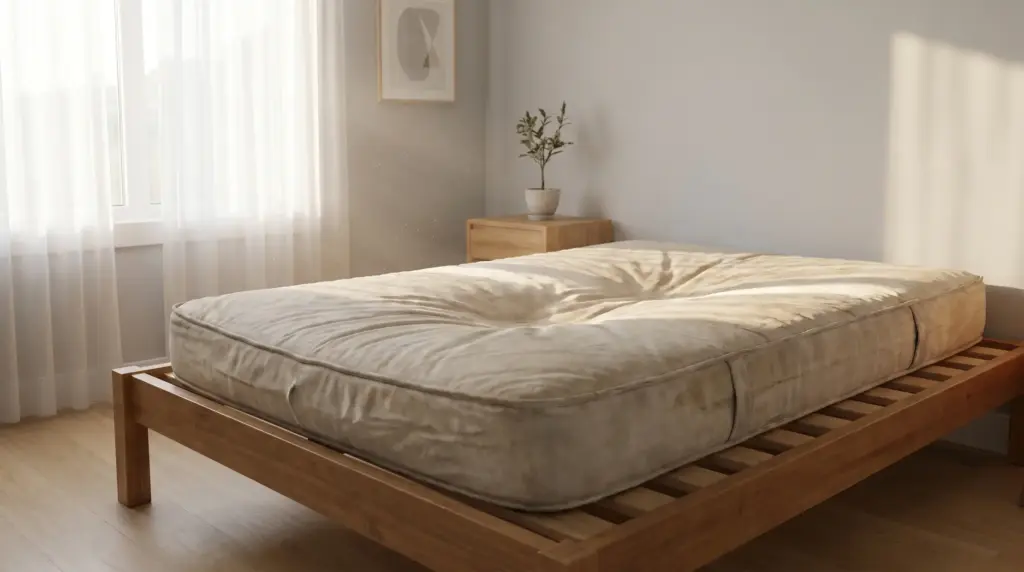
There are some fairly obvious signs, and then there are some that are easy to brush off. The obvious ones: visible sagging in the middle, lumps you can feel through the bedding, a creak or groan every time you move. If your mattress looks like a hammock when you get out of bed, that’s not a sign, that’s a verdict.
The less obvious signs are worth paying attention to though. Waking up with a stiff back or aching hips when you felt fine the night before is a big one. So is finding you sleep better on holiday, or even on someone’s spare bed, than you do at home. Your body is telling you something, and it’s usually right. Allergies flaring up at night can also point to an ageing mattress, because over time they accumulate dust mites, dead skin cells, and other things you’d rather not think too hard about.
Foam mattresses, particularly cheaper memory foam, tend to lose their ability to spring back properly after about six or seven years. You’ll notice this as a kind of permanent body impression, where the mattress holds the shape of whoever sleeps there longest. Pocket sprung models generally hold up better, but the springs do eventually fatigue, and once they start losing tension you’ll feel it in your lower back in the mornings.
Does Age Alone Mean You Need a New One?
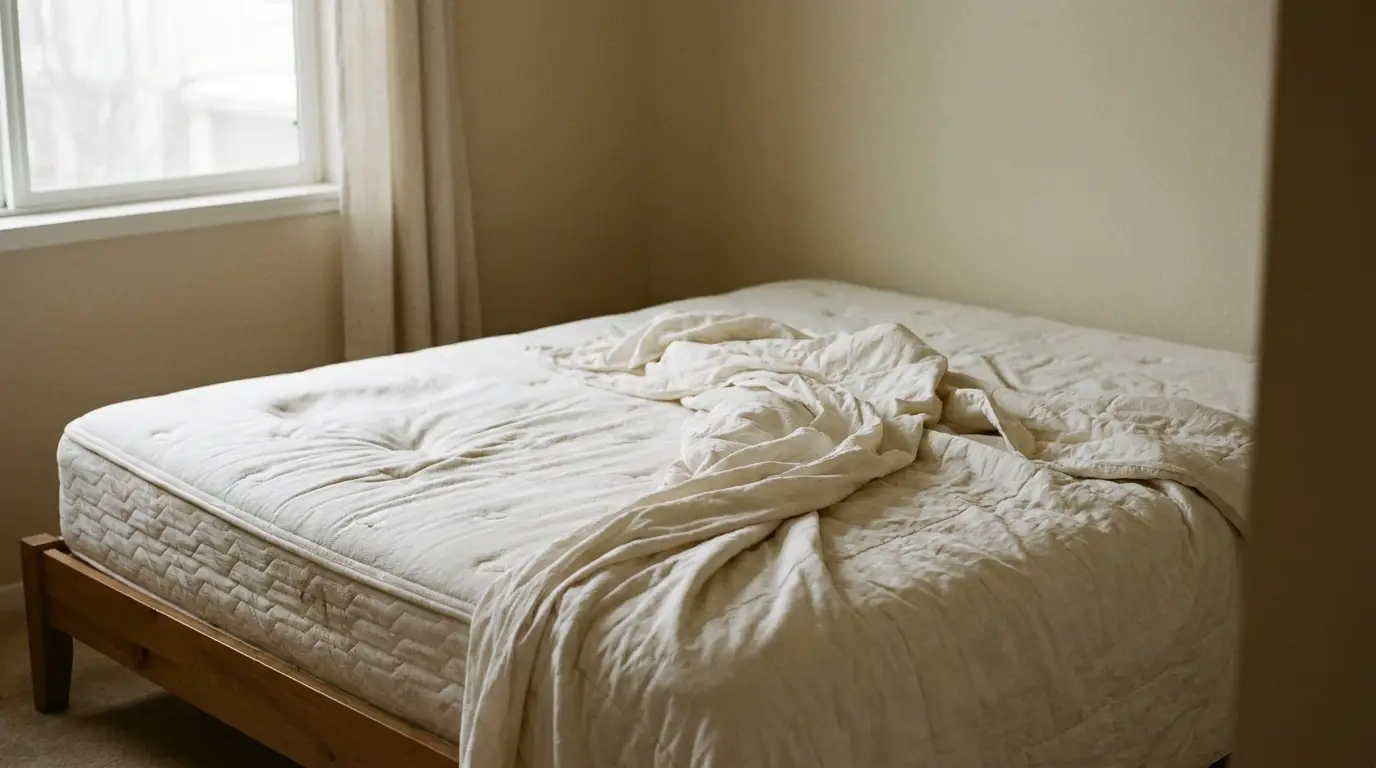
If you’ve got a high-quality mattress that’s nine years old, still feels supportive, and you’re waking up without aches, there’s no urgent reason to replace it on a technicality. The eight-year rule is a guideline, not a law. That said, even if a mattress feels fine to lie on, the hygiene situation does deteriorate over time regardless of how clean you are or how often you wash your bedding. At some point, there’s an argument for replacing it on that basis alone.
Single sleepers also get more mileage out of a mattress than couples, simply because of wear patterns. A mattress shared by two people, particularly if one or both are heavier, will compress and soften noticeably faster than one used by a person sleeping alone. That’s just physics, not a judgment on anyone.
What to Think About Before You Buy
If you’ve decided it’s time, it’s worth spending more than you think you need to. People will happily spend a thousand pounds on a sofa they sit on for a couple of hours an evening, then baulk at the same amount for something they spend a third of their life on. The maths is a bit strange when you look at it like that.
Browsing mattresses online has got much easier in recent years, and most decent retailers now offer trial periods of anywhere from 30 to 100 nights, which makes a real difference when you’re trying to judge whether something works for your sleep rather than just how it feels in a showroom for four minutes.
Think about your sleep position too; side sleepers generally need something softer to cushion hips and shoulders, but back and front sleepers usually need more firmness for spinal support. It’s not one-size-fits-all, and no amount of a good deal makes up for buying the wrong type of mattress for how you actually sleep.
The bottom line is that most people leave it too long. If you’re regularly waking up tired or sore, the mattress is usually the first thing worth looking at, not the last.