Creating a bedroom that feels like a personal sanctuary often starts with the small details that set a specific mood. Medieval accents offer a unique way to ground your space with historical charm and architectural interest while maintaining a sense of cozy security.
By incorporating elements such as wrought-iron textures or heavy woven fabrics, you can create a grounded atmosphere that helps your mind transition away from modern stress. These striking design choices do more than just look good because they help build a distinct environment where you can truly disconnect and feel at peace.
Take a look at these three simple ways to bring a touch of the past into your modern bedroom for a more characterful and comforting retreat.
Why Medieval Décor Resonates Beyond Trends
Medieval-inspired décor has a staying power that mass-market trends simply cannot replicate. Rather than relying on nostalgia, genuine pieces are defined by forged metals, aged wood, heraldic motifs, and natural leather.
These materials carry an inherent physical and emotional weight that sets them apart from synthetic imitations. You can truly feel the difference between authentic iron and a resin substitute, and this choice of materiality significantly impacts the daily atmosphere of a home.
By utilizing biophilic design principles, these organic textures help merge the outdoors with indoor living areas. This approach goes beyond merely adding a plant to a corner; it focuses on creating a vibrant, natural environment that encourages focus and relaxation. When a room is furnished with these honest materials, it engages the senses in a balanced way without becoming overwhelming.
Ultimately, historical craftsmanship connects a living space to a broader human timeline. It suggests that a room was thoughtfully assembled over time rather than purchased en masse. This collected quality is highly coveted in interior design, and authentic medieval accents achieve it with unique effectiveness.
1. Medieval Décor Fits Into Modern Homes
A common hesitation regarding historical accents is whether they will look out of place in a modern home. When old and new pieces share a material language, such as forged iron or reclaimed wood, they coexist beautifully. Vintage industrial furniture often serves as the perfect bridge between these eras.
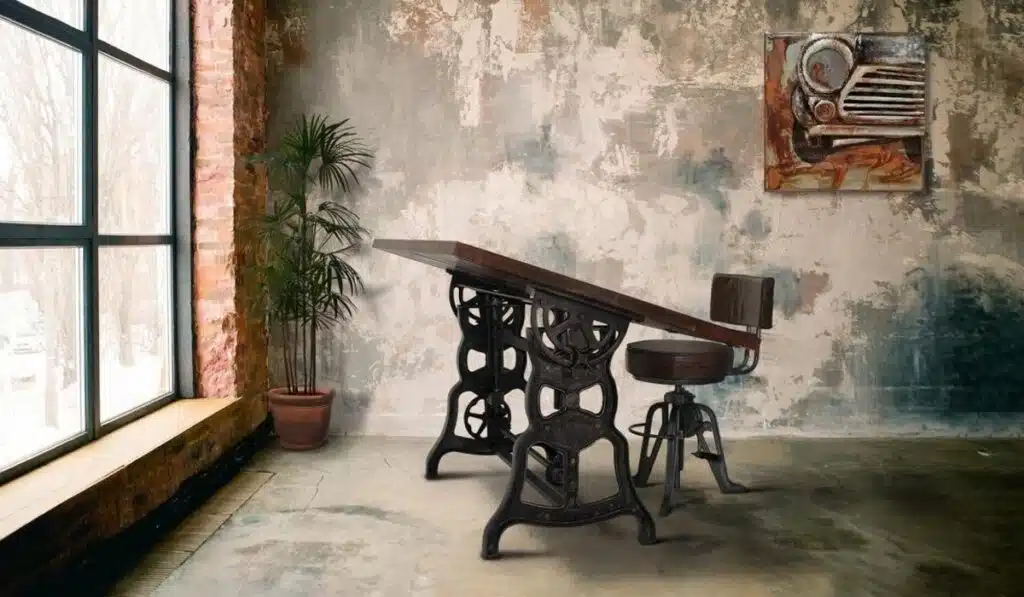
A piece like Knox Deco’s industrial drafting table functions as a grounding work surface that prevents a room from feeling purely decorative. These tables pair reclaimed hardwood tops with heavy-duty cast iron or steel bases, often featuring authentic mechanical hand-crank mechanisms.
In a room anchored by knight armor, an industrial table gives the space a deliberate, analog purpose, encouraging quiet activities. The aesthetic alignment between medieval and industrial pieces is rooted in shared characteristics:
- Heavy cast iron bases echo the forged steel of historic armor.
- Reclaimed hardwood carries the visual variation of aged timber.
- Both early industrial manufacturing and medieval metalcraft valued surfaces that developed character over time.
2. Statement Pieces That Define Medieval Interiors
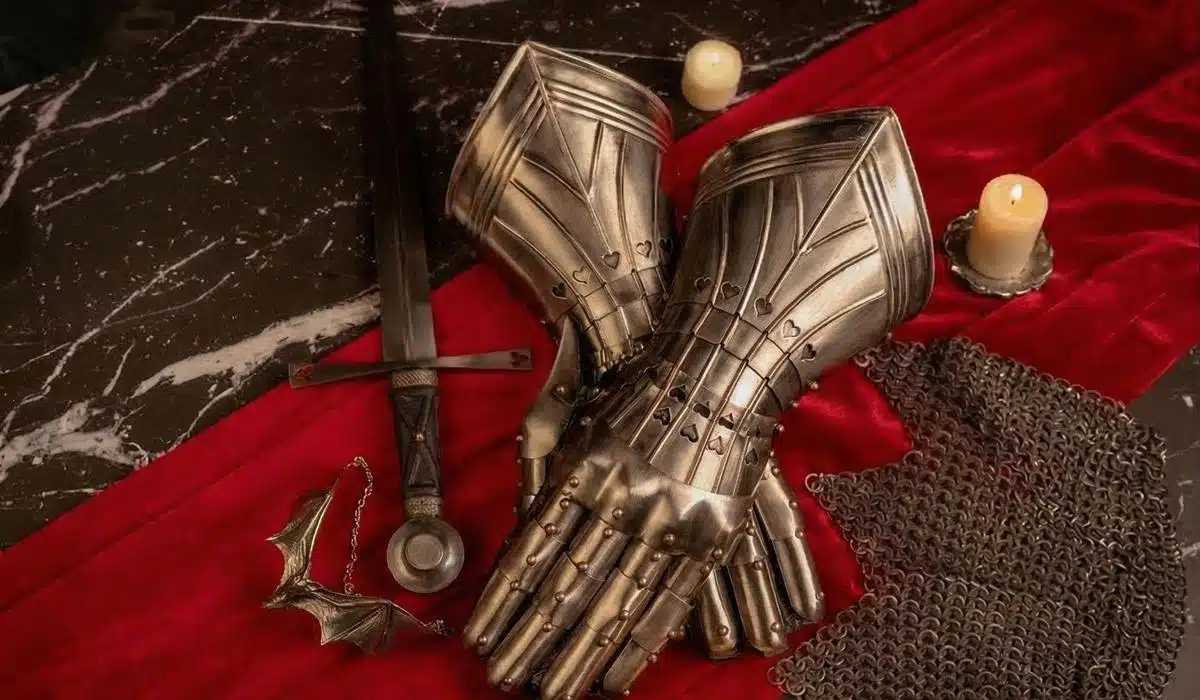
Photo from Medieval Collectibles
Every room with real character has an anchor piece, a single high-character item that sets the tonal register for everything around it. It is the most intentional object in the space, quietly organizing how someone reads the rest of the room.
For a study, reading corner, or living room alcove, there is no more effective anchor than a suit of armor. Knight armor is a masterwork of historical metalcraft, demonstrating what skilled smiths achieved through hand-forged steel and articulated plates.
Displayed in a home, it commands vertical space and catches light dynamically across the day. For authentic integration, sourcing historically accurate items like Medieval Collectibles’ knight armor provides the detail required to separate a true interior design statement piece from a theatrical prop.
Effective placement dictates how the armor reads in the room:
- Against a neutral or dark-toned wall for high visual contrast.
- In a corner with a clear sightline to keep the center open.
- With lower-profile furniture nearby to maintain a clear focal point.
- Grounded with natural textiles to soften the metal and prevent a museum-like feel.
3. Choosing the Best Medieval Items for Your Space
Once anchor pieces are established, the next step is building a curated vignette or history corner. This involves grouping three to five pieces that feel like they belong together without announcing a rigid theme. It rewards attention without demanding explanation.
An example composition for a reading room might include an armor anchor positioned in the corner. You can place a functional industrial table within its sightline, a single framed antique map, and an antique-style adjustable arm lamp. Two or three small details, such as a decorative shield or carved wooden box, complete the arrangement.
When styling these spaces, certain principles maintain cohesion:
- Limit the room to three tones, such as deep forest, warm wood brown, and aged iron grey.
- Layer warm, directional light to enhance metal finishes and wood grain.
- Combine metal, reclaimed wood, natural fibers, and aged leather to prevent the room from feeling flat.
- Use one large anchor piece, two mid-sized accents, and a few small details.
- Resist filling every surface, as a slightly underfurnished room feels much more intentional.
Maintaining Balance In Themed Interiors
One or two powerful pieces are highly effective, but an abundance of medieval references can quickly tip a space. A room can easily go from curated to themed if not carefully managed. Medieval accents should anchor a room, not narrate it entirely.
The rest of the room can remain clean and neutral, feeling richer for what the historical pieces bring. To maintain balance, let walls stay largely clear around a statement piece so it has visual breathing room. Match metal tones across pieces where possible, as mixing iron with bright chrome breaks continuity.
Utilize rugs and soft textiles to keep the space from feeling cold. You can also rotate smaller accent pieces seasonally while keeping the anchors fixed.
The Bottom Line
A space that reflects personal interests and a preference for durable craftsmanship is a foundation for daily well-being. Environments that feel personal and grounded support calmer rhythms, inviting occupants to settle, think, and recharge.
This is restfulness in its most practical, lived-in form. Choosing historical accents and vintage industrial pieces bypasses the trend cycle entirely.
These items draw from the enduring human instinct to live among things made with real care and real materials. A room anchored by genuine metalwork and tactile wood grain is a personal space with lasting presence. It possesses enough history to feel truly inhabited and quietly extraordinary.