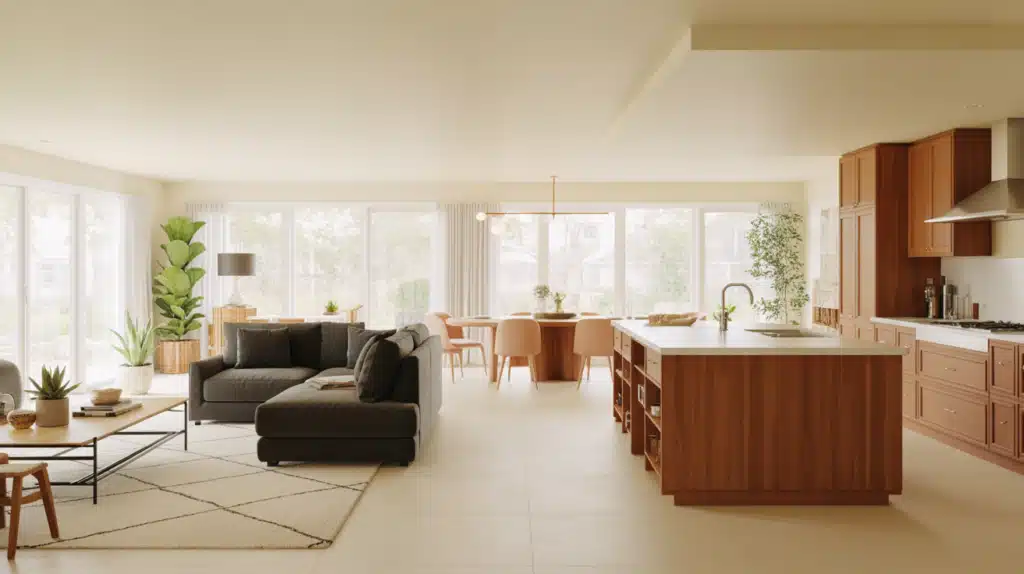
I used to think open spaces would automatically feel easy and comfortable, but that wasn’t always the case. When everything blends together, it can be hard to know where one area ends and another begins.
Open Floor Plan Ideas often look simple online, yet real homes come with noise, clutter, and awkward layouts. You may notice walkways cutting through seating or furniture that never quite feels right.
That’s why planning matters more than decoration here. When the layout works, daily life feels smoother and calmer.
I’ll walk you through practical ways to organize open spaces so they feel clear and usable, with Open Floor Plan Ideas that fit how you actually live and move through your home.
What to Know Before Using Open Floor Plan Ideas
Before you use any open floor plan ideas, it helps to understand how these spaces work. Open concept floor plans remove walls, which changes how sound, light, and furniture placement affect daily comfort.
- Open layouts remove walls, so furniture must define each area clearly.
- Sound travels easily, making noise control more important in daily life.
- Clutter becomes visible quickly because there are no hidden rooms.
- Furniture size affects balance more in wide, shared spaces.
- Lighting choices impact every zone, not just one room.
- Clear flow planning prevents walkways from cutting through living areas.
Keeping these basics in mind helps you avoid frustration later. When layout, storage, and flow are planned early, open floor plan ideas feel easier to use and far more comfortable for everyday living.
Open Floor Plan Ideas
This section shares practical open floor plan ideas that focus on layout, flow, and everyday use. Each idea helps you organize open spaces so they feel clear, balanced, and comfortable.
1. Plan Layout Before Buying Furniture
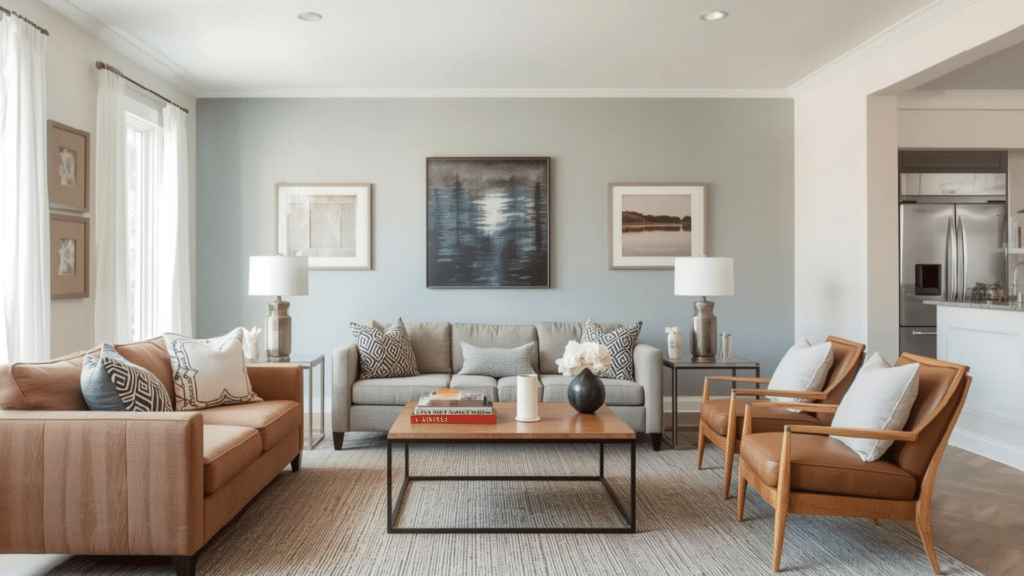
Before you buy anything, take time to plan how each area will function. Measure the full space and map where the living, dining, and kitchen zones should sit. This prevents costly mistakes later.
When furniture is bought first, it often ends up forcing awkward layouts that block walkways or crowd key areas. Planning ahead helps you choose pieces that fit the space instead of fighting it. You also avoid buying items that look good alone but fail together.
A simple floor plan sketch, even on paper, gives you a clear direction. This step makes everything else easier, from rug placement to lighting choices, and helps your open floor plan feel intentional rather than thrown together.
2. Create a Clear Walkway Path
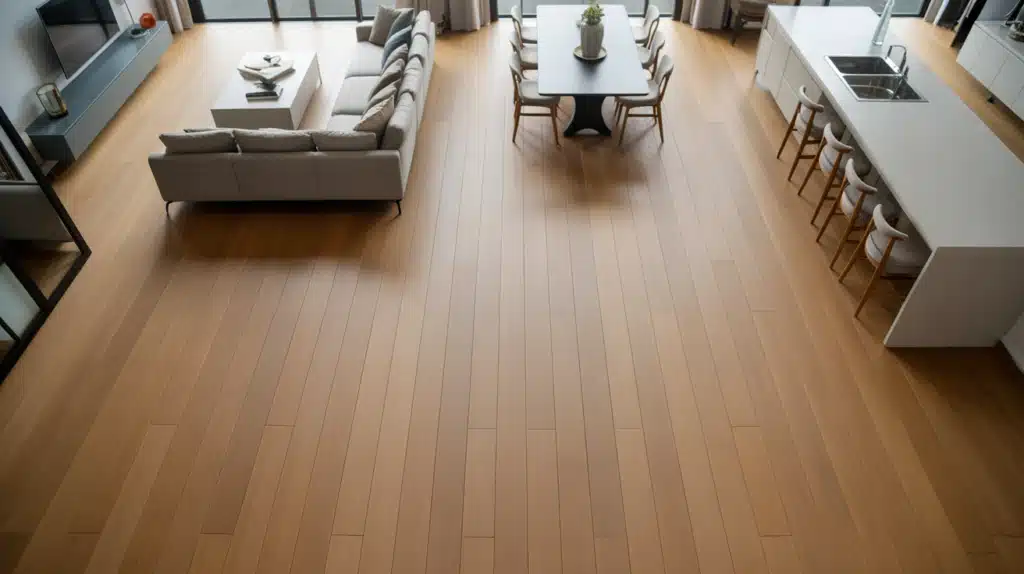
Clear walkways are essential in an open floor plan because people move through multiple zones without walls guiding them.
You should be able to walk from one end of the space to the other without weaving around furniture. Aim for natural paths between doors, seating areas, and the kitchen.
When walkways cut through seating zones, the room feels uncomfortable and messy. Leave enough space behind sofas, chairs, and tables so movement feels easy. This also helps with safety and daily comfort.
Clear paths make the space feel calmer and more organized. They also help each zone feel separate without adding physical barriers, which is key in open layouts.
3. Define Zones With Area Rugs
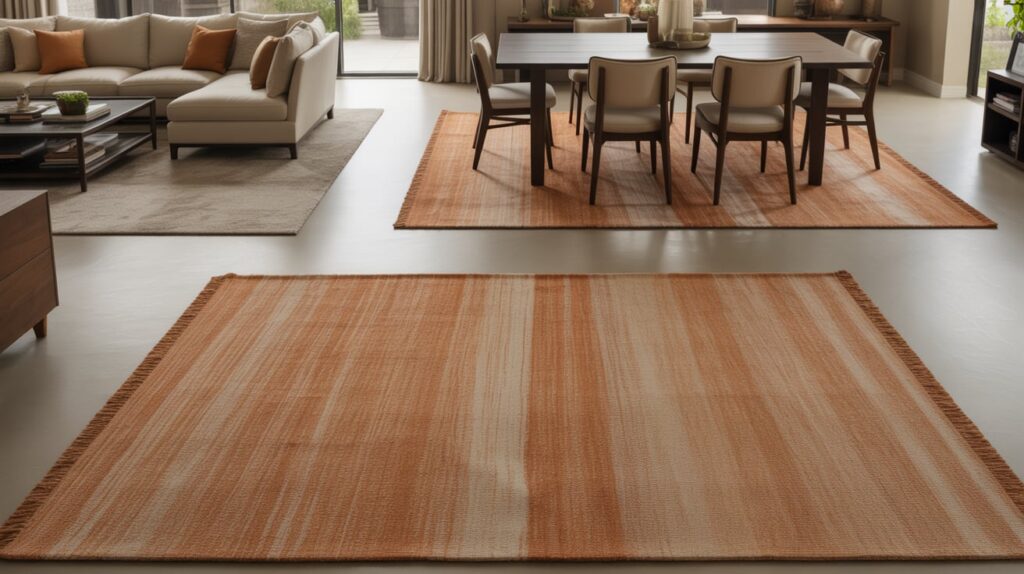
Area rugs are one of the simplest ways to define zones in an open floor plan. A rug visually anchors furniture and tells the eye where one space ends and another begins.
In living areas, the rug should be large enough to fit at least the front legs of seating. Dining rugs should extend past the table so chairs stay on the rug when pulled out. Using rugs this way keeps each zone grounded.
Rugs also add softness, which helps with noise control. Without rugs, open spaces can feel echo-heavy and unfinished. Choosing rugs that relate in color or texture keeps the space connected while still clearly divided.
4. Place Rugs Parallel to Furniture
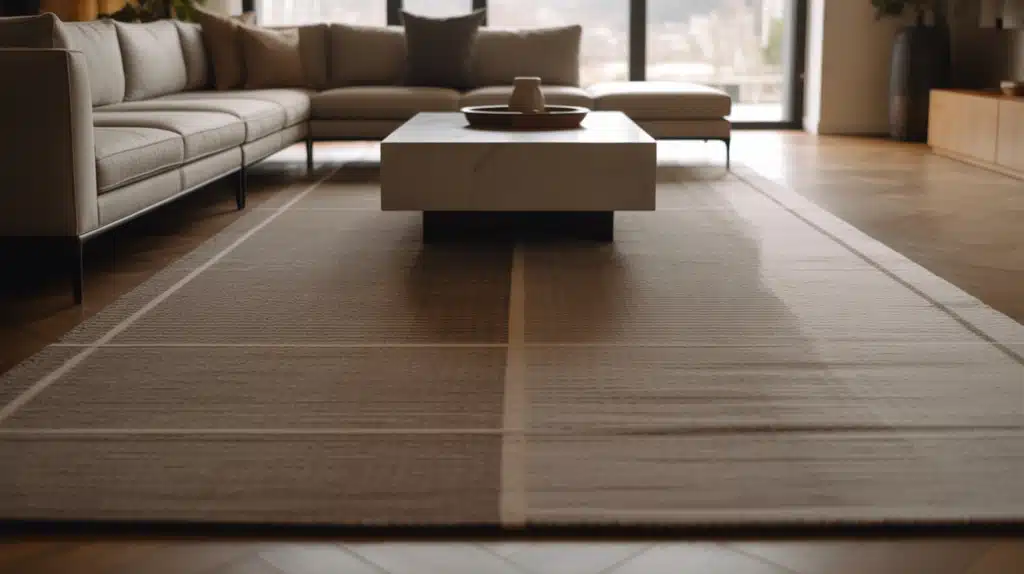
Rug placement matters just as much as rug size. When rugs are angled or placed unevenly, the entire space can feel off balance. Rugs should align with the main furniture pieces in each zone.
For example, a living room rug should sit parallel to the sofa and coffee table. This creates a clean visual structure that helps the space feel organized. In dining areas, the rug should align with the table shape and room layout.
Straight alignment reinforces the boundaries of each zone. This small detail often gets overlooked, but it makes a big difference in how polished and intentional an open floor plan feels.
5. Use a Sofa as a Soft Divider
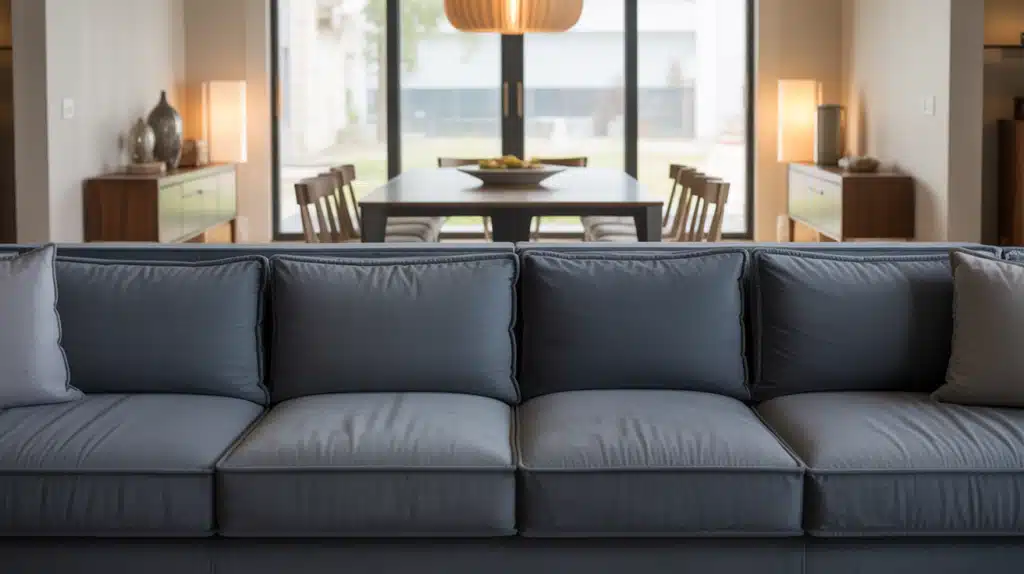
A sofa can act as a natural divider between spaces without blocking light or sightlines.
Placing the back of the sofa toward the dining area or kitchen helps define the living zone clearly. This works especially well in long or wide open rooms. The sofa creates a boundary while keeping the space visually open.
To make this work, the sofa should feel finished from the back. Consider a console table or slim shelf behind it if needed. This setup keeps seating focused inward while allowing the rest of the room to flow around it comfortably.
6. Use a Console Table Behind the Sofa
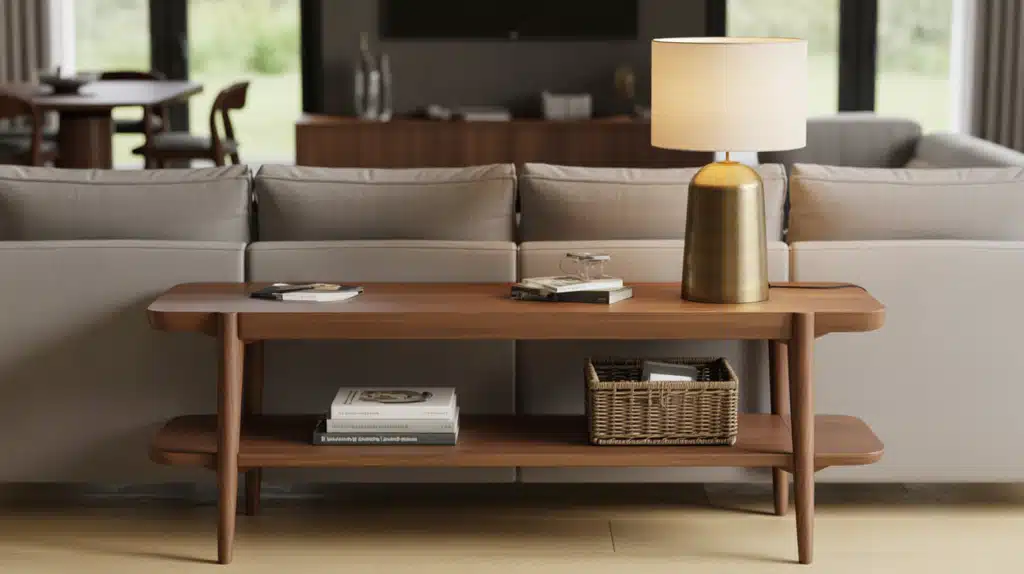
A console table placed behind a sofa adds structure and function to an open floor plan. It helps define the edge of the living area while offering storage or display space.
Consoles are useful for lamps, books, baskets, or everyday items that need a home. They also help the sofa feel anchored, especially when it floats in the middle of a room.
Choose a console that matches the scale of the sofa so it does not feel bulky. This setup improves organization and adds a visual pause between zones without closing off the space.
7. Use Open Shelving as a Divider
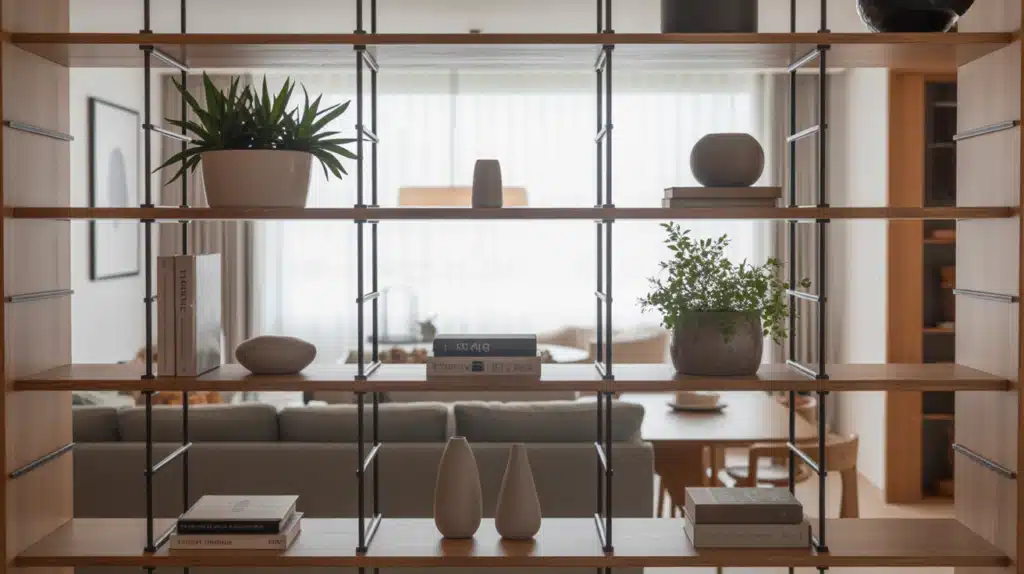
Open shelving works well when you need separation without losing light or airflow. Shelves divide space while still allowing you to see through them. This keeps the open feel intact.
Shelving can hold books, plants, or decor that connect both zones visually. It also adds much-needed storage in open layouts. The key is not to overload shelves, which can make the space feel cluttered.
Keep items simple and spaced out. Open shelving is handy between living and dining areas or near entry zones where a solid wall would feel too heavy.
8. Add a Kitchen Island for Separation
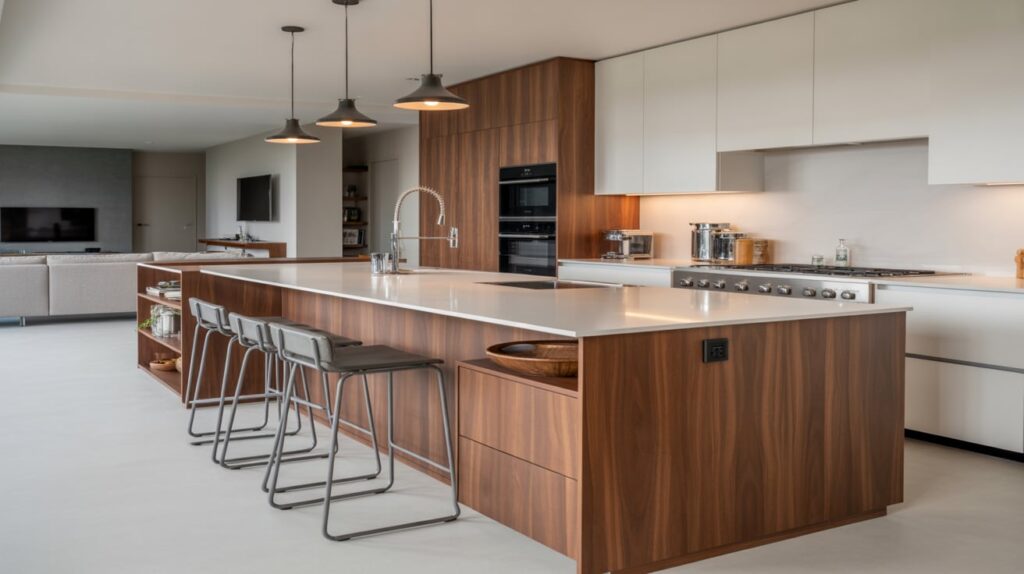
A kitchen island naturally separates the kitchen from nearby living or dining areas. It creates a clear boundary while still keeping the space connected.
Islands also add counter space, storage, and seating, which makes them highly functional. In open layouts, the island often becomes the visual center of the home. Make sure there is enough clearance around it for walking and working comfortably.
An island that is too large can block flow, while one that is too small may feel ineffective. When sized correctly, an island organizes the entire space.
9. Add a Peninsula Instead of an Island
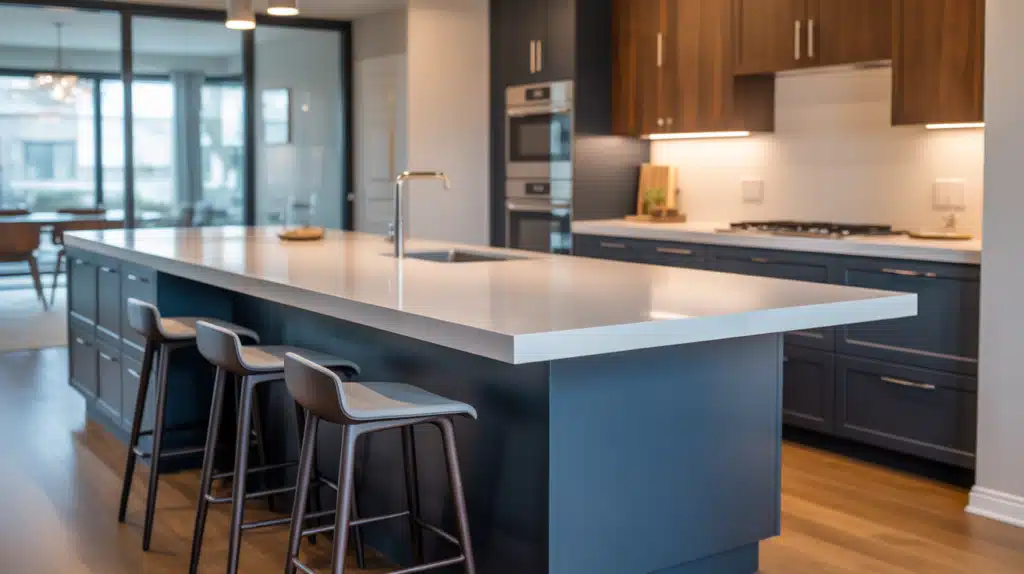
A peninsula works well when there is not enough room for a full island. It provides separation while staying connected to existing counters or walls.
Peninsulas are great for smaller open floor plans where space is limited. They still offer seating, prep space, and storage without interrupting flow.
Because one side is attached, they often feel more structured than islands. This can help open layouts feel more controlled.
A peninsula also helps guide traffic around the kitchen instead of through it, which improves daily use and comfort.
10. Keep Sightlines Clear
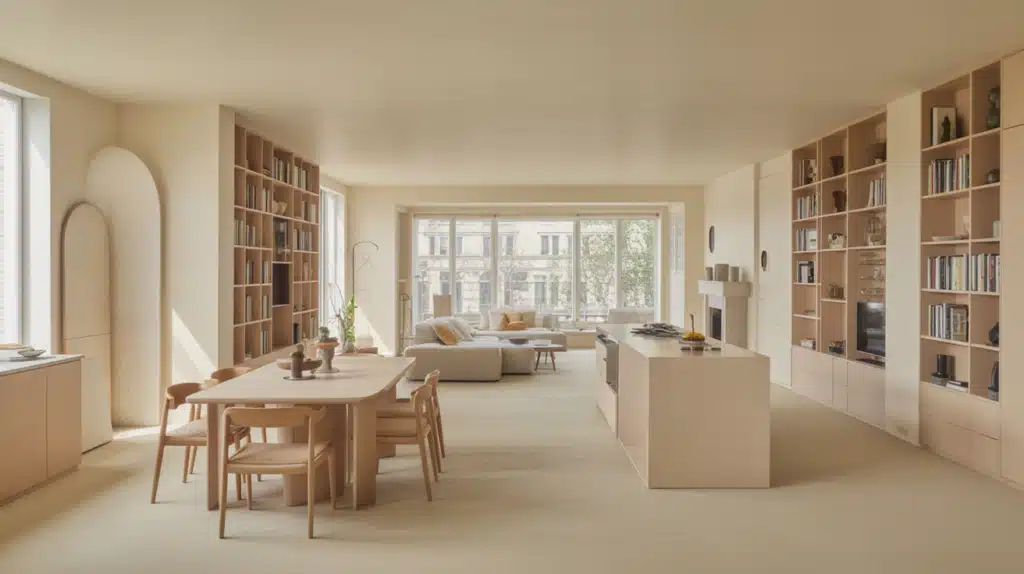
Clear sightlines help open floor plans feel calm and spacious. You should be able to see across the space without tall furniture blocking views. Avoid placing high cabinets, bookcases, or bulky pieces in the middle of the room.
Keep taller items closer to walls when possible. This allows light to travel freely and keeps the space feeling open.
Clear sightlines also help different zones feel connected instead of chopped up. This is especially important in homes where the kitchen, living, and dining areas share one large space.
11. Add a Dining Table as a Center Anchor
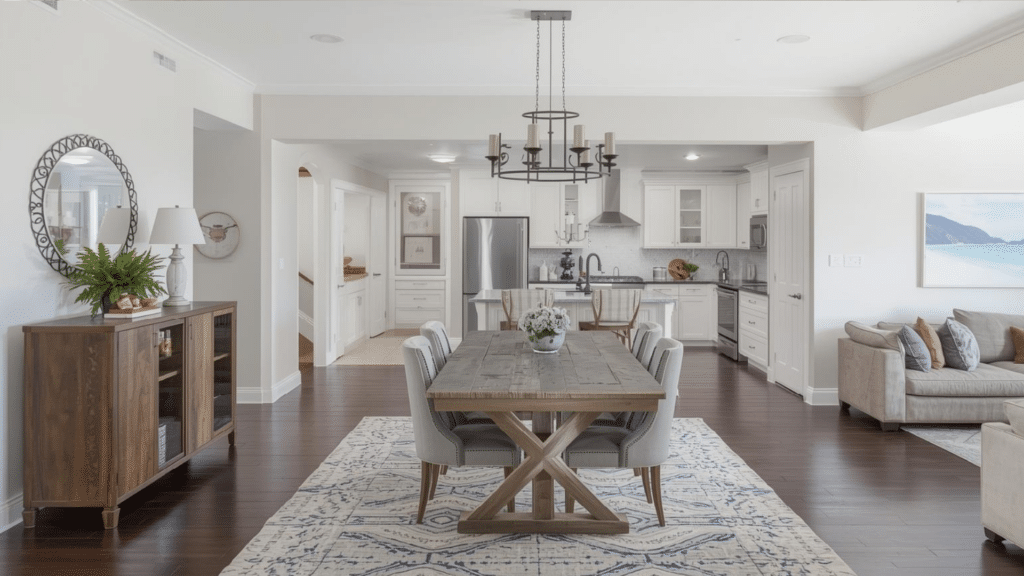
A dining table can act as a strong visual and functional anchor in an open floor plan.
Placing it between the kitchen and living area helps organize the space naturally. The table signals where dining happens and prevents the room from feeling like one large, undefined area.
It also creates a gathering point that connects surrounding zones. When positioned well, the dining table improves flow instead of interrupting it. Make sure there is enough space around the table for chairs and walkways.
Choosing the right size matters, since a table that is too small feels lost, while one that is too large can crowd nearby areas. Used correctly, the dining table grounds the entire layout and adds purpose to the center of the space.
12. Use a Round Dining Table
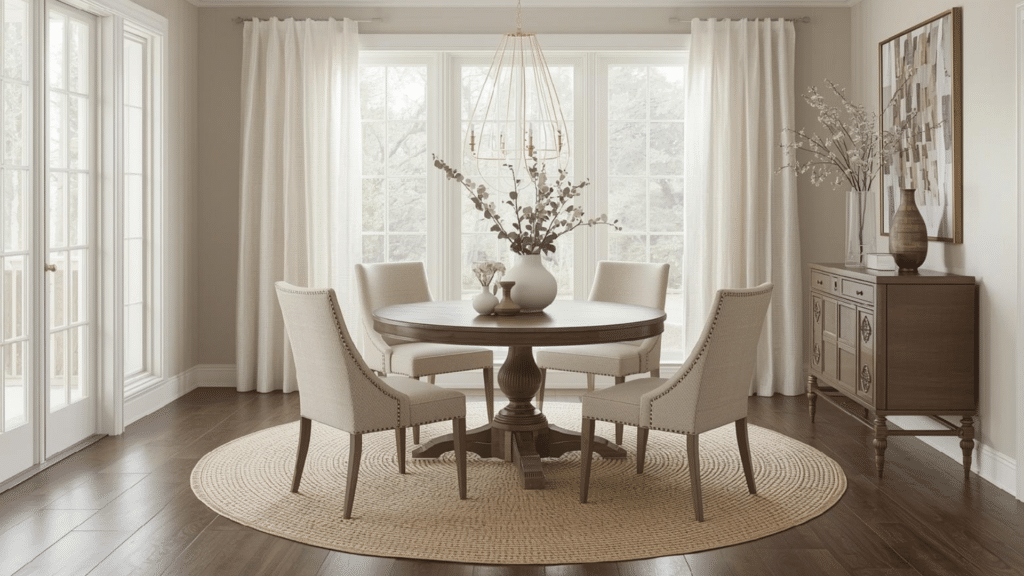
A round dining table works especially well in open floor plans because it allows smoother movement around it.
Without sharp corners, people can walk past more easily, which helps maintain good flow. This shape also feels more relaxed and social, making it ideal for shared spaces.
Round tables soften the look of an open layout that may already have many straight lines from cabinets and furniture. They work well in smaller open plans or tight transition areas.
When choosing a round table, make sure it is centered properly within the dining zone. Pairing it with a round rug can further define the area and help it feel intentional rather than floating.
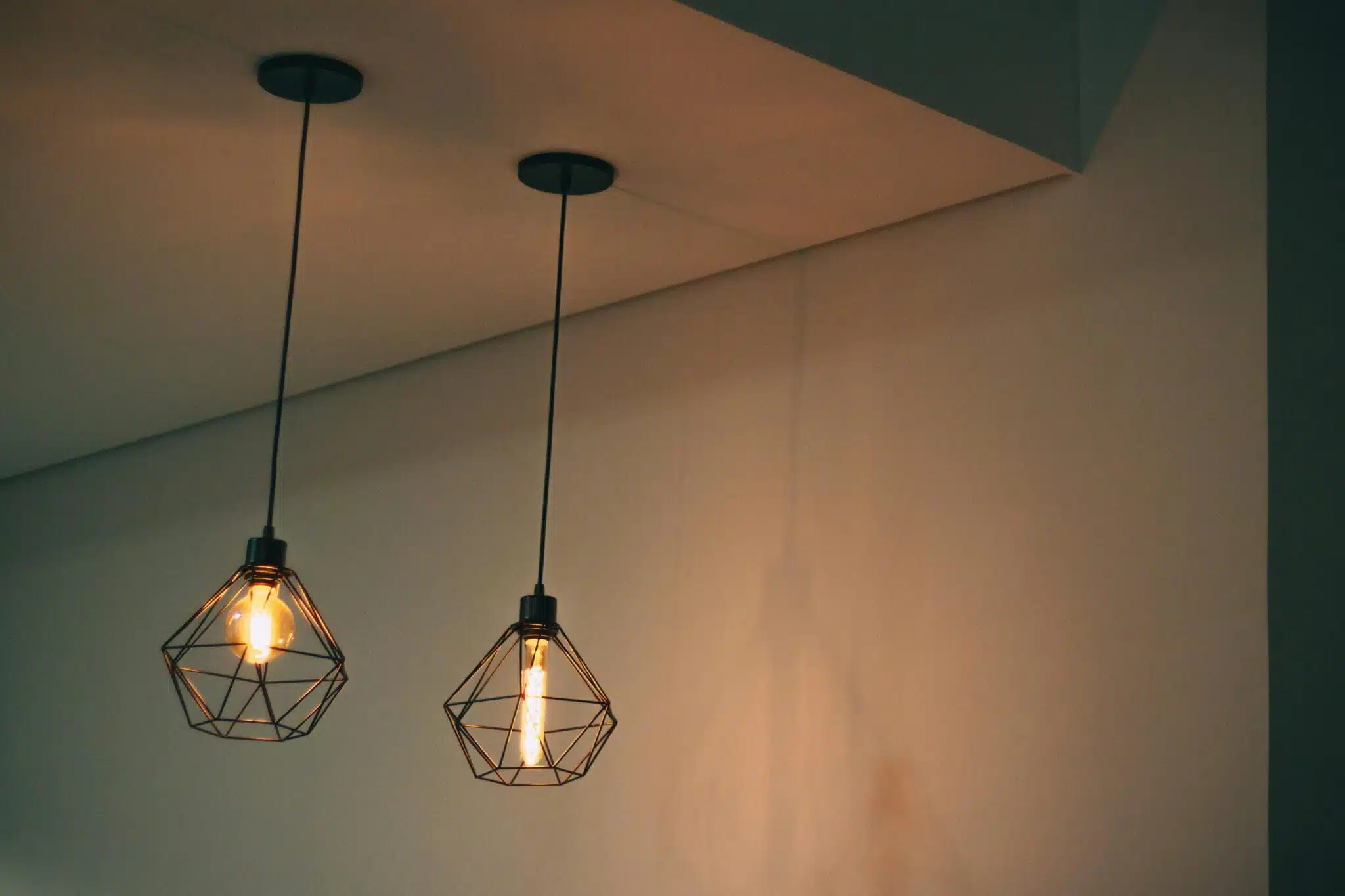
13. Add a Statement Light Over Dining
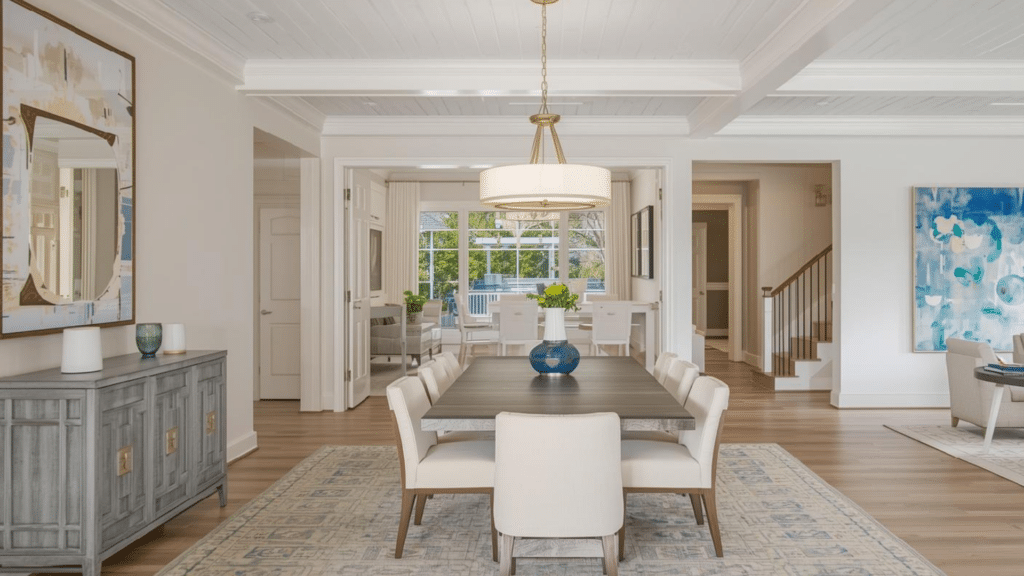
A statement light fixture above the dining table helps visually separate the dining area from surrounding spaces. It draws the eye downward and marks the dining zone clearly.
In open floor plans, this is important because ceilings are often shared across multiple areas. A distinct light creates a sense of place without adding walls.
The fixture should be centered over the table and scaled to fit the space. If it is too small, it gets lost.
If it is too large, it can overwhelm nearby zones. This single choice can make the dining area feel finished and purposeful, even in a wide open room.
14. Keep Flooring Consistent
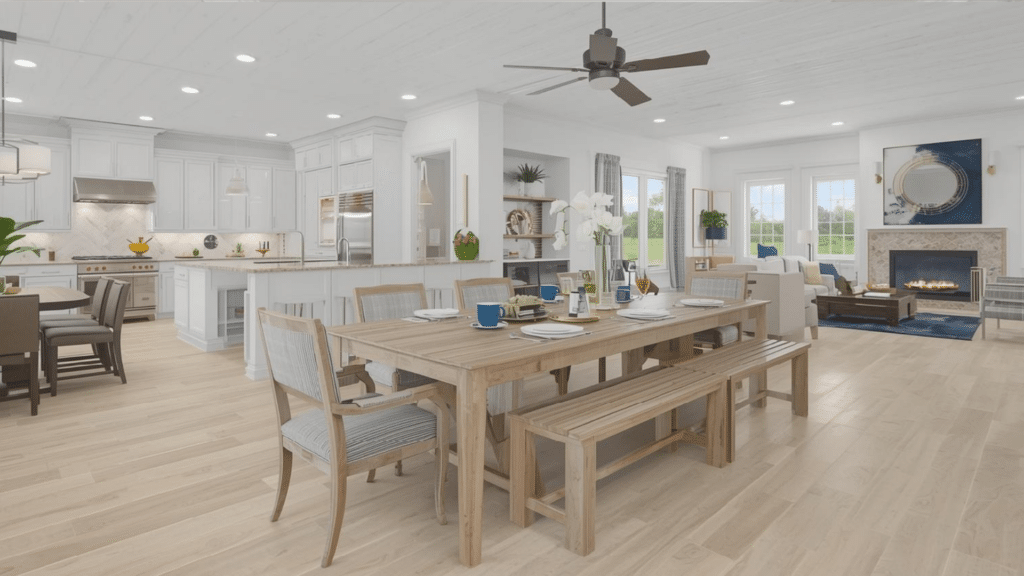
Using the same flooring throughout an open floor plan helps the space feel connected and calm. When flooring changes too often, the layout can feel choppy and smaller than it is.
Consistent flooring allows furniture, rugs, and lighting to define zones instead. It also improves visual flow, especially in homes where the kitchen, dining, and living areas share one large space. This approach works well in both small and large homes.
If you want variation, you can use rugs or furniture placement instead of different floor materials. Consistent flooring creates a clean base that supports all other design choices.
15. Change Flooring Only at Key Zones
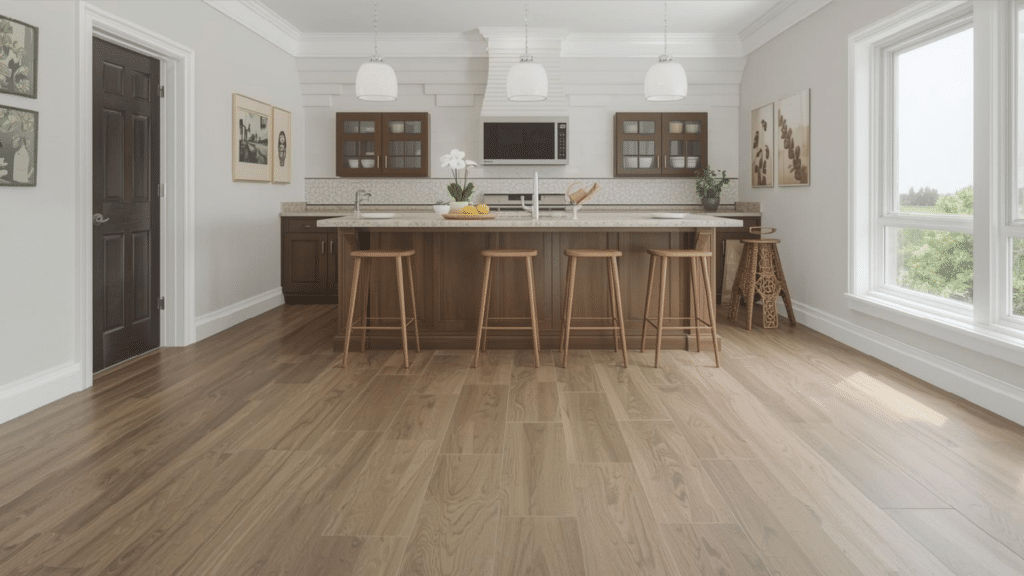
In some layouts, changing flooring at specific zones can be helpful when done carefully. This works best when you need a clear break, such as between a kitchen and living area.
The key is to limit changes to one or two transitions. Too many floor types can make the space feel busy. Changes should feel intentional, not random.
For example, tile in the kitchen and wood in the living area can work if the transition is clean and well placed. Always consider how the change affects flow and sightlines. Flooring shifts should support function, not distract from it.
16. Use Ceiling Beams for Visual Zoning

Ceiling beams are a powerful way to define zones from above without closing off space. They help break up a large ceiling visually and give structure to open layouts.
Beams can mark where one area ends and another begins, such as between living and dining spaces. This works especially well in homes with higher ceilings. Beams also add depth and help the room feel less flat.
Even faux beams can be effective if sized and spaced correctly. The goal is to guide the eye and create natural sections while keeping the open feel intact.
17. Define Zones With Ceiling Paint
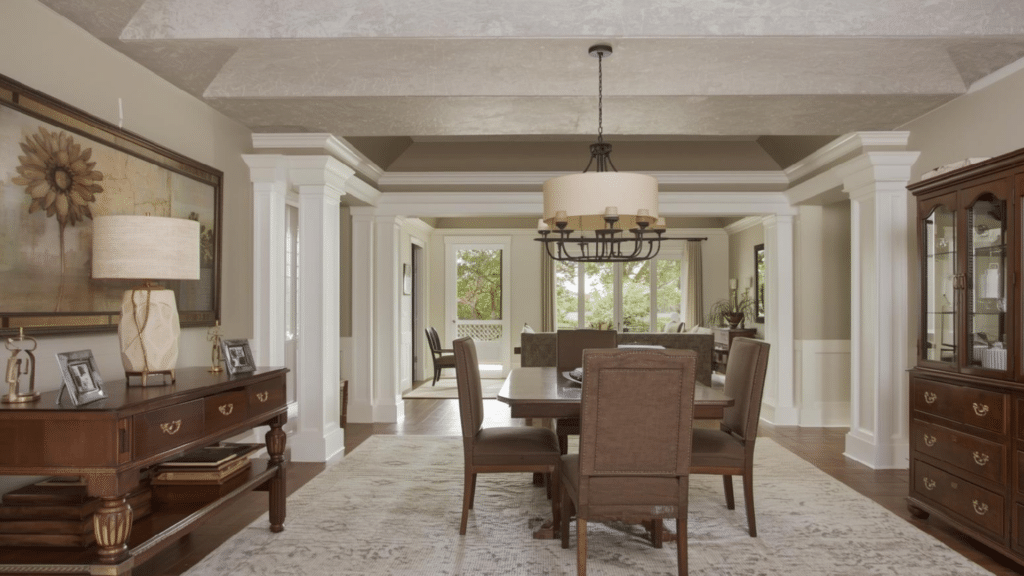
Using ceiling paint to define zones is a subtle but effective technique. Slight color changes or finishes can visually separate areas without affecting walls or floors.
For example, painting the ceiling above the dining area a slightly deeper tone can set it apart. This works best when the change is soft and intentional. Avoid harsh contrasts that draw too much attention.
Ceiling paint helps add dimension and structure to open layouts that feel too plain. It is also a good option when you want separation but cannot make physical changes to the space.
18. Anchor Spaces With Lighting
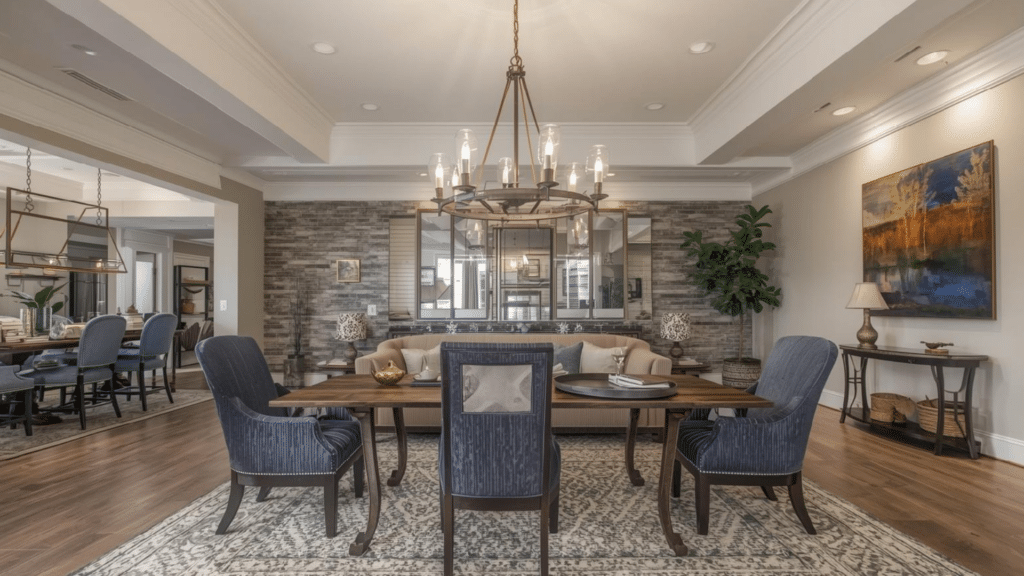
Lighting can anchor each zone in an open floor plan when used intentionally. Each area should have its own main light source, such as a pendant, chandelier, or ceiling fixture. This helps define where one space starts and ends.
Anchoring zones with lighting also improves function by ensuring each area has enough light for its purpose. Without this, open spaces often feel uneven or poorly lit.
The key is balance. Lights should work together rather than compete. When done right, lighting creates structure and makes the open layout easier to understand visually.
19. Layer Lighting Heights
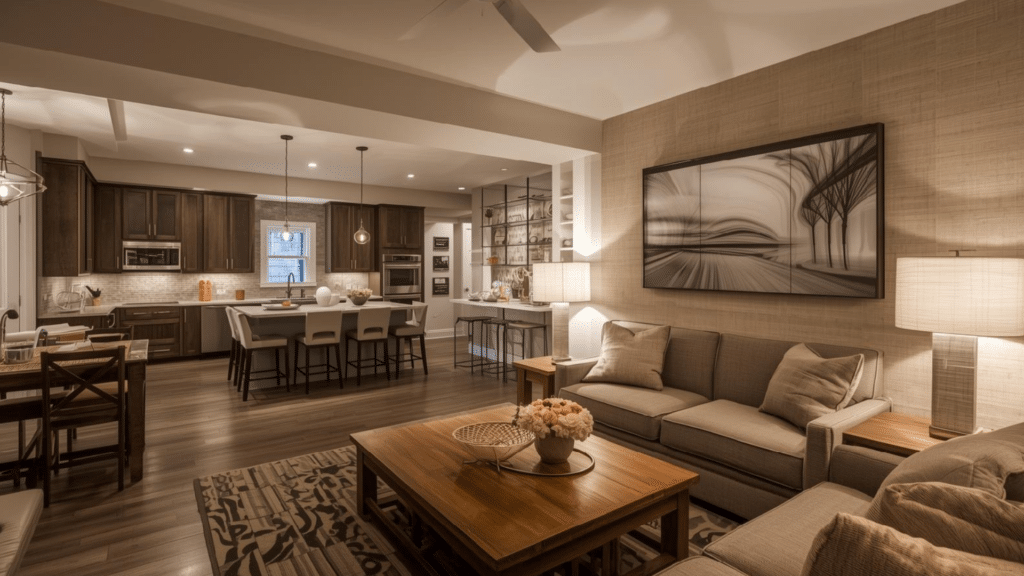
Layered lighting uses fixtures at different heights to add depth and balance. This usually includes ceiling lights, floor lamps, and table lamps. In open floor plans, layering helps avoid flat or harsh lighting.
It also allows you to control the mood in different zones. For example, softer lamps in the living area can coexist with brighter task lighting in the kitchen.
Varying heights also help guide the eye across the space. This makes the layout feel more intentional and comfortable. Layered lighting supports both function and atmosphere in shared spaces.
20. Float Furniture Away From Walls
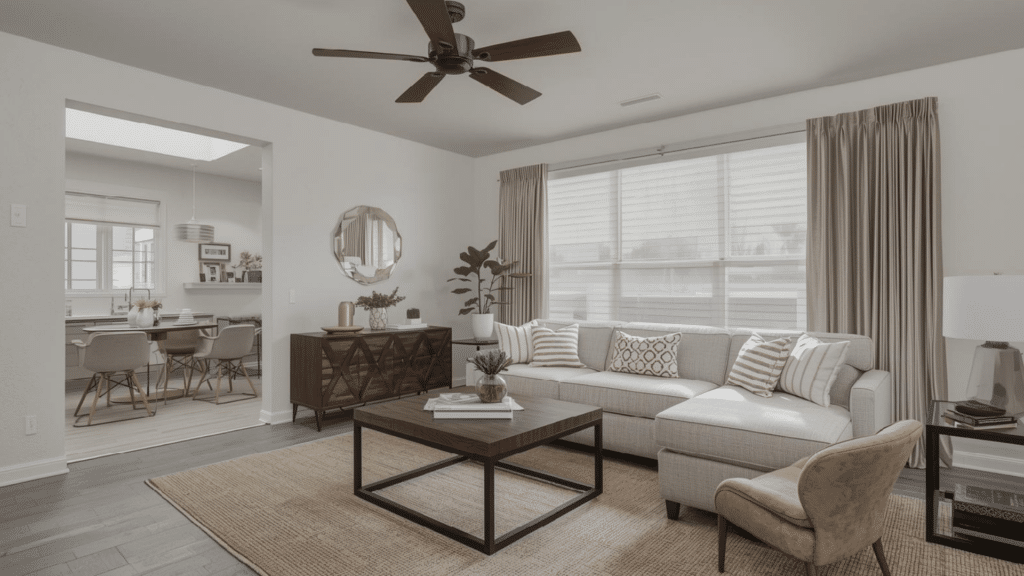
Floating furniture away from walls helps define zones more clearly in open floor plans. When everything is pushed to the edges, the center of the room can feel empty and awkward.
Pulling furniture inward creates natural boundaries and more usable space. For example, a sofa placed away from the wall can define the living area without blocking flow. This approach also makes seating areas feel more inviting.
Floating layouts work especially well in larger open plans. Just be sure to maintain clear walkways around the furniture so movement stays easy and natural.
21. Align Furniture With Architecture
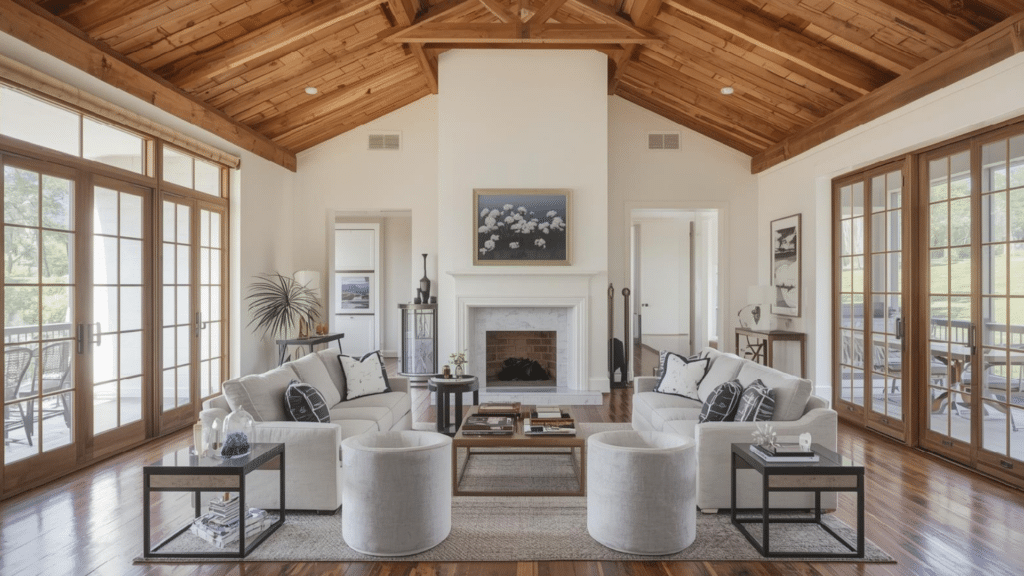
Furniture should work with your home’s natural structure, not against it. Align sofas, tables, and chairs with windows, doors, columns, or ceiling lines whenever possible. This creates a layout that feels intentional and calm.
When furniture ignores architectural cues, the space can feel awkward or forced.
For example, centering seating on a fireplace or lining dining tables with ceiling features helps the room feel grounded. This approach also improves flow, since walkways often follow architectural lines.
Paying attention to architecture makes even simple furniture arrangements feel more polished. It also helps open floor plans feel organized instead of random.
22. Use Large-Scale Furniture Carefully
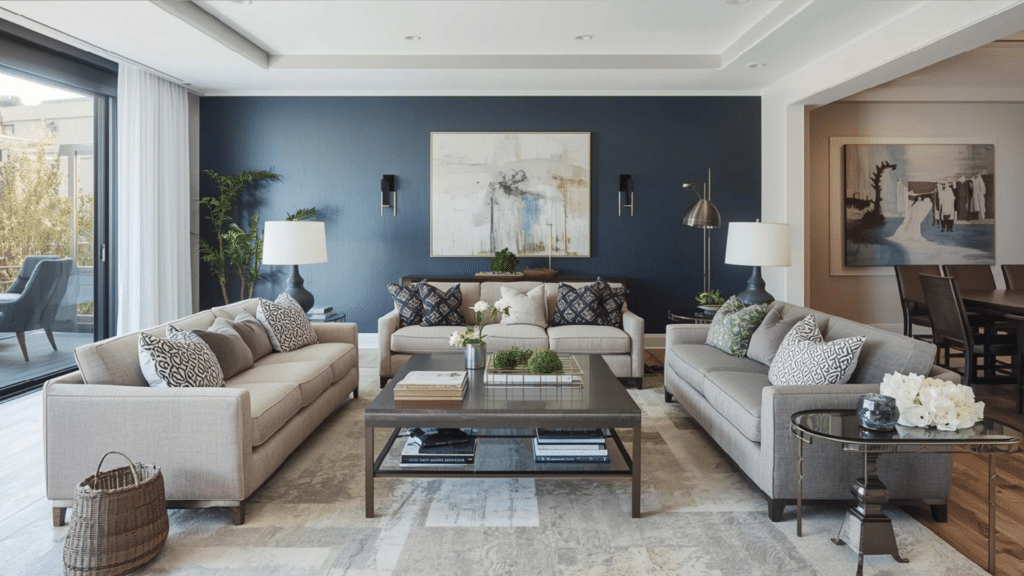
Large furniture can work in open floor plans, but it needs balance. Oversized sofas or tables should anchor one zone, not dominate the entire space. When too many large pieces are used, the layout feels heavy and crowded.
Scale matters more in open spaces because there are no walls to break things up. Choose one or two larger items and keep the rest more streamlined.
Always leave enough space around big pieces for movement. Large furniture should feel grounded, not overwhelming. Used correctly, it adds comfort and presence without sacrificing flow.
23. Use Low Furniture for Openness
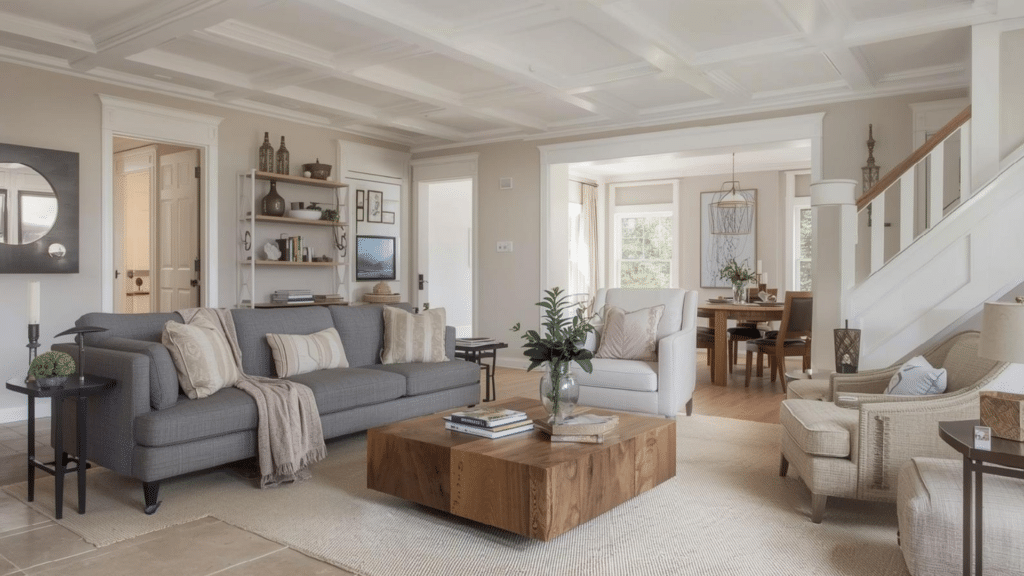
Low-profile furniture helps open floor plans feel airy and connected. Sofas, chairs, and tables that sit lower keep sightlines clear across the room. This allows light to move freely and prevents the space from feeling blocked.
Low furniture works especially well between zones, such as living and dining areas. It defines space without cutting it off visually.
This approach is helpful in homes with lower ceilings, where tall furniture can feel heavy. Low pieces also create a relaxed feel, which suits shared, multi-use spaces well.
24. Choose One Main Color Palette
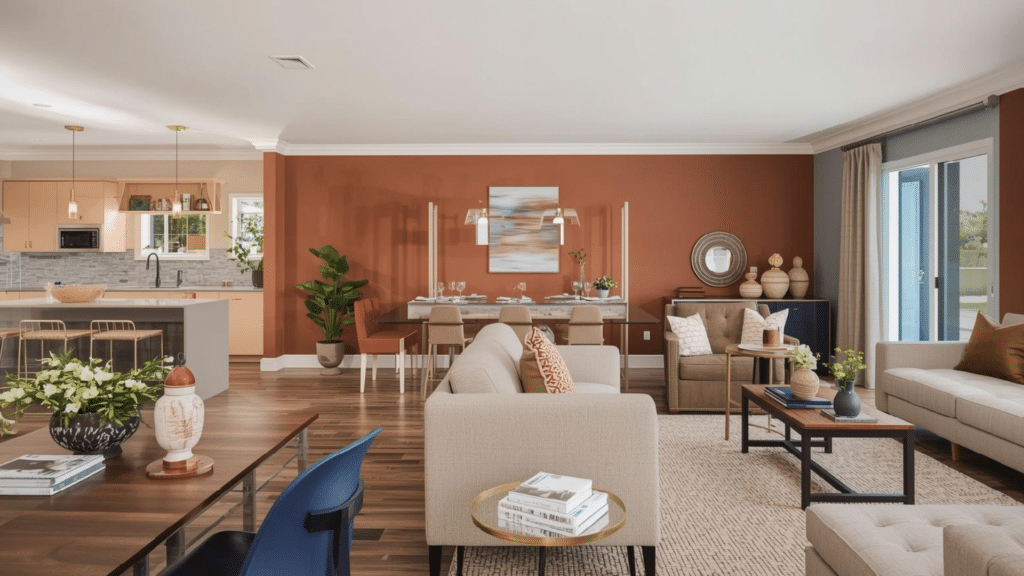
A single color palette helps open floor plans feel cohesive. When too many colors compete, the space can feel busy and disconnected.
Choose a base palette and repeat it across zones in small ways. This does not mean everything must match exactly. Instead, use variations of the same tones to create flow.
Consistent color ties the kitchen, living, and dining areas together visually. This makes the layout easier to understand and more calming to live in. A unified palette also makes future updates simpler.
25. Mix Textures Instead of Colors

Texture adds interest without overwhelming an open floor plan. Instead of adding more colors, layer different materials like wood, fabric, metal, and natural fibers. This keeps the space visually rich while staying balanced.
Texture also helps define zones subtly. For example, a woven rug in the living area and smooth surfaces in the kitchen create contrast without clashing.
Mixing textures works well when you want variety but still need cohesion. It also helps open spaces feel warmer and more inviting.
26. Match Wood Tones Across Spaces
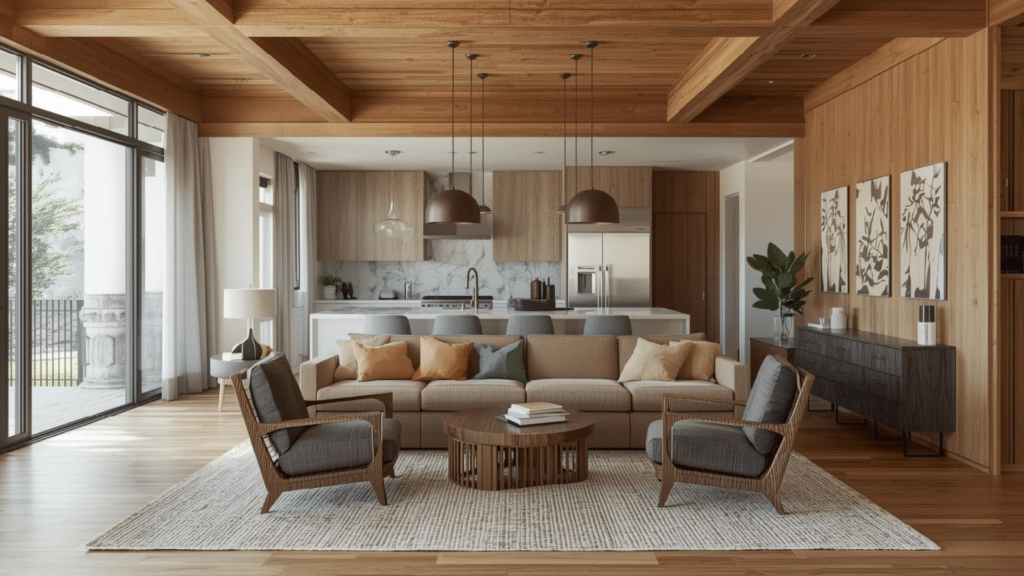
Wood tones play a big role in how connected an open floor plan feels. When wood finishes clash, the space can feel disjointed.
Matching or closely related wood tones across furniture, flooring, and cabinetry helps create harmony. This does not mean everything must be identical. Instead, stay within the same warm or cool family.
Consistent wood tones help the eye move smoothly through the space. This is especially important when multiple zones are visible at once.
27. Use Matching Furniture Styles

Using a consistent furniture style helps open floor plans feel unified. Mixing too many styles can make the space feel chaotic without walls to separate them.
Choose a main style and carry it through each zone. Small variations are fine, but the overall look should feel related. This approach helps the space feel intentional and finished.
Matching styles also make transitions between zones feel smoother. It keeps the focus on layout and function rather than visual noise.
28. Use Built-Ins for Storage
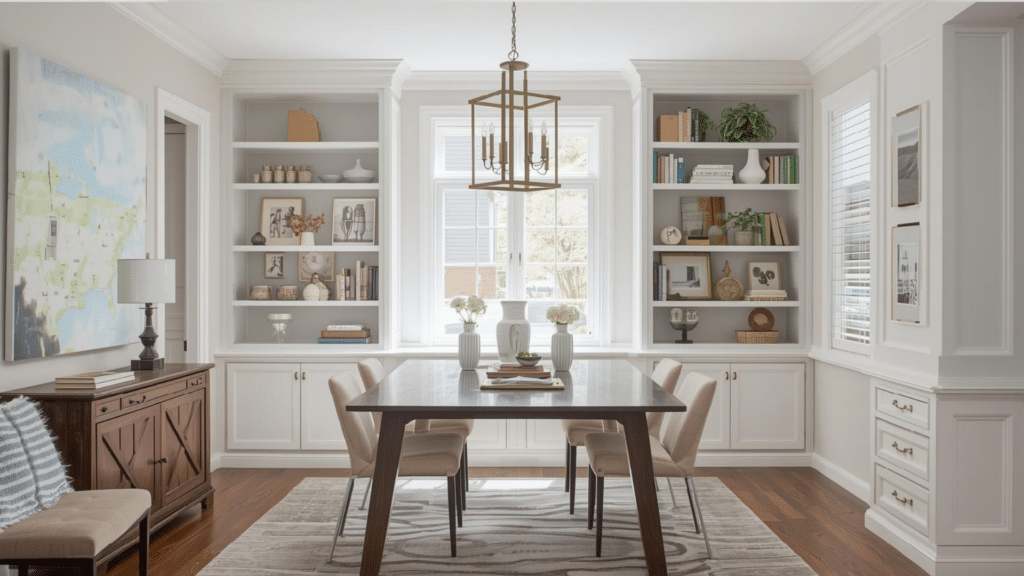
Built-in storage works especially well in open floor plans where clutter is always visible.
Built-ins help keep items organized without adding bulky furniture. They can be used along walls, under stairs, or between zones.
Built-ins also make the space feel more permanent and planned. They reduce the need for extra cabinets or shelving that can crowd the room. When designed well, built-ins blend into the layout and support daily use without drawing attention.
29. Keep Storage Close to Each Zone
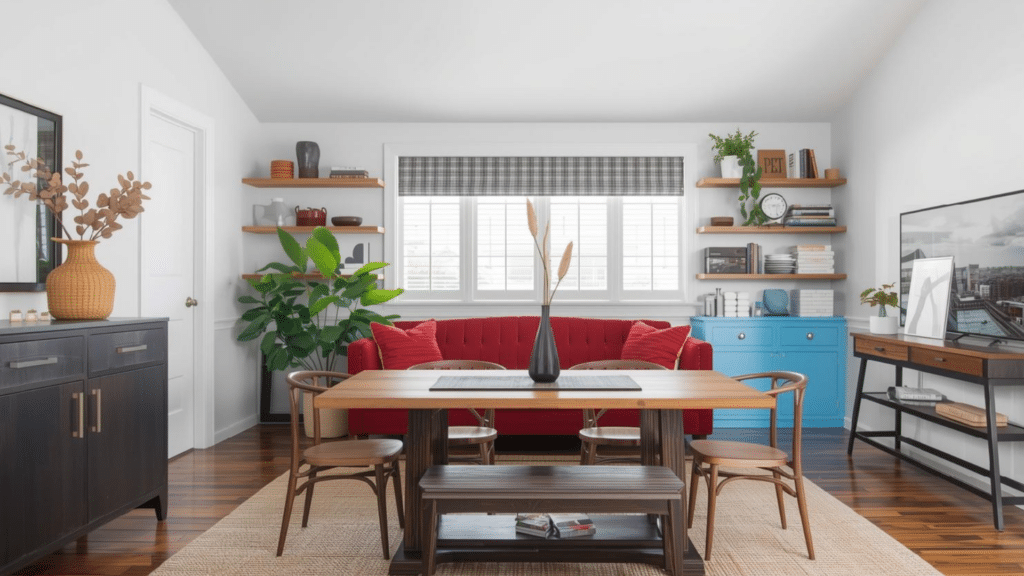
Storage should be placed where items are used most. In open floor plans, this prevents clutter from spreading across zones.
For example, dining storage should sit near the table, and living room storage should stay close to seating. This keeps each area functional and tidy.
When storage is far away, items tend to pile up in visible areas. Zone-based storage supports better habits and keeps the space feeling organized. It also makes daily routines smoother.
30. Create a Seating Cluster
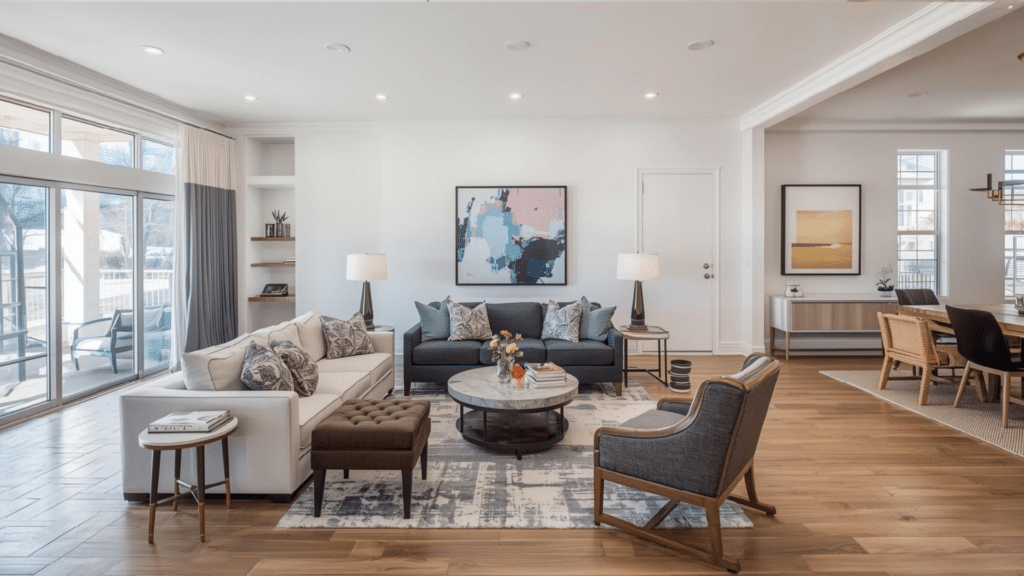
Seating clusters help define living areas within open layouts by giving people a clear place to gather.
Grouping sofas and chairs around a central point, like a coffee table, creates a natural conversation zone. This prevents furniture from feeling scattered or floating in the middle of the room.
Seating clusters also help anchor the living area visually, making it feel intentional and grounded. Pairing the cluster with a rug further strengthens the boundary without blocking movement.
Leave enough space around the cluster for walkways so flow stays comfortable. This setup makes large open spaces feel warmer, more inviting, and easier to use for everyday life.
31. Create a Reading Nook Corner
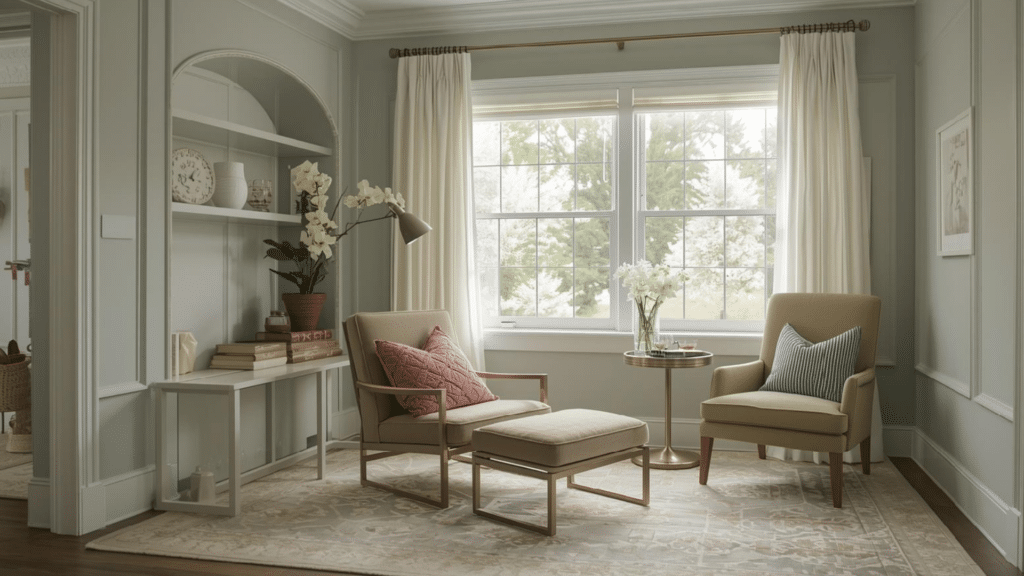
A reading nook adds function and comfort to an open floor plan without closing off the space. It works well in corners, near windows, or in areas that might otherwise go unused.
A comfortable chair, a small table, and a good lamp are usually enough to create a quiet retreat. This small zone gives the room variety and makes the layout feel more personal.
Reading nooks also help break up large spaces into smaller, more approachable areas. Because they do not require walls, they keep the open feel intact while adding purpose and balance to the overall layout.
32. Create a Multi-Use Table Area
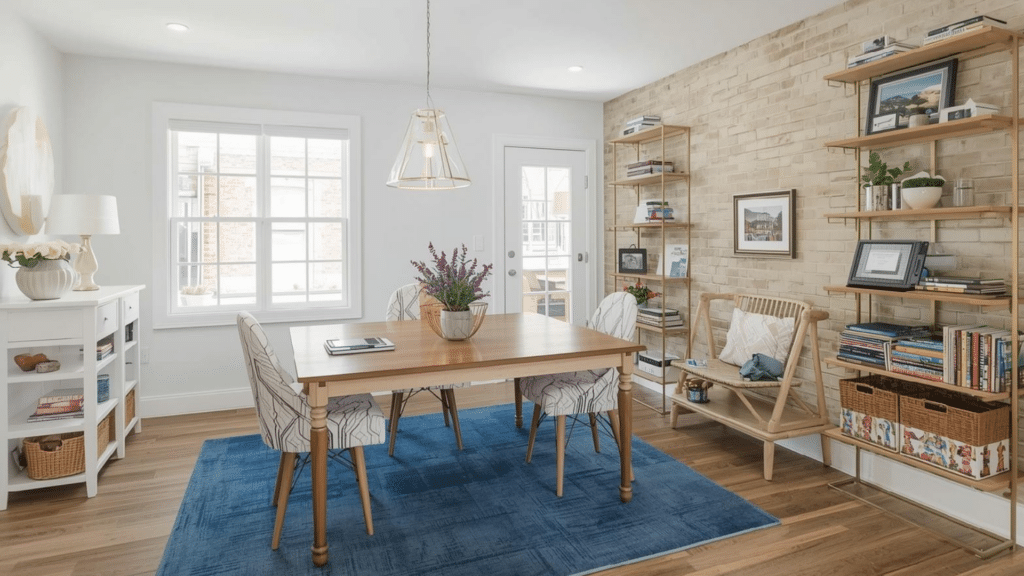
Multi-use table areas are ideal in open floor plans where flexibility is important.
A dining table can double as a workspace, homework station, or hobby surface throughout the day. This makes better use of shared space and reduces the need for separate rooms.
The key is keeping the area organized so it can shift roles easily. Nearby storage for supplies and clutter control is essential.
Good lighting also helps support different tasks. Multi-use tables reflect how people actually live, making open layouts more practical and adaptable to changing daily needs.
33. Add Curtains for Soft Separation
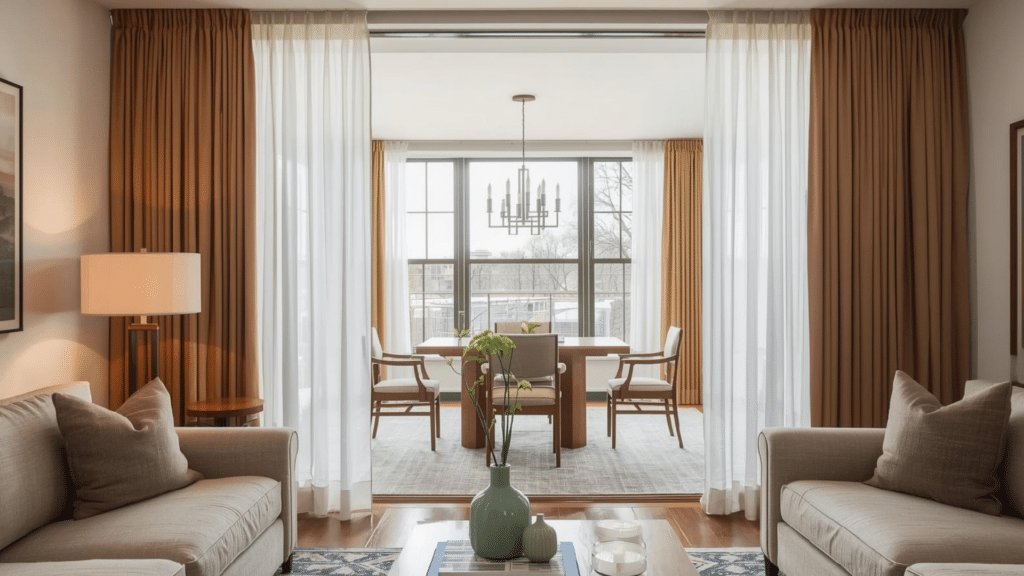
Curtains provide a flexible way to separate areas in an open floor plan without permanent construction. They can be opened to maintain flow or closed to create privacy when needed.
Curtains work well between living and dining areas, sleeping zones, or workspaces. They also help soften sound, which is useful in open layouts. Choosing fabrics that match the room’s colors and textures helps curtains feel intentional rather than temporary.
Sheer fabrics keep light moving through the space, while heavier fabrics offer more privacy. Curtains add softness, movement, and adaptability while preserving the open feel.
34. Use Sliding Panels for Flexibility
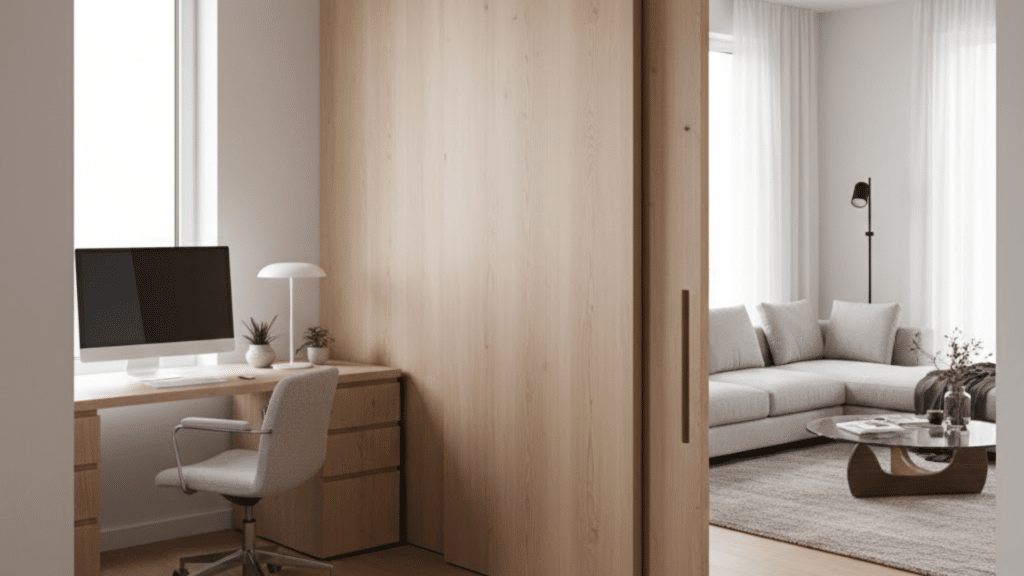
Sliding panels are a smart solution for open floor plans that need occasional separation. They work well for home offices, dining areas, or guest spaces that do not require permanent walls.
Panels can block noise or visual distractions when closed, then slide away to restore openness. This flexibility makes them useful for homes with changing needs.
Sliding panels also help maintain clean lines and visual order. When not in use, they blend into the design instead of taking up space. This option allows open layouts to adapt easily without sacrificing flow or light.
35. Add a Partial Wall or Pony Wall
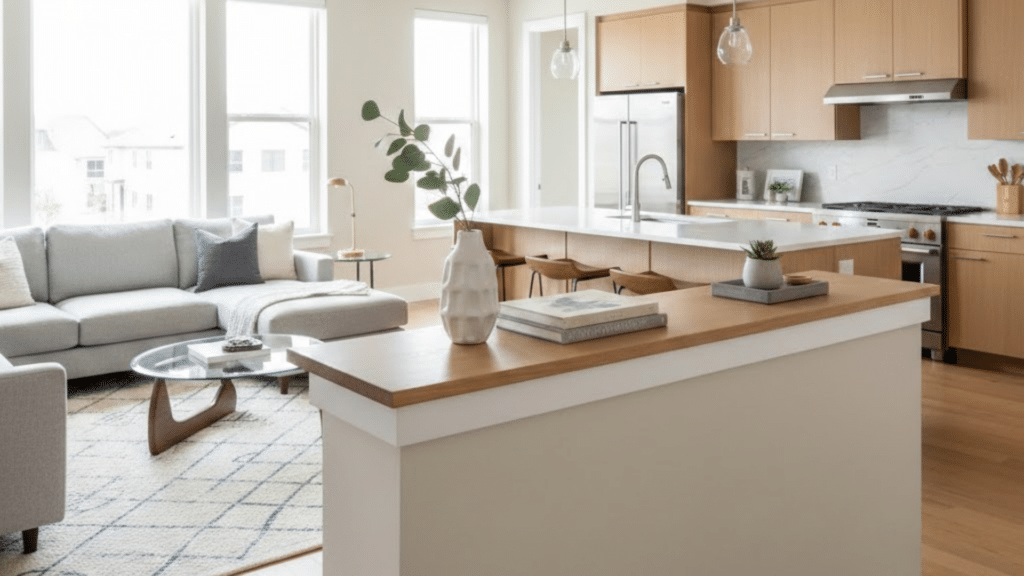
Partial walls add structure to open floor plans without fully enclosing spaces.
Pony walls, which are lower than standard walls, help define zones while keeping sightlines open. They work well between kitchens and living areas where full walls would feel too closed.
Partial walls can also support shelving, seating, or decor, adding function as well as separation. They provide a sense of boundary without blocking light or airflow. This option works best when open layouts feel too loose but full walls would limit connection.
Partial walls strike a balance between openness and structure.
36. Add Plants Between Zones
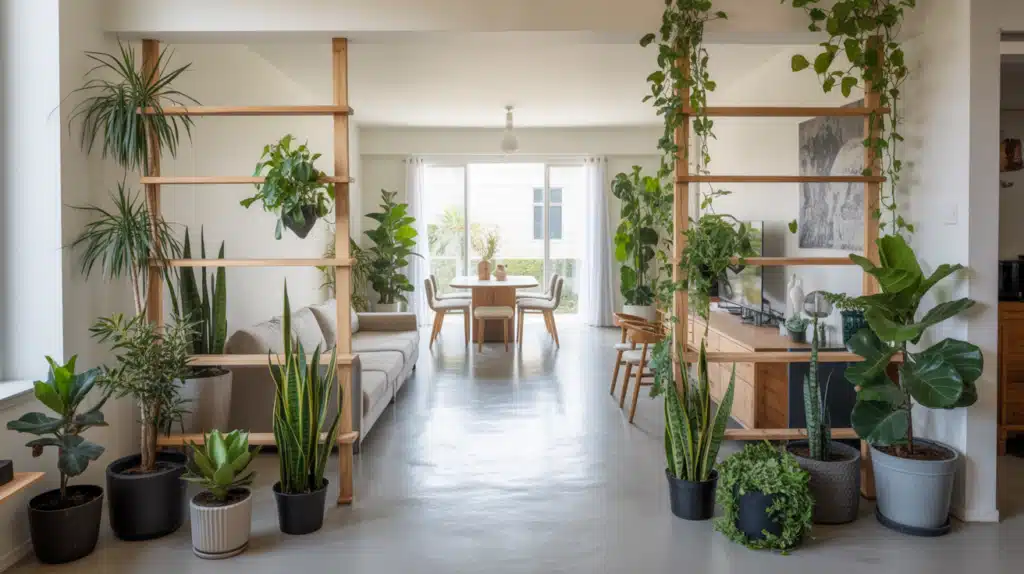
Plants act as natural dividers in open floor plans while adding warmth and texture. Tall plants can visually separate living and dining areas without blocking light. Smaller plants help mark transitions between zones more subtly.
Plants soften hard lines and make large spaces feel more comfortable and lived-in. They also add color and depth without overwhelming the layout.
Using plants as dividers avoids heavy furniture or construction. This makes them an easy and flexible solution for zoning open spaces. Plants support both function and comfort while keeping the space fresh and inviting.
37. Keep Decor Scale Balanced
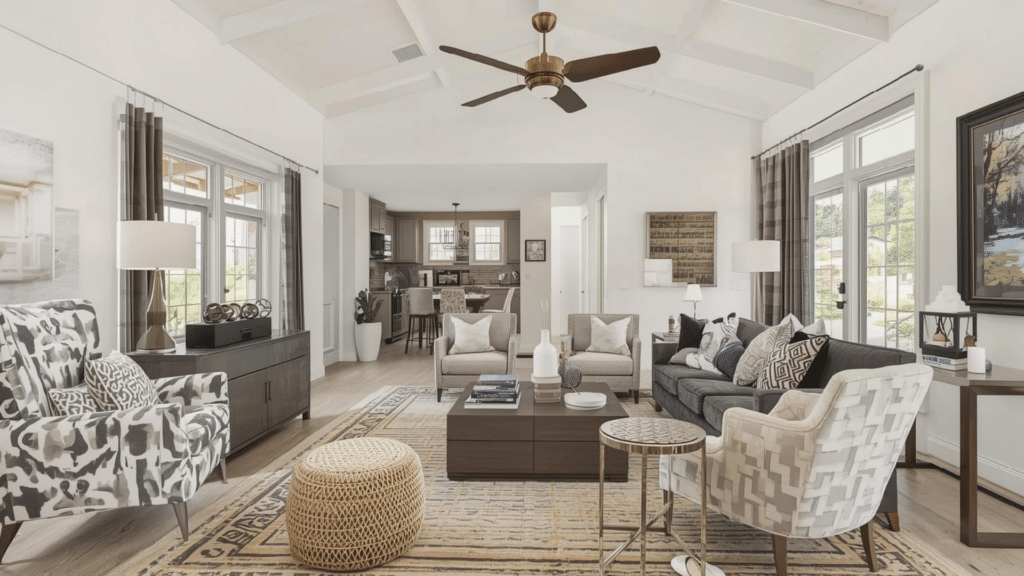
Decor scale is especially important in open floor plans because everything is visible at once. Small decor pieces can feel lost in large spaces, while oversized items can dominate and overwhelm.
Choose decor that fits the size of each zone and relates well to nearby furniture. Balance larger items with open space so the room does not feel crowded.
Consistent scale across zones helps the layout feel cohesive and calm. Avoid clustering too many statement pieces in one area. Properly scaled decor supports the layout and improve the open design instead of distracting from it.
Common Mistakes With Open Floor Plans
Open floor plans fail most often because of planning mistakes, not because the layout itself is flawed or impractical.
- Skipping zone planning causes furniture to float aimlessly, making the entire space feel messy, confusing, and uncomfortable to use daily.
- Using furniture that is too large or too small throws off balance and blocks flow across shared living areas.
- Ignoring sound control allows noise to travel freely, creating echo issues and reducing comfort in everyday living.
- Poor lighting choices leave some areas too dark while others feel harsh or glaring, affecting the entire open space.
- Placing walkways through seating or dining zones disrupts comfort and breaks the natural flow of movement.
- Mixing too many styles or finishes makes open spaces feel visually busy since there are no walls to separate rooms.
- Relying only on overhead lighting creates flat spaces that lack depth, warmth, and functional lighting balance.
- Failing to plan storage early leads to visible clutter spreading across every zone in the open layout
Are Open Floor Plans Still a Good Choice?
Open floor plans can still be a good choice, but they work best when they match how you actually use your home.
These layouts are great for households that value shared time, easy movement, and visual connection between spaces. They allow light to travel freely and make smaller homes feel more open. However, open layouts are not ideal for everyone.
Homes that need quiet work areas, privacy, or noise control may struggle without some separation.
The key is balance. Many homes benefit from semi open designs that keep spaces connected while adding flexible boundaries. When planned thoughtfully, open floor plans remain practical, comfortable, and adaptable to real daily living needs.
Conclusion
We covered how open layouts work, why they sometimes feel tricky, and how smart planning creates clearer zones and better flow.
When furniture placement, lighting, and storage work together, open spaces feel easier to live in. The real value of Open Floor Plan Ideas comes from matching the layout to your habits, not forcing trends into your home.
I always remind myself that comfort and function matter more than perfect photos. If one idea stood out, try applying it in a small way and see how the space feels.
What change do you think would make the biggest difference in your home? If you want more guidance, keep c heck out my other blogs for practical Open Floor Plan Ideas and layout tips.