
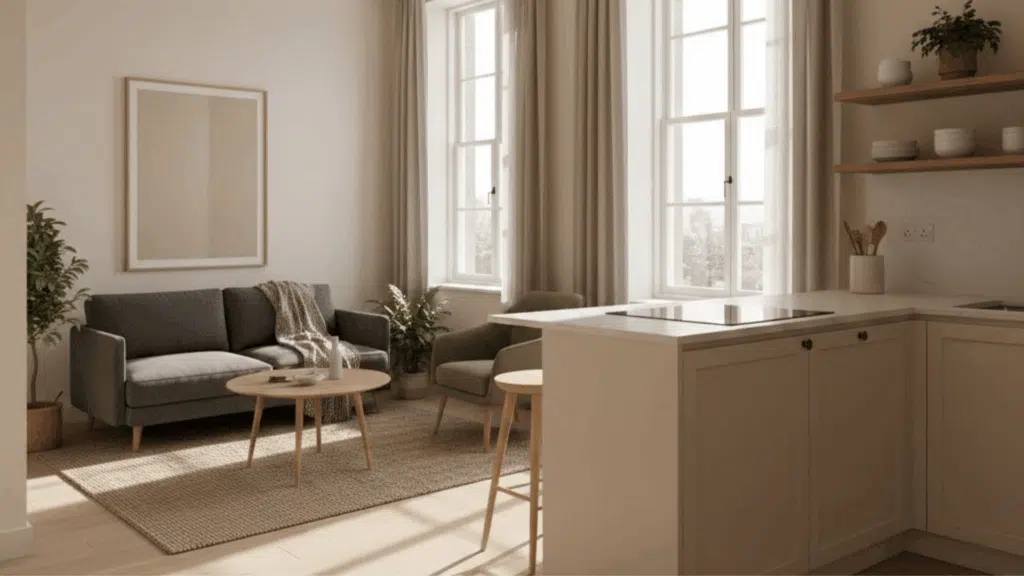
Dreaming of a small house, open concept kitchen, and living room, but worried about making it work? I remember feeling overwhelmed when I first started planning my own open layout modification years ago.
You’re probably wondering how to fit everything you need without the space feeling cramped or chaotic. Small homes deserve smart design that makes every inch count while keeping things comfortable and functional daily.
I’ve found that open concept layouts actually make tiny spaces feel way bigger than traditional closed-off rooms.
The key is understanding which floor plans, colors, and furniture work best for limited square footage. Let me show you exactly how to create an open concept space that feels spacious and organized.
Open Concept Kitchen Living Room Basics
A small house with an open concept kitchen and living room means your cooking and living spaces flow together without walls.
I love how this design removes the barriers that usually separate these two rooms into one combined area. Traditional closed layouts have walls and doorways dividing each room, making spaces feel smaller and more cramped.
The open concept eliminates these dividers to create one large, unified space where everything connects seamlessly.
I can cook dinner while chatting with family in the living room without feeling cut off or isolated. Natural light flows freely through the entire area instead of getting blocked by walls between rooms.
Benefits of Open Concept Layouts in Small Houses
Open concept designs offer so many advantages that make small homes feel comfortable and functional. Here are the biggest benefits you’ll notice when removing walls between your kitchen and living room:
- Creates visual spaciousness: Removing walls makes your small house feel significantly larger because your eyes can see across the entire space.
- Maximizes natural light: Windows in one area light up the whole space since no walls block sunlight from flowing throughout.
- Improves traffic flow: You can move easily between cooking and relaxing areas without constantly guiding through doorways or tight hallways.
- Enables better socializing: You can cook meals while talking with family or guests in the living room without feeling separated or isolated.
- Increases functionality: The combined space serves multiple purposes at once, making every square foot work harder for your daily life.
I’ve experienced all these benefits firsthand in my own small home, and they really do make a difference.
Small House Open Concept Kitchen and Living Room Floor Plans
I’ve tried several different floor plans over the years, and I’ve learned which ones work better for different situations. Here are the most popular open concept layouts that maximize small house kitchens and living rooms:
1. One-Wall Kitchen With Living Room
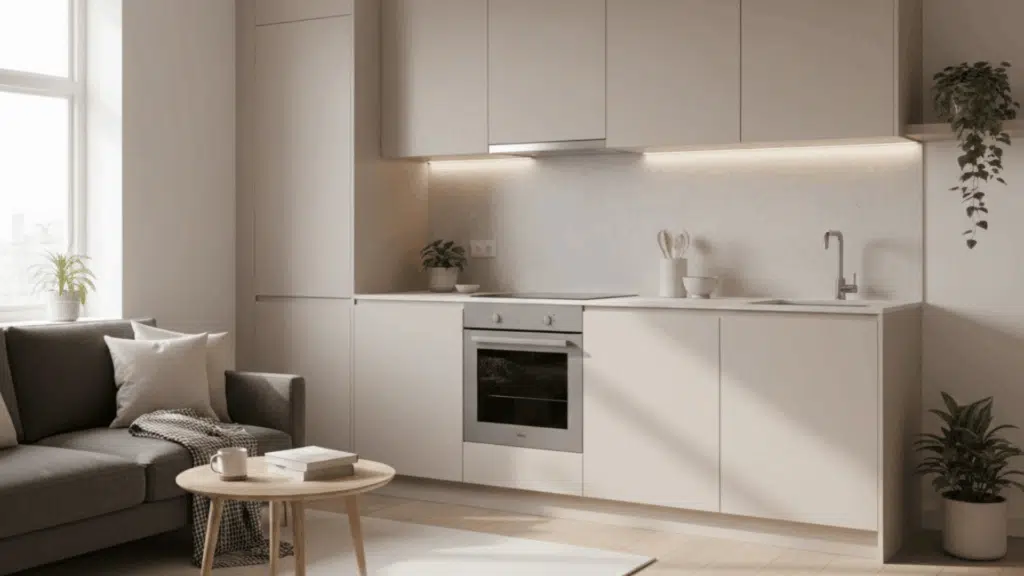
Place all your kitchen cabinets, appliances, and counters along a single straight wall facing the living area. This creates the most compact kitchen possible while leaving maximum floor space for the remaining area.
Install upper and lower cabinets on that one wall to maximize storage without taking up extra room. Keep your refrigerator, stove, and sink in a logical workflow along that same wall for efficiency.
- Suitable for: Studio apartments, tiny homes, and singles or couples who don’t cook elaborate meals regularly.
- Spacing Tip: Leave at least three feet between the kitchen wall and any elements in the living area.
2. L-Shaped Kitchen Open to Living Area
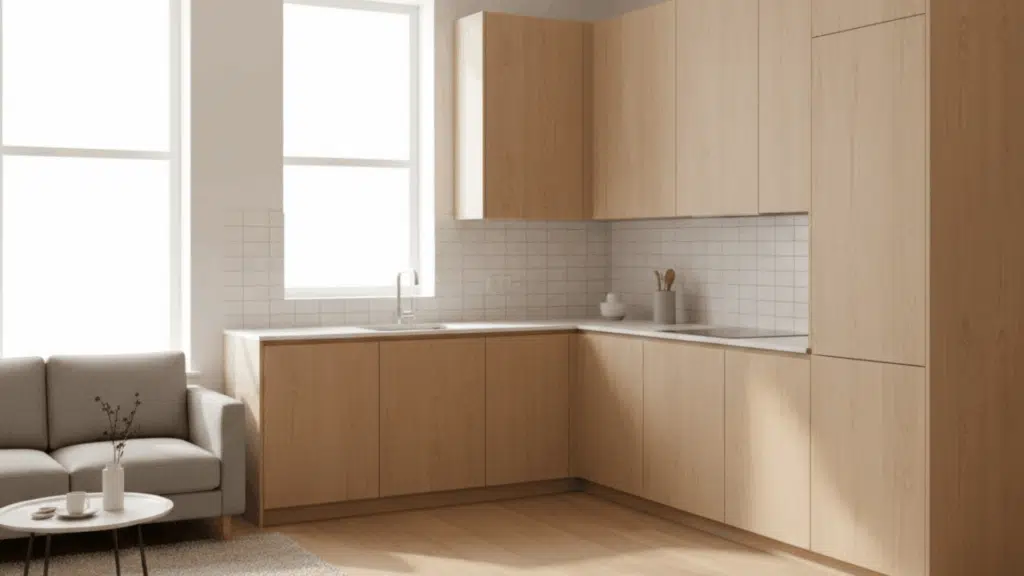
Two perpendicular walls meet at a corner to form an L-shaped kitchen that defines your cooking zone naturally. The opposite side stays completely open, allowing unobstructed views and access throughout the day.
Position your sink along one wall and your stove on the other to create an efficient work triangle. Corner cabinets at the junction point offer excellent storage for small appliances or pantry items you use regularly.
- Suitable for: Small families, couples who cook regularly, and homes with awkward corner spaces needing functional solutions.
- Spacing Tip: Maintain at least forty-two inches between the L-shaped counter and the living area boundaries.
3. Galley Kitchen Open on One Side
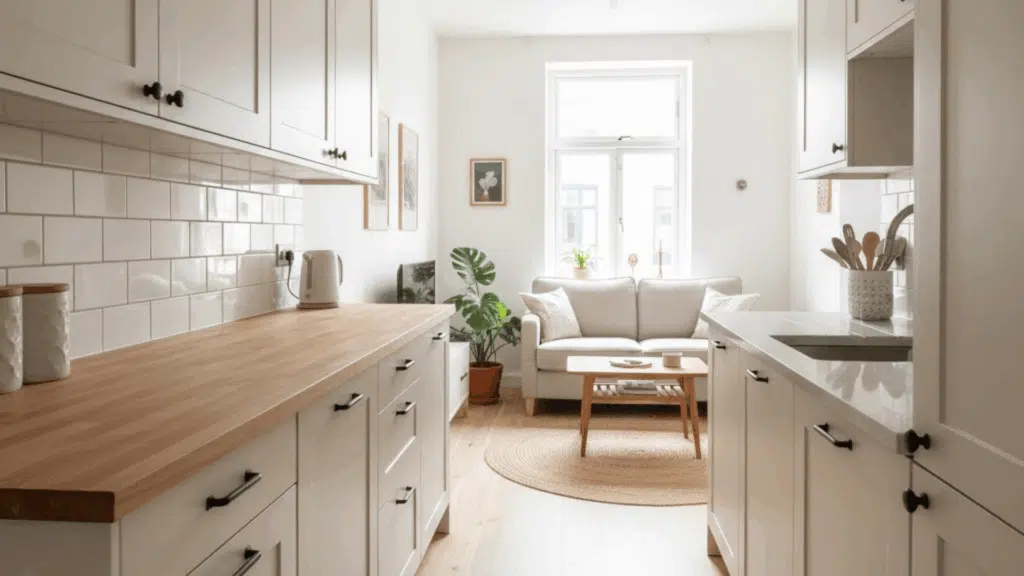
Run cabinets and counters along both sides of a narrow walkway, but remove the wall at one end entirely. Everything you need stays within easy reach while you move efficiently between both counter sides during meal preparation.
Your most frequently used appliances and prep zones go along the enclosed galley section for maximum workflow. The open end prevents that closed-in feeling that typical galley kitchens often create in small homes.
- Suitable for: Narrow homes, rectangular floor plans, and people who value efficient cooking workspace over entertaining space.
- Spacing Tip: Keep the galley walkway between forty-two and forty-eight inches wide for comfortable movement.
4. Kitchen Peninsula With Living Room Seating
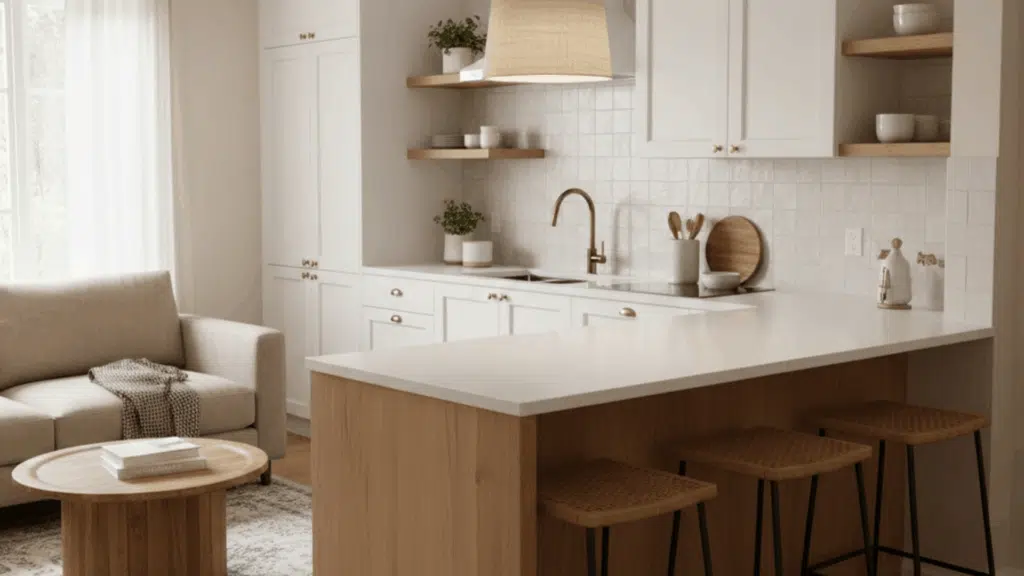
A counter extends from your kitchen wall into the room, creating a peninsula that serves multiple functions simultaneously. This partial divider separates cooking and living zones just enough while keeping everything visually connected across the space.
The living room side accommodates seating, giving people a spot to gather near the kitchen. Underneath cabinets provide hidden storage that doesn’t interrupt sightlines or make the peninsula feel too heavy visually.
- Suitable for: Families with kids, people who entertain casually, and homes needing extra seating without formal tables.
- Spacing Tip: Allow at least thirty-six inches between the peninsula and any walls or elements behind it.
5. Island Kitchen With Compact Living Room
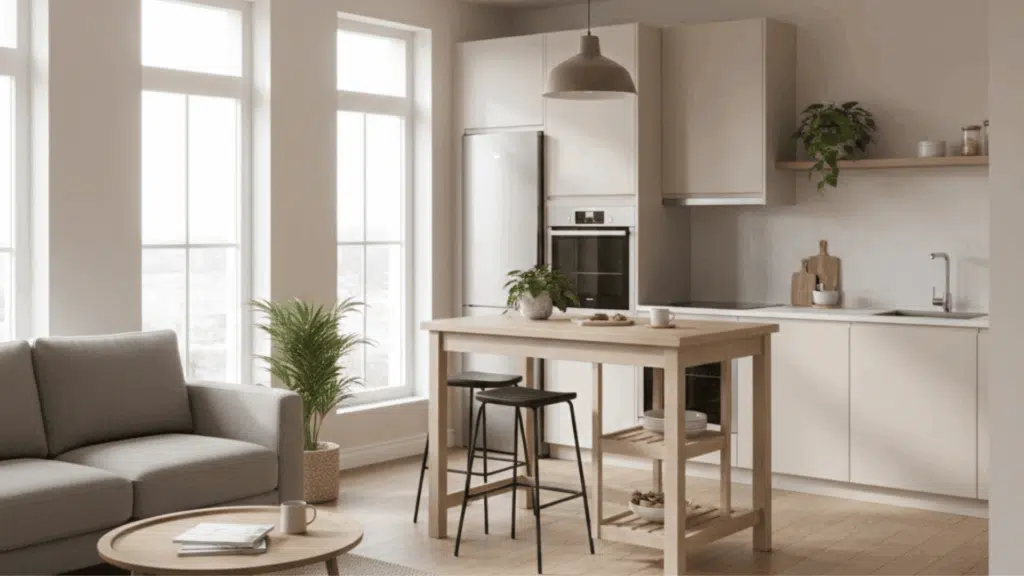
A freestanding island sits centrally in your kitchen zone, sized appropriately so it doesn’t overwhelm the limited space. Extra counter surface, hidden storage, and casual seating all come together in this single multifunctional piece.
Walking paths surround all four sides, ensuring smooth movement without any awkward bottlenecks or tight squeezes during use. Select an island design that improves flow rather than blocking the visual connection between both areas.
- Suitable for: Active cooks, families who gather in the kitchen, and homes with just enough island space.
- Spacing Tip: Maintain at least thirty-six inches of clearance on all sides of the island.
6. Corner Kitchen With Open Living Area
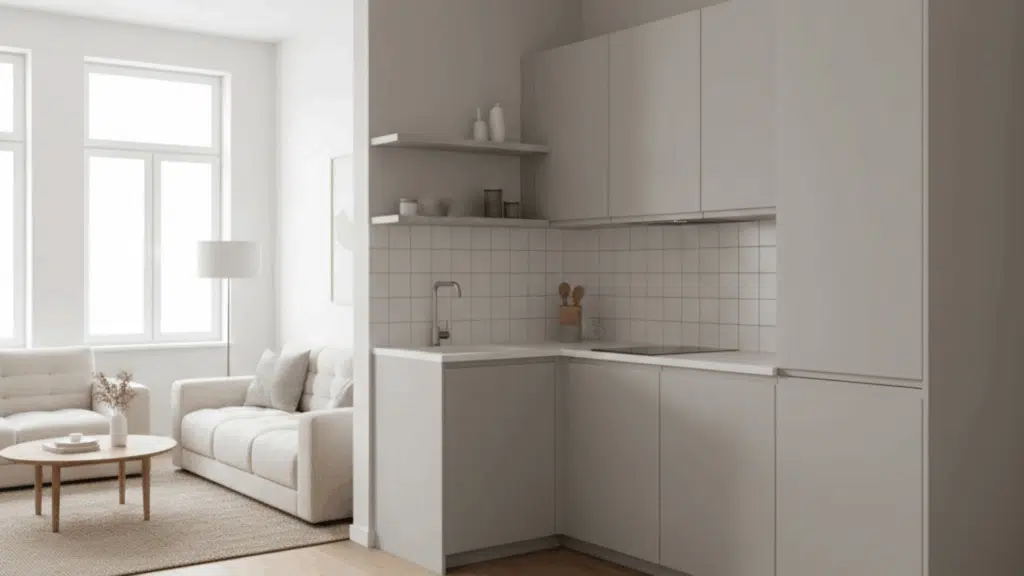
Your complete kitchen setup occupies just one corner where two walls naturally intersect at a right angle. Cooking activities stay tucked away from main traffic paths, leaving the center and far side available for other uses.
Both corner walls get filled with cabinets, keeping everything you need close together for an efficient cooking workflow. The rest of your space becomes available for the living area since the kitchen doesn’t bisect it at all.
- Suitable for: Square-shaped homes, people who prefer defined zones, and layouts where living area spaciousness is a priority.
- Spacing Tip: Leave at least four feet between the kitchen corner and the start of the living zone.
7. U-Shaped Kitchen Open to Living Room
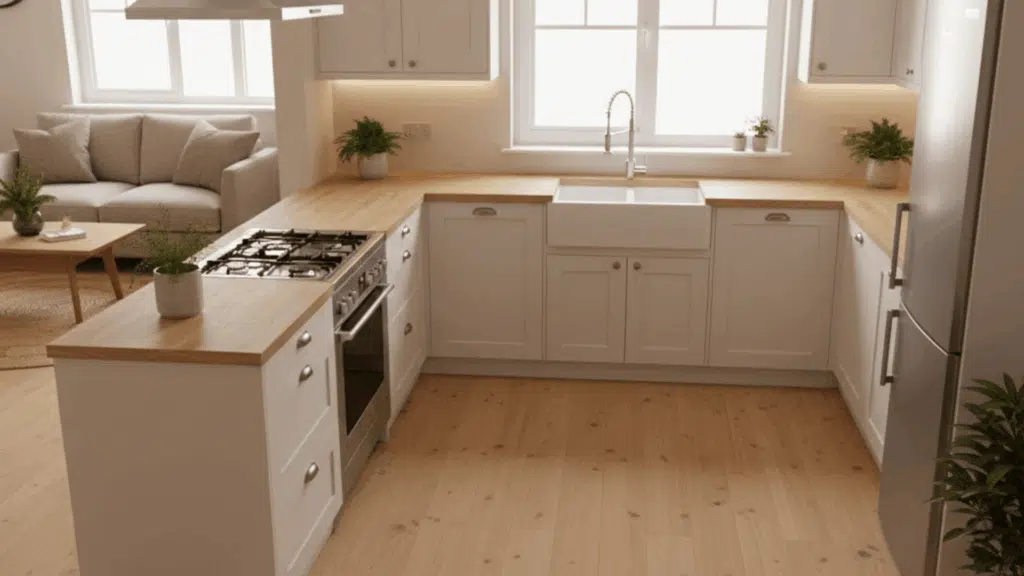
Three walls surround you with cabinets and workspace, forming a U configuration with the fourth side left wide open. Maximum storage and prep surface come from this design while still maintaining visual and physical access beyond.
Your sink placement in the U’s center base allows easy reach from either side whenever you’re preparing meals. The open fourth wall ensures you stay connected to activities happening in the adjacent living space, always.
- Suitable for: Serious home cooks, larger families, and spaces where maximizing kitchen storage is essential.
- Spacing Tip: Keep the U-shaped kitchen walkway at least forty-two inches wide for comfortable movement.
Design Ideas for Small Open Concept Kitchen Living Rooms
I’ve learned that smart design choices make your small open concept space feel larger and more put-together. Here are the key design elements that create a cohesive and spacious feel:
1. Color Schemes That Work Best
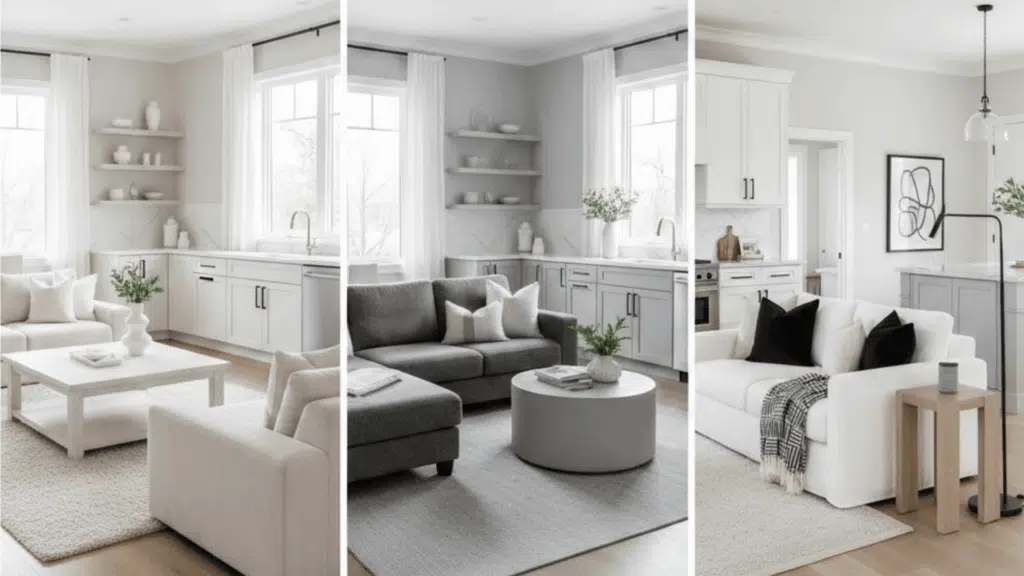
Choosing the right colors dramatically impacts how spacious and unified your open concept space feels. Here are the best color strategies for small open concept kitchen living rooms:
- Light neutral palettes: Use whites, creams, and light grays throughout both spaces to maximize brightness and make rooms feel larger.
- Consistent color flow: Apply the same color scheme in both the kitchen and the living areas to create visual continuity and cohesion.
- Strategic dark accents: Add dark colors sparingly as accents rather than dominant shades to avoid making small spaces feel closed in.
Light colors reflect more natural light, which is crucial for making small open concept spaces feel airy.
2. Flooring Ideas for Open Concept Small Homes
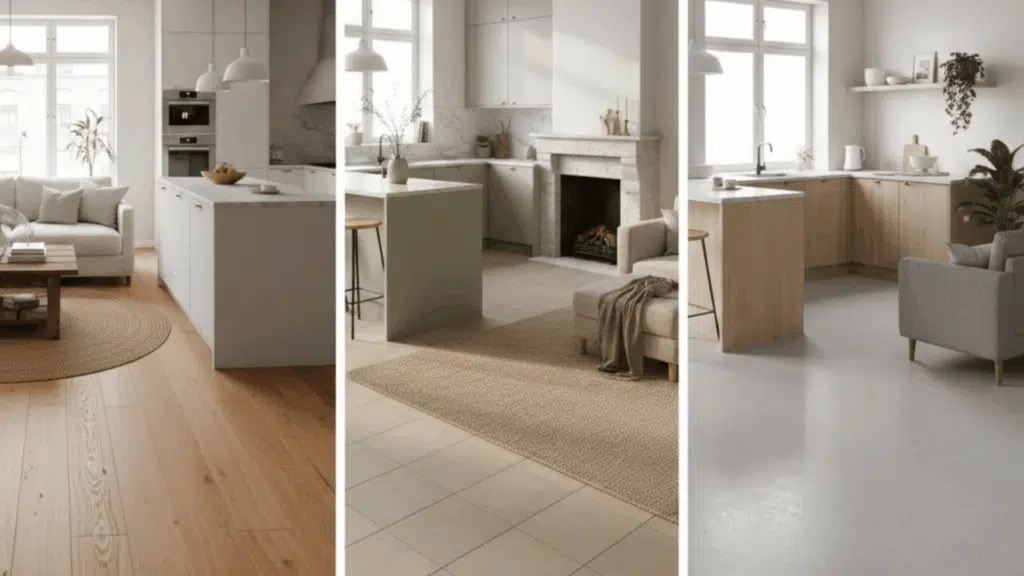
Flooring choices either unify your open concept space or visually chop it into smaller sections. Here are the best flooring approaches for small open concept kitchen living rooms:
- Continuous same flooring: Run identical flooring material throughout both kitchen and living areas to eliminate visual breaks and maximize spaciousness.
- Similar tone transitions: If using different materials, keep them in the same color family to maintain flow without jarring contrasts.
- Avoid multiple patterns: Skip busy tile patterns or mixed flooring styles that create visual chaos in already limited square footage.
Single flooring throughout makes your space feel significantly larger by removing boundaries that interrupt the eye’s flow.
3. Ceiling and Lighting Ideas
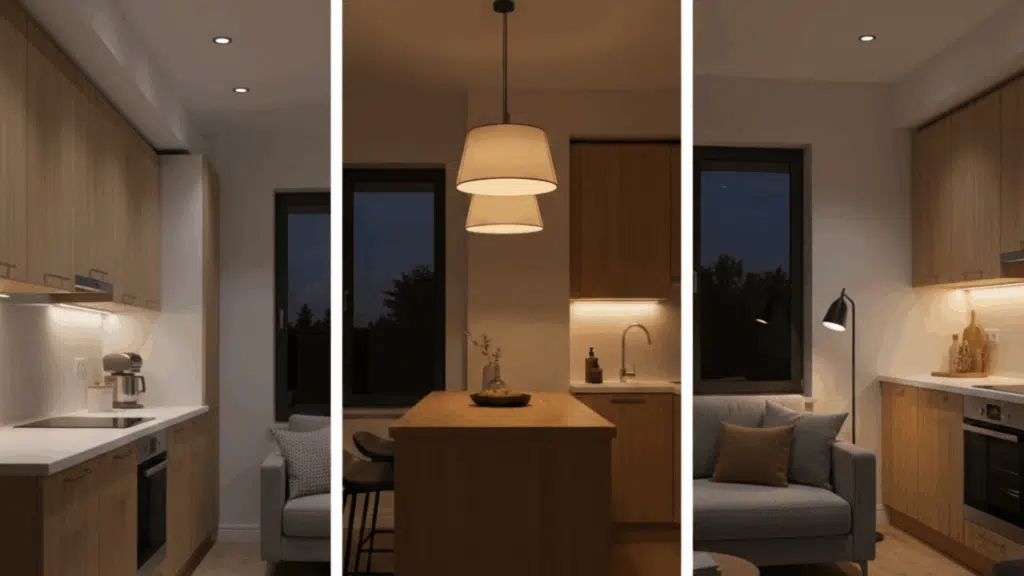
Proper lighting makes small open concept spaces functional while improving the feeling of openness throughout. Here are the best lighting strategies for small open concept kitchen living rooms:
- Recessed ceiling lights: Install evenly spaced recessed lights across the entire ceiling to provide general illumination without taking up visual space.
- Pendant lights over zones: Hang pendants above the kitchen island or peninsula to define the cooking area without blocking sightlines.
- Layered lighting approach: Combine ambient, task, and accent lighting to create depth and make the space feel larger and more dynamic.
Strategic lighting prevents dark corners that make small spaces feel even smaller and more closed in.
Furniture Ideas for Small Open Concept Layouts
I’ve learned that choosing the right furniture makes a huge difference in how functional small open concept spaces feel. Here are the best furniture options and placement strategies for small kitchen living room combinations:
| Furniture Type | Best Options | Placement Tips | Why It Works |
|---|---|---|---|
| Sofas and Seating | Apartment-sized sofas, armless chairs, low-profile sectionals | Face the kitchen or parallel to the counter, keep 3 feet from the kitchen | Scaled-down pieces don’t overwhelm, and low backs maintain sightlines |
| Dining Solutions | Drop-leaf tables, round tables, and bar seating at a peninsula | Between the kitchen and the living area or against the wall | Saves floor space, eliminates the need for a separate dining area |
| Multi-Use Furniture | Storage ottomans, extendable tables, nesting tables | Use as room dividers or along walls | Serves multiple purposes, reduces clutter, adapts to needs |
| Storage Solutions | Open shelving, console tables, and built-in benches | Behind the sofa or along the walls to define zones | Provides storage without blocking views, creates subtle separation |
Selecting correctly scaled furniture prevents your small open concept space from feeling cramped or overcrowded.
Smart Layout Ideas for Small Open Concept Spaces
Creating a functional open concept layout requires smart planning to make the most of every inch. Here are the essential layout strategies that help small kitchens and living rooms work together:
- Define zones with area rugs: Place distinct rugs under the living area and near the kitchen entrance to visually separate spaces without walls.
- Maintain clear traffic paths: Keep at least three feet of open walkway between major zones so people can move comfortably without obstacles.
- Create visual balance: Use similar color schemes, materials, or design styles in both the kitchen and living areas for a cohesive look.
- Avoid furniture blocking sightlines: Position pieces so they don’t obstruct views between the kitchen and living room, maintaining the open feeling.
I’ve found that these layout strategies make small open concept spaces feel organized rather than chaotic or cramped. Taking time to plan your layout properly prevents common mistakes that I’ve seen make small homes feel even smaller.
Common Mistakes to Avoid in Small Open Concept Designs
Avoiding common design mistakes saves you time, money, and frustration when creating your small open concept space. Here are the biggest errors people make and how to prevent them:
| Mistake | Why It’s a Problem | How to Fix It |
|---|---|---|
| Overcrowding furniture | Too many pieces make the space cramped and block traffic flow | Remove unnecessary items, choose multi-functional pieces, and leave open walkways |
| Ignoring scale and proportion | Oversized furniture overwhelms small spaces and makes them feel tiny | Select apartment-sized pieces, use low-profile designs, and measure before buying |
| Poor lighting planning | Dark corners and inadequate light make small spaces feel smaller | Layer ambient, task, and accent lighting, and add recessed and pendant lights |
| Lack of visual separation | Without defined zones, space feels chaotic and lacks purpose | Use area rugs, lighting, and furniture placement to create distinct zones |
Learning from these common mistakes helps you design a small open concept space that feels spacious and functional.
That’s a Wrap
You’ve got all the tools to design a small house, open concept kitchen, and living room that feels amazing. I hope these floor plans, design tips, and layout strategies help you create the open concept space you want.
Remember that proper planning prevents the common mistakes that make small homes feel even more cramped than before. Start by choosing a floor plan that matches your home’s shape and how you actually use the space.
Don’t rush the furniture selection process because the right pieces make all the difference in functionality. Your small home can feel surprisingly spacious with wise design choices that maximize every available inch.
What’s your biggest challenge with open concept design? Share your questions in the comments below!