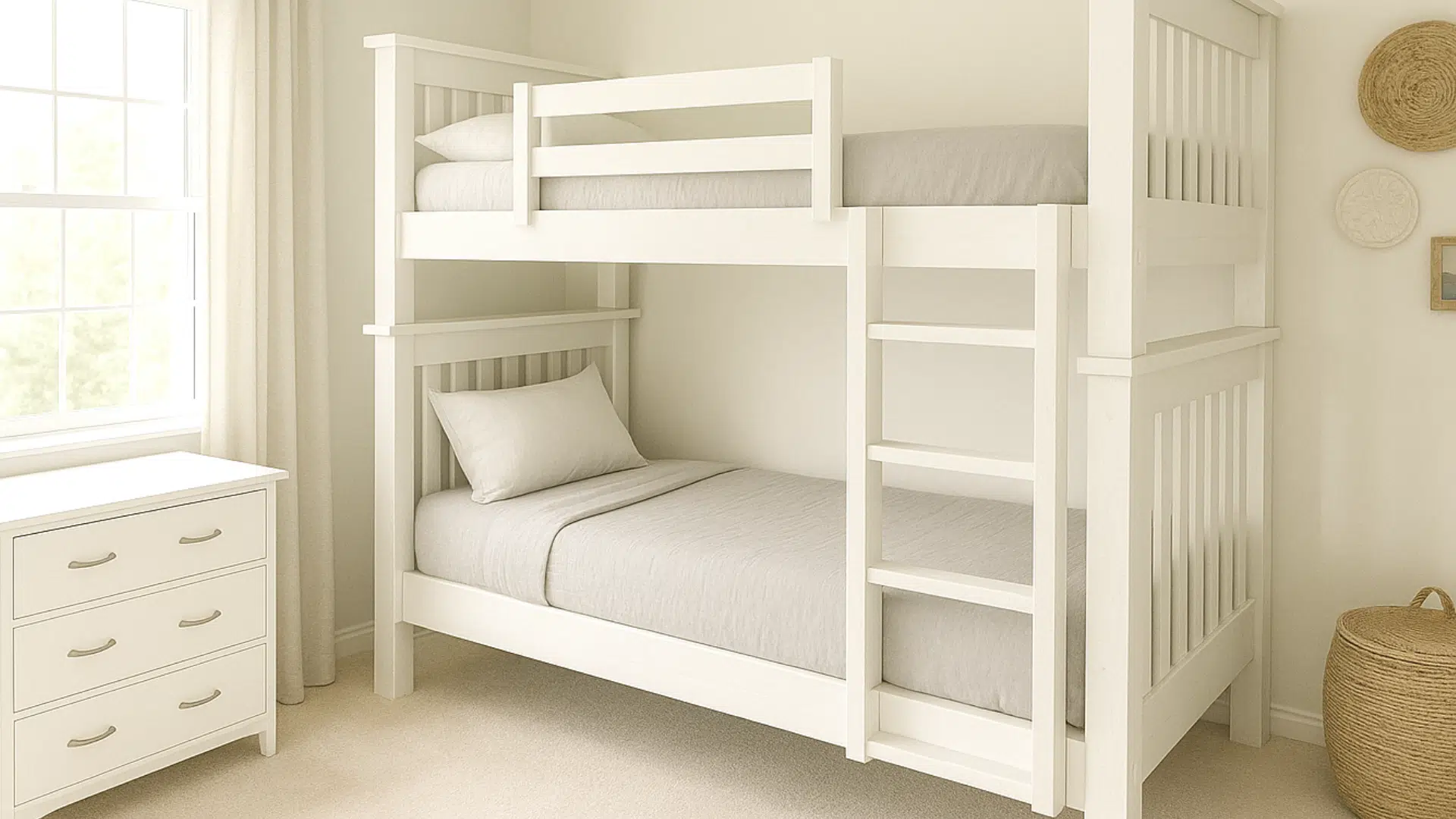


If you’ve ever woken up, swung your legs out of bed, and immediately stepped on… something crunchy (a sock? a hanger? a mystery item from 2019?) then hi. Welcome. Small bedrooms can feel like you’re living inside a very expensive closet, and somehow your stuff is still multiplying like it pays rent.
The good news: you don’t need to knock down walls to make your room feel bigger and cozier. You just need a few sneaky visual tricks that basically Jedi mind trick your eyeballs into thinking, “Oh wow, we have space in here,” while your body goes, “Oh wow, I can actually relax.”
The short answer: Prioritize visible floor (leggy furniture + fewer bulky pieces), soften the room with layered lighting and textiles, and use “height” tricks (curtains + vertical storage) to make a small bedroom feel bigger and cozier.
Key exception: If you have poor light control (streetlights, night shifts), blackout solutions may matter more than paint color or mirrors.
When it matters less: If your room is already calm and functional, one high impact change (bulbs, curtains, or a rug) can be enough no full makeover required.
| Trick | Biggest payoff | Cost level | Renter friendly? | Watch out for |
|---|---|---|---|---|
| Leggy/low profile bed | “More floor” = instantly airier | $$ | ✅ | Under bed clutter you can see |
| Layered lighting (2700K) | Cozy and bigger feeling | $-$$ | ✅ | One harsh overhead light |
| Curtains hung high + wide | Fake height + bigger window | $-$$ | ✅ | Too short panels that “crop” the wall |
| One large mirror | More light + depth | $-$$$ | ✅ | Reflecting clutter (it doubles it) |
| Rug sized correctly | Warmer + visually “expands” floor | $-$$$ | ✅ | Tiny rug that floats and shrinks the room |
| Hidden vertical storage | Less visual noise | $-$$ | ✅ | Open shelves becoming “stuff display” |
1) Start With the Bed (Because It’s the Main Character)
Your bed is the biggest thing in your bedroom, so if it looks heavy, your whole room looks heavy. This is why a chunky bed frame with a solid base can make a small room feel like it’s wearing ankle weights.
My favorite fix: a low profile bed with exposed legs. More visible floor = more “room vibes.” It’s dumb how well this works, but it does. Your brain sees continuous flooring and goes, “Ah yes, we are not trapped.” (Design guides consistently point to clear sightlines and uninterrupted surfaces as “bigger feeling” cues [Ching, Interior Design Illustrated].)
And yes, storage beds are useful. If you truly need those drawers, keep them. But if you’re choosing a storage bed because you think you “should”… I’m gently pushing you toward a leggy frame and a couple under bed bins that actually disappear.
The same rule goes for nightstands and dressers: pieces on legs read lighter than furniture that sits flat on the floor like it’s refusing to leave.
Quick bedroom Tetris tips (no annoying music):
- If you’re constantly turning sideways to squeeze through a walkway, something’s too big. (I say this with love. I’ve lived this.) As a rough target, many space planning references treat ~24-30 inches as a more comfortable minimum circulation path in tight residential layouts [De Chiara et al., Time-Saver Standards for Interior Design and Space Planning].
- Floating shelves or wall mounted nightstands = clear floor = instantly airier.
- If you need more clothing storage, go taller instead of wider. Vertical storage is your small room bestie.
Cheat code: if you can see more floor, your room often feels bigger.
Image idea: Low profile bed with legs + visible floor (alt: “Small bedroom with low profile bed on legs showing open floor space underneath.”)
2) Fix the “One Sad Overhead Light” Situation
One overhead light in a tiny bedroom is a crime against coziness. It’s giving “hospital waiting room.” It’s giving “who stole the last cookie?” interrogation.
What you want is lighting in layers. Not fancy, just intentional (this is a common recommendation in lighting design handbooks because multiple lower intensity sources reduce harsh shadows and improve comfort [IES Lighting Handbook]):
- Ambient: general light (ceiling fixture, flush mount, whatever you’ve got)
- Task: reading light (bedside lamp or sconce)
- Accent: soft glow for mood (a small lamp, LED strip behind the headboard, tiny plug in light anything)
Bulb tip I will shout forever: go warm. Around 2700K is that cozy, flattering “I live in a rom com” glow. Many consumer lighting guides classify ~2700K as “warm white” for living spaces/bedrooms [U.S. DOE Energy Saver LED lighting color temperature].
If your nightstands are basically the size of coasters (been there), swap table lamps for wall sconces. Renters: plug in sconces are a thing, and they’re shockingly easy to make look custom with a cord cover.
Bottom line: when you reduce dark corners and harsh glare, the room tends to feel less cramped and more relaxing.
Safety note (quick but real): If you’re hardwiring lights, adding dimmers, or dealing with flickering/outlets that run hot, use a licensed electrician.
Image idea: Layered lighting diagram (alt: “Diagram showing ambient, task, and accent lighting positions in a small bedroom.”)
3) Hang Your Curtains Like You Know What You’re Doing (Even If You Don’t)
This is my favorite “I can’t believe that worked” trick, because it can make a room feel taller in one afternoon without buying a single piece of furniture.
Here’s the move:
- Hang the curtain rod high a few inches below the ceiling (or as close as you can get).
- Extend the rod wider than the window so the curtains can sit mostly on the wall when open. (This “high and wide” approach is a standard window treatment trick in many home design guides because it visually enlarges the window opening [Better Homes & Gardens curtain hanging guidance].)
What this does: it makes the window look bigger, pulls your eye upward, and suddenly your ceilings feel higher. It’s basically contouring for architecture.
Bonus: if you can do curtains that kiss the floor (not puddle like Victorian poetry, just lightly skim), it helps the whole wall feel longer and cleaner.
Mantra: hang them high, spread them wide. Let your windows live their best life.
Image idea: Curtain rod placement before/after (alt: “Before/after showing curtain rod mounted near ceiling and extended wider than window.”)
4) Mirrors: The Sneakiest Space Expander
A large mirror opposite (or near) a window bounces light around like it’s getting paid for it. It can make the room feel noticeably more open, especially when it reflects the brightest part of the room (a classic decorating strategy [The Spruce mirror placement basics]).
And I know the temptation is to do a whole gallery wall of little frames because it’s “cute.” Sometimes it is! But in a tight bedroom, lots of tiny pieces can start to look like visual clutter.
If your room already feels busy, go for one larger mirror or one big art piece instead. Bigger = calmer, weirdly enough.
Mini “Do this / Not that” (mirrors):
- Do: Place a larger mirror where it reflects light or a calm view (window, lamp glow, tidy wall).
- Not that: Put a mirror where it reflects your laundry chair or the clutter corner (it will double the chaos).
Image idea: Mirror opposite a window (alt: “Large mirror placed near a window reflecting daylight to brighten a small bedroom.”)
5) Paint: Yes, Light Colors Help… But Dark Can Be Magic
Sure, light colors reflect light and can make a room feel open. Soft whites, warm creams, pale greige classic for a reason.
But I’m going to say something mildly controversial: dark paint can be incredible in a small bedroom. Deep navy, forest green, moody charcoal when the lighting is good, it can blur edges and create that cozy “jewel box” vibe. Like the room put on a fancy velvet jacket. (Dark, low glare palettes are often used intentionally to reduce visual contrast and create a cocooning effect [Ching, Interior Design Illustrated].)
The trick if you go dark: commit. Painting the walls and trim the same color can make the room feel more seamless (less chopped up), which can read larger and calmer with a serene bedroom palette.
Just don’t do moody paint and then rely on one overhead bulb. That’s not “jewel box.” That’s “I can’t find my water glass.”
6) Hidden Storage That Doesn’t Turn Into “Stuff Display”
Small rooms don’t need more surfaces. They need fewer places for your stuff to pile up and start a new civilization.
My favorite storage moves are vertical and sneaky:
- Use the space above the door for items you don’t need daily (extra linens, off season stuff, sentimental items you can’t part with but also don’t want staring at you).
- Add a second closet rod if your closet has wasted vertical space. It’s one of the easiest “why didn’t I do this sooner?” upgrades.
- Under bed bins are great just make sure they fully hide. If they stick out, they’ll visually clutter the room.
I live by this rule: If it doesn’t have a home, it becomes a roommate. And roommates are stressful.
Renter friendly note: Over door racks, tension rods, and adhesive hooks can add storage without holes just check weight ratings and paint safe removal instructions.
Image idea: Vertical closet storage (alt: “Small closet with double hang rods and labeled bins on upper shelf.”)
7) Add a Rug (It’s Basically a Floor Sweater)
If you want “cozy” fast, add softness underfoot. If you want “bigger” fast, use a rug that visually anchors the bed area so the room feels intentional instead of scattered.
A simple rule that usually works: choose a rug large enough that the front legs of the bed (and ideally nightstands) can sit on it, so it doesn’t look like a tiny “postage stamp” floating in the middle. Many space planning references include rug and furniture grouping as a way to define zones and improve visual order [De Chiara et al., Time-Saver Standards for Interior Design and Space Planning].
If you’re sensitive to dust/allergens: pick a low pile rug you can vacuum easily and wash bedding/throws regularly. Soft layers should feel cozy, not sneezy [U.S. EPA indoor allergens overview].
8) Cozy Without Clutter: Layer Textures, Not Trinkets
Cozy is mostly texture and you can do it without filling every surface with comfort first room styling.
Try this “3 layer bed” formula:
- Crisp base: sheets + a duvet/comforter
- Mid layer: a folded quilt or blanket at the foot (adds texture without chaos)
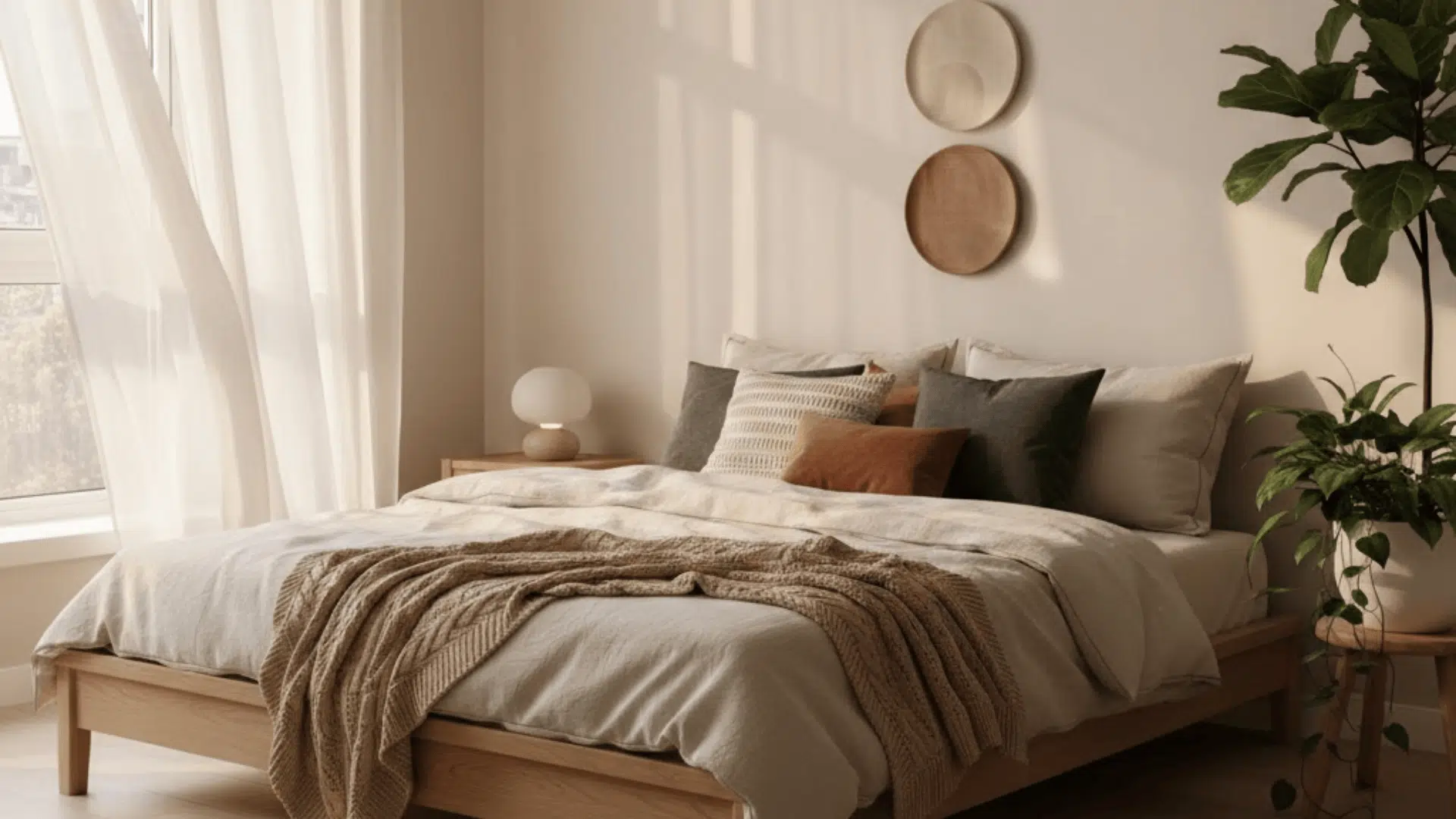
- Finish: 2 sleeping pillows + 1-2 shams + one lumbar (or one throw pillow you actually like)
Then add one throw (not five) in a warm fabric: knit, fleece, brushed cotton, linen whatever feels good to you.
Tiny upgrade that reads expensive: a fabric or woven lamp shade (it softens light and makes the whole room feel gentler) [IES Lighting Handbook].
9) Declutter in a Way That Actually Sticks (The “Landing Strip” Rule)
You don’t need minimalism. You need fewer “drop zones.”
Pick the top two clutter magnets (usually: the chair, the nightstand, the dresser) and give each one a job:
- Nightstand gets a tray (phone, lotion, book). If it doesn’t fit in the tray, it goes elsewhere.
- The chair becomes either a reading chair (with one throw) or it goes away. No in between.
- Dresser top gets one statement thing (lamp or art) and one container (dish, box). That’s it.
This is the boring secret sauce: fewer visible items = calmer room = cozier feeling.
10) Doors, Closets, and “Why Is This So Awkward?” Fixes
Small bedrooms often lose space to swing paths and weird corners.
A few high impact tweaks:
- Over the door hooks for tomorrow’s outfit or a robe (so it doesn’t become chair laundry).
- Slim hangers to reduce bulk and help clothes sit flatter.
- Inside closet lighting (battery puck lights or LED strip) so the closet doesn’t become a black hole.
If you’re changing doors or hardware: consider a pro if anything is sticking, scraping, or misaligned forcing doors can damage frames and hardware over time.
11) Multi-Function Furniture (So Your Room Works Harder Than It Looks)
If you’re truly tight on space, one multi-tasker can replace two bulky pieces:
- Storage ottoman at the foot of the bed (blankets inside, seating when needed)
- Wall mounted fold down desk (work zone that disappears)
- Daybed if your bedroom doubles as a guest space
- Murphy bed if you’re doing studio life (bigger project, but maximum floor payoff)
Tip: prioritize pieces that look visually light (slim arms/legs) even if they store a lot.
12) Two Quick Layout Scenarios (So You’re Not Guessing)
If your room is around 8×10-ish:
- Put the bed on the longest wall you can.
- Use wall sconces instead of lamps.
- Skip extra furniture. Use one tall dresser or closet organizers instead.
If your room is around 10×12-ish:
- You can usually fit a larger rug and a slightly wider nightstand.
- Add a small chair only if you can keep a real walkway (aiming for that ~24-30 inches where possible) [De Chiara et al., Time-Saver Standards].
Image idea: Simple top down layout (alt: “Top down diagram of small bedroom layout showing bed placement and clear walking paths.”)
Pick One Thing and Do It Today
You don’t have to overhaul your entire bedroom this weekend (unless that’s your idea of fun, in which case… teach me your ways). Pick one change that will make an immediate difference:
- Raise your curtain rod.
- Swap to warm bulbs.
- Replace one bulky piece with something on legs.
- Add a big mirror.
- Add a correctly sized rug.
- Clear the floor like it owes you money.
The “30 / 60 / 120 minute” plan
- 30 minutes: clear floors + make the bed + put a tray on the nightstand.
- 60 minutes: swap bulbs to ~2700K + add one soft accent lamp.
- 120 minutes: rehang curtains high/wide or mount plug in sconces.
Small bedrooms can feel airy, calm, and intentional not because they’re secretly bigger, but because you made smart choices that let the space breathe and feel soft.
Now go make one tiny change and let your bedroom feel big on purpose.
Frequently Asked Questions
How do I make a small bedroom look bigger and feel cozy at the same time?
Start with “bigger”: clear floors, lighter looking furniture, and curtains hung high/wide. Then add “cozy”: warm lighting (around 2700K) and a few texture layers (rug + bedding) without adding clutter [U.S. DOE Energy Saver color temperature].
What size rug is best for a small bedroom?
Aim for a rug that sits under the lower portion of the bed so it visually anchors the sleep zone (instead of a tiny rug floating in the middle). If you’re between sizes, going slightly larger often looks calmer and more intentional than going too small [De Chiara et al., Time-Saver Standards].
Where should I place a mirror in a small bedroom?
Place it where it can reflect natural light or a calm, uncluttered view (near/opposite a window or a softly lit wall). Avoid placing it where it reflects your main clutter zone mirrors don’t judge, they just double.
What’s the best light bulb color temperature for a cozy bedroom?
Many people prefer “warm white” bulbs around 2700K for bedrooms because the light reads softer and less clinical than cooler temperatures [U.S. DOE Energy Saver LED color temperature].
How can I make a small bedroom cozy without making it feel cluttered?
Use larger, simpler moves: one rug, one throw, one statement art piece, and contained storage (baskets/bins) instead of lots of small décor. Cozy is more about texture and lighting than adding more objects.
What should renters focus on first?
Plug in sconces, peel and stick hooks, high and wide curtains (with minimal wall damage options), and storage that’s vertical or over the door. You’ll get most of the impact without permanent changes.
When should I call a professional instead of DIY-ing?
Call a licensed electrician for flickering lights, warm outlets, or any hardwiring/dimmer installation. Call a contractor/handyperson if you suspect structural issues (cracking, sagging) or moisture/mold. If your sleep is suffering despite a comfortable setup (persistent insomnia or loud snoring/gasping), a healthcare provider is the right next stop.
Sources
- Illuminating Engineering Society (IES). The IES Lighting Handbook (10th/11th ed.). (reference handbook)
- U.S. Department of Energy (Energy Saver). “LED Lighting” / “Color temperature (Kelvin) guidance.” https://www.energy.gov/energysaver/led-lighting (overview)
- De Chiara, Joseph; Panero, Julius; Zelnik, Martin. Time-Saver Standards for Interior Design and Space Planning. McGraw-Hill, 2001 (and later editions). (reference)
- Ching, Francis D.K. Interior Design Illustrated. Wiley, 2014 (and later editions). (reference)
- U.S. Environmental Protection Agency (EPA). “Indoor Air Quality: Allergens and Dust (overview).” https://www.epa.gov/indoor-air-quality-iaq (overview)
- Better Homes & Gardens. “How to Hang Curtains” (curtain rod height/width guidance). https://www.bhg.com/decorating/window-treatments/basics/how-to-hang-curtains/ (how-to)
- The Spruce. “How to Decorate With Mirrors” (mirror placement basics). https://www.thespruce.com/decorating-with-mirrors-1976583 (how-to)