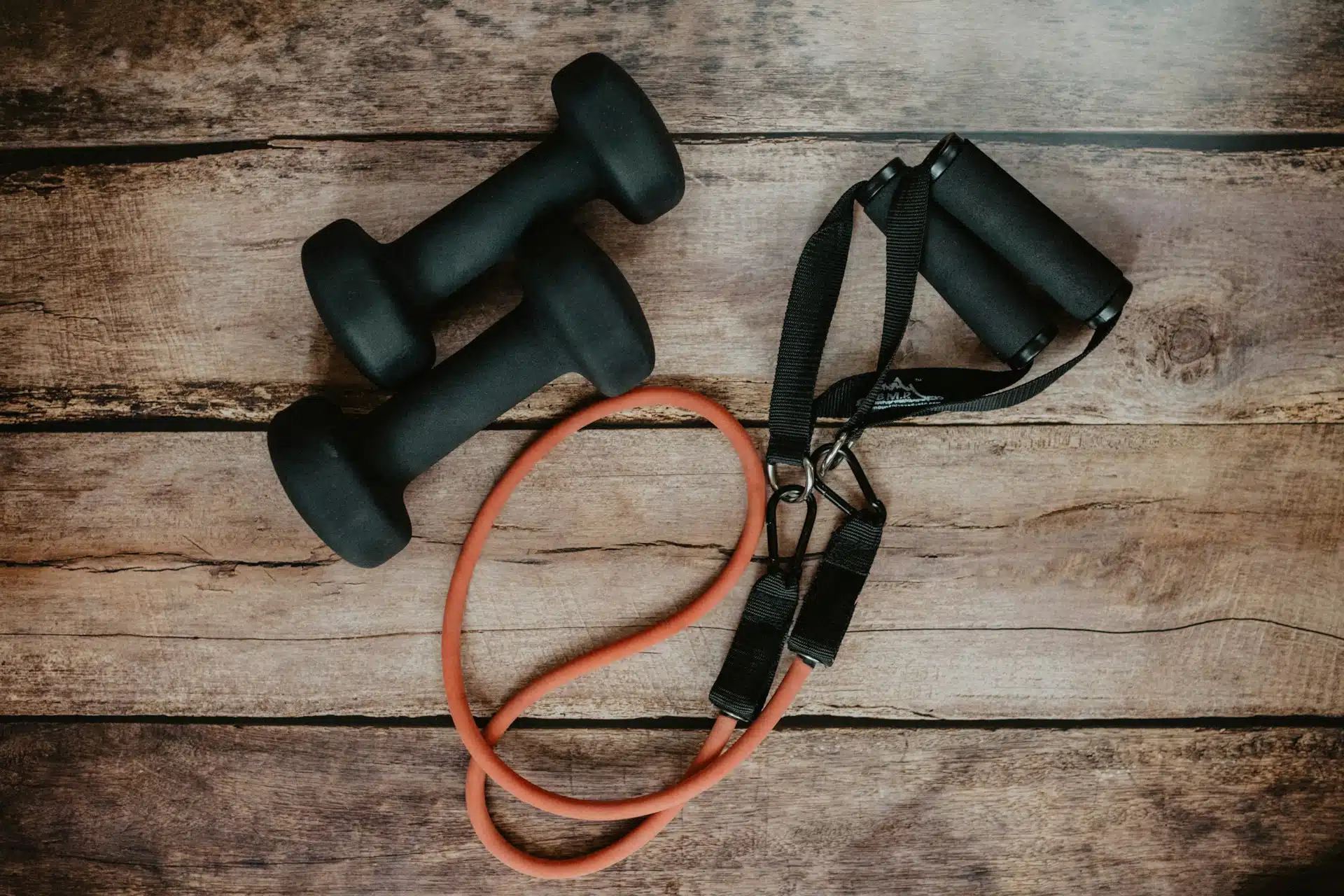
A resistance band leg workout can help you successfully grow your glutes without any gym equipment. Bodyweight movements combined with resistance bands create the tension your muscles need to adapt and grow.
Equally important, resistance bands are excellent for activating your glutes and engaging smaller stabilizer muscles that heavy weights might miss. This makes band workouts for legs particularly effective for building strength and sculpting your lower body at home or anywhere you go.
Why Resistance Bands Work for Leg and Glute Training
Research confirms what many physical therapists have known for years: resistance bands deliver strength gains equal to traditional weight training.
A 2019 analysis of eight studies found no significant differences in strength gains between elastic resistance training and weight training across both upper and lower body muscles.
This makes leg workouts with resistance bands just as effective as your standard gym routine, but with distinct advantages for your joints and connective tissues – especially when using high-quality options like Tribe Lifting thigh resistance bands for consistent tension and durability.
Builds strength without heavy weights
The elastic nature of resistance bands creates progressive tension as they stretch, offering a unique advantage over fixed-weight equipment. When you perform banded squats, the resistance remains lighter at the bottom where your joints are most vulnerable, then increases at the top where your muscles are naturally stronger.
This variable resistance matches your body’s natural strength curve better than constant-load weights.
Research shows guided band exercises helped elderly participants build lower-body strength without excessive stress on weaker muscles or joints. You get the muscle-building stimulus you need while reducing injury risk.
Activates smaller stabilizer muscles
Resistance band exercises for legs force your body to work harder to control movement compared to machine-based training. When you perform a chest press with a machine, the weight moves predictably on a fixed rail.
Switch to a band for the same exercise, and your smaller muscles must work harder to stabilize that slight wobble.
This stabilization strengthens muscles often neglected with traditional weightlifting, improving joint stability and functional movement patterns. Your hip stabilizers, ankles, and core all engage more intensely during band workouts for legs, which translates to better balance and reduced injury risk in daily activities.
Portable and convenient for home workouts
You can purchase a complete set of resistance bands with varying tensions for less than $20, making them significantly more affordable than dumbbells, kettlebells, and barbells.
They weigh almost nothing, compress into minimal space, and travel anywhere. This means you can maintain your leg workout with bands whether you’re at home, in a hotel room, or outdoors. No commute to the gym, no waiting for equipment.
Adjustable resistance for progressive overload
Bands offer multiple methods for increasing difficulty as you grow stronger. You can transition to thicker bands with higher resistance levels, double up bands for combined tension, or adjust hand placement to modify resistance.
Moving your hands toward the center increases tension, while sliding them toward the ends decreases it. This built-in adjustability lets you progress continuously without purchasing new equipment.
Understanding Your Leg and Glute Muscles
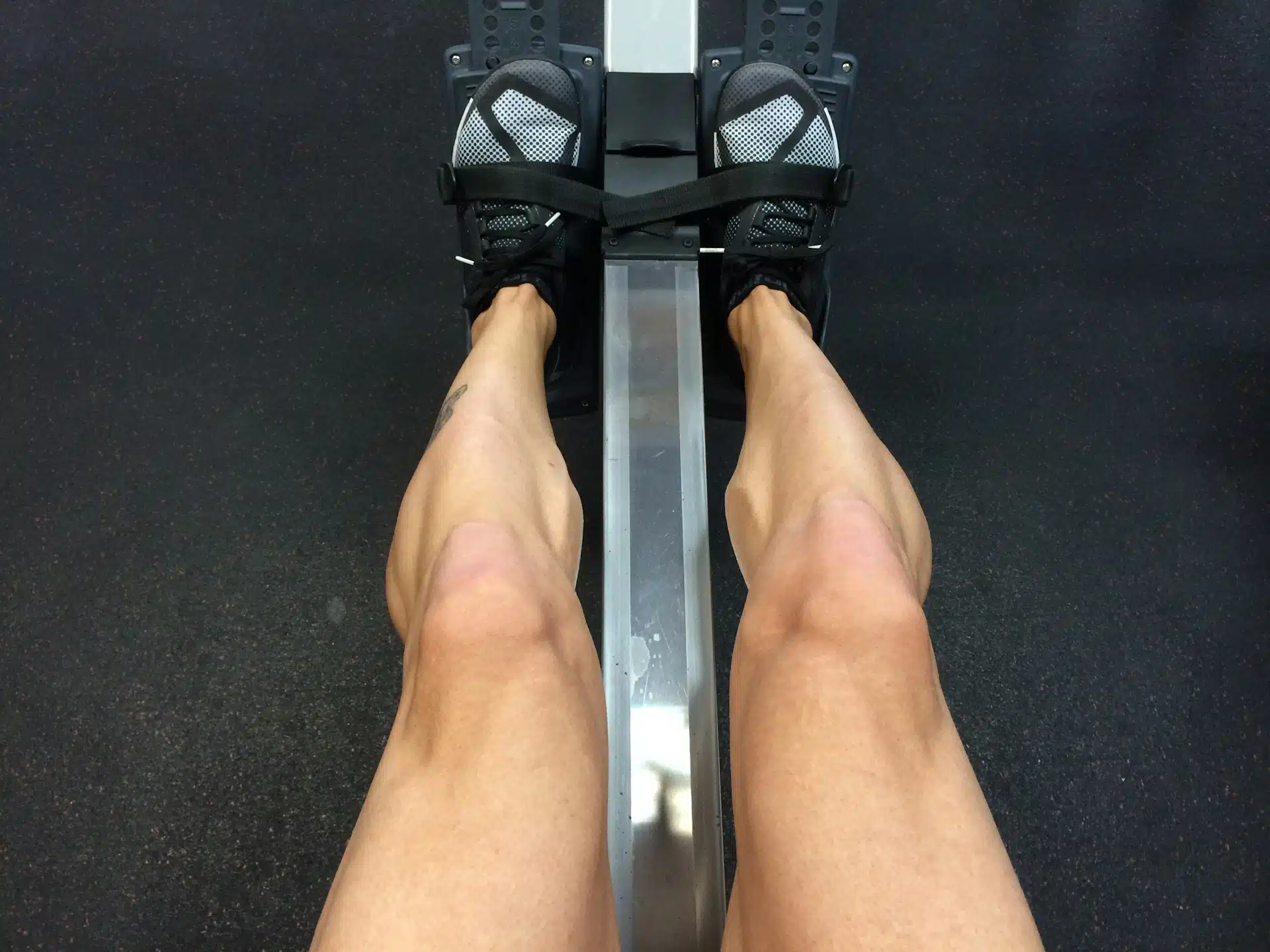
Your glute and leg muscles work together to power every lower body movement, from standing up to sprinting. Understanding these muscles helps you target them more effectively during resistance band leg workouts.
Gluteus maximus: the primary butt muscle
The gluteus maximus stands as the largest and most powerful muscle in your body. This thick, quadrangular muscle forms the bulk and shape of your buttocks. Its primary job involves extending your hip, which means straightening your leg from a bent position.
You engage this muscle powerfully when rising from a chair, climbing stairs, running, or regaining an upright position after bending forward. The gluteus maximus only activates fully when force is necessary, working alongside your hamstrings for hip extension.
Beyond movement, it stabilizes your pelvis and trunk when you stand on one leg. Its large size directly relates to humans’ ability to maintain upright posture, a feature that distinguishes us from other primates.
Gluteus medius and minimus: hip stabilizers
The gluteus medius and minimus sit deeper beneath your gluteus maximus. These muscles play a critical role in pelvic stability and lower extremity function. They stabilize your pelvis during movements like walking and running, preventing excessive tilting when you shift weight from one leg to another.
Both muscles also help you move your thighs away from your body’s center and rotate your hips. Research confirms they provide rotational and distractive stability for your hip joint, working alongside passive joint structures.
Quadriceps and hamstrings: supporting leg muscles
Your quadriceps consists of four muscles on the front of your thigh that extend your knee and help flex your hip. You use them constantly for walking, climbing stairs, and standing from seated positions.
On the other hand, your hamstrings include three muscles on the back of your thigh that bend your knee and extend your hip. These muscles are biceps femoris, semitendinosus, and semimembranosus.
Best Resistance Band Exercises for Legs and Glutes
These leg exercises with bands target every major muscle in your lower body. Each movement offers unique benefits for building strength and sculpting your glutes at home.
Lateral band walks
Place the band just above your ankles and stand with feet shoulder-width apart. Drop into a half-squat position and step sideways, keeping your hips level throughout the movement. This exercise specifically targets your gluteus medius and hip abductors while improving knee joint stability.
Performing lateral band walks before your main workout activates deep pelvic stabilizers and reduces injury risk. Studies show that resistance band exercises like lateral band walks are as effective for lower body strength as traditional weight training.
Banded squats
Loop a band above your knees and stand with feet slightly wider than hip-width apart. Lower into a squat until your thighs reach parallel to the floor, pushing your knees outward against the band.
The band increases glute and hip muscle activation more than traditional squats while improving joint stability. Rise slowly, focusing on squeezing your glutes at the top.
Glute bridges with band
Wrap a band just above your knees and lie on your back with feet flat. Bridge your hips up by squeezing your glutes and driving your heels into the floor while pushing out slightly on the band. The band provides accommodating resistance, placing more tension on your glutes as you reach full contraction. Hold for one second at the top before lowering.
Standing glute kickbacks
Loop a band around both ankles and place your hands on your hips. Pull one leg straight back, keeping it locked out until you reach a 45-degree angle. This movement strengthens your gluteus maximus into hip extension. Return to the starting position and repeat before switching legs.
Clamshells
Lie on your side with knees slightly bent and a band around both thighs. Keep your feet together and lift your top knee, then lower it back down. Clamshells target your outer thighs and glutes while strengthening hip stabilizers. Perform 10 to 15 repetitions on each side.
Single-leg Romanian deadlifts with band
Loop a band from your right foot to your right hand. Contract your glutes and slowly lift your left leg straight behind you while hinging at your hips. This exercise improves strength, balance, and mobility while targeting your posterior chain. Perform 10 controlled reps on each side.
Fire hydrants
Position yourself on all fours with a band above your knees. Lift one leg away from your body at 45 degrees while keeping your knee at 90 degrees. Fire hydrants strengthen your gluteus maximus and work your core when performed with proper form. The band forces your hips and glutes to work against additional resistance.
Squat to lateral leg lift
Place a band around your ankles and perform a standard squat. As you rise to standing position, lift one leg out to the side until you feel band tension. This compound movement targets your glutes, quadriceps, adductors, abductors, and core muscles simultaneously. Alternate legs with each repetition for balanced development.
Conclusion
Resistance band leg workouts deliver real results without expensive gym memberships or heavy equipment. Now that you understand the exercises and proper workout structure, you can start building stronger glutes and legs from home.
Choose a few exercises from this guide, stick to a consistent schedule, and adjust resistance as you progress. Your portable home gym fits in a drawer and costs less than $20, yet it’s equally effective for muscle growth.