

Finding the right pillow size can be tricky when the labels don’t always tell the full story.
A queen size pillow is longer than a standard one, but how much longer, and does it really make a difference?
In this guide, I’ll walk you through queen size pillow dimensions, how they compare to standard and king sizes, and what those small differences mean for comfort and fit.
You’ll also see a complete size chart, learn which pillows suit your sleep style, and get a few practical tips for buying the right one for your bed.
Understanding Queen Size Pillow Dimensions
A queen pillow generally measures 20 × 30 inches (51 × 76 cm).
- Width: 20 inches (51 cm), same as a standard or king pillow.
- Length: 30 inches (76 cm), 4 inches longer than a standard pillow and 6 inches shorter than a king.
This size provides extra length for movement while still fitting most standard pillowcases.
The slight variation in length across brands (29–31 inches) depends on materials and construction, but the standard measurement is 20 × 30 inches.
Pillow Size Chart (Inches & Centimeters)
Most bed pillows have the same width, about 20 inches, and differ mainly in length.
Here’s a quick reference table showing common pillow sizes in both inches and centimeters:
| Pillow Type | Inches (W × L) | Centimeters (W × L) |
|---|---|---|
| Standard | 20 × 26 | 51 × 66 |
| Super Standard | 20 × 28 | 51 × 71 |
| Queen | 20 × 30 | 51 × 76 |
| King | 20 × 36 | 51 × 91 |
| Body Pillow | 20 × 54 | 51 × 137 |
Euro pillows (usually 26 × 26 inches) are mainly decorative and aren’t included in standard bedding sets.
Do Queen Pillows Fit in Standard Pillowcases?
In most cases, yes; standard pillowcases are made to fit both standard and queen pillows.
The fit is just snugger on a queen, leaving little to no extra fabric at the end. This close fit helps hold the pillow in place for restless sleepers.
Quick Size Check:
- Standard Pillowcase: ~20 × 26 inches (51 × 66 cm)
- Queen Pillow: ~20 × 30 inches (51 × 76 cm)
If you like a looser look or have a thicker or gusseted pillow, go for queen pillowcases, which are usually cut around 20 × 30 inches or slightly longer.
Tips:
- Use standard cases for a snug, fitted appearance.
- Choose queen cases for easier pillow insertion or extra loft.
- Always confirm the brand’s measurements, since case sizes can vary.
In short, queen pillows do fit in standard cases, but the choice between snug and relaxed depends on your comfort and style preference.
Queen vs Standard Pillow Size: What’s the Difference?

The main difference between these two pillow sizes is length. Both are 20 inches wide, but a queen pillow is slightly longer, offering more space and better coverage on wider beds.
| Feature | Standard Pillow | Queen Pillow |
|---|---|---|
| Dimensions (inches) | 20 × 26 | 20 × 30 |
| Dimensions (cm) | 51 × 66 | 51 × 76 |
| Best Mattress Fit | Twin, Full | Queen |
| Best For | Back or stomach sleepers | Side or active sleepers |
| Pillowcase Fit | Standard case | Standard (snug) or Queen case (loose) |
In short, standard pillows suit smaller beds and compact sleepers, while queen pillows give extra length for comfort and movement.
Best Pillow Size for Each Mattress Width
Here’s a quick breakdown of which pillow sizes work best for each bed type:
- Twin / Twin XL / Full: One or two standard pillows (20 × 26 inches) fit perfectly. For a fuller look, you can use queen pillows (20 × 30 inches) that slightly extend beyond the mattress edges.
- Queen (60″ wide): Two queen pillows align edge to edge, giving complete coverage. You can also use two standard pillows if you like a bit of space or plan to layer decorative cushions.
- King / California King: Two king pillows (20 × 36 inches) provide full-width balance. For a styled look, use three standard pillows across the width for a layered, designer setup.
Choosing the right pairing keeps your bed visually balanced while adding comfort that matches your sleep style and mattress size.
Picking the Right Size for Your Sleep Style
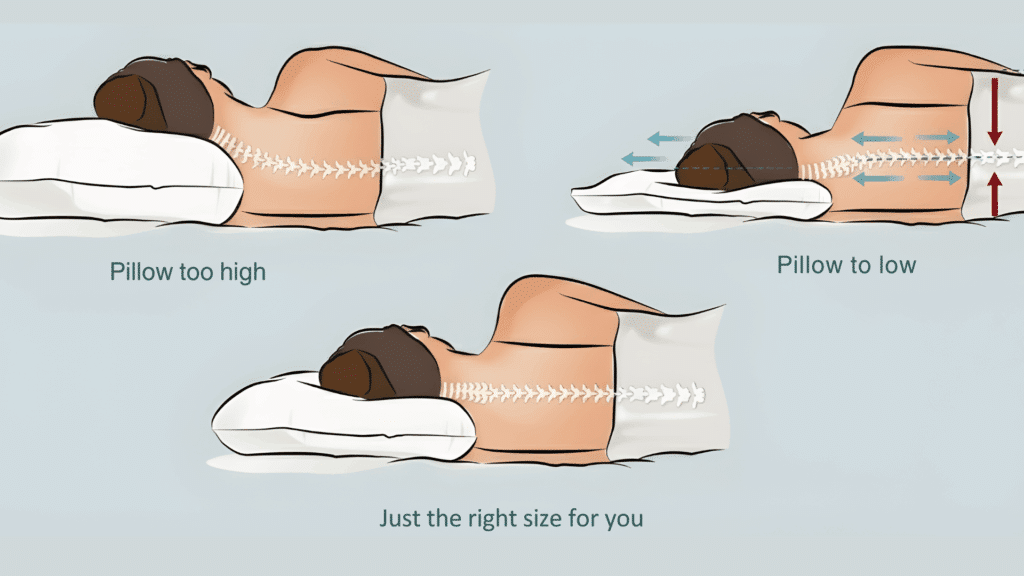
Your pillow size should match how you sleep and how much you move at night. The right fit supports your head and neck, keeps your spine aligned, and helps you stay comfortable in any position.
1. For Active or Side Sleepers
Choose a queen pillow (20 × 30 inches) to give yourself extra room to move. The added length lets your head and shoulders stay supported even when you switch sides or adjust during sleep.
Side sleepers often need a pillow that fills the space between their shoulder and head to keep their spine straight.
- Loft and Fill Tip: Go for a medium to high loft to maintain alignment. Foam or latex pillows work well because they keep their shape and provide firm, steady support through the night.
- Extra Tip: The longer pillow surface prevents your shoulder from dropping too low, reducing stiffness in the morning.
2. For Back or Stomach Sleepers
Pick a standard pillow (20 × 26 inches) for compact, balanced support. Its smaller size keeps your neck closer to the mattress and prevents over-arching while you sleep.
Back and stomach sleepers usually need a flatter pillow to keep the airway open and reduce neck strain.
- Loft and Fill Tip: Choose a low to medium loft with a softer fill. Down or fiberfill pillows work best since they compress easily and let your head sink just enough for comfort.
- Extra Tip: If you sleep on your stomach, a low-loft, plush pillow or even no pillow under your head can help prevent neck twisting.
How to Choose a Queen Pillow Across Different Brands
When buying a queen pillow, keep in mind that not all brands follow the same size standards.
Small design differences, like gussets, fill type, or material, can affect how the pillow fits your pillowcase and bed setup.
| What to Check | Why It Matters | What to Look For |
|---|---|---|
| Actual Dimensions | Each brand may size slightly differently. | Compare listed sizes; some measure 19 × 29, others 20 × 32 inches. Always check product specs. |
| Gusset Design | Adds structure and changes the pillow’s overall shape. | Look for 1–3 inch side panels. Gusseted pillows are taller and more supportive but may need larger pillowcases. |
| Material & Fill Type | Different materials compress or hold shape differently. | – Foam or latex: Dense and firm; may appear smaller. – Down or fiberfill: Fluffier and expands, needing more room. |
| Pillowcase Fit | Ensures the pillow sits neatly inside the cover. | For gusseted or oversized models, choose queen-specific pillowcases or those labeled with flexible sizing. |
| Brand Specifications | Prevents surprises in fit and comfort. | Always read the brand’s dimension chart before purchasing, avoid relying only on the “queen size” label. |
Measure your existing pillowcases and compare them to the pillow’s dimensions before buying. A quick check helps you avoid tight fits or loose, bunched fabric.
How Many Pillows Do You Really Need for a Queen Bed?

For a queen bed, two queen pillows (20 × 30 inches) fill the width evenly and create a clean, balanced base.
To bring in height and dimension, layer two or three Euro pillows (26 × 26 inches) behind them. These larger, square pillows add a polished backdrop and make your bed look full and inviting.
You can then place one or two smaller accent or lumbar pillows in front to introduce color, texture, or pattern. This setup creates a stylish, layered look perfect for both everyday use and display.
If you prefer a more minimal layout, stick to your sleeping pillows and add just one decorative cushion in the center for a simple yet cohesive appearance.
The key is to balance comfort with aesthetics so your bed looks put-together without feeling cluttered.
Tips to Keep Pillows in Good Shape
To keep your pillows in good condition, follow these basic care steps:
- Replace every 1–2 years based on usage and fill type.
- Fluff and air weekly to maintain shape.
- Fold test: if it doesn’t spring back, replace it.
- Follow washing labels; foam needs spot cleaning; down or fiberfill can go in the washer and dryer on low.
Proper pillow care helps maintain both comfort and hygiene. Regularly refreshing and cleaning your pillows prevents the buildup of dust, oil, and allergens that can affect sleep quality.
Rotating or airing them in sunlight also helps eliminate moisture and odor.
By replacing worn pillows on time and caring for them correctly, you’ll keep your bed feeling fresh, supportive, and comfortable throughout the year.
Wrapping Up
Choosing the right pillow might seem simple, but those few extra inches can make a real difference in how well you sleep.
Now that you understand queen size pillow dimensions, you can pick the best fit for your bed, your sleep habits, and your pillowcases without second-guessing.
I hope this guide helped clear up the confusion between standard and queen pillows so you can feel confident the next time you shop.
A good night’s rest starts with comfort that actually fits; and now you know exactly what to look for.
If you found this helpful, take a look at my other posts for more tips on bedding, comfort, and home essentials.