
Low Light Bedroom Plants That Actually Thrive (Yes, Even in Your Cave of a Room)
If your bedroom gets approximately five minutes of sunlight a day like a moody little hobbit hole but you still want that “calm green sanctuary” vibe… hi, you’re my people.
Most plant advice is basically like: “Place in bright, indirect light!” which is the botanical version of “just be rich.” So let’s talk about what actually survives (and even looks good) in a low light bedroom without you hovering over it like a stressed out plant stage mom.
First: Are You Really Low Light? (No judgment. Okay, mild judgment.)
Here’s my quick and dirty light test:
- Put your hand about a foot above where you want the plant.
- Sharp shadow: Congrats, you’ve got more light than you think.
- Soft, fuzzy shadow or basically nothing: Yep. Low light.
- If the spot is more than ~7 feet from a window, it’s usually low light territory.
Also: “low light” doesn’t mean “no light.” Plants tolerate shade, but they do not throw a party in it. Expect slower growth and fewer dramatic new leaves. (Honestly, relatable.)
Pick a Plant Based on the Kind of Person You Are
Let’s match your plant to your lifestyle because forcing a high maintenance plant into your life when you’re already hanging on by a thread? Absolutely not.
If you forget to water (or you travel / dissociate / exist)
Go for: Snake Plant, ZZ Plant, Cast Iron Plant.
These are the plants that survive spite.
If your pet thinks greenery is a snack bar
Stick with the pet safer options section below. (Please don’t gamble with this. Vet bills are not the fun kind of “home upgrade.”)
If you want flowers or something a little extra
Try: Peace Lily, Prayer Plant, Anthurium
They’re a bit more needy, but they give you some payoff.
The “I Can’t Believe It’s Still Alive” Plants (Start Here)
If you’ve ever watched a plant slowly decline while you whisper “why are you like this?”… pick one of these.
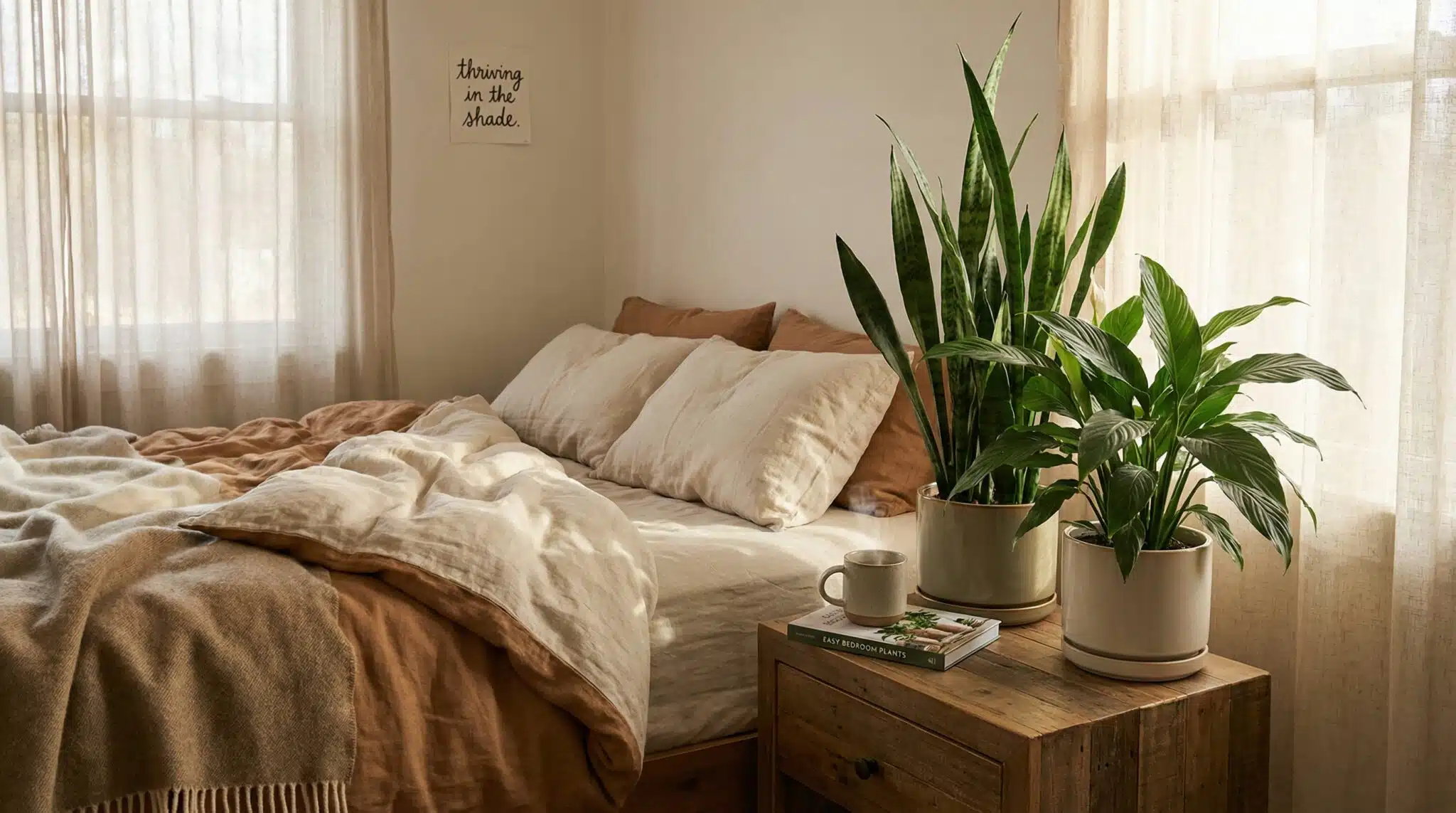
Snake Plant
This one is basically furniture. Water every 3-4 weeks (sometimes longer), and it’s fine. It’s also famous for releasing oxygen at night, which makes it a cozy bedroom buddy.
- Want something small for a nightstand? Look for ‘Hahnii’.
- Want a tall corner plant? Try ‘Laurentii’ or similar.
Important note: It’s not a great chew toy for pets can cause stomach upset if munched.
ZZ Plant
The ZZ is that friend who’s unbothered by everything. It can live under artificial light, so if your bedroom is basically a lamp lit Netflix den, it’ll still cope.
Water every 2-3 weeks (and if you forget and it becomes 4… it will probably forgive you).
Pet note: Higher risk if chewed (mouth/throat irritation). Keep it away from nibblers.
Cast Iron Plant
This plant has survived Victorian parlors full of coal dust and bad vibes, so your dim bedroom is not going to scare it. It’s slow growing like, glacial but it’s tough.
Water every 4-6 weeks, give or take.
Low Light Plants That Want a Weekly “Hey Bestie” Check In
These are still forgiving, but you’ll want to eyeball them weekly so they don’t get dramatic.
Pothos
The gateway plant. Trails beautifully from shelves, doesn’t ask for much, and tells you when it’s thirsty by going a bit limp (same).
Water when the top inch of soil is dry often weekly in low light.
Pet note: Higher risk if chewed (irritation). Hang it up high if your cat is a menace.
Peace Lily
The drama queen of houseplants in the best way. It literally droops when it’s thirsty and then perks back up after watering like nothing happened. Iconic.
It can flower in lower light, but in a truly dim room it may just… exist. Still pretty, though.
Pet note: Mild to moderate risk if chewed (stomach/mouth irritation).
Spider Plant
Easy, cheerful, and it makes babies (“spiderettes”) you can root for free. I love a plant that wants to multiply without me doing math.
Also: generally a pet safer pick.
Heartleaf Philodendron
Cute, trailing hearts, and doesn’t need a spotlight to look good. Water roughly every 10-14 days, but always check the soil first.
Pet note: Higher risk if chewed.
Chinese Evergreen (Aglaonema)
If you want a fuller, “I tried” looking plant in a dim corner, this one delivers. Some varieties have silver/pink/red tones, but brighter color usually needs a bit more light.
Pet note: Higher risk if chewed.
“Okay, She’s Fancy” Statement Plants (Worth It If You’ll Babysit a Little)
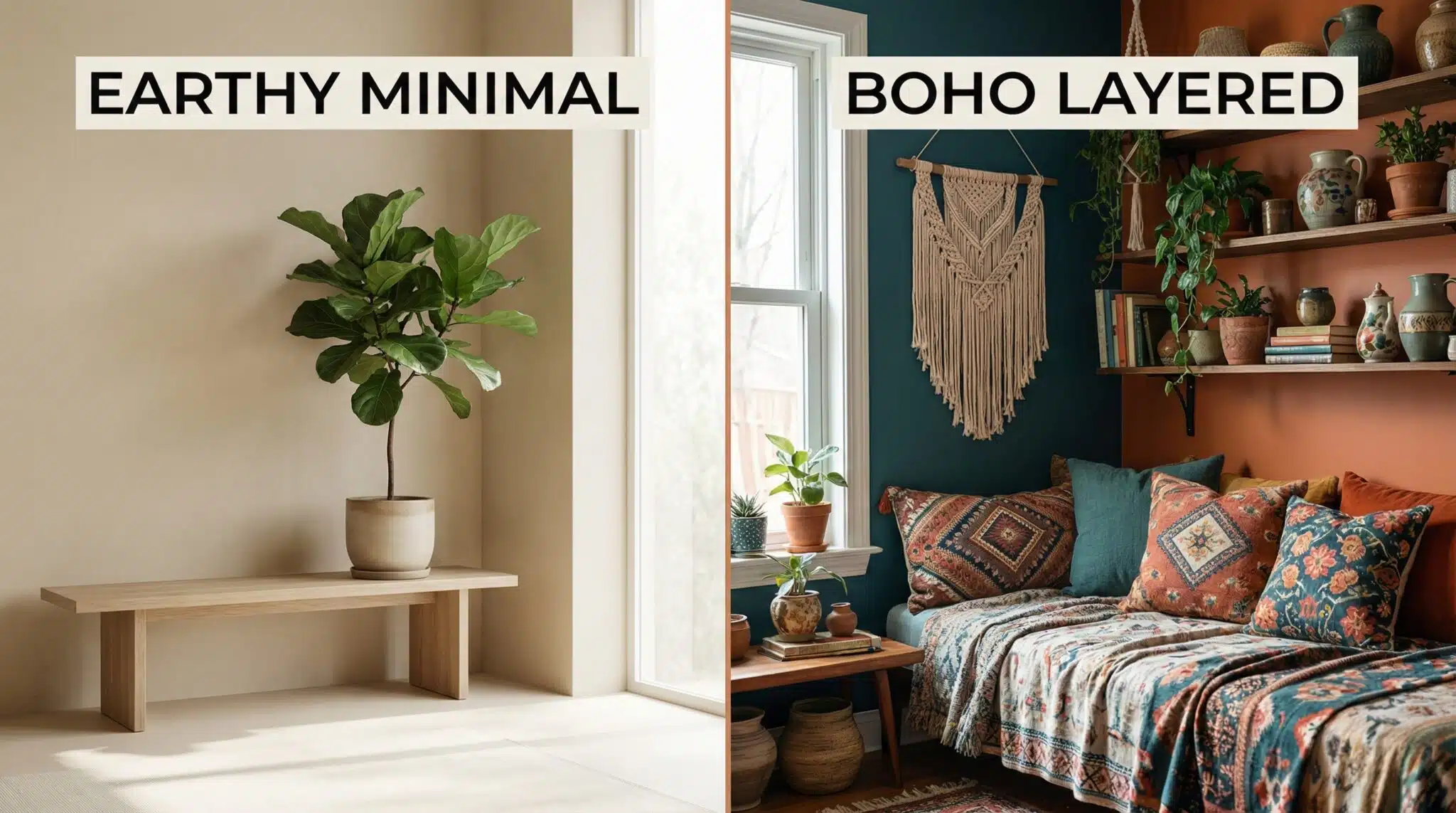
These are the ones that make your room feel styled for an earthy or bohemian look… but they do want a bit more attention, especially around humidity.
Parlor Palm
Classic, soft, and totally fits that cozy earthy bedroom vibe. Great for low light but it likes humidity. If your heat runs all winter and your skin feels like paper, your palm will agree.
If you’re dry air cursed:
- mist a couple times a week, or
- use a pebble tray (pot on pebbles, water underneath don’t drown the roots).
Prayer Plant
More forgiving than the fussy Calathea crowd (thank goodness). The leaves fold up at night and open during the day, which is honestly delightful like plant ASMR.
Also appreciates humidity.
Anthurium
If you want blooms in a dim-ish bedroom, Anthurium is a stunner. The tradeoff: it’s needier more frequent watering and humidity help a lot. Not my first pick for the chronically busy, but gorgeous if you’re committed.
Bird’s Nest Fern
One of the easier ferns indoors (and I do not say that lightly). It still likes decent humidity, but it’s not as high maintenance as some fern divas. If your water is super hard, filtered/distilled can help prevent brown tips.
Plants I’d Skip in a Dark Bedroom (Save Yourself the Heartbreak)
Some plants are internet famous but absolutely not low light bedroom sweethearts.
- Boston Fern: wants high humidity and constant attention. Bathrooms? Sure. Bedrooms? Usually nope.
- Calathea: gorgeous, but often turns crispy and offended for no reason. (Yes, I’ve tried. Yes, I got my feelings hurt.)
- Monstera: in low light it gets leggy and sad, and you won’t get those iconic split leaves.
- English Ivy: often attracts spider mites indoors, especially with heating. Hard pass.
Pet Safer Bedroom Plants (Because Cats Choose Chaos)
If your pet nibbles plants, I’d stick with these generally non-toxic options:
- Spider Plant
- Cast Iron Plant
- Parlor Palm
- Bird’s Nest Fern
- Prayer Plant
Plants that are more likely to cause irritation if chewed (and are best kept out of reach if your pet is a snacker):
- ZZ Plant, Pothos, Philodendron, Chinese Evergreen
- (Also: Snake Plant and Peace Lily can cause upset too.)
If you’re ever unsure, check a reliable toxicity list (like ASPCA) and call your vet if a bite happens. Don’t play “wait and see” with a determined plant eater.
Where Your Plant Should Actually Live (Not Where It Looks Cute on Pinterest)
Low light bedrooms are all about placement strategy.
- Nightstands + dark corners: choose the toughest plants (Snake, ZZ, Cast Iron).
- Within 2-3 feet of a window (even north facing): Pothos, Philodendron, Parlor Palm do well here.
- High shelves: perfect for trailing plants like Pothos and Spider Plant (plus it saves them from pets).
- Floor corners: great for taller Snake Plants and Palms.
Two tips I swear by:
- Quarter turn your pot every week or two so it doesn’t permanently lean toward the window like it’s yearning for a better life.
- Use a waterproof saucer. Always. And never set a watered pot directly on wood furniture unless you enjoy surprise water rings and slow motion swelling.
Watering: The Fastest Way to Kill a Low Light Plant (I’m So Sorry)
Here’s the rule: overwatering kills way faster than underwatering, especially in low light. Less sun = slower drying = roots sitting wet and getting gross.
My no fail method:
- Stick your finger about 1 inch into the soil.
- Dry? Water.
- Still moist? Walk away and check again in a couple days.
Also: please don’t fall for the “put gravel at the bottom for drainage” myth. Gravel doesn’t magically create drainage water just sits above it and your roots stew in sadness.
What you actually need:
- A pot with drainage holes, or
- Keep it in a nursery pot inside a cute cachepot, and lift it out to water and fully drain before putting it back.
Do You Need a Grow Light?
Sometimes the answer is: yes, your bedroom is basically a plant desert, and we need to bring in reinforcements.
You’ll probably benefit from a grow light if:
- you can’t see any shadow at midday where the plant sits, or
- your plant is getting leggy, losing color, or doing absolutely nothing for 6+ months.
The good news: modern LED grow lights can look like normal white light (no creepy purple nightclub glow). Run them 12-16 hours a day, and still give plants darkness at night.
Quick Troubleshooting (Because Plants Love to Communicate in Vague Symptoms)
- Yellow/mushy leaves: usually overwatering. Let it dry more between waterings.
- Leggy, stretched growth: needs more light. Move closer to a window or add a grow light.
- Brown crispy tips: often dry air (hello winter heat). Try grouping plants, pebble tray, occasional misting.
- Wilting but soil is wet: possible root rot. Unpot, trim mushy roots, repot in fresh dry soil, and hold off watering for a bit.
And sometimes? No growth is normal in low light. If the plant looks healthy, it might just be conserving energy instead of performing for you.
My Favorite Way to Start a Bedroom Plant “Sanctuary” (Without Losing Your Mind)
Pick one plant that matches your light and your personality. Put it in the right spot. Water like you’re slightly paranoid about overwatering (because you should be). Watch what happens for a few weeks.
Once you’ve kept one plant alive, your confidence skyrockets and suddenly you’re propagating spiderettes and rearranging furniture for “better plant light” like the rest of us.
Welcome. There’s no turning back.