You’ve bought the crib, now you need a mattress. You search “standard size” and assume any option will fit. I’ve seen this mistake countless times, parents discover a dangerous gap only after the mattress arrives.
Here’s what you need to know: “standard” isn’t universal. Manufacturing tolerances, regional differences, and zero regulations for mini cribs mean buying the wrong size is surprisingly easy. Those gaps? They’ve caused hundreds of entrapment incidents.
I’ll walk you through the actual dimensions that matter, how to measure and test fit properly, and the common mistakes that create dangerous spaces, even when you think you’ve bought the right size.
Why Crib Mattress Size is More than a Shopping Detail?
Most parents worry about mattress comfort or organic materials. But size and thickness are the actual safety factors the CPSC regulates, and for good reason.
Gaps cause entrapment when a mattress is too small for the crib, with 494 incidents and 139 fatalities from 2010-2021, mainly due to poor fit.
Thickness affects rail height; a mattress over 6 inches reduces effective height, increasing fall risk. The 6-inch limit ensures a minimum 26-inch rail height.
Federal regulations allow a ⅝ inch tolerance in crib and mattress dimensions, so two “standard” mattresses can differ by over an inch, creating dangerous gaps. Don’t rely solely on standard-sized labels.
Mattress dimensions aren’t trivia. They’re the difference between a safe sleep space and a recall waiting to happen.
Mini Crib Mattress Dimensions
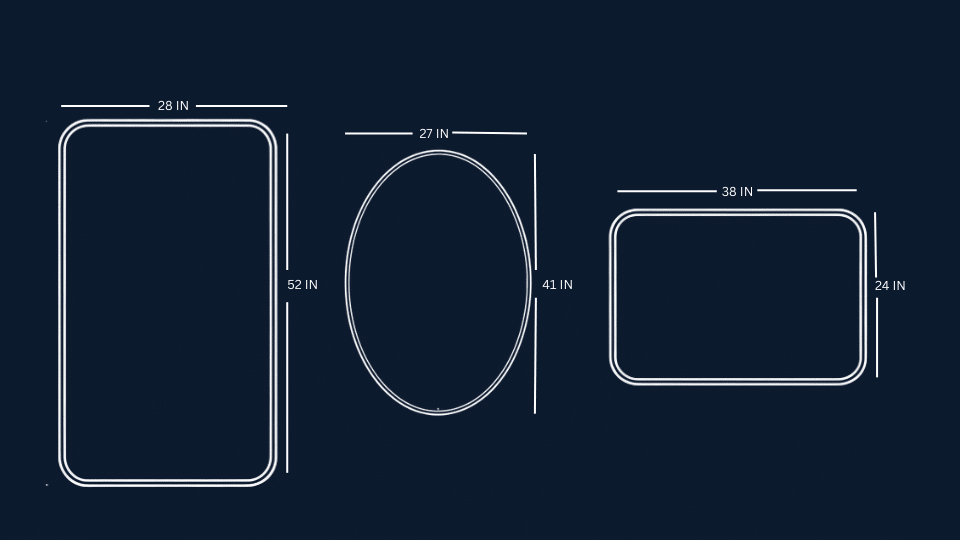
Mini cribs are popular for small spaces, but their mattresses are where most fit issues happen.
Typical size: Around 24 × 38 inches, though some brands range from 23 × 36 inches to 25 × 39 inches.
Unlike full-size cribs, mini cribs have no federal size standard. Each manufacturer sets their own dimensions. That means a mini crib mattress from one brand often won’t fit a mini crib from another, even if both are labeled “mini crib mattress.”
Always measure your specific crib’s interior dimensions and match them precisely to the mattress specs before buying. Don’t assume “mini” means universal.
Mini cribs work well for apartments or the first 6-9 months, but babies outgrow them fast. The lack of standardization also makes it harder to find a replacement mattress if yours wears out.
How to Measure and Test Mattress Fit
Buying the right size label isn’t enough; you need to verify the actual fit before your baby sleeps on it.
Before You Buy
Measure your crib’s interior width, length, and base-to-rail height. Write these numbers down. When shopping, compare mattress specs to your measurements, not what the product box claims.
For foam mattresses: Expect them to arrive compressed. They need 24-48 hours to expand fully, so don’t judge the fit right out of the box.
After It Arrives
Run two quick tests before your baby uses it:
Two-finger rule: Place the mattress in the crib. Try to fit two adult fingers between the mattress edge and crib rail on all sides. If more than two fingers fit, it’s too small; return it.
Shake test: Push the mattress firmly toward one corner. It shouldn’t slide more than an inch.
These gaps are how babies become wedged between the mattress and rails. Five minutes of testing now prevents a dangerous situation later.
Common Mattress Fit Problems and How to Avoid Them
Even with careful measurements, several factors can prevent a proper fit between your mattress and crib.
- Assuming universal standards: Standard sizing varies between manufacturers, with slight dimensional differences that affect fit
- Judging foam prematurely: Memory foam and compressed mattresses need 24-48 hours to expand to their true dimensions fully
- Thick mattress protectors: Waterproof pads and covers reduce the adequate mattress size, creating unexpected gaps
- Regional sizing differences: US and European sizing standards differ slightly, causing compatibility issues even when labeled standard
Taking these factors into account during your purchase will help ensure a safe, snug fit from the start.
What the Community has to Say About Crib Mattress Sizes
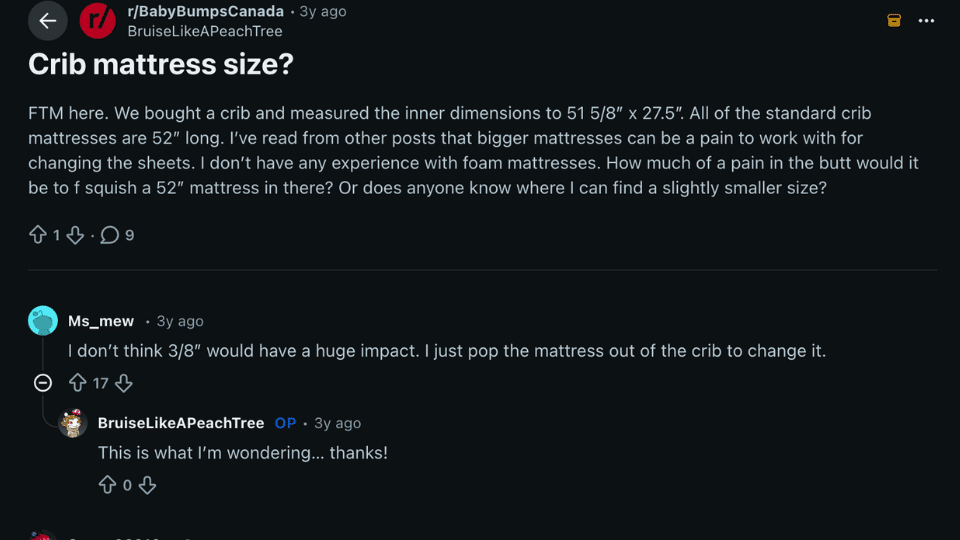
I came across an interesting discussion on r/BabyBumpsCanada where a first-time mom measured her crib’s interior at 51 5/8″ × 27.5″ and worried that standard 52″ mattresses would be too tight.
The comments were reassuring; most parents said the 3/8″ difference wouldn’t matter and suggested simply removing the mattress to change sheets.
One commenter attributed the discrepancy to manufacturer rounding, while another emphasized that as long as there’s no gap, a snug fit is actually preferable for safety.
Here’s my take: While these parents are right that a tight squeeze beats a dangerous gap, I’d still verify the fit using the two-finger test once the mattress arrives.
That 3/8″ difference could work perfectly or create difficulty with sheet changes, depending on the specific mattress foam density and your crib’s corner design.
The advice to remove the mattress for sheet changes is practical and something I recommend regardless of fit tightness.
The Bottom Line
Getting crib mattress dimensions right isn’t about being a perfectionist; it’s about keeping your baby safe. You now know that standard sizing varies by manufacturer, mini cribs have no federal regulations, and a proper fit requires more than trusting a label.
Before you make your purchase, measure your crib’s interior dimensions and compare them to the actual mattress specs.
Once it arrives, run the two-finger test and shake test before your baby sleeps on it. Those five minutes of verification could prevent a dangerous gap.
I’ve given you the measurements, the tests, and the common pitfalls to avoid. Now you can shop with confidence, knowing exactly what to look for and how to verify a safe fit.