
If your “bedroom” currently feels like a storage unit that happens to contain a bed… hi. Same. I’ve lived through seasons where my nightstand was basically a rotating display of “things I might need someday” (spoiler: I did not need them at 11:30 p.m. when I was trying to sleep).
And that’s the problem with most hygge bedroom advice: it’s all blankets and candles and not nearly enough why does this room make my nervous system feel like it’s on a group text with 38 unread messages?
The short answer: A hygge bedroom is less about buying “cozy stuff” and more about reducing visual noise, using warmer/dimmer evening lighting, and choosing a simple, soft materials palette that supports winding down.
Key exception: If you have asthma/allergies, migraines/light sensitivity, or pets/kids, fragrance and flame “cozy” may need safer swaps (low scent, flameless, and easy to clean).
When it matters less: If you already sleep well, you can treat this as a comfort upgrade not a strict sleep protocol.
Hygge isn’t a shopping list. It’s a feeling. It’s your brain unclenching when you walk into the room.
So here’s the version that actually works without turning your bedroom into a Pinterest reenactment.
Table of contents
- The one screen cozy plan checklist
- First: Hygge is not “more cozy stuff”
- Step 1: Declutter (yes, it affects how you feel)
- Step 2: Fix your hygge bedroom lighting
- Step 3: Layout + flow (the underrated design move)
- Step 4: Calm color story + materials palette
- Step 5: Hygge bedding layers (without chaos cozy)
- Step 6: Personality (meaningful, not filler)
- Step 7: Scent (softly, and safely)
- Step 8: Make the phone less powerful
- Bonus: A cozy corner, even in a tiny room
- Common hygge bedroom mistakes
- Start tonight: one tiny change
- Frequently Asked Questions
The one screen cozy plan checklist
| Step | What you’ll do | Time | Cost level | Biggest payoff |
|---|---|---|---|---|
| 1 | Clear nightstand + floor pickup | 15-30 min | $ | Instant “exhale” |
| 2 | Swap to warm, dimmable bedside lighting | 10 min | $$ | Softer evenings (and usually easier wind down) |
| 3 | Fix bed placement + walking paths | 20-40 min | $ | Room feels calmer + more functional |
| 4 | Pick a calm palette + 2-3 textures | 20 min | $-$$ | Cohesive “designed” look |
| 5 | Simplify bedding layers | 15 min | $-$$$ | Cozy without clutter |
| 6 | Add 1-2 meaningful items | 10 min | $ | Personality without noise |
| 7 | Keep scent subtle (or skip) | 5 min | $-$$ | Cozy atmosphere without headaches |
| 8 | Move phone charging away from bed | 2 min | $-$$ | Fewer accidental scroll spirals |
Optional photo checklist (for before/after):
- Nightstand (before/after). (Alt text: “hygge bedroom nightstand decluttered before and after”)
- Lighting at night (overhead vs lamp). (Alt text: “warm hygge bedroom lighting with bedside lamps at night”)
- Bed + rug view (shows proportions). (Alt text: “hygge bedroom layout with bed placement and rug sizing”)
First: Hygge Is Not “More Cozy Stuff”
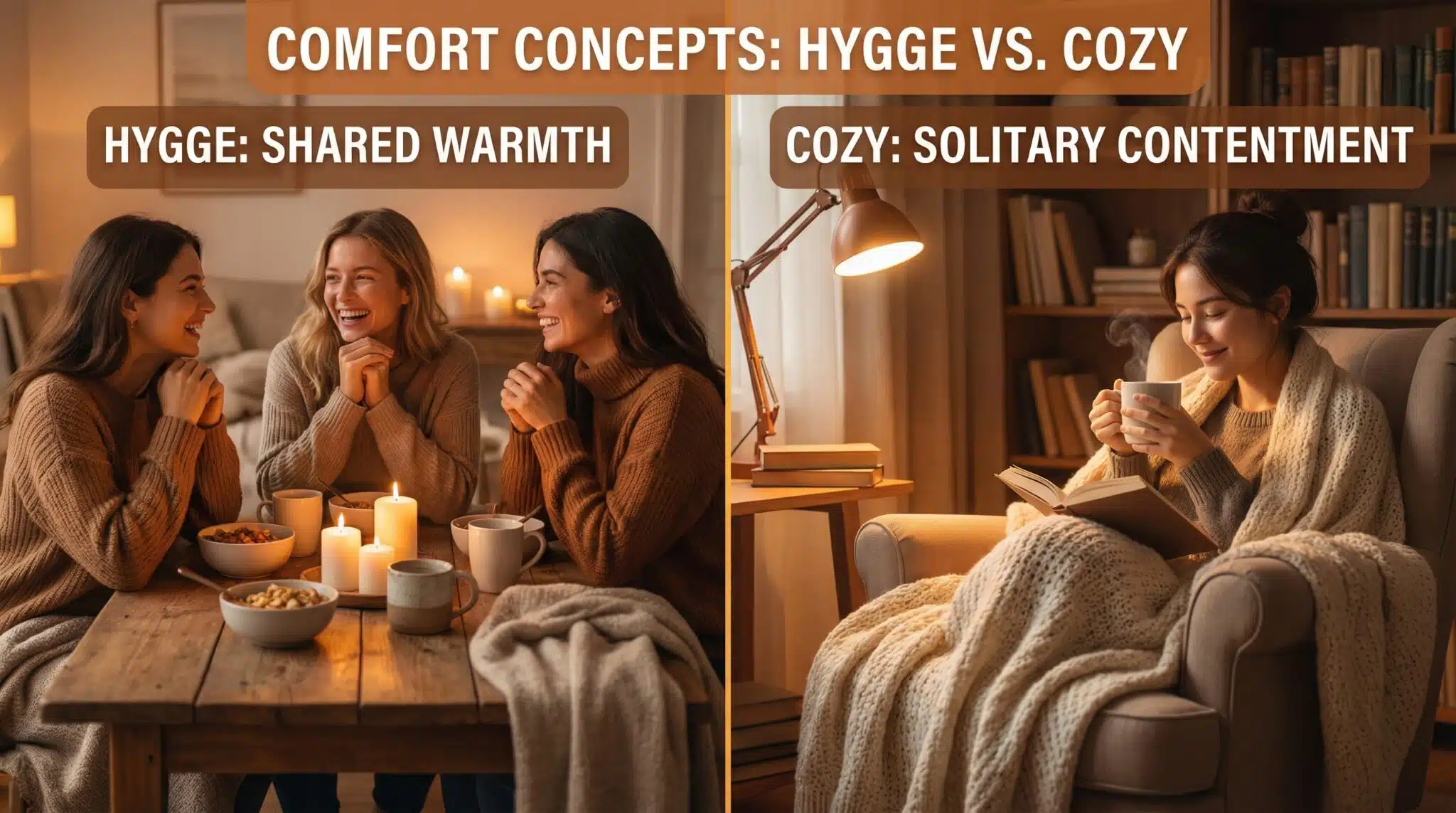
Hygge (the Danish concept everyone loves to slap on a chunky knit throw) is really about a space that supports rest, comfort, and calm.
My personal filter for every single thing in your bedroom:
- Comfort: Does it help you feel physically good?
- Simplicity: Does it reduce visual/mental noise?
- Connection: Does it feel like you (or nature), not a hotel room?
- Atmosphere: Does it make the room feel soft and settled especially at night?
If something doesn’t hit at least one of those, it’s just… clutter wearing a cute outfit.
Step 1: Declutter Like It’s a Sleep Emergency (Because It Kind of Is)
I’m going to be dramatic: hygge cannot breathe in clutter. Your room can have the world’s softest bedding and still feel stressful if every surface is screaming. (And yes clutter has been linked with higher stress for some people, especially when the space feels “unfinished” [Saxbe & Repetti, 2010].)
Do this tonight (15 minutes, no martyrdom)
Set a timer. Grab a donation bag (or just a trash bag you promise you’ll donate later).
- Clear your nightstand completely. Wipe it down. Enjoy the rare sensation of seeing wood/granite/whatever your nightstand even is.
- Put back only: lamp + current book + a tiny dish for jewelry/chapstick/your emotional support hair tie. Optional: one plant or one candle.
- Pick up the floor. Nothing makes a room feel less calm than stepping over jeans like you’re in an obstacle course.
Quick opinion: if you have open shelving in a bedroom and you’re not the kind of person who enjoys dusting for fun… you’re probably going to hate it. Closed storage is hygge’s best friend.
Renter friendly storage wins: under bed bins, lidded baskets, over door hooks, and a slim dresser that doubles as a “landing zone.”
Step 2: Fix Your Lighting (This Is the Closest Thing to a Bedtime Cheat Code)
Overhead lighting at night is almost always the villain. Not because it’s “bad,” but because it can make your room feel like a dentist’s office who just got into minimalism and bright evening light (especially blue heavy light) can delay sleepiness for many people [Chang et al., 2015; Harvard Health Publishing, 2020].
My “please don’t overthink it” bulb rule
Look for bulbs labeled warm white (often 2700K). Warmer light is generally lower in the wavelengths most associated with circadian stimulation compared with cool/blue heavy light [CIE S 026/E:2018].
Easy bedside lamp default:
- Warm (~2700K), dimmable, around 450-600 lumens (cozy, not interrogation)
Layer your light (aka stop relying on the Big Light)
- Ambient: table lamps/floor lamp for general glow
- Task: a reading light that’s actually useful
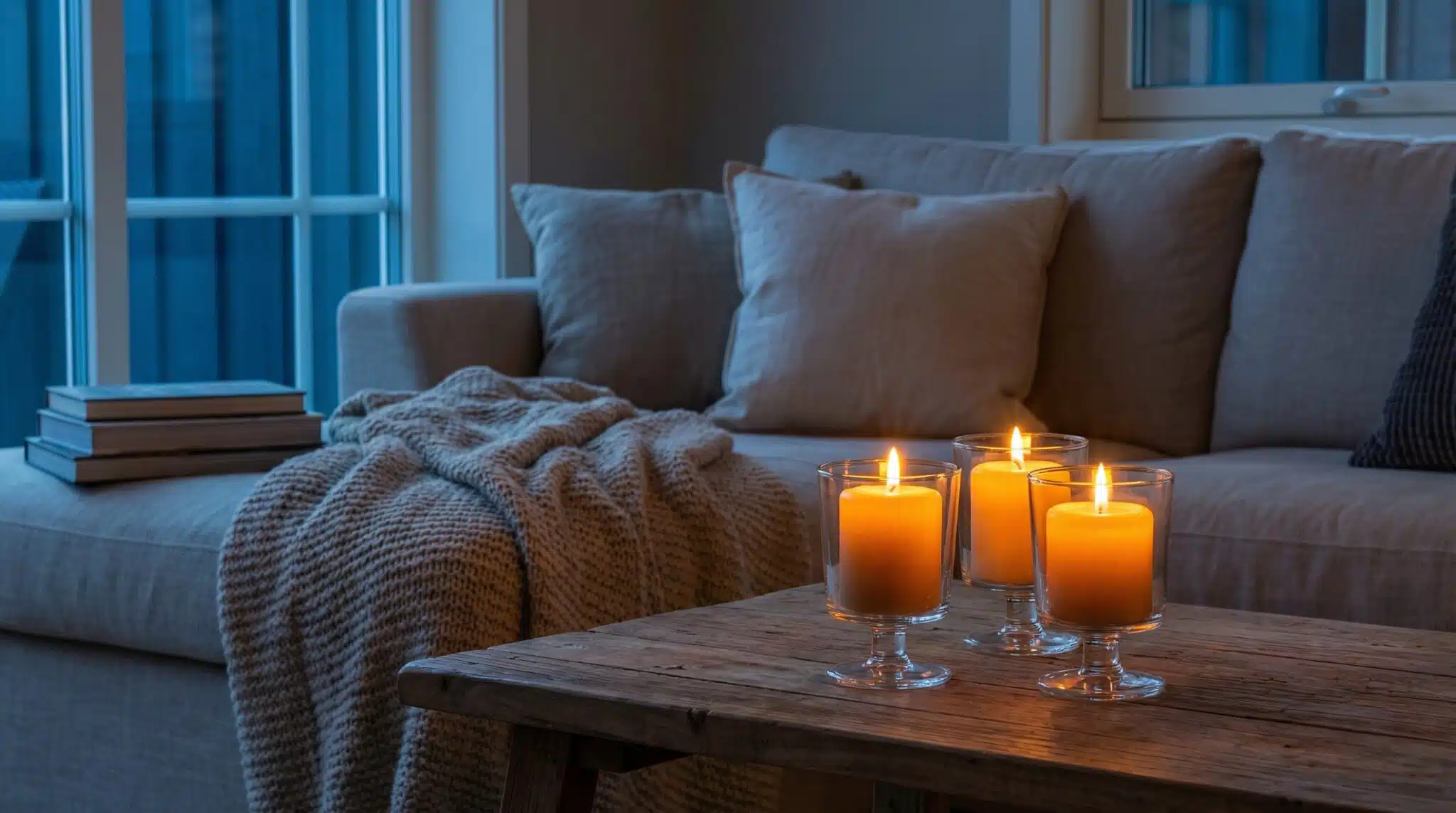
- Accent: a candle or two or LED flicker candles (love them, zero fire anxiety)
Candle safety note (boring but important): keep flames well away from curtains/bedding, use stable holders, and never fall asleep with a candle burning (NFPA guidance is clear on this) [NFPA, Candle Safety].
If you get headaches/migraines: prioritize dimmers, shaded lamps, and indirect light (bounce light off a wall) to reduce glare.
Step 3: Layout + Flow (The Underrated Design Move)
“Hygge bedroom design” is also… actual design. Layout is what makes the room feel easy to live in.
A simple layout checklist
- Walking path: aim for a clear path from door → bed → closet/bathroom. If you’re constantly sidestepping things, your brain reads “friction.”
- Bed placement: if possible, place the bed so you can see the door without being directly in line with it (calmer for many people; also just practical).
- Nightstand sizing rule of thumb: choose a nightstand about level with the top of your mattress (or within a couple inches). It looks more intentional and feels better to use.
- Lamp height: bottom of lampshade roughly around eye level when sitting in bed = less glare.
Rug sizing (so it stops looking like a postage stamp)
Pick the biggest rug your space/budget can handle. Common “works in most rooms” options:
- Queen bed: often 8’×10′ (or 6’×9′ in tighter rooms)
- King bed: often 9’×12′ if the room allows
If you’re not replacing your rug: try a runner on each side of the bed for that warm first step feeling.
(Alt text for an image here: “hygge bedroom layout diagram showing bed placement, walking paths, and rug sizing”)
Step 4: Choose a Calm Color Story (So Your Eyes Can Rest Too)
Hygge color isn’t “all beige forever.” It’s quiet, warm, and not visually shouty.
If you’re stuck, start here:
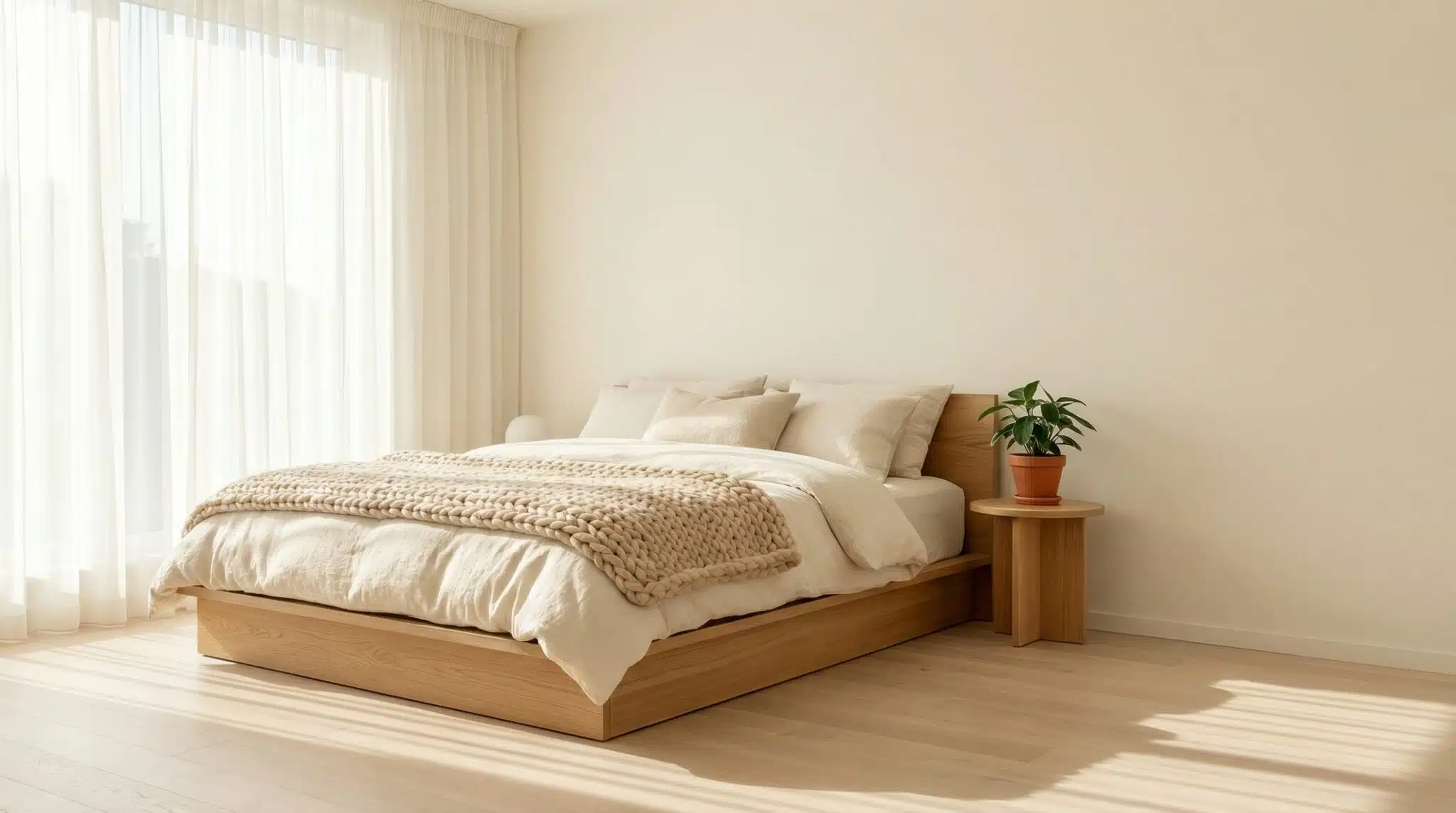
- Base: warm white, cream, soft taupe, warm greige
- Accent: muted sage, dusty blue, soft terracotta, warm gold, gentle lavender
If you like rules, use the 60/30/10 thing:
- 60% calm neutral (walls/bedding)
- 30% secondary (rug/curtains)
- 10% accent (pillows/art/small decor)
And please test paint. Paint is a liar. It will look adorable at noon and then turn swampy at night just to humble you.
Materials + texture palette (the “it looks expensive but isn’t loud” move)
Pick 2-3 textures for warm toned bedroom ideas and repeat them around the room:
- Natural fibers: linen, cotton, wool (or wool blends)
- Wood tones: light oak, warm walnut, or one consistent mid tone (don’t mix five competing browns)
- Finishes: matte or satin tends to read softer than high gloss
Window treatments (instant softness)
- Hang curtains high and wide (closer to the ceiling, extending past the window) for that calmer, drapier look.
- If you need darkness: consider blackout lined curtains or a blackout roller shade behind curtains (layered = more polished). Darker bedrooms are often associated with easier sleep for many people [AASM, Sleep Hygiene Overview].
(Alt text for an image here: “hygge bedroom color palette with warm neutral base and muted accent colors”)
Step 5: Make Your Bed Cozy Without Creating a Decorative Pillow Lawsuit
This is where people accidentally create “chaos cozy.” You don’t need seven throws and 14 pillows. You need the right layers.
My simple bedding formula:
- Sheets: cotton percale/linen for cool sleepers, flannel/brushed cotton if you’re always cold
- One textured layer: quilt or waffle blanket (adds cozy without bulk)
- Duvet/comforter: the main warmth layer
- Hot tip if you share a bed: try two twin duvets instead of one big one. It’s a Scandinavian method that many couples find more comfortable.
- Throws: one, maybe two. Not a throw avalanche.
Pillows: 2-3 sleeping pillows + 0-2 decorative. If you need a separate basket just to store pillows at night, your pillows have started a tiny pillow economy and it’s time to intervene.
If you sleep hot: prioritize breathable layers (cotton/linen) and consider a lighter duvet insert overheating can disrupt sleep for some people [National Sleep Foundation, Sleep Environment].
Step 6: Add Personality (Without Turning Every Surface Into a Gift Shop)
Hygge loves meaningful things. It does not love random filler decor you bought because a shelf looked “empty.”
Pick one or two personal moments for the room:
- a framed photo you actually love
- a small stack of books you reread
- a souvenir with a story
- a vase with dried stems
Even better: rotate things seasonally so you get the “newness” without accumulating a museum collection.
Step 7: Scent Softly, Like a Whisper
Scent is powerful… which is exactly why you don’t want your bedroom smelling like a candle store tackled you.
Keep it subtle:
- a gentle candle (many people prefer soy/beeswax for a “cleaner” feel, but any burning candle can still produce smoke/particles ventilation matters) [EPA, Indoor Air Quality Overview]
- a diffuser with fewer drops than you think
- a lavender sachet in a drawer
Lavender aromatherapy has some evidence for improving perceived sleep quality in certain settings, though results vary and it’s not a cure all [Lillehei & Halcon, 2014].
Rule of thumb: if you smell it the second you walk in, it’s too much.
Who should be careful with scent:
- Asthma/allergies: choose low or no scent options; skip diffusion if it irritates your breathing [EPA, Indoor Air Quality Overview].
- Pregnancy: essential oils aren’t automatically “safe because natural” check with your clinician if you’re using concentrated oils regularly [NCCIH, Aromatherapy].
- Pets: many essential oils can be risky for cats/dogs; ask your vet before diffusing, and default to good ventilation + mild options [ASPCA, Toxic and Non-Toxic Plants / Pet Safety Resources].
Step 8: The Glow-y Rectangle Has to Go (At Least a Little)
I know. Phones are basically an organ now. But if you want a room that actually helps you wind down, the bedroom can’t be a notification arena. Evening screen use is associated with later sleep timing and reduced sleepiness for many people, especially when it replaces wind down time [Chang et al., 2015; AASM, Screen Time and Sleep].
Try one of these:
- charge your phone across the room
- or, if you’re brave, charge it outside the bedroom
- use a basic alarm clock (or sunrise clock if you like a gentle wake up)
I’m not here to take away your nighttime scrolling entirely. I’m just saying: make it harder to do by accident for an hour.
If you’re a shift worker: focus less on “no screens ever” and more on light control (blackout curtains, consistent wind down cues) based on your sleep window.
Bonus: Create a “Cozy Corner” Even If Your Room Is Tiny
You don’t need a sprawling primary suite to make a tiny room feel bigger. You just need a spot that isn’t your bed because your bed already has a full time job.
A simple cozy nook:
- a chair (even a small one)
- a little table for tea/book/glasses
- a warm lamp
- one throw
If you don’t have space for a chair, your “cozy corner” can literally be: a cleared nightstand + lamp + book. That counts. I’m the judge and I say it counts.
Common Hygge Bedroom Mistakes (That Undo Everything)
A few sneaky things that mess up the vibe fast:
- Keeping clutter and just adding “cozy.” That’s like putting perfume on a gym bag.
- Cool, harsh lighting. If your bulb is bright white/bluish, it may never feel restful at night [CIE S 026/E:2018].
- Decor with no meaning. If it’s just there to “fill space,” it becomes visual noise.
- Too many plants. Yes, plants are great. No, your bedroom does not need to become a greenhouse you feel guilty about.
- Easy plants: pothos, snake plant, ZZ (note: snake/ZZ aren’t pet safe, so skip if your pets are nibblers)
- Pet safe ish options: spider plant, parlor palm (still: don’t let them snack like it’s a salad bar)
Start Tonight: One Tiny Change That Makes a Big Difference
If you’re overwhelmed, do one thing and stop. The hygge police will not arrest you.
Pick one:
- clear your nightstand to the “lamp + book + dish” rule
- swap one bulb to warm (~2700K) light
- make your bed with a simple layered setup (sheets + one textured blanket + duvet)
- remove just one “obligation item” you don’t even like (goodbye, guilt decor)
Start with one surface. One corner. One light.
Then let the calm grow like it pays rent.
Frequently Asked Questions
What does “hygge bedroom design” actually mean?
It’s a bedroom setup that feels warm, simple, and personally comforting usually through softer lighting, fewer visual stressors, and natural textures. It’s less “add more decor” and more “make the room easy to exist in at night.”
What lighting is best for a hygge bedroom?
Warm, dimmable lamps are a solid default (often around 2700K), plus layered lighting so you’re not relying on bright overheads. Bright, blue heavy evening light can make it harder for many people to feel sleepy [Chang et al., 2015; CIE S 026/E:2018].
How can I make my bedroom hygge on a low budget?
Start with free: clear one surface, pick up the floor, and remove anything that feels like an obligation. Then spend strategically: a warm bulb + thrifted lamp often changes the whole mood more than buying new decor.
How do I make a small bedroom feel hygge (without it feeling cluttered)?
Go for “closed calm”: lidded baskets, under bed storage, and one clear landing spot (nightstand). Keep the palette tight (1 neutral + 1 muted accent) and use one statement textile (a textured duvet or curtain).
Are candles and essential oils safe in the bedroom?
Candles are safest when you’re awake, they’re away from flammables, and you never fall asleep with one burning [NFPA, Candle Safety]. Essential oils can irritate allergies/asthma and may be risky for pregnancy or pets use low scent options, ventilate, and check with a clinician/vet if you’re unsure [EPA, Indoor Air Quality Overview; NCCIH, Aromatherapy].
Is a hygge bedroom the same as Scandinavian style?
They overlap, but not exactly. Scandinavian style is a design look (often minimalist, light woods, clean lines). Hygge is more about the feeling softness, warmth, and comfort whether your style is modern, vintage, or eclectic.
When should I talk to a healthcare professional about sleep instead of redesigning my bedroom?
See a healthcare provider if sleep problems last more than 3 weeks, if you regularly snore loudly or wake up gasping/choking, or if daytime sleepiness affects your safety (driving, work, parenting). Your room can support rest, but persistent insomnia and possible sleep apnea deserve medical attention [AASM, Insomnia/Sleep Health Resources].
Sources
- Saxbe, D. E., & Repetti, R. “No place like home: Home tours correlate with daily patterns of mood and cortisol.” Personality and Social Psychology Bulletin, 2010. (observational study)
- Chang, A.-M. et al. “Evening use of light emitting eReaders negatively affects sleep, circadian timing, and next morning alertness.” PNAS, 2015. (clinical/experimental study)
- Harvard Health Publishing. “Blue light has a dark side.” 2020. https://www.health.harvard.edu/staying-healthy/blue-light-has-a-dark-side (overview)
- CIE. “CIE System for Metrology of Optical Radiation for ipRGC Influenced Responses to Light (CIE S 026/E:2018).” 2018. (standard/technical report)
- American Academy of Sleep Medicine (AASM). Sleep hygiene / sleep health resources (including screen time and sleep). https://aasm.org/ (guideline/overview)
- National Sleep Foundation. “Bedroom and Sleep Environment” resources. https://www.thensf.org/ (overview)
- NFPA (National Fire Protection Association). “Candle Safety.” https://www.nfpa.org/ (safety guidance)
- U.S. EPA. Indoor Air Quality overview. https://www.epa.gov/indoor-air-quality-iaq (overview)
- NCCIH (National Center for Complementary and Integrative Health). “Aromatherapy.” https://www.nccih.nih.gov/health/aromatherapy (overview)
- Lillehei, A. S., & Halcon, L. L. “A systematic review of the effect of inhaled essential oils on sleep.” Journal of Alternative and Complementary Medicine, 2014. (systematic review)
- ASPCA. Pet safety resources (plants/toxins). https://www.aspca.org/pet-care/animal-poison-control (overview)