
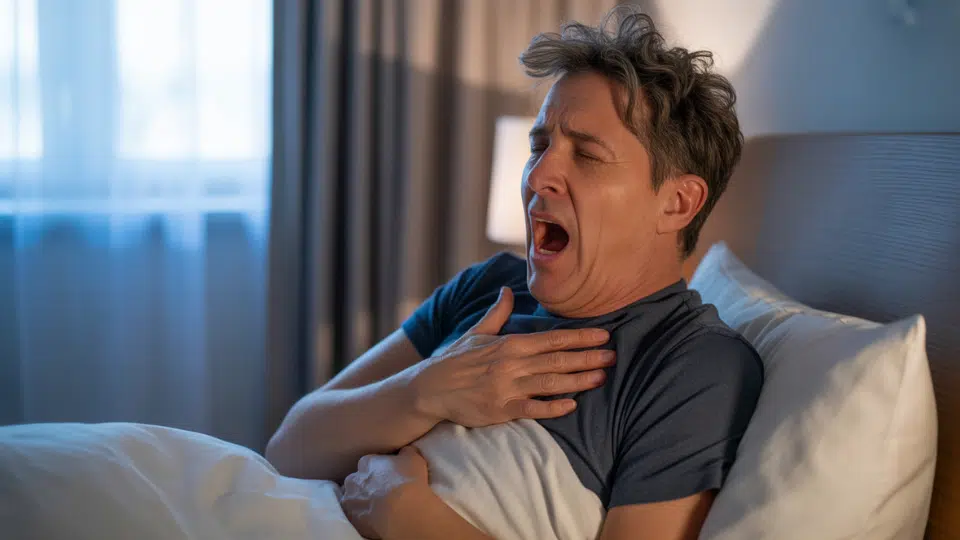
You jolt awake, unable to breathe, throat closed tight, heart pounding. For a terrifying moment, you’re convinced something is seriously wrong.
Then it passes, leaving you confused and afraid to fall back asleep. Waking up choking happens to millions of people, yet most struggle to understand why. The symptoms feel similar, but the underlying causes vary dramatically, and so do the solutions.
This guide breaks down the distinct warning signs that reveal what’s really happening, immediate steps to take during an episode, and targeted long-term solutions for each condition.
You’ll also learn which symptoms require emergency attention versus routine medical care, so you can finally get answers instead of guessing.
The Problem Most People Miss
Choking episodes at night get dismissed more often than diagnosed correctly. You mention it during a checkup, and your doctor suggests sleeping elevated or cutting out spicy food.
But the episodes continue because the real culprit wasn’t identified. Nighttime choking stems from three distinct conditions that share similar symptoms but require completely different treatments.
Acid reflux triggers throat spasms. Sleep apnea causes sudden gasping. Panic attacks mimic suffocation without any physical airway problem.
Most people cycle through generic advice for months, treating the wrong condition, because they don’t know how to distinguish between them.
Was It Acid Reflux, Sleep Apnea, or a Panic Attack?
Waking up choking often results from acid reflux, sleep apnea, or nocturnal panic attacks, each with unique triggers and warning signs to identify the cause.
1. Acid Reflux or Laryngospasm
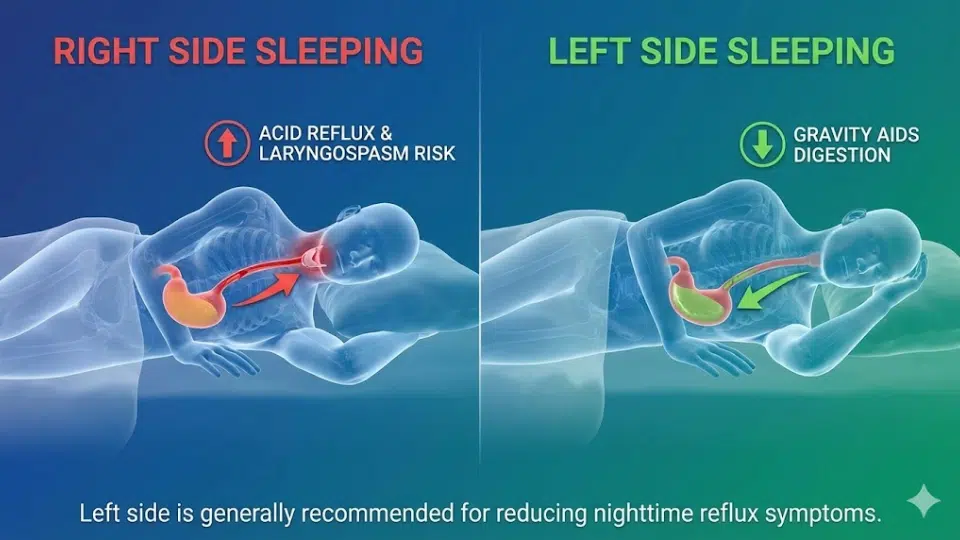
Stomach acid backs up into the throat during sleep. When it touches the vocal cords, the airway can spasm shut, a protective reflex called laryngospasm.
This creates 10 to 60 seconds of feeling unable to breathe, even though the spasm will release on its own. Lying flat makes reflux worse, which explains why choking on acid reflux while sleeping happens more at night.
Key signs: Burning sensation in the chest or throat, sour or bitter taste in the mouth, coughing or throat-clearing after waking.
2. Sleep Apnea Misread as Choking
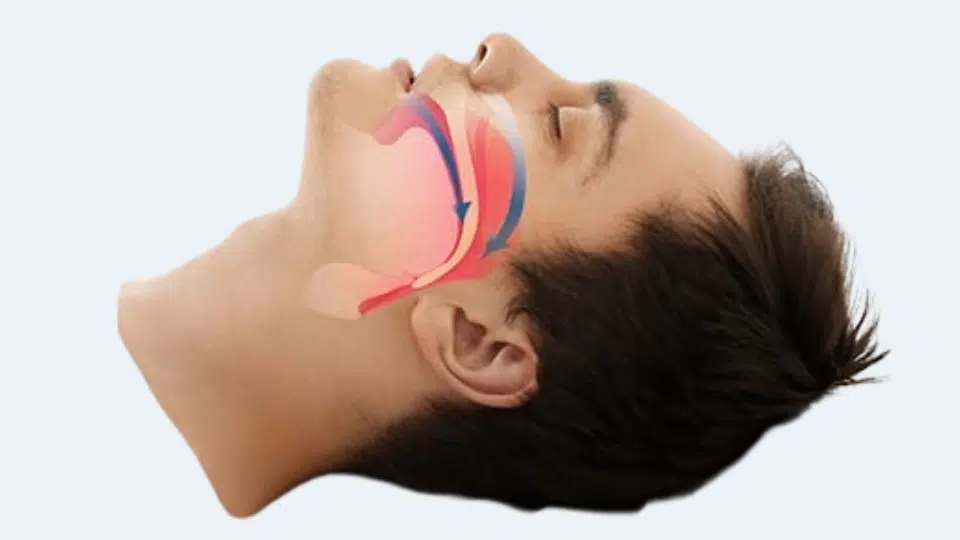
The airway collapses during sleep, cutting off oxygen. The brain detects the problem and forces an abrupt wake-up with gasping, that “bolt upright” moment.
Many people assume this means reflux, but sleep apnea is actually more common and frequently misdiagnosed. If there’s no burning but repeated gasping, apnea is the likely culprit
Key signs: Loud snoring, breathing pauses witnessed by a partner, waking with a dry mouth or headache, and constant daytime exhaustion.
3. Panic Attacks During Sleep (Not Weakness)

The brain mistakenly senses a breathing problem and floods the body with adrenaline. This triggers a sudden wake-up with a choking sensation, even though the airway is completely open.
It’s a misfired alarm system, not a psychological flaw. These episodes feel like suffocation but leave no physical evidence like reflux or apnea do.
Key signs: Rapid or pounding heartbeat, no burning taste, no snoring patterns, sudden fear or dread upon waking.
What to Do When Waking Up Choking
These immediate steps help restore normal breathing and prevent the episode from worsening. Act quickly but deliberately.
- Sit up immediately: Gravity helps keep stomach acid down and opens the airway. Staying flat can make reflux worse or allow the airway to collapse again.
- Breathe slowly through the nose: Nasal breathing activates the calming response and prevents hyperventilation. Gasping through the mouth can trigger more panic.
- Sip water only after breathing stabilizes: Many people reach for water while still struggling to breathe—this can cause more choking. Wait until inhaling feels normal.
- Stay upright for 20 to 30 minutes: Lying back down too quickly invites another episode, especially with acid reflux. Give the body time to settle.
Recognize emergency signs. If choking lasts longer than 60 seconds or breathing doesn’t return, call emergency services immediately.
Long-Term Solutions for These Issues
The fix depends on what’s triggering the episodes. Here’s what actually works for each condition, no generic advice, just targeted steps that address the root problem.
1. Solution for Acid Reflux or Laryngospasm
Elevate the head of the bed 6 to 8 inches using risers or a wedge pillow; this uses gravity to keep acid down. Avoid lying flat for 2 to 3 hours after eating, especially dinner.
Cut back on common triggers like caffeine, alcohol, and large late-night meals, but don’t obsess over restrictive diets. See a gastroenterologist if choking happens more than twice weekly or antacids aren’t helping.
- Sleep on your left side rather than your right, as this positions the stomach below the esophagus and reduces reflux episodes.
- Consider over-the-counter H2 blockers or PPIs if lifestyle changes alone don’t provide relief within two weeks.
- Track your symptoms in a simple log to identify personal triggers that might not be on the typical list.
2. Solution for Choking in Sleep Because of Sleep Apnea
Here’s the uncomfortable truth: you can’t fix sleep apnea on your own. Lifestyle changes like losing weight might help mild cases, but most people need proper diagnosis and treatment.
If you snore loudly, wake gasping regularly, or feel exhausted despite sleeping, get tested. A home sleep test is cheaper and convenient; an in-lab study is more thorough. Both lead to solutions like CPAP that actually work.
- Avoid alcohol and sedatives before bed, as they relax throat muscles and worsen airway collapse during sleep.
- Try sleeping on your side with a body pillow to prevent rolling onto your back, where apnea episodes are typically worse.
- Ask your partner or use a phone app to record your sleep sounds, which can provide valuable evidence for your doctor.
3. Solution for Choking Due to Panic or False Suffocation
The brain starts expecting choking, which creates anticipatory anxiety, and then the anxiety itself triggers more episodes.
Break this loop with a grounding technique: when you wake, focus on five things you can see, four you can touch, three you hear.
This redirects the panic response. If episodes continue despite trying calming strategies, cognitive behavioral therapy (CBT) helps retrain the brain’s threat detection system.
- Practice diaphragmatic breathing before bed: inhale slowly through your nose for four counts, hold for four, exhale for six. This activates the calming parasympathetic system.
- Keep a small notepad by your bed to jot down rational reassurances when anxiety strikes, like “I’ve never actually choked” or “This feeling always passes.”
- Limit screens and stimulating content in the hour before sleep to reduce overall nervous system activation that can fuel nighttime panic.
Real Experience of People Waking Up Choking
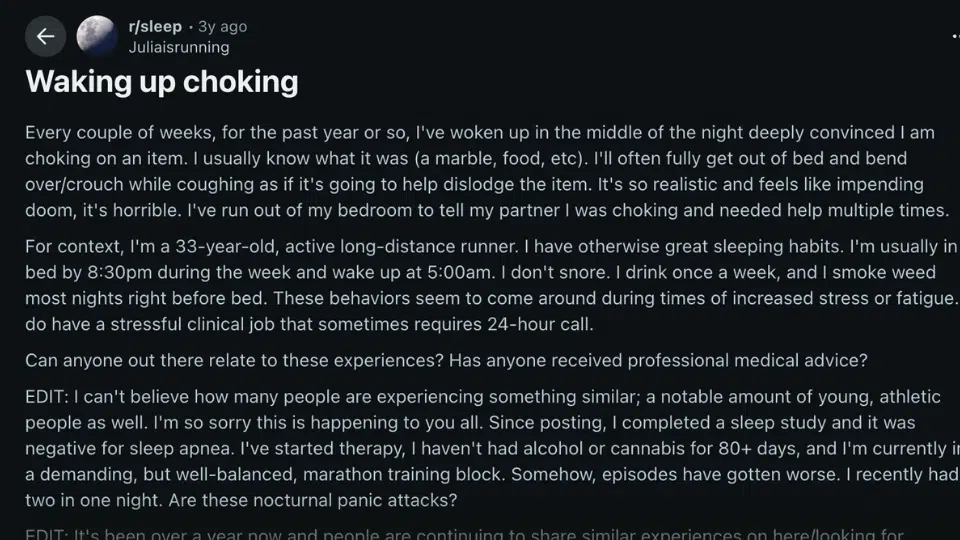
A Reddit thread about waking up choking shows how common this terror is. The original poster, a 33-year-old runner, wakes convinced she’s choking on objects, episodes so realistic she runs for help.
Dozens share identical experiences: young, athletic people panicking within 30-60 minutes of sleep. Most had negative sleep apnea tests, leaving them without answers.
Theories include laryngospasm from GERD, nocturnal panic attacks, and UARS. Many note episodes worsen during stress, creating fear around falling asleep itself.
The pattern is striking: healthy individuals with clean studies still suffering nightly. This suggests standard testing misses subtler causes, making it critical to discover both physical triggers like reflux and anxiety-driven responses together for real relief.
What Scholars Have to Say on This
A major global analysis published in The Lancet Respiratory Medicine estimated that obstructive sleep apnea affects nearly 936 million adults worldwide, with about 425 million experiencing moderate to severe disease.
Because nighttime gasping and choking are hallmark symptoms of sleep apnea, this scale helps explain why so many people around the world report waking up suddenly unable to breathe.
The study harmonized data from multiple countries and diagnostic methods to produce the most reliable global estimate to date.
You can read the full study here: Estimation of the global prevalence and burden of obstructive sleep apnoea.
When to Seek Immediate Medical Care
Most episodes resolve within seconds, but certain warning signs require emergency attention. Call for help immediately if any of these occur:
- Chest pain or pressure
- Blue or gray lips, face, or fingertips
- Inability to inhale for 60+ seconds
- Confusion, dizziness, or fainting
- Repeated episodes that worsen or increase in frequency
If you checked even one, don’t wait; seek medical help now. These symptoms indicate the issue goes beyond typical reflux, apnea, or panic responses.
The Bottom Line
Waking up choking doesn’t always mean something’s seriously wrong, but it does deserve attention. Acid reflux, sleep apnea, and panic-driven episodes each leave distinct clues.
Identifying the pattern helps determine the right fix. Elevating the bed might solve reflux issues, while apnea requires professional testing and treatment.
Panic attacks respond to grounding techniques and therapy. The key is recognizing which symptoms match the experience and acting on them, not living in fear of the next episode.
Better sleep is possible once the actual cause is addressed instead of being guessed at. Dealing with this too? You’re not alone, share your story in the comments.