

I used to struggle to fall asleep at night and to drag myself out of bed every morning. I felt tired all day, no matter how much coffee I drank. That’s when I learned about circadian rhythm.
Do you also find yourself feeling tired during the day or wide awake when you should be sleeping? You might have an out-of-sync circadian rhythm.
I’ll show you how to reset your circadian rhythm so you can feel more energized and sleep better. We’ll learn what causes circadian rhythm issues, why it’s important for your health, and simple steps to fix it.
If you’re wondering how long it takes to reset your circadian rhythm or how to get back on track, you’re in the right place!
What is Circadian Rhythm?
Think of your circadian rhythm as a tiny alarm clock inside your body. It runs on a 24-hour schedule and tells you when to feel awake and when to feel sleepy. Your brain controls this clock, especially a small part called the SCN.
When sunlight hits your eyes in the morning, your brain gets the message to wake you up. When it gets dark, your brain releases a sleep hormone called melatonin that makes you drowsy.
You will know something’s off when you can’t fall asleep at bedtime, wake up tired even after sleeping, feel exhausted during the day, or find yourself wide awake at 2 AM.
You might also notice trouble concentrating or feeling cranky all the time, which are signs of a disrupted circadian rhythm.
What Causes Changes in Your Circadian Rhythm
Your circadian rhythm can shift due to several everyday habits and life situations. Understanding these causes helps you identify what may be disrupting your sleep cycle.
- Irregular sleep schedule: Sleeping and waking at different times each day, including weekend sleep-ins, can confuse your internal clock and delay sleep signals.
- Too much nighttime light exposure: Screens, bright indoor lighting, and late device use reduce natural melatonin production, pushing your sleep time later.
- Lack of morning sunlight: Without early daylight exposure, your body struggles to set a clear start to the day, making it harder to feel sleepy at night.
- Travel across time zones: Rapid schedule shifts force your body to follow a new light–dark cycle, often causing temporary fatigue and poor sleep quality.
- Lifestyle factors: Stress, late meals, caffeine, illness, or intense late-night exercise can gradually shift your natural sleep timing.
By identifying which of these factors affects you most, you can take targeted steps to restore a stable, healthy sleep rhythm.
How to Reset Circadian Rhythm: 7 Easy Tips
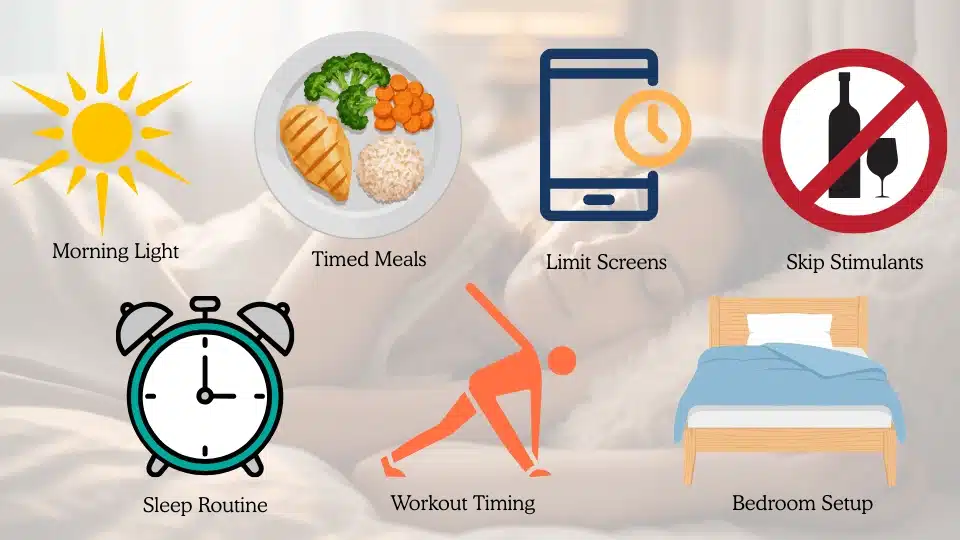
Resetting your circadian rhythm doesn’t happen overnight, but these seven proven strategies will get you back on track. Let’s break down exactly what you need to do, step by step.
1. Light Exposure Management
Light is the most powerful tool to reset your internal clock. As soon as you wake up, go outside and get 10-15 minutes of natural sunlight. This tells your brain it’s time to wake up and stops the production of melatonin.
If it’s cloudy or winter, stay outside a bit longer. In the evening, dim your lights after sunset. Your brain needs darkness to start making melatonin again.
2. Establish Consistent Sleep-Wake Times
Pick a bedtime and wake-up time, then stick to it every single day, even on weekends. Your body loves routine. Try going to bed around 10 PM and waking up at the same time each morning.
Even if you’re not tired at first, stay consistent. Within a week or two, your body will adjust, and you’ll naturally feel sleepy at bedtime. Consistency is more important than perfection.
3. Strategic Meal Timing
When you eat matters just as much as what you eat. Try to have your meals at the same times each day. Eat breakfast within an hour of waking up to signal to your body that it’s daytime.
Have your last meal at least 2-3 hours before bedtime. Late-night snacking confuses your internal clock because your body expects to rest at night, not digest food.
4. Exercise at the Right Times
Physical activity helps reset your circadian rhythm, but timing matters. Exercise in the morning or afternoon gives you energy and helps you sleep better at night. Even a 20-minute walk outside in the morning counts.
Morning workouts are especially powerful because they reinforce your wake-up signal. Avoid intense exercise 2-3 hours before bedtime since it raises your body temperature and makes falling asleep harder.
5. Reduce Screen Time Before Bed
Your phone, tablet, and TV screens emit blue light that tricks your brain into thinking it’s daytime. This blocks melatonin production, keeping you awake. Stop using screens at least one hour before bed. I know this is tough!
Instead, try reading a physical book, journaling, or listening to calm music. If you must use devices, turn on night mode or wear blue light-blocking glasses. Your sleep will improve dramatically when you break the screen habit.
6. Control Your Sleep Environment
Your bedroom should be your sleep sanctuary. Keep it cool, dark, and quiet. Use blackout curtains to block outside light, especially if you live in a city. Invest in a comfortable mattress and pillows.
You spend a third of your life sleeping, so it’s worth it. Remove your TV from the bedroom and only use your bed for sleep. This trains your brain to associate your bed with rest.
7. Avoid Stimulants and Alcohol
Caffeine stays in your system for 6-8 hours, so avoid coffee, tea, and energy drinks after 2 PM. That afternoon pick-me-up might be keeping you awake at night. Nicotine is also a stimulant that disrupts sleep.
While alcohol might make you feel drowsy initially, it actually prevents deep, restorative sleep and can wake you up in the middle of the night, so you can stick to water or herbal tea in the evening.
These seven strategies work together to naturally reset your circadian rhythm. Start with 2-3 changes that feel easiest for you, then gradually add more as they become habits.
How Long Does It Take to Reset Your Circadian Rhythm?
Most people need about 1-2 weeks to reset their circadian rhythm if they stick to the plan. Some lucky folks feel better in just 3-4 days, while others need closer to three weeks.
It really depends on how messed up your sleep was before and how well you follow the new routine. If you’ve been staying up until 3 AM for months, it’ll take longer than if you’re just off by an hour or two.
Be patient with yourself; your body is learning a whole new schedule. Think of it like building a habit or learning to ride a bike. The more consistent you are with your wake times, bedtimes, and light exposure, the faster you’ll see real results and feel like yourself again.
Common Mistakes That Prevent a Reset
Even with the right plan, a few common habits can slow down or completely block your circadian rhythm from resetting.
- Sleeping in after a bad night: Waking up much later than usual confuses your internal clock and delays your sleep time the following night.
- Taking long daytime naps: Naps longer than about 20–30 minutes reduce sleep pressure, making it harder to fall asleep at bedtime.
- Using alcohol to fall asleep: Alcohol may make you drowsy at first, but it disrupts deep sleep and often causes nighttime awakenings.
- Checking the clock all night: Watching the time increases anxiety and mental alertness, which makes falling back asleep even harder.
- Trying to fix everything in one day: Sudden, extreme schedule changes rarely stick; gradual, consistent adjustments work much better.
Avoiding these mistakes helps your body adjust more smoothly and speeds up the process of restoring a healthy, stable sleep rhythm.
Community Shared Experiences and Tips
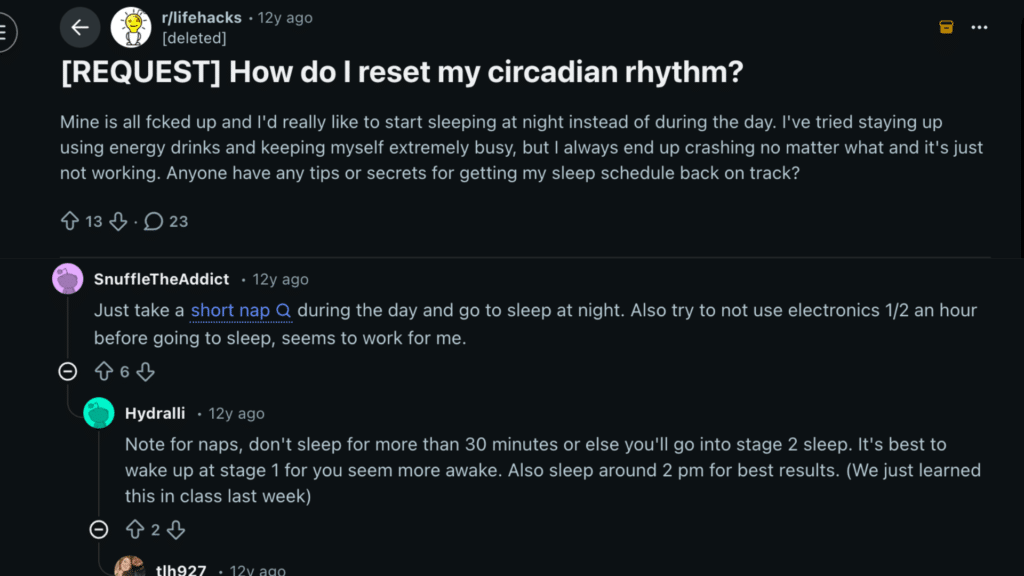
In a Reddit thread, users discuss ways to reset their circadian rhythm. One user suggests taking a short nap during the day and avoiding electronics before bedtime. Another mentions that naps shouldn’t last longer than 30 minutes to prevent entering deep sleep.
A third user shares their experience with Chronotherapy, a method of gradually adjusting sleep times by going to bed later each night until the desired schedule is reached. They detail their specific schedule changes over several days to reset their rhythm.
From my perspective, these are interesting tips! I think Chronotherapy could work well for some, but for others, gradually adjusting light exposure, as explained earlier in the blog, might be a simpler, better approach.
Signs Your Circadian Rhythm Is Improving
As your body clock starts syncing properly, you’ll notice small but clear changes in how you sleep and feel during the day.
- Feeling sleepy at the same time nightly: Your body begins sending natural sleep signals in the evening, so you don’t have to force bedtime.
- Waking up before your alarm: Instead of struggling to get up, you may start opening your eyes naturally around your planned wake time.
- Better daytime energy: You feel more alert, need less caffeine, and don’t experience heavy afternoon crashes as often.
- Fewer nighttime awakenings: Sleep becomes deeper and more continuous, with less tossing, turning, or checking the clock.
- Improved mood and focus: Stable sleep helps balance your mental clarity and emotional stability, making it easier to stay productive.
When you notice several of these signs happening consistently, it usually means your circadian rhythm is successfully resetting and becoming stable again.
When to See a Doctor

If your sleep still doesn’t improve after trying a schedule and lifestyle changes, it may be time to speak with a doctor. Persistent insomnia that lasts for weeks, even with good sleep habits, can signal an underlying sleep disorder.
You should also seek help if you suspect delayed sleep phase disorder, especially if you consistently fall asleep very late and struggle to wake for normal responsibilities.
Watch for extreme daytime sleepiness that affects work, driving, or daily functioning. Symptoms like loud snoring, choking at night, or gasping for air may point to possible sleep apnea symptoms that need medical testing.
Finally, ongoing chronic fatigue despite schedule adjustments is a strong indication that a professional evaluation can help identify and treat the underlying cause.
Final Takeaway
Learning how to reset my circadian rhythm has completely changed my sleep quality and energy levels. It’s not complicated, but it does require consistency.
Start with one or two changes, like getting morning sunlight and setting a regular bedtime, and build from there. Remember, it typically takes one to two weeks to see real improvement, so be patient with yourself.
Your body is incredibly smart, and once you give it the right signals through light, timing, and routine, it will naturally adjust.
Don’t let poor sleep control your life anymore. Pick one strategy from this and start today. Your future well-rested self will thank you. Do let me know what step you will take first to reset your internal clock, below.