


I used to think my neck pain came from a cheap pillow. I replaced it three times, memory foam, down alternative, even an expensive cervical pillow, and still woke up stiff.
The problem wasn’t the pillow itself. It was where and how I positioned it. Learning proper pillow positioning for sleep changed everything.
Small adjustments, moving the pillow lower, keeping my shoulders off it, matching the height to how I sleep, solved issues that seemed permanent.
What follows covers exactly how to position a pillow based on your sleep style, what discomfort you’re experiencing, and which mistakes to avoid.
I’ll discuss side, back, stomach, and combination sleeping positions, plus how to adjust when something still feels wrong. Most fixes take minutes and cost nothing.
What Proper Pillow Position Actually Does?
Proper pillow position keeps the neck aligned with the spine, prevents muscle strain, and lets the head rest without fighting gravity. When positioned correctly, a pillow fills the space between the mattress and the natural curve of the neck, nothing more, nothing less.
This alignment affects more than neck comfort. Good positioning supports steady breathing, reduces pressure points that cause tossing and turning, and prevents stiffness that develops hours after waking.
Poor positioning forces muscles to work through the night, disrupts airflow, and creates tension that builds into chronic pain.
The difference often comes down to inches, moving a pillow slightly lower, adjusting where the head sits, or removing extra height. Small positioning changes frequently solve problems that seem like they need new pillows.
Proper Pillow Position for Sleeping
Proper pillow position keeps the neck neutral and supported throughout the night, matching the body’s natural alignment based on sleep position and comfort needs.
1. Proper Pillow Position for Neck Pain
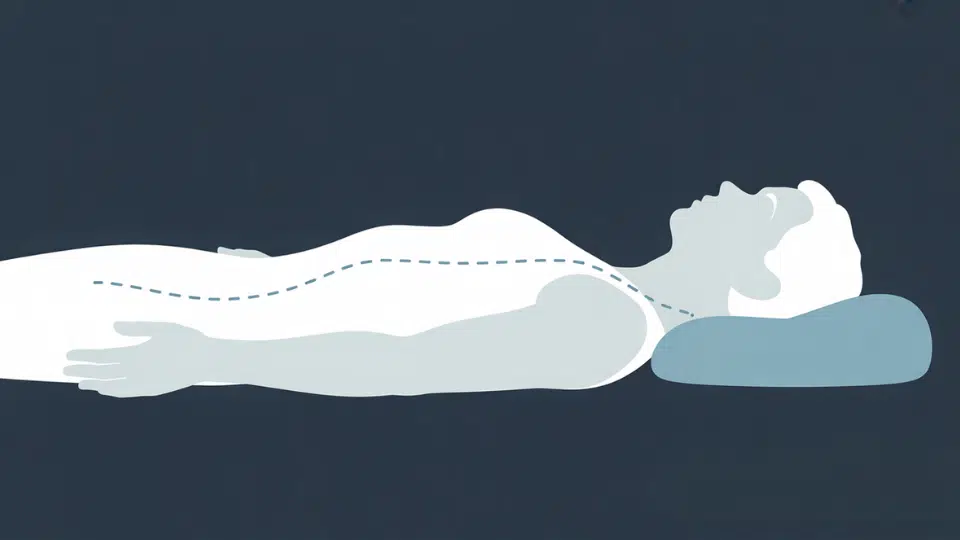
Neck pain usually signals the pillow sits too high, compresses the neck downward, or fails to support the curve properly. The goal is letting the neck rest in a neutral position, not stretched forward or compressed backward.
Position the pillow so the head settles naturally and the neck feels cradled, not strained. Shoulders stay flat on the mattress while the pillow fills only the space beneath the head and neck curve.
- Number of pillows: One pillow to avoid over-stacking height
- Thickness: Medium, matching natural neck curve alignment
- Material: Memory foam or latex for consistency
2. Proper Pillow Position for Side Sleepers
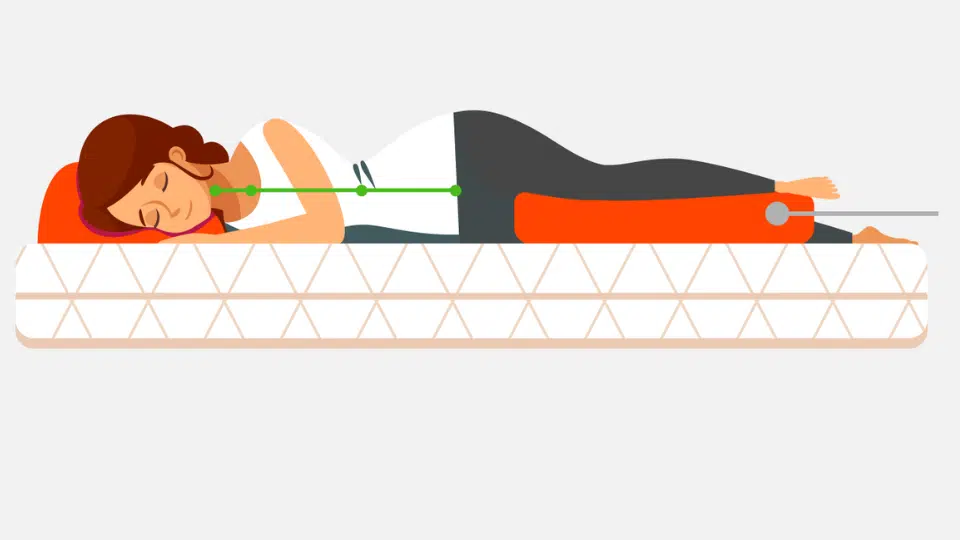
Side sleeping creates a natural gap between the ear and the mattress that needs full support. The pillow must fill this entire space without collapsing or leaving the head tilted downward.
Position the head so the ear aligns directly above the shoulder, creating a straight line from neck to spine. Shoulders rest completely on the mattress, never pushed up onto the pillow edge.
- Number of pillows: One head pillow, one knee pillow
- Thickness: Higher loft for broader shoulders, softer mattresses
- Material: Firm or adjustable fill resists compression
3. Proper Pillow Position for Back Sleepers
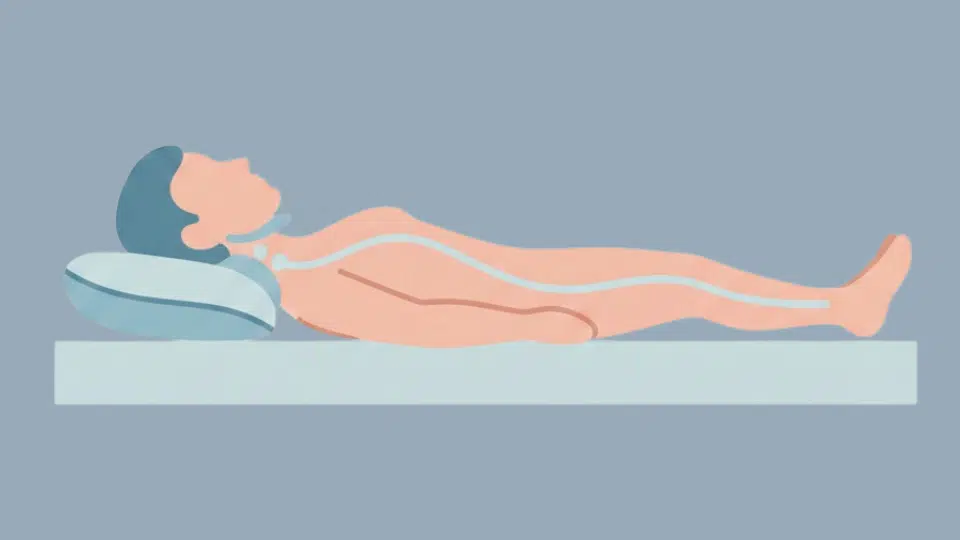
Back sleepers need support directly under the neck’s natural curve without tilting the head forward. The pillow should cradle the base of the skull while keeping the chin level, not tucked toward the chest.
Position it so the thickest part sits beneath the neck, with less material under the head itself. The spine maintains its natural S-curve from neck through lower back.
- Number of pillows: One thin pillow under the head
- Thickness: Lower loft than side sleeping positions
- Material: Medium-firm cervical or contoured pillow support
4. Proper Pillow Position for Stomach Sleepers
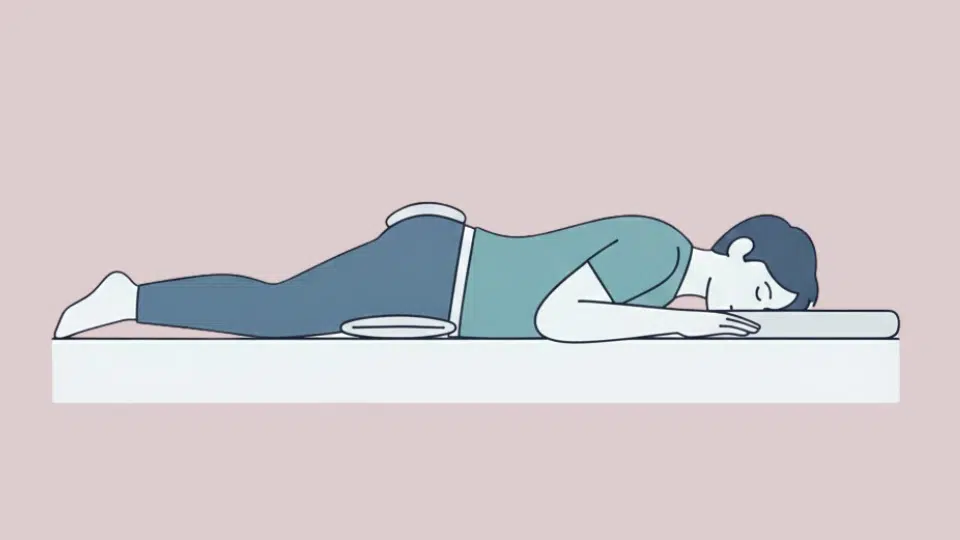
Stomach sleeping rotates the neck sideways and arches the lower back, creating strain on both areas. Minimal pillow height reduces the neck rotation angle and prevents the head from tilting too far upward.
Position a very thin pillow under the forehead or remove it entirely to keep the neck closer to neutral. Consider placing a flat pillow under the pelvis to reduce lower back compression.
- Number of pillows: None or one ultra-thin pillow only
- Thickness: Minimal to reduce unnatural neck angle
- Material: Soft, compressible down or down-alternative material
5. Proper Pillow Position for Combination Sleepers
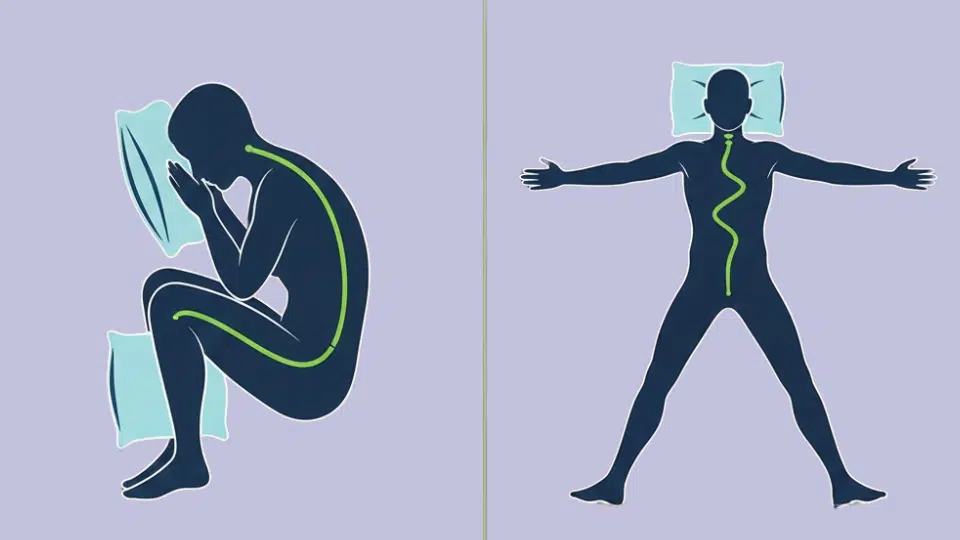
Combination sleepers shift between positions throughout the night and need a setup that adapts without constant manual adjustment. The pillow must work across side, back, and possibly stomach positions without creating discomfort in any single one.
Position one adaptable pillow that adjusts as the body moves, plus a secondary support pillow that can shift with position changes for knees, back, or between arms.
- Number of pillows: One head pillow, one movable support
- Thickness: Medium or adjustable fill for adaptability
- Material: Responsive buckwheat or shredded foam materials
Common Pillow Positioning Mistakes to Avoid
Even well-chosen pillows fail when positioned incorrectly. These common mistakes create discomfort that seems like a pillow problem but stems from placement.
| Issue | Solution |
|---|---|
| Sleeping with shoulders on the pillow | Keep shoulders flat on the mattress. Only the head and neck should rest on the pillow to prevent upward neck strain. |
| Stacking multiple pillows under the head | Use one properly positioned pillow. Extra height tilts the head forward and compresses the neck unnecessarily. |
| Prioritizing softness over support | Choose pillows that maintain their shape overnight. Initial comfort matters less than sustained support through the night. |
| Never adjusting after changing mattresses | Reassess pillow height and position when getting a new mattress. Body height and support needs change with mattress firmness. |
Fixing these mistakes costs nothing and often solves problems within one or two nights without requiring new pillows or bedding.
Adjusting Your Pillow if You Wake up Sore
Waking up with pain doesn’t always mean the pillow needs replacing, it usually means the position needs adjusting.
Finding the proper pillow position requires paying attention to where discomfort shows up and making targeted changes based on those signals.
Neck stiffness typically means the pillow sits too high or too firm. Lower the pillow height or switch to softer support that lets the neck settle naturally.
Shoulder pain signals the pillow isn’t filling the gap during side sleeping, add height or firmness for full support between ear and mattress.
Lower back tightness points to a body support issue, not head positioning. Add a pillow under the knees for back sleeping or between the knees for side sleeping. Headaches often develop when the neck tilts too far forward, lower the pillow or adjust where the head rests.
Final Thought
Getting proper pillow positioning for sleep right doesn’t require buying anything new. It comes down to understanding where your head and neck need support, then making small adjustments until everything feels neutral.
I’ve covered positioning for different sleep styles, common mistakes that create strain, and how to troubleshoot soreness in specific areas.
The biggest takeaway: comfort comes from alignment, not from stacking more pillows or chasing perfect products.
If your neck relaxes and you stop noticing the pillow during the night, it’s working. Start with one adjustment tonight: lower the pillow, move your shoulders down, or add support where it’s missing, and see what changes.
Drop a comment if something here helped or if you’re still working through your setup.