

Have you ever crawled into bed exhausted, only to find your mind racing the moment the lights go out? You are not alone. In a world filled with notifications, late-night streaming, and endless to do lists, sleep has become harder to protect.
Many people track their steps and calories but forget to design a space that supports rest. The bedroom often turns into a home office, a media room, or a storage area. That mixed purpose works against deep sleep.
In recent years, sleep health has gained more attention. Wearable devices now measure sleep cycles. Wellness podcasts talk about circadian rhythms. Yet many homes still ignore the basics. Deep, restorative sleep does not start with a fancy app. It begins with the room itself.
Your bedroom should send a clear message to your brain. This is a place for rest. Not work. Not scrolling. Not stress. Design choices influence how quickly you fall asleep and how well you stay asleep. Lighting, temperature, bedding, and even wall color matter. In this blog, we will share practical ways to design a bedroom that supports deep, restorative sleep and helps you wake up feeling clear and ready for the day.
Choose the Right Foundation for Comfort
The bed is the center of the room. It should support your body in a way that reduces pressure and strain. Start with a quality mattress. The right firmness depends on your sleep position. People who sleep on their side often need more cushioning at the shoulders and hips. That is why many experts recommend special mattresses for side sleepers that provide pressure relief without sacrificing support.
A mattress that is too firm can create tension. One that is too soft can misalign the spine. Test options before buying. Lie down in your usual sleep position for several minutes. Pay attention to how your back and neck feel.
Pillows matter as well. Your pillow should keep your neck aligned with your spine. Side sleepers often need thicker pillows. Back sleepers may prefer medium support. Replace old pillows that have lost shape.
Bed frames and foundations also affect comfort. A sturdy frame prevents sagging. Avoid placing your mattress directly on the floor. Proper airflow helps maintain freshness.
Investing in the right foundation reduces tossing and turning. When your body feels supported, your mind can relax more easily.
Control Light to Support Your Natural Rhythm
Light exposure shapes your sleep cycle. Bright light at night signals your brain to stay alert. Dim light encourages melatonin production. Start by limiting overhead lighting in the evening. Use bedside lamps with warm bulbs instead.
Blackout curtains help block streetlights and early morning sun. Even small amounts of light can interrupt deep sleep. If full blackout feels too dark, choose heavy curtains that reduce glare.
Screens are a common problem. Phones and televisions emit blue light. This type of light delays sleep. Try setting a device cutoff time at least one hour before bed. If that feels unrealistic, use night mode settings to reduce blue light.
During the day, expose yourself to natural light. Open curtains in the morning. Step outside when possible. Daytime light strengthens your internal clock and improves sleep at night.
Lighting changes may seem minor. Yet they create a powerful signal for your body.
Set the Right Temperature and Air Quality
Temperature plays a large role in sleep quality. Most people sleep best in a cool room. Aim for a range between sixty and sixty seven degrees Fahrenheit. Adjust bedding layers instead of overheating the room.
Breathable sheets improve comfort. Cotton and linen allow air to circulate. Heavy synthetic fabrics can trap heat.
Air quality also affects rest. Dust and allergens irritate airways. Wash bedding weekly. Vacuum regularly. Consider an air purifier if allergies disrupt your sleep. A small fan can improve airflow and provide gentle background noise. That white noise helps block sudden sounds from outside.
Fresh air supports deeper breathing. Crack a window when the weather allows. Small environmental adjustments create noticeable improvement.
Reduce Clutter and Mental Noise
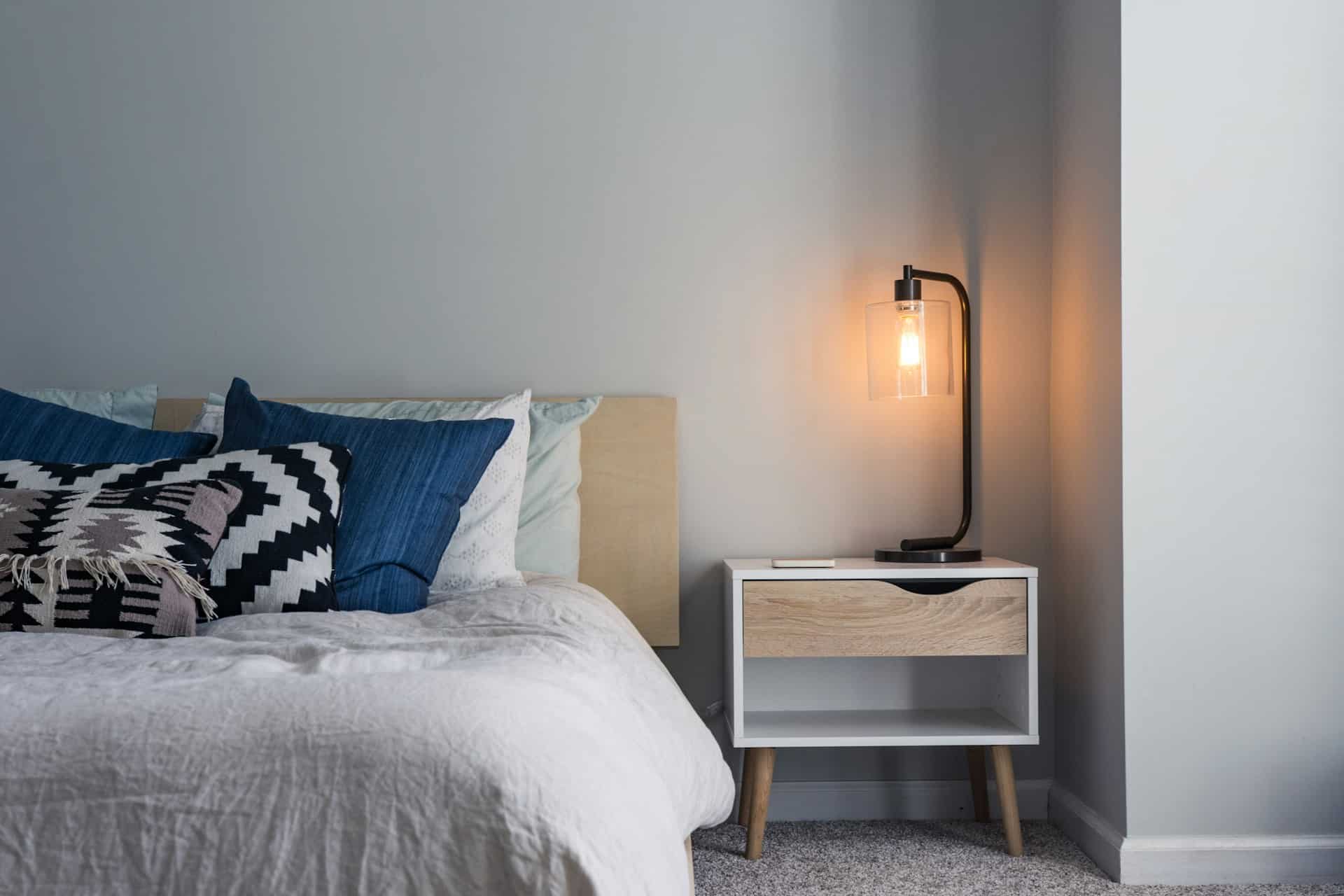
Your brain reacts to visual chaos. A cluttered room sends subtle signals of unfinished tasks. Keep surfaces clear. Store work items outside the bedroom. If space is limited, use storage bins or baskets to reduce visible mess.
Color influences mood. Soft blues, greens, and neutrals promote calm. Bright reds or bold patterns may feel stimulating. Choose bedding and decor that feel restful. Keep decorations simple. Personal photos and art are fine. Avoid overcrowding walls. The goal is calm, not distraction.
Create a simple bedtime routine. Dim lights. Read a few pages of a book. Stretch lightly. These habits train your brain to associate the bedroom with relaxation.
Limit Technology and Create Boundaries
Remote work has blurred lines between work and rest. Laptops often sit on nightstands. This habit can harm sleep quality. Keep work devices outside the bedroom when possible.
If you use your phone as an alarm, place it across the room. This reduces late-night scrolling. It also forces you to get up in the morning. Televisions in bedrooms remain common. While convenient, they encourage late viewing. Consider removing the TV or setting a strict cutoff time. Noise matters too. If outside sounds disturb you, try a white noise machine. Consistent sound can mask interruptions.
Boundaries protect your sleep. The bedroom should serve one main purpose.
Build Habits That Match the Space
A well-designed room works best when paired with steady habits. Go to bed and wake up at similar times each day. Consistency strengthens your sleep cycle.
Avoid heavy meals right before bed. Reduce caffeine in the afternoon. Exercise regularly but not too close to bedtime.
If you cannot sleep after twenty minutes, get up briefly. Read in dim light until you feel tired. This prevents frustration from building in bed.
Sleep is not a luxury. It is a foundation for health. In a culture that celebrates productivity, rest often feels secondary. Yet deep, restorative sleep improves focus, mood, and physical recovery.
Designing a bedroom that supports sleep is not about trends. It is about thoughtful choices. Supportive bedding, proper lighting, cool air, and reduced clutter create a space that encourages rest. When your environment aligns with your body’s needs, falling asleep becomes easier. Waking up refreshed becomes normal. And that quiet success carries into every part of your day.