
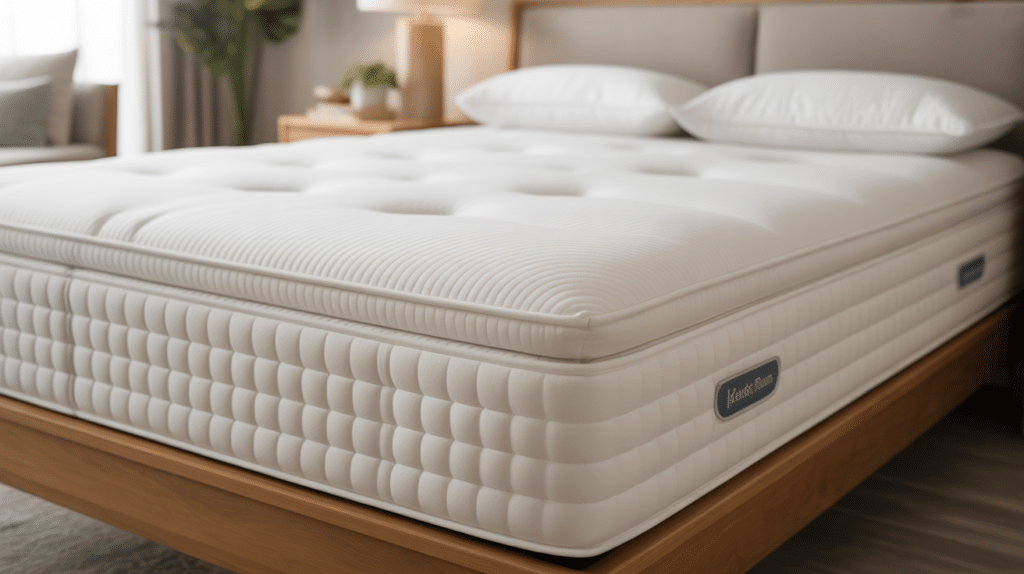
Ever had that moment when you lie down, get comfortable, and then start thinking about how clean your mattress really is? I get why that thought pops up.
Your foam mattress handles sweat, spills, dust, and daily use quietly in the background, yet it rarely gets the attention it deserves.
Unlike sheets or pillowcases, it’s not something you can toss into the washer, which often leaves you unsure about what’s safe and what could ruin it.
That’s usually when questions start stacking up. Can you use water? How much is safe? What works without causing damage?
If you’ve ever paused mid-clean thinking about the right way to do it, this guide will help. I wrote this to remove that uncertainty.
Why Foam Mattresses Need Special Cleaning?
Foam mattresses require a careful cleaning approach due to their unique structure. Unlike traditional spring mattresses, foam’s open-cell composition acts like a sponge, absorbing liquids deep into its layers.
Once moisture penetrates, it becomes trapped within the dense material, creating an ideal breeding ground for mold and mildew. These fungi not only produce musty odors but can also trigger allergies and respiratory issues.
The risks intensify when improper cleaning methods are used. Soaking foam or using steam cleaners introduces excessive moisture that the material simply cannot release quickly.
This prolonged dampness accelerates microbial growth and can permanently damage the foam’s structure, causing it to break down, lose support, and develop permanent odors.
Effective foam mattress cleaning focuses on surface treatments and minimal moisture to protect both your health and your investment.
How to Clean a Foam Mattress: Step by Step
Regular mattress cleaning improves sleep quality and removes allergens, dust, and stains. These simple steps help you keep your mattress fresh and clean without using harsh chemicals or complicated equipment.
Step 1: Remove Bedding and Prep the Mattress
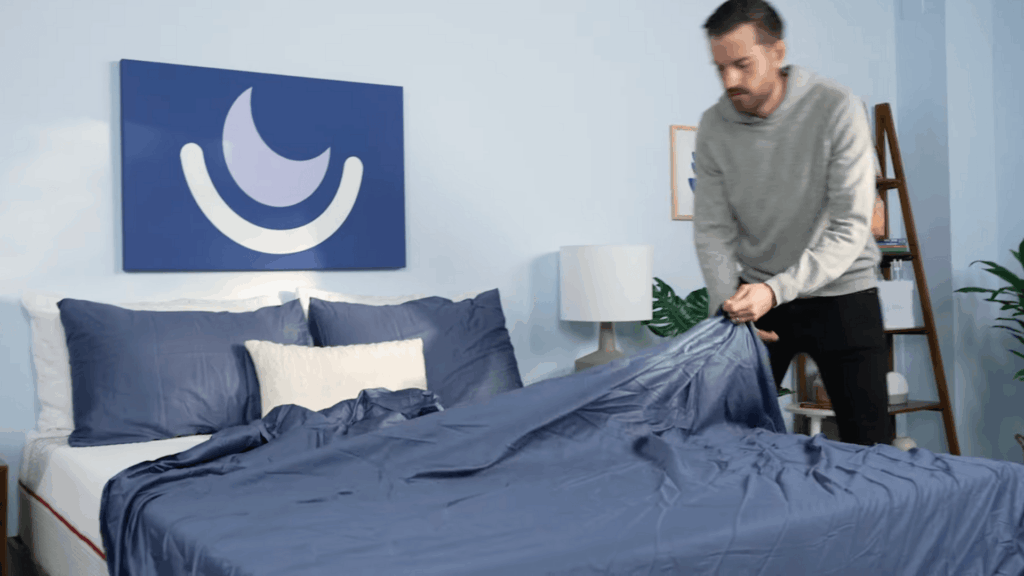
Take off all bedding, including sheets, pillowcases, and mattress protectors. This step exposes the full mattress surface and gets it ready for cleaning. Washing your bedding separately ensures a completely fresh sleep space once you’re done with the mattress.
Step 2: Vacuum the Mattress Thoroughly
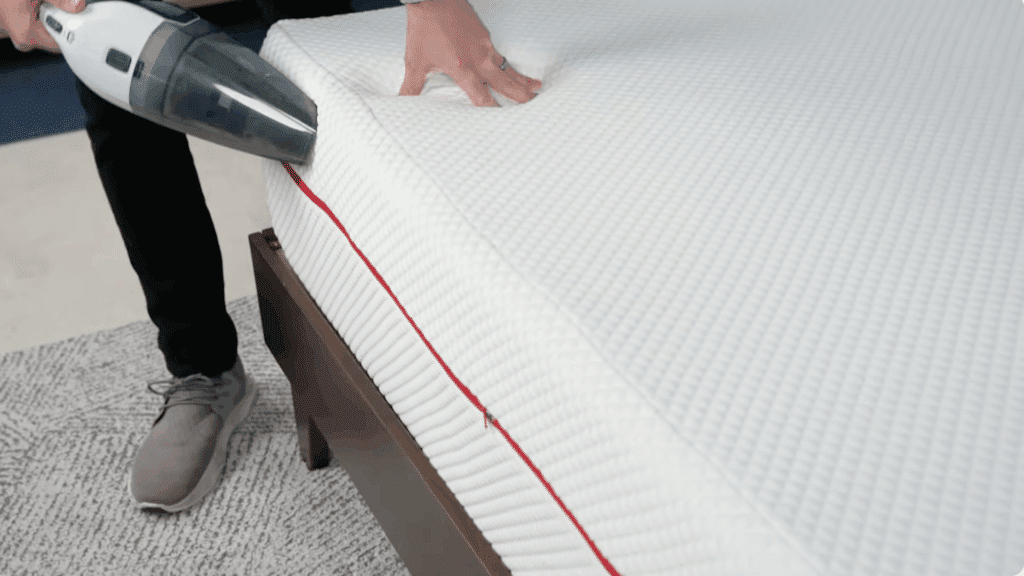
Vacuum the top, sides, and edges of the mattress using an upholstery attachment. Vacuuming removes dust, debris, dead skin cells, and allergens. For most mattresses, this routine vacuuming is often enough to keep things clean between deeper cleaning sessions.
Step 3: Deodorize With Baking Soda
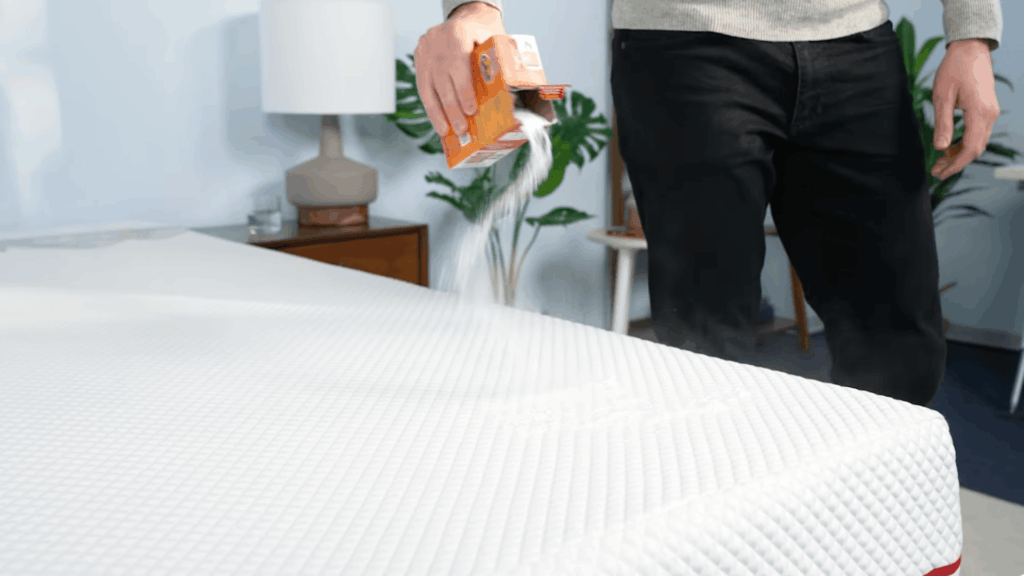
Sprinkle baking soda over areas with bad smells or across the entire surface. Let it sit for at least 30 minutes, or several hours for stronger odors. Vacuum it up once finished. Repeat this process if smells remain after the first round.
Step 4: Treat Fresh Liquid Stains Immediately
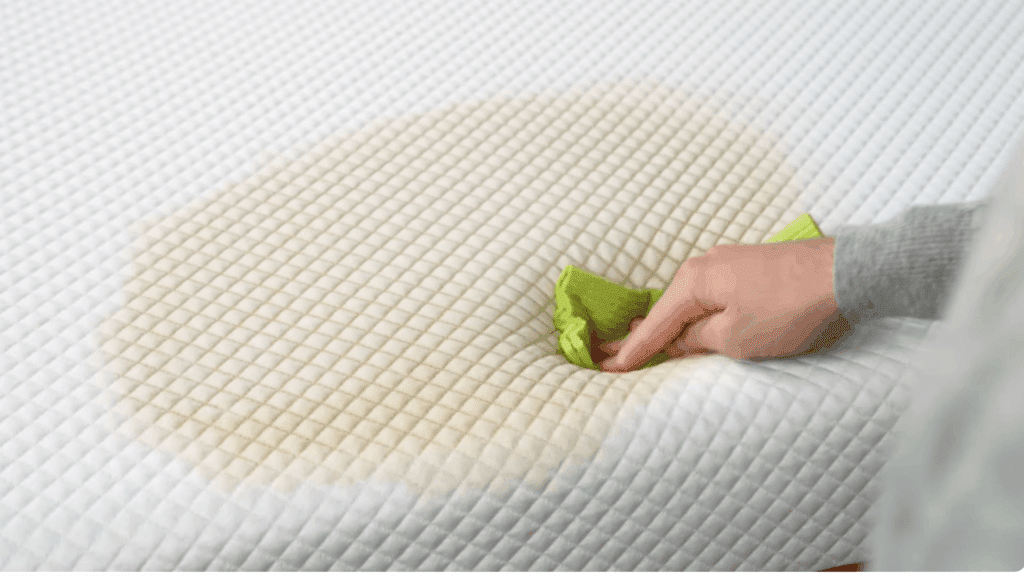
Blot fresh spills right away with a clean towel to soak up as much liquid as you can. Don’t rub, as this pushes stains deeper into the fabric. Lightly spray the area with white vinegar using a spray bottle, then blot again with a fresh towel to lift the stain.
Step 5: Use Baking Soda to Finish Stain Removal
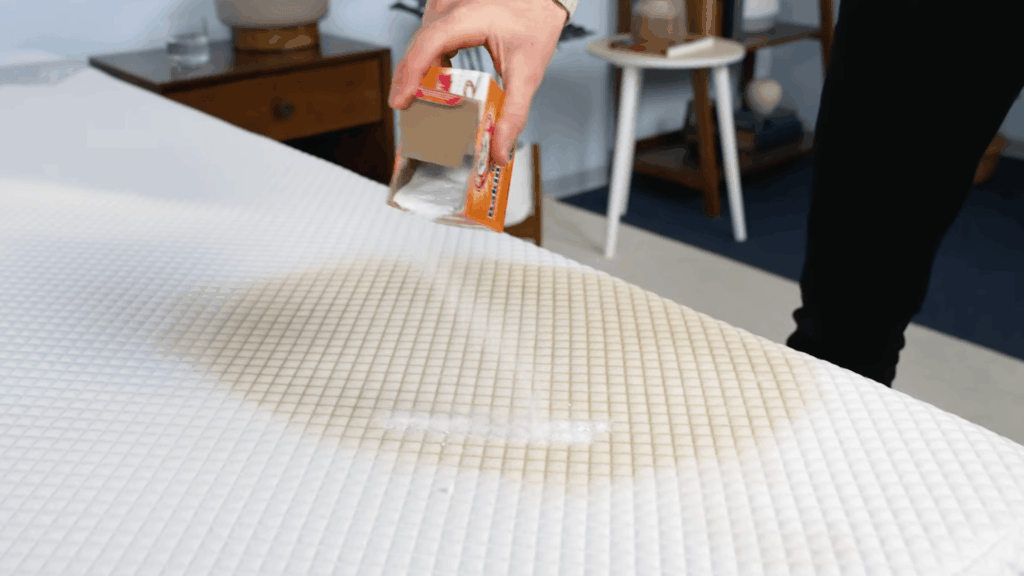
After blotting the stain, sprinkle baking soda over the area. Leave it on for up to eight hours or overnight for better results. Vacuum well to remove all baking soda along with absorbed odors and moisture from the area you cleaned.
Step 6: Handle Older or Tough Stains Carefully
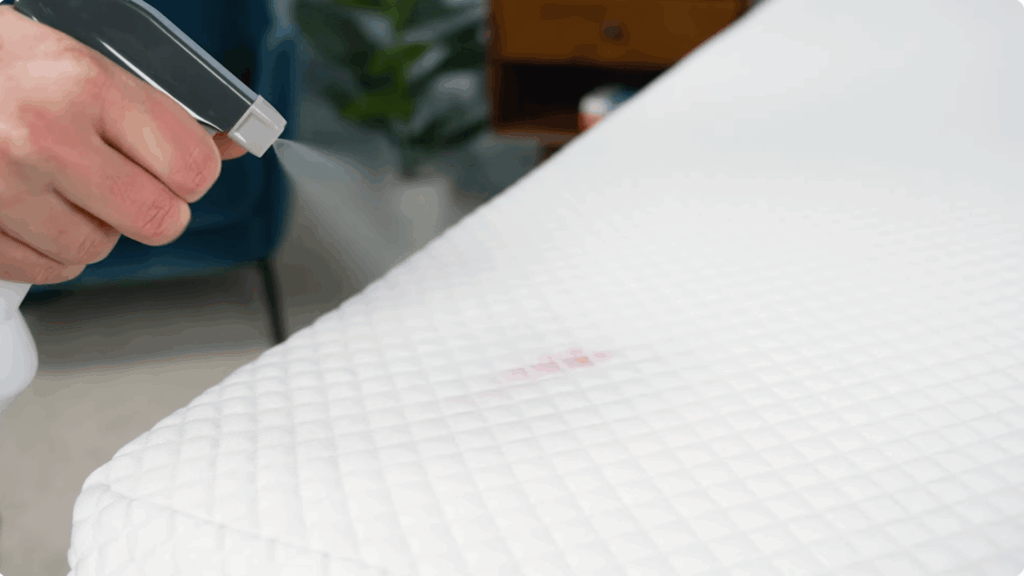
Mix one part mild detergent with two parts water in a spray bottle. Lightly spray the tough stain and gently scrub with a clean towel using small circles. Blot with a damp towel, then a dry one, and let the mattress air dry fully before putting bedding back on.
Here’s a detailed overview from YouTube by Sleep Doctor :
How to Remove Common Foam Mattress Stains
Different stains require specific treatments for effective removal. Acting quickly and using the right cleaning method prevents permanent damage while protecting your foam mattress from moisture-related issues.
1. Sweat and Body Oil Stains
Sweat and body oils gradually accumulate on mattress surfaces, creating yellow discoloration and unpleasant odors. These stains respond well to gentle absorbent treatments that lift oils without saturating the foam.
Treatment method:
- Sprinkle baking soda liberally over affected areas
- Mix a few drops of mild detergent with water in a spray bottle
- Lightly mist the stained area without soaking
- Let it sit for 15-20 minutes, then blot with a clean cloth
- Vacuum thoroughly once completely dry
2. Urine Stains
Urine requires immediate attention to prevent odor and bacterial growth. Quick action and enzymatic cleaners effectively neutralize the acids and break down organic compounds.
Treatment method:
- Blot immediately with paper towels to absorb excess liquid
- Apply white vinegar or enzyme cleaner sparingly with a spray bottle
- Allow the solution to sit for 10-15 minutes
- Blot gently with a clean, dry cloth
- Sprinkle baking soda to eliminate lingering odors
3. Blood Stains
Blood stains set quickly when exposed to heat, making cold water essential for removal. Gentle blotting lifts the stain without pushing it deeper into foam layers.
Treatment method:
- Use only cold water, never hot, which sets blood stains
- Dampen a cloth with cold water and blot gently
- For stubborn stains, test hydrogen peroxide on a hidden spot first, then apply it to the stain
- Continue blotting until the stain lifts
- Air dry completely before covering
4. Food and Drink Spills
Fresh spills are easiest to clean when addressed immediately. Absorbing liquid first prevents it from penetrating deep into the foam structure.
Treatment method:
- Blot spills immediately with absorbent towels
- Mix mild dish soap with water for a cleaning solution
- Lightly dampen a cloth and blot the stained area
- Avoid rubbing, which spreads the stain
- Use fans to speed the drying process
How to Remove Odors From a Foam Mattress
Foam mattresses trap odors from sweat, spills, and body oils over time. Baking soda naturally neutralizes these smells without harsh chemicals, making it the safest and most effective deodorizing solution.
Application: Sprinkle a generous, even layer of baking soda across the entire mattress surface, focusing extra on areas with strong odors or visible stains.
Penetration time: Leave the baking soda on for at least 8 hours, though overnight (12-24 hours) produces the best results for stubborn odors.
Better effectiveness: For persistent smells, add a few drops of essential oil (lavender or tea tree) to the baking soda before sprinkling for added freshness and antimicrobial benefits.
Removal process: Vacuum thoroughly using an upholstery attachment, making multiple passes to ensure all baking soda is removed from the foam surface and seams.
Repeat frequency: For routine maintenance, deodorize monthly. For strong odors, repeat the process weekly until the smell completely disappears.
Prevention tip: Always ensure the mattress is completely dry before applying baking soda, as moisture reduces its odor-absorbing effectiveness.
What to Avoid When Cleaning a Foam Mattress
Avoiding these common mistakes protects your foam mattress from permanent damage. Improper cleaning methods can destroy the foam’s structure, promote mold growth, and void your warranty.
| Avoid This | Why It’s Harmful |
|---|---|
| Soaking or hosing down | Foam absorbs and traps excessive water deep inside, creating ideal conditions for mold and mildew growth that’s nearly impossible to eliminate |
| Using steam cleaners | High heat and moisture penetrate foam layers, causing structural breakdown, permanent compression, and prolonged dampness that encourages bacterial growth |
| Harsh chemicals or bleach | Strong chemicals degrade foam materials, cause discoloration, create toxic fumes, and leave residues that can irritate skin and trigger allergic reactions |
| Heat drying or direct sunlight | Excessive heat breaks down foam’s cellular structure, causes yellowing and brittleness, and accelerates deterioration—always air dry in indirect light instead |
Stick to gentle, minimal-moisture methods to keep your foam mattress clean, fresh, and intact for years to come.
When to Replace Instead of Clean
Even with proper care, foam mattresses eventually reach the end of their lifespan. Recognizing when damage is irreversible helps you avoid health risks and ensures quality sleep.
Deep mold or mildew growth: Visible black, green, or white patches on the surface indicate fungi have penetrated deep into the foam. Cleaning only addresses surface issues while spores remain embedded, posing serious respiratory and allergy risks.
Persistent odors that won’t disappear: If smells linger after multiple deep cleaning attempts with baking soda and enzyme cleaners, bacteria or mold have likely colonized the foam’s interior, making the mattress unsalvageable and potentially harmful.
Structural foam damage: Visible sagging, permanent body impressions deeper than 1.5 inches, crumbling foam, or loss of support indicates the material has degraded beyond repair; continuing to use it causes poor sleep quality and back pain.
Age factor: Most foam mattresses last 7-10 years with proper care. If yours is near this age and shows these signs, replace it rather than attempting repairs.
Health concerns: Unexplained allergies, respiratory issues, or skin irritation that improve when sleeping elsewhere strongly suggest your mattress harbors contaminants that cleaning cannot eliminate.
How Often You Should Clean a Foam Mattress
Maintain your foam mattress with light vacuuming monthly to remove dust, allergens, and surface debris. Perform a deep cleaning every 3-6 months using baking soda deodorization and spot treatment for stains.
However, immediate cleaning is essential whenever spills occur, be it urine, blood, food, or drinks, to prevent liquids from penetrating deep into the foam where they cause permanent stains, odors, and mold growth.
Acting within minutes of a spill makes the difference between easy cleanup and irreversible damage.
Tips to Keep a Foam Mattress Clean Longer
Preventive care reduces deep cleaning frequency and extends your mattress’s lifespan. Simple daily habits protect foam from stains, odors, and premature wear.
- Use a waterproof mattress protector: Acts as a barrier against spills, sweat, and oils—washable and far easier to clean than the mattress itself
- Wash bedding weekly: Prevents buildup of dead skin, dust mites, and oils that transfer to the mattress surface over time
- Spot clean spills immediately: Blot accidents within minutes to prevent liquids from penetrating deep into foam, where removal becomes impossible
- Rotate mattress every 3-6 months: Distributes wear evenly and prevents permanent body impressions (check manufacturer guidelines first)
- Maintain bedroom ventilation: Reduces moisture accumulation, preventing mold growth and keeping the mattress fresher between cleanings
Final Thoughts
Keeping your mattress clean feels much easier once you understand what foam actually needs. Learning how to clean a foam mattress safely helps you avoid common mistakes that lead to odors, stains, or long-term damage.
With gentle spot cleaning, regular vacuuming, and proper drying, you can keep your mattress feeling fresh without overdoing it.
Small habits, like using a protector and handling spills right away, make a noticeable difference over time and save you from bigger problems later.
If you’re working on creating a cleaner, healthier sleep space, I’ve shared more helpful guides you may enjoy.
You can check my other blogs on mattress care, bedroom cleaning routines, and simple ways to improve sleep comfort at home.