


You know that moment when you wake up with a stiff neck and realize you’ve been battling your pillow all night?
While everyone obsesses over finding the perfect mattress, your pillow is actually doing the heavy lifting when it comes to spinal alignment and quality sleep.
The right one cradles your neck, keeps your spine happy, and turns those restless nights into actual rest.
Side sleeper, back sleeper, or somewhere in between, understanding pillow materials, firmness levels, and how they work with your body changes everything. Let’s find your perfect match!
Why the Right Pillow is Essential for Quality Sleep?
Your pillow’s main job is keeping your spine in neutral alignment, which means your head, neck, and back form a straight line while you sleep.
When this alignment is off, you wake up with neck and shoulder pain, stiffness, or even headaches. But it goes beyond discomfort.
The wrong pillow can worsen snoring by tilting your head at awkward angles that restrict airflow. It can also trap heat, leaving you sweaty and restless all night.
If you’re constantly fluffing, flipping, or folding your pillow to get comfortable, that’s your clearest sign it’s working against you, not for you.
How to Choose a Pillow Based on Your Sleep Position?

Your sleep position dictates everything about what your pillow needs to do. A side sleeper’s dream pillow would feel completely wrong for a stomach sleeper, and back sleepers need something entirely different.
Matching your pillow to how you actually sleep is the fastest way to fix neck pain and wake up feeling rested.
1. Side Sleepers
Ideal Pillow Height: High loft with firm support
Side sleepers need a taller pillow to fill the gap between their shoulder and head, keeping the spine straight. Think firm memory foam or thick down alternative that won’t flatten overnight.
The biggest mistake? Choosing a pillow that’s too soft and collapses under pressure, letting your head sink, and your neck bend awkwardly. Your shoulder should rest below the pillow, not squished underneath it.
2. Back Sleepers
Ideal Pillow Height: Medium loft with balanced support
Back sleepers need just enough lift to support the natural curve of their neck without pushing their head too far forward.
A medium-firm pillow cradles your cervical spine while keeping your head level with your body. Too high and you’re straining your neck forward. Too flat and you lose that crucial neck support altogether.
3. Stomach Sleepers
Ideal Pillow Height: Low loft or no pillow
Stomach sleeping already puts stress on your neck, so a thick pillow only makes it worse by cranking your head back.
Go for the softest, flattest pillow you can find, or skip it completely and place one under your hips instead to ease lower back pressure. Your goal is to keep your spine as neutral as possible in an already tricky position.
4. Combination Sleepers
Ideal Pillow Height: Adjustable and responsive
If you shift positions throughout the night, you need a pillow that adapts with you.
Shredded memory foam or adjustable fills let you add or remove stuffing to customize the height. These materials reshape as you move, unlike solid foam blocks that stay rigid no matter how you turn.
Pillow Loft Explained: Low, Medium, High
Loft is simply how tall your pillow sits when you lie on it. Think of it like stacking books under your head: low loft is one thin paperback, medium is a couple of novels, and high loft is a small tower.
But the correct height isn’t just about your sleep position. Your body frame and how soft or firm your mattress is also play a role in what works best.
- Low Loft (2-3 Inches): Best for stomach sleepers, petite frames, or anyone sleeping on a firm mattress that doesn’t let your body sink in much.
- Medium Loft (4-5 Inches): Perfect for back sleepers and average builds, especially on medium-firm mattresses that offer some give.
- High Loft (6+ Inches): Essential for side sleepers, broader shoulders, or soft mattresses where your body dips deeper and needs more height to stay aligned.
If your mattress is plush and you sink into it, you’ll need a higher loft to compensate. A firmer mattress keeps you more on top, so a lower loft usually does the trick.
Pillow Firmness Levels: Soft vs. Medium vs. Firm
Firmness isn’t the same as support. A pillow can feel plush but still hold your neck in place, or feel firm but lack the structure you need.
The key is finding a firmness level that keeps your spine aligned without feeling like you’re resting on a rock or sinking into a cloud. Your sleep position and body weight both influence what firmness works best for you.
| Firmness Level | Best For | Sleep Position | Body Weight |
|---|---|---|---|
| Soft | Gentle cushioning, minimal resistance | Stomach sleepers, some back sleepers | Lighter individuals (under 130 lbs) |
| Medium | Balanced support with some give | Back sleepers, combination sleepers | Average builds (130-230 lbs) |
| Firm | Maximum support, holds shape well | Side sleepers, those with neck pain | Heavier individuals (over 230 lbs) |
Quick Tip: If you’re between sizes or unsure, medium firmness is the safest starting point. You can always adjust with pillow protectors or toppers, but a pillow that’s too soft or too firm from the start will never quite feel right.
Pillow Fill Materials Compared
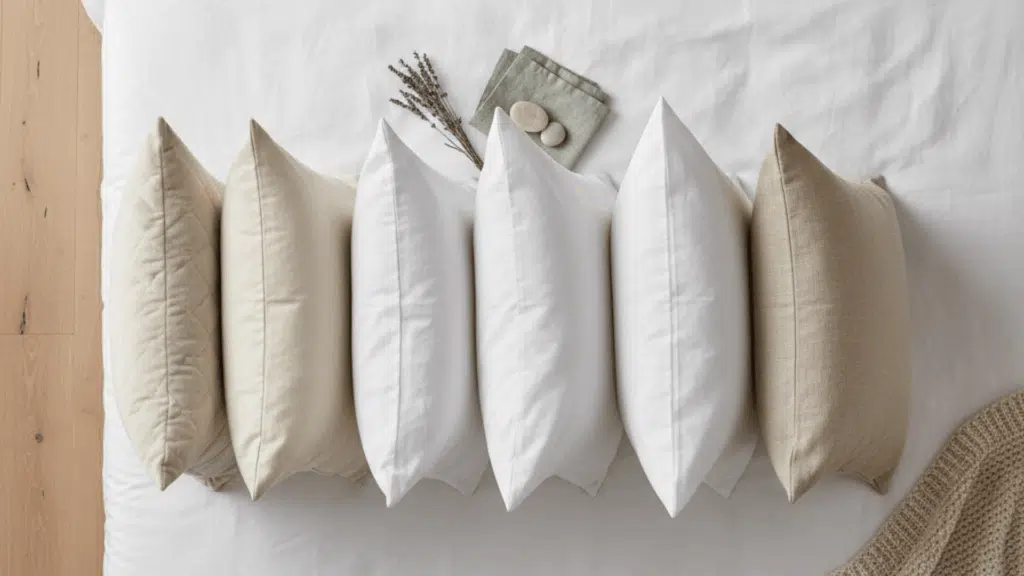
The stuffing inside your pillow determines how it feels, how long it lasts, and who it works best for.
Each material has its own personality, from contouring memory foam to breezy buckwheat hulls. Knowing the pros and cons helps you skip the trial and error.
1. Memory Foam Pillows
Who Should Avoid: Hot sleepers and those who prefer a bouncy, adjustable feel
Memory foam molds to your head and neck, offering excellent pressure relief and support. Solid foam holds its shape but can trap heat and feel rigid. Shredded foam is cooler, more adjustable, and easier to fluff.
Both types take a few nights to break in and can have an initial chemical smell. Great for anyone needing consistent neck support, but not ideal if you sleep hot or like changing your pillow’s shape throughout the night.
2. Latex Pillows
Who Should Avoid: Those on a tight budget or sensitive to latex allergies
Latex is naturally breathable, durable, and responsive with a subtle bounce that memory foam lacks. Natural latex comes from rubber trees and is eco-friendly, while synthetic versions are more affordable but less resilient.
This material offers firm, consistent support without the sinking feeling, making it perfect for side sleepers dealing with neck pain. Expect to pay more upfront, but latex pillows can last years longer than most alternatives.
3. Down & Feather Pillows
Who Should Avoid: Allergy sufferers and anyone needing firm, structured support
Down pillows feel luxuriously soft and light, almost cloud-like. They’re moldable and breathable but lack the support needed for proper alignment, especially for side and back sleepers.
Feather blends add a bit more structure but can poke through fabric over time. These work best for stomach sleepers or as decorative accents. If you have allergies or need real neck support, skip this option entirely.
4. Down Alternative (Polyfill)
Who Should Avoid: Those seeking long-term durability or premium support
Polyester-filled pillows mimic the soft, fluffy feel of down without the allergens or high price tag. They’re lightweight, machine washable, and great for guest rooms or combination sleepers who move around a lot.
The downside is that they flatten quickly and need replacing more often than other materials. Perfect if you’re on a budget or want a low-maintenance option, but not if you’re investing in serious neck support.
5. Buckwheat & Specialty Pillows
Who Should Avoid: Light sleepers bothered by noise or those preferring plush softness
Buckwheat hulls create a firm, adjustable pillow that stays cool all night thanks to natural airflow between the hulls. You can add or remove filling to customize height and support.
They’re supportive for neck alignment, but make a rustling sound and feel unlike traditional pillows. These have a loyal following among people with chronic neck issues, but the texture and noise aren’t for everyone.
Best Pillows for Side Sleepers
Side sleepers carry most of their weight on one shoulder and hip, so the pillow needs to do serious work keeping the neck and spine level.
Experts test pillows for height retention, neck support, and preventing shoulder discomfort. The best side sleeper pillows share a few standout features that cheaper options skip.
- High, Consistent Loft: The pillow should stay tall enough to fill the space between your ear and shoulder without collapsing halfway through the night.
- Gusseted or Contoured Edges: Extra side panels or ergonomic shaping keep the pillow structured and prevent your head from rolling off the support zone.
- Firm to Medium-Firm Feel: Soft pillows compress too much under your head’s weight, losing the alignment you need.
- Adjustable or Shredded Fill: Let’s you customize the height to match your exact shoulder width and mattress firmness.
- Breathable Materials: Side sleepers press more of their face into the pillow, so cooling fabrics like latex or ventilated foam prevent overheating.
If the product description doesn’t talk about side sleeper support specifically, it likely won’t deliver what you need.
Red Flags to Watch for: pillows labeled as “universal” without clear loft measurements, overly soft fills that flatten under pressure, and solid foam blocks that give you zero adjustability.
Now I have the official product URLs. Let me create the updated table with the embedded links:
Top Tested Pillows for Side Sleepers (2026)
Side sleepers need higher loft, consistent support, and pressure relief for the neck and shoulders. Based on expert reviews, sleep lab testing, and verified user feedback, these pillows stand out in 2026.
| Pillow | Best For | Firmness | Loft | Ratings |
|---|---|---|---|---|
| Coop Home Goods Original Adjustable Pillow | Best Overall for Side Sleepers | Medium–Firm | Medium–High | ★★★★★ (5/5) |
| Tempur-Pedic TEMPUR-Cloud ProHi | Best for Neck & Shoulder Pain | Firm | High | ★★★★★ (5/5) |
| Saatva Latex Pillow | Best Luxury Pillow for Side Sleepers | Medium–Firm | Medium–High | ★★★★★ (5/5) |
| Layla Kapok Pillow | Best Cooling Pillow for Side Sleepers | Medium | Adjustable | ★★★★☆ (4/5) |
| Eli & Elm Cotton Side Sleeper Pillow | Best Ergonomic Pillow for Side Sleepers | Medium | Medium–High | ★★★★☆ (4/5) |
How Mattress Type Affects Your Pillow Choice?
Your mattress and pillow work together to keep your spine aligned, not separately.
On a soft mattress, your body sinks deeper, closing the gap between your head and the surface. This means you need a lower loft pillow to avoid propping your head too high.
A firm mattress keeps you more on top, creating a bigger gap that requires a higher pillow to fill.
To test alignment, lie down in your usual sleep position and have someone check if your neck forms a straight line with your spine. If your head tilts up or down, adjust your pillow height accordingly.
Cooling, Allergies & Special Sleep Needs
Not everyone needs the same pillow features. Hot sleepers, allergy sufferers, and those dealing with neck pain need specific materials and designs that standard pillows don’t always provide.
Best Pillows for Hot Sleepers & Allergies
Temperature regulation and allergen resistance start with the right materials and certifications.
- Latex and shredded foam sleep cooler than solid memory foam blocks due to better airflow between fill pieces.
- Look for gel-infused materials, breathable cotton or bamboo covers, and ventilated foam with air channels.
- CertiPUR-US and OEKO-TEX certifications ensure pillows are free from harmful chemicals and allergens.
- Hypoallergenic fills like latex, memory foam, and down alternative resist dust mites better than traditional down.
Pillows for Neck Pain & Cervical Support
The right pillow can ease neck pain, but the wrong shape or height can make it worse.
- Contoured pillows with curves for your neck work well for back sleepers, but feel awkward for side or stomach sleepers.
- Adjustable pillows let you dial in the exact height needed to keep your neck aligned without tilting up or down.
- Orthopedic pillows help chronic neck issues, but aren’t necessary if your pain comes from using the wrong loft or firmness.
- Memory foam and latex provide consistent support that doesn’t flatten overnight, keeping your neck stable through all sleep stages.
How Often Should You Replace Your Pillow?
Pillow lifespan depends on the fill material. Down and polyester pillows need replacing every 1-2 years as they flatten quickly and lose support. Memory foam and latex last 3-5 years thanks to their durability and shape retention.
Beyond comfort, old pillows accumulate dead skin cells, dust mites, and oils that washing can’t fully remove, triggering allergies and breakouts.
The famous fold test (folding your pillow in half to see if it springs back) is outdated and unreliable. Instead, check for visible lumps, permanent indentations, or waking up with neck pain.
These are your real signs that it’s time for a replacement.
How to Test a Pillow Before Buying?
Most quality pillow brands offer trial periods, giving you time to test at home before committing. Use the first week strategically to catch any red flags before the return window closes.
| Testing Phase | What to Check | Red Flags |
|---|---|---|
| Trial Period | 30-120 night trials, free returns, no restocking fees | Short window, return shipping costs, restocking charges |
| Night 1-3 | Initial comfort, appropriate height, minimal odor | Immediate neck strain, overwhelming smell, wrong loft |
| Night 4-7 | Maintains shape, no pain, sleeping through the night | Constant fluffing needed, morning stiffness, overheating |
| Week 2+ | Consistent support, no headaches, still firm | Worsening pain, lumps forming, allergic reactions |
Quick Tip: Track your sleep quality and pain levels in a notes app during the trial. If issues persist past two weeks, return it and try a different loft or firmness level.
Common Pillow Buying Mistakes to Avoid
Even with all the right information, it’s easy to make costly mistakes when pillow shopping. These are the most common traps that lead to buyer’s remorse and wasted money.
- Choosing a pillow because it feels plush in-store without considering if it actually supports your neck alignment.
- Buying based on price alone, assuming expensive always means better or cheap means low quality.
- Ignoring your primary sleep position and going for a pillow marketed as universal or all-position.
- Skipping adjustable options when you’re unsure about loft leaves you stuck with a height that doesn’t work.
- Falling for trendy materials or features you don’t actually need, like cooling gel when you don’t sleep hot.
The best pillow isn’t the softest, the priciest, or the most popular. It’s the one that matches your body, sleep position, and actual needs. Take your time, test properly, and don’t settle for almost right.
Wrapping Up
Learning how to choose a pillow that actually works for your body takes the guesswork out of sleep.
You now know which materials suit your needs, what loft matches your sleep position, and how firmness plays into alignment. No more tossing and turning or waking up sore.
Start with your sleep position, factor in your mattress type, and don’t skip those trial periods. The right pillow is out there waiting to give you the restful nights you deserve.
Have questions or pillow recommendations of your own? Drop them in the comments below and let’s keep the conversation going.