
Buying a mattress is a big deal because it affects how you sleep every night. If you have a memory foam bed (or you’re thinking about getting one), you might be asking how long do memory foam mattresses last in real life, not just on a product page.
That question matters because foam can feel amazing at first, then slowly change over time. You might notice it getting softer, sinking a bit, or not supporting you the same way.
When that happens, you can wake up tired or sore and wonder if your mattress is the problem.
In this guide, I’ll walk you through the typical lifespan, what makes foam wear out faster, the signs it’s time to replace it, and simple ways you can help your mattress last longer.
What “Lasting” Really Means for a Memory Foam Mattress
When people ask what “lasting” means for a memory foam mattress, they are not always talking about the same thing.
A mattress can still look fine on the outside and still feel usable, but it may not support the body the way it used to.
Memory foam usually does not fail all at once. Instead, it slowly softens and compresses over time, especially in the spots where sleeping happens most.
Because of this, the mattress may still be usable, but comfort and support can drop a little by little.
In simple terms, a mattress often lasts longer physically than it lasts comfortably. Many times, support loss shows up before any clear damage can be seen.
Typical Lifespan of Memory Foam Mattresses
Most memory foam mattresses last between 7 and 10 years. However, many owners report replacing them closer to 5 to 8 years, depending on quality and use.
| Memory Foam Type | Expected Lifespan |
|---|---|
| Low-density foam | 5–6 years |
| Mid-density foam | 6–8 years |
| High-density foam (4 PCF or more) | 8–10+ years |
Higher-quality foam usually lasts longer. Cheaper foam often softens faster, even if sagging is not obvious right away.
What Real Owners Often Experience Over Time
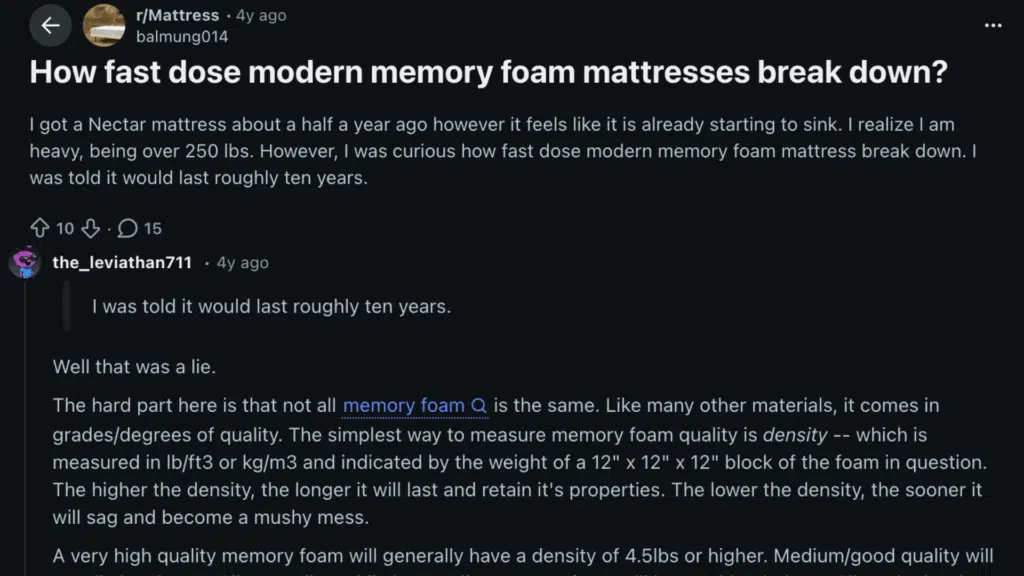
Many mattress owners share that modern memory foam can start feeling softer or less supportive sooner than expected, especially for heavier sleepers.
In community discussions, people often mention early sinking, foam softening within months to a couple of years, and uneven support showing up before the mattress looks “damaged.”
A big takeaway is that not all memory foam is the same; foam density and build quality can make a huge difference, and lower-quality foam tends to wear out faster under daily pressure.
Some also point out that a weak bed base/foundation can speed up sagging, and that comfort can decline long before a warranty claim becomes realistic.
Reddit owners share how quickly memory foam mattresses can start sinking, also showing how lifespan can change based on body weight, time spent in bed, and the support under the mattress.
Factors That Affect How Long Memory Foam Mattresses Last
Even a great mattress can wear out faster if the conditions around it are tough, so these key factors help explain why some beds last longer than others.
1. Foam Density and Quality
Foam density is one of the biggest factors in mattress lifespan. It is measured in pounds per cubic foot (PCF).
Higher-density foam is usually more durable, while low-density foam breaks down faster and softens sooner.
2. Body Weight and Sleep Position
Body weight and sleep position change how much pressure the foam takes each night.
Heavier sleepers stress the foam more, side sleepers press into hips and shoulders, and stomach sleepers may notice support loss sooner as the foam softens.
3. How Often the Mattress Is Used
Usage plays a big role in wear. A mattress used every night gets more compression and breaks down faster.
Guest room beds last longer because they get less use, and couples often wear foam quickly than solo sleepers.
4. Bed Base and Support
The base under the mattress matters more than most people think. Weak frames or wide slats can cause early sagging and uneven wear.
Platform beds, solid foundations, and slatted bases with narrow spacing support foam better.
5. Bedroom Environment
Heat and moisture can shorten mattress life. Warm rooms can make foam feel softer, while moisture can lead to buildup inside the bed.
Good airflow, breathable bedding, and a well-ventilated room help protect the foam over time.
Signs a Memory Foam Mattress is Wearing Out
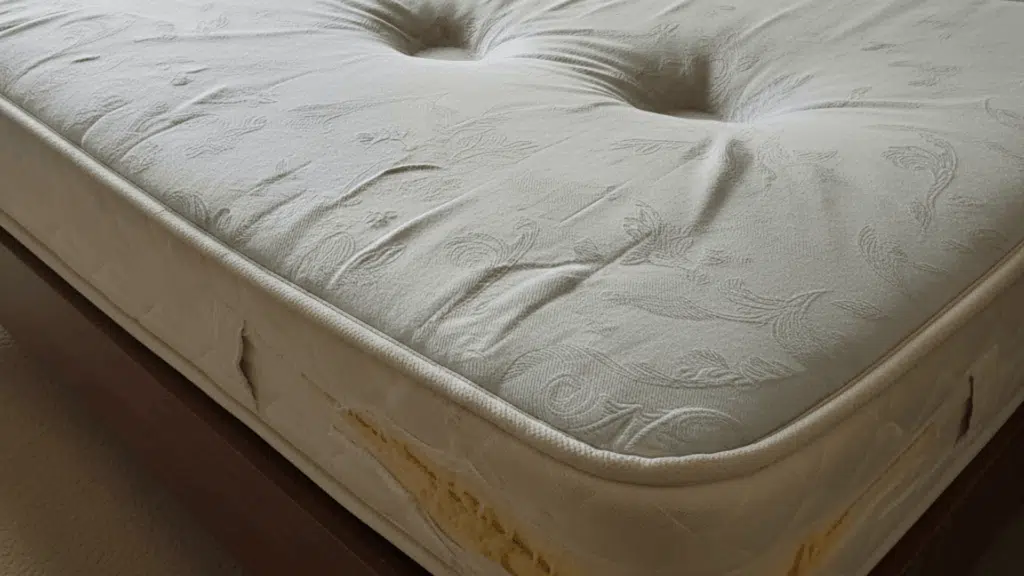
Many people wait too long to replace a mattress because the signs are not always obvious.
Watch for these changes:
- Visible sagging or body impressions that do not bounce back
- Waking up with aches or stiffness that did not exist before
- Restless sleep or frequent position changes
- Loss of edge support when sitting on the bed
- Feeling stuck instead of gently supported
- Sleeping hotter than before
- Skin or allergy irritation, especially without a mattress protector
Even one or two of these signs can mean the mattress is no longer doing its job well.
When is the Right Time to Replace a Memory Foam Mattress?
There is no single “perfect” age to replace a memory foam mattress, because timing depends more on how it feels than how long it has been owned.
A mattress can still look fine, but it stops giving the comfort and support the body needs. A practical way to decide is to focus on changes in sleep.
If sleep feels worse than before, if new aches show up without a clear reason, or if the mattress feels uneven or overly soft, the foam may no longer be doing its job.
When these issues start happening regularly, it may be time to replace the mattress, even if it is not very old.
| Mattress Quality | Typical Replacement Time |
|---|---|
| Budget memory foam | 5–6 years |
| Mid-range memory foam | 6–8 years |
| High-density memory foam | 8–10 years |
Comfort loss is the key signal, not just how long the mattress has been owned.
Memory Foam and Other Mattress Types Comparison
Memory foam performs well compared to many mattress types, but it is not the longest-lasting option.
| Mattress Type | Average Lifespan |
|---|---|
| Innerspring | 5–6.5 years |
| Memory foam | 6–10 years |
| Hybrid | 6–8 years |
| Latex | 10+ years |
Memory foam lasts longer than most spring mattresses because it has fewer moving parts. Latex tends to last the longest due to its natural durability.
How to Make a Memory Foam Mattress Last Longer
Good care can add years to a mattress’s useful life.
- Rotate the mattress every 3–6 months
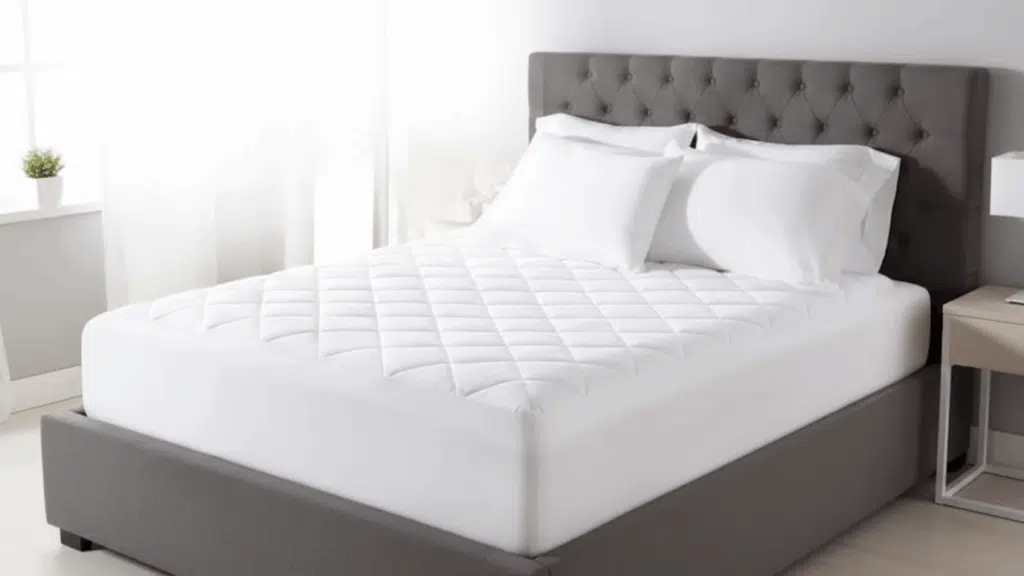
- Use a breathable mattress protector
- Keep the mattress clean and dry
- Make sure the bed base provides full support
- Avoid repeated sitting on the edges
- Keep the room temperature comfortable
Mattress protectors are especially helpful. They reduce moisture, stains, and buildup that can shorten the lifespan.
Is a Memory Foam Mattress Worth It for Longevity?
A memory foam mattress can be worth it for longevity because it offers strong value for many sleepers.
It works especially well for side sleepers, couples who want less motion transfer, and people who need pressure relief, often at a lower upfront cost.
However, hot sleepers and heavier sleepers may notice wear sooner. A simple way to decide is to compare the cost per year of comfort.
Final Thoughts
Now you’ve got a clearer way to think about how long memory foam mattresses last without guessing.
I covered what “lasting” really means, why foam can feel fine but still lose support, and the common lifespan ranges based on foam quality and daily use.
You also saw the signs that matter most, like sagging, poor sleep, and new aches, so you can trust what your body is telling you.
If your mattress still feels supportive, simple care steps can help you get more years out of it. If it feels uneven or too soft, you’ll know it’s not just in your head.
For more helpful tips, check out my other blog posts for extra ideas and guidance.