
There is something almost universal about the college experience of lying awake at 2 a.m., staring at a ceiling, convinced that finishing one more chapter will somehow make the difference. It usually does not. What it does instead is chip away at the one resource students cannot borrow or buy back: restorative sleep.
Most students know sleep matters. Knowing and actually fixing the problem are two entirely different things.
Why Sleep Keeps Losing to Everything Else
The average college student treats sleep as the most flexible item on their schedule. Assignments pile up, social obligations compete with study time, and somewhere in that chaos, bedtime becomes a moving target. A student carrying 18 credit hours while working part time does not have a laziness problem. They have a time management and priority problem, and sleep is usually the first casualty.
This is where the conversation gets interesting. When academic pressure becomes overwhelming, students often look for shortcuts – whether that is affordable essay writing help, cramming methods, or caffeine strategies. But none of those substitutes fix what poor sleep is quietly destroying: the brain’s ability to consolidate memories, regulate attention, and process new information.
Research published by the American Academy of Sleep Medicine found that college students who maintained irregular sleep schedules scored significantly lower on cognitive performance tests than those with consistent routines, even when total sleep time was similar. The pattern matters as much as the hours.
What Sleep Actually Does to a Learning Brain
Understanding how lack of sleep affects learning changes the way a student might think about their nightly habits. Sleep is not passive downtime. During slow wave and REM sleep cycles, the hippocampus transfers information to long term storage. Skip that process and the notes from Tuesday’s lecture stay fragile, easy to lose under stress.
Matthew Walker, a neuroscientist at UC Berkeley and author of research widely cited in sleep science, has described sleep deprivation as one of the most underestimated threats to academic performance. His lab’s findings suggest that pulling an all nighter before an exam can reduce memory retention by up to 40 percent compared to a well rested brain.
That statistic is worth reading twice. Forty percent. A student could study twice as hard and still perform worse than a peer who slept.
Practical Student Sleep Schedule Tips That Actually Work
The advice to “just sleep more” is not advice. Here is what research and student experience actually support:
Anchor the wake time first. Most sleep hygiene guides focus on bedtime, but the wake time is actually the stronger anchor for the circadian rhythm. A student who wakes at 7:30 a.m. every day, including weekends, builds a biological pattern that makes falling asleep easier at night. Drifting the wake time by two or three hours on weekends creates what researchers call social jetlag, which can mimic the effects of crossing multiple time zones weekly.
Reduce light exposure after 10 p.m. Screens emit blue light that suppresses melatonin production. Dimming screens or using warm light settings an hour before bed does measurably reduce the time it takes to fall asleep. Stanford Sleep Center studies have shown even brief exposure to bright light during the hour before sleep delays melatonin onset by up to 90 minutes.
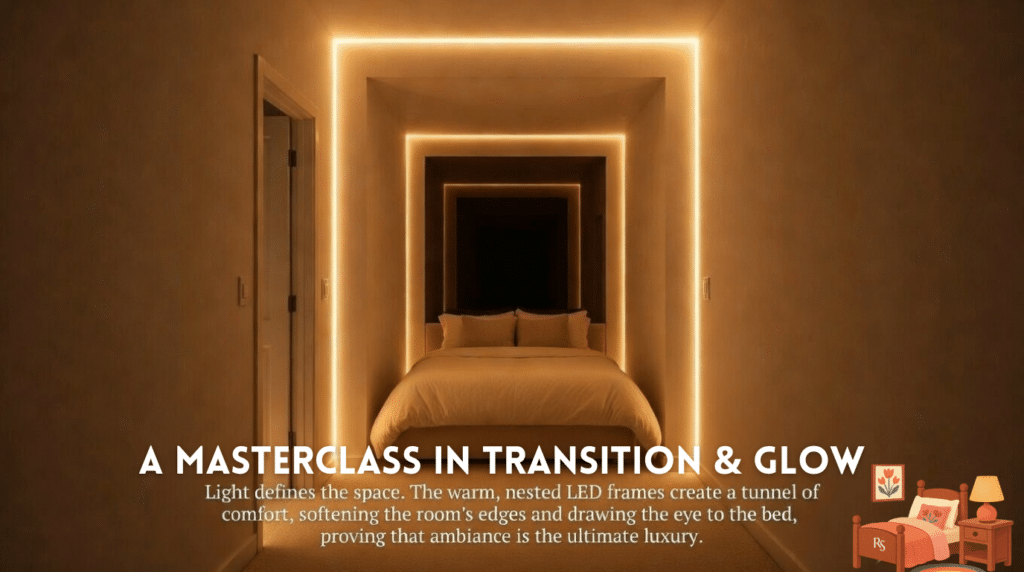
Treat the bedroom as a single purpose space. Students who study, eat, and scroll in bed train their brain to associate that environment with wakefulness. This sounds minor until it becomes the reason someone cannot fall asleep before 1 a.m. even when they are exhausted.
Use naps strategically, not desperately. A 20 minute nap between 1 p.m. and 3 p.m. can restore alertness without interfering with nighttime sleep. A 90 minute nap at 5 p.m. is a different matter entirely.
The Connection Between Sleep Habits and Focus
Here is a table that puts the relationship in plain terms:
|
Sleep Duration |
Cognitive Effect |
Study Impact |
|---|---|---|
|
Less than 5 hours |
Reaction time drops to impaired level |
Retention falls sharply |
|
5 to 6 hours |
Attention lapses increase 30%+ |
Reading comprehension suffers |
|
7 to 8 hours |
Optimal working memory function |
Best conditions for learning |
|
9+ hours (irregular) |
Groggy, disrupted rhythm |
Harder to concentrate |
Sleep habits for better focus are not about maximizing hours arbitrarily. They are about reaching the 7 to 8 hour window consistently and protecting the deep sleep phases that make learning stick.
What Happens When Students Try to Fix Things
The difficulty with building better sleep for studying is that most students attempt change during the worst possible time – finals season, deadline week, or after a string of poor nights has already left them in deficit. Sleep debt is real, but it does not disappear with one 10 hour recovery night. It requires gradual rebuilding.
A more realistic approach is to treat sleep reform as a semester project rather than a one week experiment. Small shifts matter. Moving bedtime 15 minutes earlier every few nights is more sustainable than a sudden rigid schedule. Cutting the last caffeine intake off at 2 p.m. is more effective than eliminating it entirely and failing.
Students at institutions with wellness programs, including MIT, Cornell, and the University of Michigan, have seen measurable improvements in GPA and mental health outcomes when sleep education was incorporated into first year orientation programs. This is not coincidence. The schools that take sleep seriously produce students who perform better under pressure.
The Harder Conversation About Habits
There is a pattern worth naming honestly. Students who struggle most with sleep are often the same students who struggle with consistency in other areas – meal times, exercise, social boundaries. Sleep does not operate in isolation. It is the downstream effect of how the day is structured.
A student who knows how to improve sleep as a student but cannot stop scrolling at midnight does not have a knowledge problem. They have a habit and environment design problem. The phone on the nightstand is not neutral. The group chat that fires off at 11:30 p.m. is not neutral. These are architecture problems that require structural solutions, not willpower.
Putting the phone in another room is one of the most evidence backed sleep interventions available. It is also one of the most resisted. That tension says something important about where the real friction is.
Building Toward a Smarter Semester
No one gets sleep perfectly right. There are exam weeks, travel disruptions, anxiety spirals, and the occasional social event that runs too late. Those exceptions are fine. What determines academic performance over a semester is not the one bad night but the average quality of sleep across weeks.
A student who builds a consistent rhythm, protects their sleep environment, and understands the physiological stakes is already operating with an advantage over their peers who treat every night as negotiable. The information above is not new science. It is well documented, widely available, and still largely ignored.
That gap between knowing and doing is exactly where students either gain ground or lose it.