I used to think sleep problems were only about mattresses or routines, but bedroom setup plays a bigger role than many realize.
You’ve probably noticed how some rooms feel calming while others make it hard to fully relax. That curiosity often leads people to feng shui sleeping head direction, especially when rest feels off, and nothing obvious seems wrong.
The challenge is that advice online can feel confusing or overly strict, leaving you unsure what actually matters. This topic matters because small adjustments can make your space feel more settled instead of stressful.
I’ll walk you through clear, practical guidance, explain what truly helps versus what can be skipped, and show how to choose a direction that fits real life. That’s where things start to make sense.
The Short Answer: Best Feng Shui Sleeping Head Direction
If you want a simple place to start, this section gives you exactly that.
In Feng Shui, East and South are the most commonly recommended sleeping head directions.
- East is often linked with fresh energy, mental clarity, and smoother mornings.
- South is usually connected with deeper rest and a more grounded feeling during sleep.
These directions are favored because they are believed to support natural energy flow and a calmer sleep state for many people.
North and North-East are often described as less supportive in traditional Feng Shui and Vastu teachings.
It is essential to understand this carefully. These directions are commonly believed to cause restlessness or lighter sleep for some people, but this is not guaranteed.
Many people sleep well in these directions, mainly when their bedroom layout and comfort are well managed. Use this simple guide if you want to decide quickly:
- If you wish to focus better and have lighter mornings, try East.
- If you want deeper, heavier rest, try South.
- If neither direction works in your room, focus on bed placement and bedroom setup instead of forcing direction changes.
Choose Your Direction Based on Your Sleep Problem
Your sleep struggles can offer useful clues about which head direction may feel more supportive. Instead of guessing, match your main issue with a direction that traditionally aligns better.
1. If You Struggle to Fall Asleep
If falling asleep takes a long time, your nervous system may have trouble slowing down. In Feng Shui, East and South are often linked with smoother energy flow that helps the body settle more easily. The
East is associated with gentle renewal and mental clarity, which can help quiet racing thoughts. South is connected with stability and warmth, which may help the body relax physically.
While direction alone will not fix insomnia, these positions are often considered less stimulating than North or North-East when winding down.
2. If You Wake Up Tired or Heavy
Waking up tired, sore, or mentally foggy can signal that your sleep is not deep or restorative.
South-facing head positions are traditionally associated with grounding and physical rest. This direction is believed to support steadier energy during sleep, which may help the body feel more restored in the morning.
Some people also find West-facing positions feel too sluggish, adding to that heavy feeling. If mornings feel slow and drained, testing a South-facing setup for a whole week may be worth trying.
3. If You Wake During the Night or Feel Restless
Frequent night waking or restless sleep is often linked to overstimulation rather than exhaustion. In Feng Shui traditions, North and North-East are sometimes associated with lighter, more active energy.
For sensitive sleepers, this may translate into easier disruption during the night.
If you notice tossing, turning, or waking without clear reasons, shifting toward East or South may reduce that sense of energetic imbalance. Pairing direction changes with reduced light and noise usually improves results.
4. If You Feel Anxious or Mentally Wired at Night
When anxiety or mental tension dominates bedtime, changing direction alone often does very little. While calmer directions like East or South may help slightly, room setup matters more here.
Bright lighting, clutter, electronics, and poor bed placement can keep the mind alert regardless of direction. In these cases, focus first on reducing stimulation in the bedroom and improving the layout.
Once the environment feels calmer, adjusting sleeping direction may offer additional support instead of acting as a primary solution.
Personalized Feng Shui Option: Using Your Kua Number
If general sleeping directions feel too broad, the Kua number offers a more personal way to choose a direction that may better support your energy.
What is a Kua Number
A Kua number is a Feng Shui tool used to identify directions that may feel more supportive or challenging for you. It is calculated using your birth year and gender, then linked to specific compass directions.
Think of it as a personal reference rather than a strict rule. Your Kua number suggests four directions that are traditionally considered more supportive and four that may feel less helpful.
When used for sleep, it helps guide which direction the crown of your head points while resting.
When Kua is Worth Using
Using your Kua number can be helpful if you want more personalized guidance instead of general advice. It is especially useful when setting up a long-term bedroom where the layout is unlikely to change often.
People who enjoy structure and want to fine-tune their Feng Shui choices often find value in it. Kua can also help when deciding between two otherwise acceptable bed directions.
In these cases, it offers an extra layer of guidance rather than replacing comfort or practicality.
When You Can Skip Kua
You do not need to use a Kua number in every situation. It can be skipped if you live in a temporary space, such as a rental or short-term housing. Shared bedrooms are another common reason to skip it, especially when partners have conflicting directions.
You can also ignore Kua guidance when comfort, room shape, or bed placement clearly works better another way. In these cases, physical comfort and calm usually matter more than personal direction rules.
Sleeping With a Partner and Conflicting Directions
When partners have different Kua directions, compromise is often the best solution. One common approach is choosing the direction that feels least disruptive to both people, rather than ideal for one.
Many couples also prioritize the lighter sleeper, since their rest is easier to disturb. Another option is focusing on strong bed placement and room balance instead of direction alone.
A calm, supportive environment often matters more than perfect directional alignment for shared sleep spaces.
Feng Shui vs. Vastu Shastra: What’s Same and What’s Different
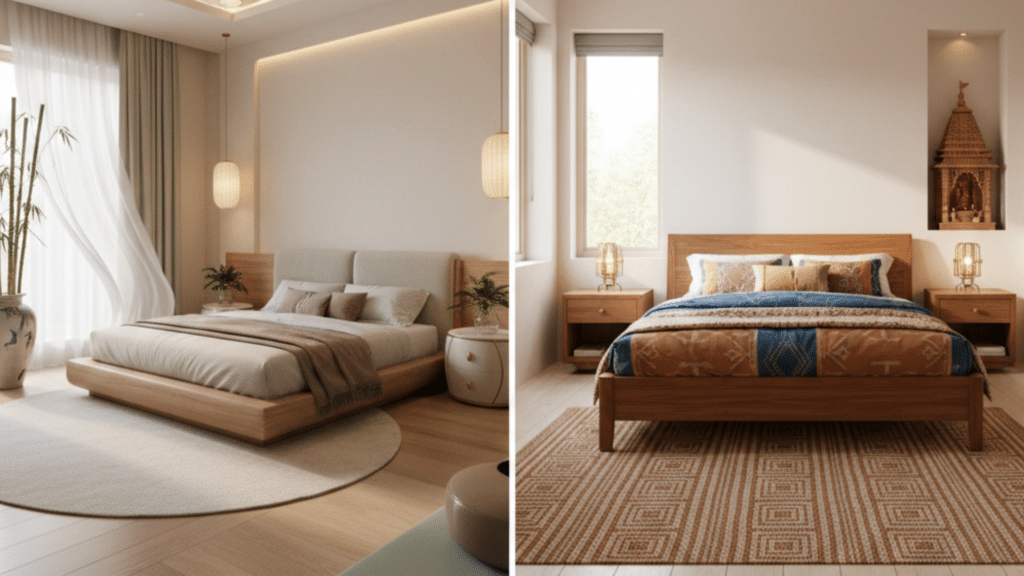
Both Feng Shui and Vastu Shastra guide sleeping direction, but they come from different cultures and focus on different principles. Understanding this helps you avoid confusion.
| Aspect | Feng Shui | Vastu Shastra |
|---|---|---|
| Origin | Ancient China | Ancient India |
| Core focus | Energy flow (Chi) and room layout | Direction, space, and natural forces |
| View on sleep | Emphasizes balance, calm, and placement | Emphasizes alignment with natural forces |
| Preferred head directions | Often East or South | Strongly favors South |
| View in the North direction | Often considered less supportive for some | Usually discouraged |
| Flexibility | More adaptable to room layout and comfort | More rule-based and directional |
| Priority | How the space feels and functions | Correct directional alignment |
Neither system is meant to override comfort or common sense. When advice differs, choose the approach that supports calm, rest, and consistency in your space.
What Science Actually Says About Sleeping Direction
From a scientific perspective, the idea that sleeping direction changes sleep quality is still not firmly proven. Some studies have looked at how aligning your body with the Earth’s magnetic field might relate to sleep, but evidence is limited and mixed.
One small 2015 sleep study found a significant relationship between sleep difficulty and geographical direction.
People sleeping along a north–south axis had fewer issues falling asleep than other orientations, though no deep conclusions were reached about overall sleep quality beyond that specific measure.
Another exploratory neuroarchitecture study using EEG showed that brainwave patterns varied when sleepers faced the Earth’s electromagnetic field north–south versus east–west, suggesting orientation can affect brain dynamics during sleep.
Even so, scientific consensus remains limited. Many experts agree that comfort, lighting, noise, and temperature have far more potent effects on sleep than compass direction alone, and the Earth’s natural magnetic field is very weak compared with fields that have measurable physiological effects in controlled research.
In summary, while a few studies suggest interesting correlations between orientation and aspects of sleep, there is no definitive proof that one sleeping direction reliably improves sleep in all people. Personal comfort and sleep environment generally matter more for rest quality than orientation by compass.
How to Test a Sleeping Direction Properly
Testing a sleeping direction works best when you stay consistent, observe specific signs, and avoid changing too many things at the same time.
- Test one direction at a time: Choose a single head direction and stick with it for at least seven to ten nights before judging results.
- Keep other factors stable: Try not to change your mattress, lighting, bedtime routine, or room layout during the testing period.
- Track how long it takes you to fall asleep: Notice whether sleep comes faster, slower, or feels the same compared to your previous setup.
- Pay attention to night waking: Note how often you wake up and whether returning to sleep feels easier or harder.
- Check morning energy levels: Observe how your body and mind feel when you wake up, not just how many hours you slept.
- Stop if sleep clearly worsens: If rest feels consistently worse, switch direction or focus on improving the bedroom environment instead.
Feng Shui Bedroom Setup That Supports Better Sleep
Your sleeping direction matters, but it works best when the bed, room layout, and environment support rest together. This section covers the most practical fixes for real homes.
1. Commanding Position and Door Awareness
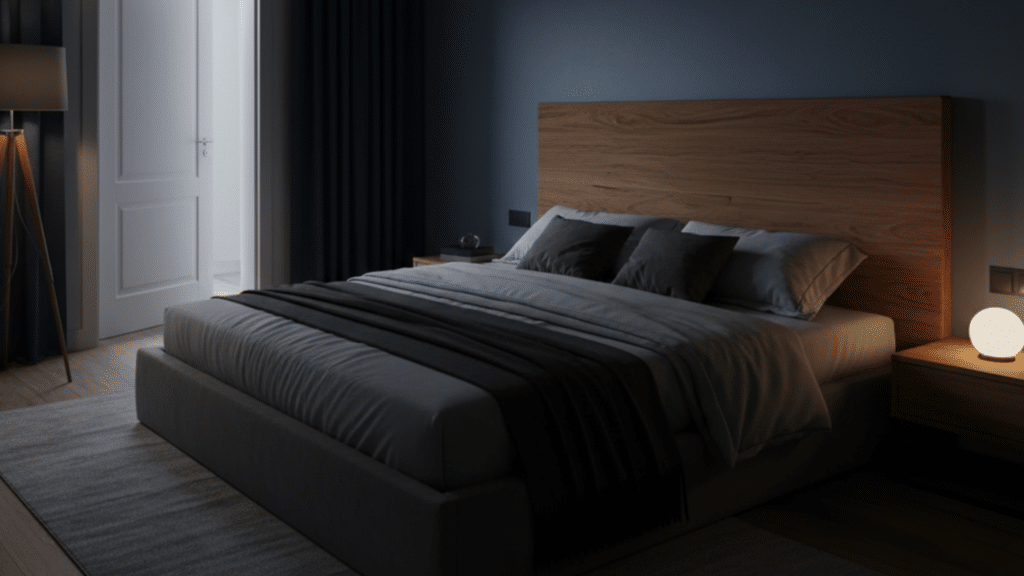
Place your bed so you can see the bedroom door while lying down, without being directly in line with it. This setup helps the body feel safer and more relaxed at night. When the door is visible, your mind does not stay on alert, even subconsciously. B
eds aligned directly with doors can feel exposed and unsettled, which may affect sleep quality over time. If layout limits your options, a solid headboard and thoughtful furniture placement can help restore balance.
2. Space Around the Bed and Room Balance
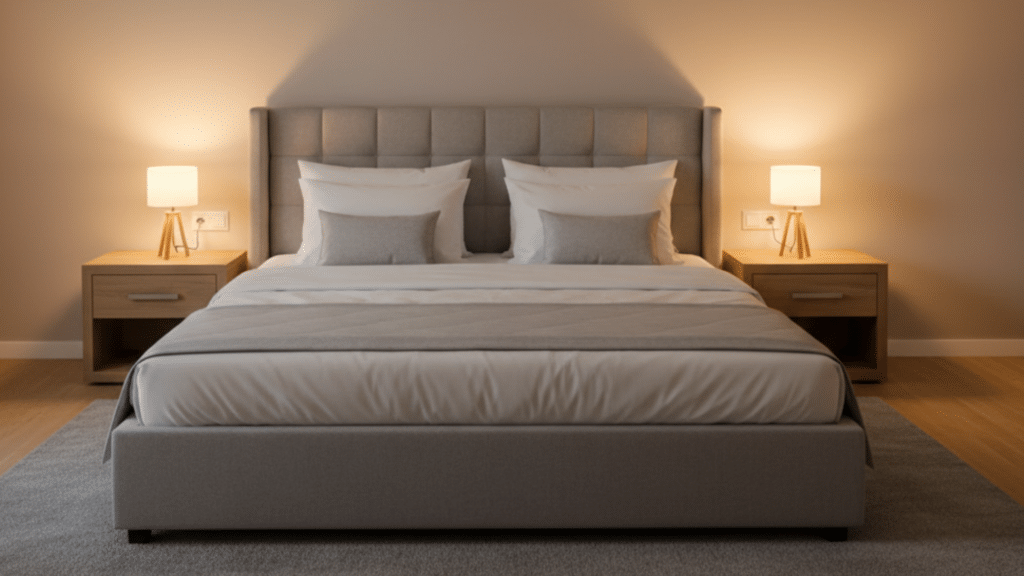
Balanced space on both sides of the bed allows easier movement and creates a more even, settled feeling. This is especially important for couples, but it also matters for solo sleepers.
When one side is pressed tightly against a wall, the room can feel cramped or restrictive. If space is limited, aim for small gaps rather than perfect symmetry. Clear walkways and matching nightstands can help maintain balance even in tighter bedrooms.
3. Windows, Beams, and Fixed Room Challenges
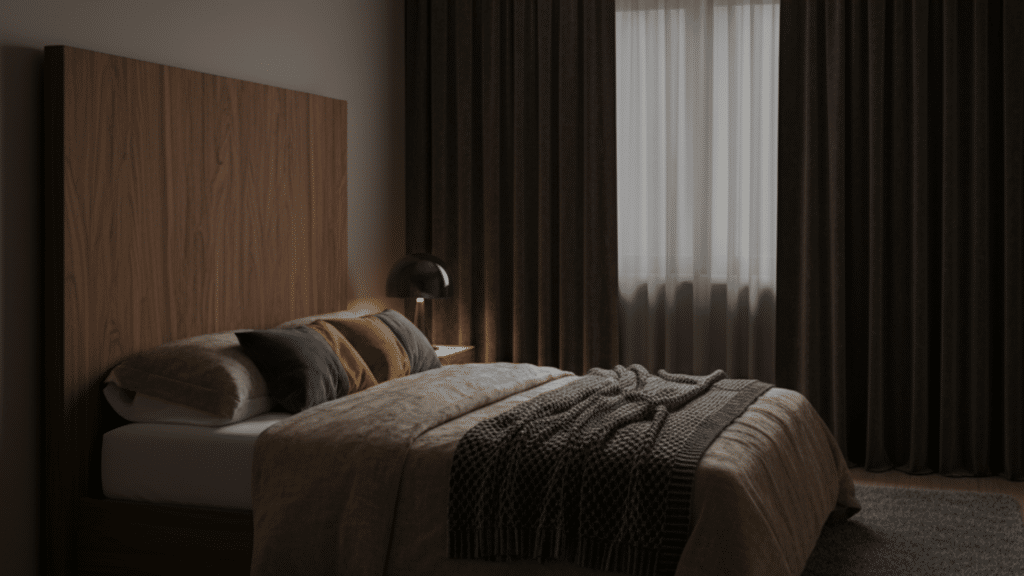
Beds placed under windows or beams often feel less stable due to light, movement, or visual pressure. Curtains, solid headboards, or wall treatments can reduce these effects.
If your room only allows one bed direction, focus on strengthening the environment instead of forcing orientation changes. Use grounding elements like heavier bedding, softer colors, and reduced clutter near the bed to compensate for layout limitations.
4. Lighting, Clutter, and Visual Calm
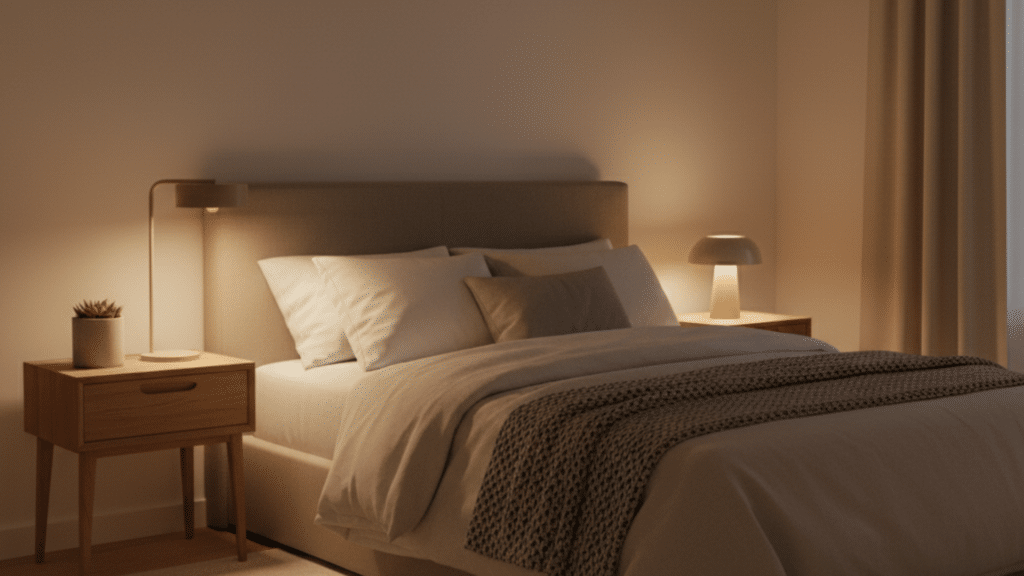
Soft, layered lighting supports rest far better than bright overhead lights. Lamps with warm tones help signal the body to wind down. Clutter and visual noise can keep the mind active, even during sleep.
Keeping surfaces clear and décor minimal around the bed helps create a calmer atmosphere. Less visual input often leads to deeper rest, regardless of sleeping direction.
5. Electronics and Sleep Association
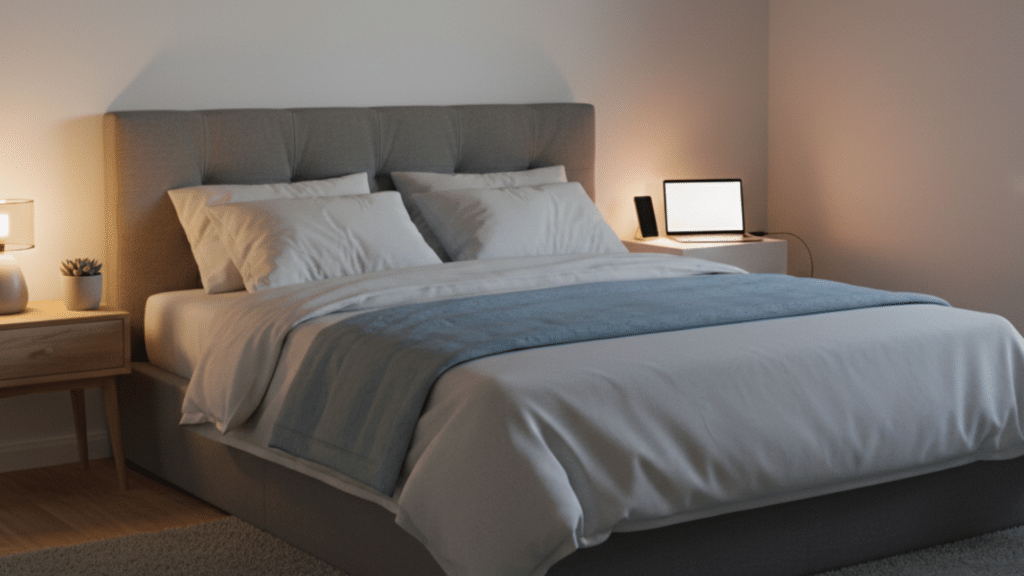
Keeping electronics away from the bed helps reinforce the space as one meant for rest, not stimulation. Phones, televisions, and work devices can disrupt sleep through light exposure and mental engagement.
When possible, charge devices away from the bed and avoid screens before sleep. This strengthens the mental link between your bed and relaxation, making any Feng Shui adjustments more effective.
Common Feng Shui Sleep Direction Mistakes
Many people feel frustrated with Feng Shui sleep advice because small but common mistakes often create confusion, stress, and unnecessary sleep disruption.
- Obsessing over direction alone: Focusing only on compass direction while ignoring comfort, lighting, noise, or mattress quality often leads to disappointment.
- Ignoring comfort and room setup: Poor bed placement, clutter, and bright lighting can disrupt sleep even if the head direction is considered ideal.
- Creating fear around “wrong” directions: Treating certain directions as dangerous or harmful can increase anxiety, which directly interferes with falling and staying asleep.
- Constantly changing without testing: Switching directions too often without giving your body time to adjust makes it impossible to know what actually works.
Conclusion
By now, you’ve seen that sleeping direction works best as part of a bigger picture.
East and South are common starting points, but comfort, bed placement, and room setup often matter more than strict rules.
The real value of feng shui sleeping head direction comes from using it as a supportive tool, not something that creates pressure.
I’ve found that testing one setup at a time and paying attention to how you feel leads to better results than chasing perfection. If you’re curious, try one small change this week and notice the difference.
Want to go further? You can check out other blogs on bedroom layout, sleep setup, and Feng Shui tips to keep improving your space.