

I used to think minimalism meant stripping away everything that made a home feel lived-in.
But here’s what I’ve learned: you don’t have to choose between a clutter-free space and a home that actually feels good to be in.
Cozy minimalism is about keeping what matters and letting go of what doesn’t, surrounding yourself with things that are both useful and meaningful. It’s having fewer things, but better things.
A space that’s easy to breathe in, but still wrapped in texture, warmth, and the little touches that make it yours.
I want to show you how to build a home that feels calm without feeling cold, simple without feeling empty. A place where you can truly relax and recharge.
Minimalist Living Room Foundations: Color, Light & Materials
The backbone of cozy minimalism lies in your choices of color, light, and texture. These elements set the mood before you even add a single piece of furniture.
1. Use a Warm Neutral Color Palette

When my colleague Sarah repainted her living room in soft beige instead of stark white, she noticed how much longer her family lingered there in the evenings.
Warm neutrals like greige, warm grey, and muted earth tones create a foundation that feels inviting rather than clinical. These shades reflect light beautifully while maintaining a sense of coziness.
The key is choosing undertones that lean toward warmth rather than cool, which can make spaces feel sterile and unwelcoming.
2. Introduce Subtle Pops of Color Thoughtfully

I learned this lesson the hard way after buying six different colored cushions that made my sofa look chaotic. A single terracotta vase or a muted sage cushion can add personality without breaking the minimalist appeal.
Interior designer Maria Chen notes that “one intentional accent piece does more visual work than a dozen scattered colors.”
Think of color as seasoning in cooking: a little goes a long way, and it should amplify rather than overwhelm the base.
3. Maximize Natural Light

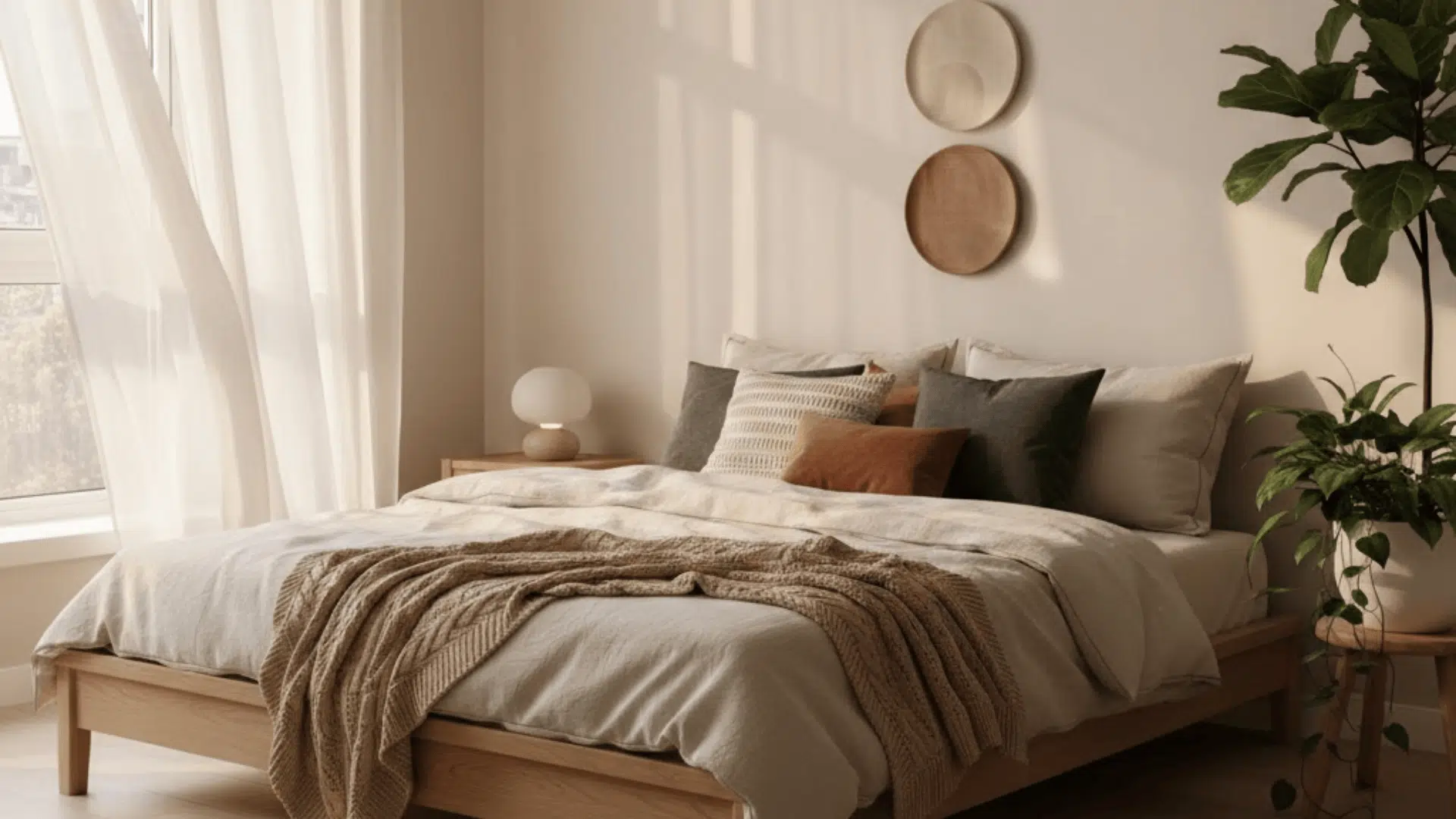
Large windows transformed my friend Raj’s apartment from a cave into a sanctuary. If you’re working with existing windows, swap heavy curtains for sheer ones or light-filtering treatments that let sunlight pour in.
Natural light not only makes spaces feel larger but also shifts throughout the day, creating a dynamic ambiance.
In rooms with limited windows, consider removing unnecessary window treatments altogether to capture every bit of available light.
4. Layer Lighting for Ambiance

Relying solely on overhead lighting was my biggest decorating mistake in my first apartment.
Combining ceiling fixtures with floor lamps, table lamps, and wall sconces creates depth and warmth that single-source lighting can’t achieve.
Each layer serves a purpose: ambient for general illumination, task for reading or working, and accent for highlighting features. This approach lets you adjust the mood from energizing morning brightness to relaxing evening glow.
5. Incorporate Natural Materials and Textures

There’s something grounding about running your hand across a wooden coffee table or sinking your feet into a wool rug.
Natural materials like stone, linen, and woven fabrics bring organic warmth that synthetic alternatives simply can’t replicate.
My oak side table has developed a beautiful patina over three years, telling its own story. These materials age gracefully and connect your interior space to the natural world outside.
Cozy Minimalist Living Room Furniture & Layout
Smart furniture choices and thoughtful arrangement make the difference between a showroom and a livable space. Every piece should earn its place through beauty and utility.
6. Choose Sleek, Streamlined Furniture with Clean Lines

Bulky, ornate furniture can dominate a room and make it feel cramped. I replaced my grandmother’s heavy Victorian sofa with a streamlined mid-century piece, and suddenly the room could breathe.
Clean-lined furniture creates visual calm while maintaining presence.
Look for pieces with simple silhouettes and minimal embellishment that let the quality of materials and craftsmanship shine through.
7. Opt for Multifunctional Furniture

My coffee table with hidden storage compartments saves me daily.
Ottomans that double as seating and storage, modular sofas that reconfigure for different needs, and expandable dining tables maximize functionality without adding clutter.
Architect Tom Rodriguez explains that “furniture that serves multiple purposes is the cornerstone of efficient small-space living.” This approach is particularly valuable in apartments or homes where every square foot counts.
8. Select a Comfortable, Textured Sofa as the Anchor

Your sofa is likely where you’ll spend countless hours, so comfort matters as much as appeal.
I chose a neutral-toned sofa in textured linen that’s survived coffee spills, movie marathons, and afternoon naps while still looking intentional.
The texture adds visual interest without pattern, and the neutral color adapts to seasonal decor changes. Invest in quality here since this piece anchors your entire living space.
9. Add a Cozy Armchair or Chaise Lounge

Instead of cramming multiple small seats around the perimeter, one well-chosen armchair creates a focal point and genuine comfort.
My reading chair by the window has become my favorite spot in the house. A chaise lounge offers the same impact while providing a place to truly stretch out and relax.
Quality over quantity applies perfectly to seating arrangements in cozy minimalism.
10. Use Modular Seating or Floor Cushions for Versatility

Floor cushions saved my last gathering when twelve people showed up instead of six.
Modular seating and oversized floor pillows provide flexible options that store easily when not needed. This approach creates a relaxed, informal vibe that encourages people to settle in comfortably.
Designer Lisa Park notes that “flexible seating arrangements adapt to life rather than constraining it.”
11. Keep Surfaces Clean and Clutter-Free

My dining table used to disappear under mail, keys, and random objects until I implemented a “nothing stays on surfaces” rule.
Clutter-free tables and shelves showcase your curated pieces rather than hiding them in visual noise. This doesn’t mean surfaces must be empty, but every item should be there intentionally.
The practice creates mental clarity alongside physical order.
12. Allow Breathing Space Between Furniture

When I pushed all my furniture against the walls, thinking it would maximize space, the room actually felt smaller.
Floating furniture away from walls and leaving generous gaps between pieces allows visual flow and makes rooms feel more spacious.
Negative space is as important as the furniture itself in creating a calm, uncluttered atmosphere.
Textiles, Rugs & Soft Furnishings in a Minimalist Living Room
Soft elements transform minimalism from austere to inviting. These tactile additions create comfort without compromising clean appeal.
13. Use Rugs to Define Zones and Add Softness

A jute rug under my coffee table instantly made the seating area feel intentional and grounded.
Rugs define conversation areas, add warmth underfoot, and introduce texture to hard flooring. In open-plan spaces, different rugs can subtly separate living and dining zones without walls.
Consider layering a smaller textured rug over a larger neutral one for added dimension.
14. Drape Plush Throw Blankets and Scatter Soft Pillows

My collection of linen and wool throws lives in a basket beside the sofa, always within reach for chilly evenings.
Natural fiber pillows and blankets add comfort while maintaining the organic aesthetic of cozy minimalism. My neighbor Emma keeps hers in complementary neutral tones that she swaps seasonally.
The key is having enough for comfort but not so many that they overtake the furniture.
15. Mix Textures Thoughtfully

Combining smooth leather with rough jute and soft wool creates sensory interest that keeps minimalism from feeling flat.
I pair my smooth ceramic vases with a chunky knit throw and a nubby linen cushion. Interior stylist James Wu says, “texture is the secret ingredient that makes minimal spaces feel rich.”
The interplay between different tactile surfaces adds depth without requiring color or pattern.
Natural Elements & Greenery for a Minimalist Living Room
Bringing the outdoors in softens minimalism’s edges and adds life to carefully curated spaces. These organic touches create connection and vitality.
16. Bring in Plants or Greenery

My fiddle leaf fig has become a conversation starter and a daily reminder to slow down and care for something living.
Potted plants, small indoor trees, or low-maintenance succulents add freshness and improve air quality. Even people without green thumbs can succeed with hardy varieties like pothos or snake plants.
The organic shapes and living color of plants provide movement and energy that static decor cannot.
17. Adopt Organic Shapes and Forms

After years of rigid geometric furniture, my friend David introduced a rounded coffee table that completely changed his room’s energy.
Curved furniture edges and naturally shaped decor pieces soften minimalism’s sometimes harsh angles. Organic forms feel more human and welcoming, creating visual relief from straight lines.
A kidney-shaped mirror or an irregularly shaped wooden bowl brings unexpected softness.
Keep Decor & Art Personal Yet Minimal
Thoughtful decoration adds personality without clutter. These elements tell your story while maintaining visual restraint.
18. Choose a Statement Piece as Focal Point

My sculptural floor lamp draws every visitor’s eye and anchors my entire living room design.
Whether it’s a dramatic mirror, a unique furniture piece, or a striking artwork, one statement element gives the room direction and personality.
Designer Sofia Martinez advises, “let one piece sing while others harmonize.” This prevents the space from competing with itself visually.
19. Go Minimal with Wall Art

I hung three simple line drawings in black frames rather than covering every wall, and the effect is surprisingly impactful.
Abstract art, monochrome photography, or minimalist prints complement a clean appeal without overwhelming them.
The wall space around art is as important as the art itself, creating breathing room that enhances rather than diminishes the piece’s presence.
20. Display a Curated Selection of Books or Personal Items

My bookshelf holds about twenty carefully chosen books displayed cover-out rather than a packed library.
A few meaningful items, like a vintage camera from my grandfather or a ceramic piece from my travels, add personality without creating clutter.
The keyword is “curated,” meaning each item passes the test of being genuinely meaningful or beautiful to you.
21. Keep Window Treatments Simple

Replacing my heavy, patterned curtains with sheer white panels let in so much more light and made my windows feel twice as large.
Simple roller shades, minimal blinds, or light linen curtains complement clean lines while serving their practical purpose.
Window treatments should recede into the background, framing views rather than competing with them.
Lighting & Ambience in a Minimalist Living Room
Lighting shapes mood more powerfully than almost any other element. Thoughtful illumination creates warmth and depth in minimal spaces.
22. Integrate Smart Lighting for Seamless Routines

My smart bulbs sync with my phone’s sunset timer, automatically shifting from bright task lights during work calls to a golden evening hue that signals it’s time to unwind.
Beyond basic layers, tech like dimmable LEDs or app-controlled strips lets you effortlessly customize your mood to your schedule: energizing for mornings, soothing for nights.
This not only boosts coziness but also promotes better sleep cycles, as lighting designer Rachel Kim emphasizes: “Adaptive light mimics nature, aligning your home with your body’s rhythms.”
23. Create Cozy Corners or Reading Nooks

My reading nook consists of just an armchair, a floor lamp, and a small side table, but it’s become my sanctuary.
These intentional corners make minimal rooms feel inhabited and loved rather than staged.
The combination of comfortable seating, good lighting, and a surface for your coffee or book creates a micro-environment within the larger space that invites you to slow down and settle in.
Functional Storage & Clutter Control
Smart storage keeps minimalism sustainable long-term. These strategies maintain clean surfaces while accommodating real-life necessities.
24. Prioritize Eco-Friendly Storage Solutions

Swapping my plastic bins for bamboo dividers last spring not only tidied my linen closet but also cut down on single-use waste; now everything stacks neatly with a nod to the planet.
In a minimal home, choose storage from recycled or natural sources like cork organizers or upcycled wood crates; they blend seamlessly without visual bulk and support your values.
Sustainability expert Lena Voss reminds us, “Clutter control starts with what you bring in; sustainable storage ensures less stuff cycles through your life.”
25. Adopt Open Space

The empty corner in my living room isn’t a problem to solve but a feature to appreciate.
Resisting the urge to fill every wall and corner allows your space to breathe and your curated pieces to shine. Negative space provides visual rest in a world full of stimulation.
Sometimes what you choose not to include speaks as loudly as what you do.
Personalization & Comfort: Making It Feel Like Home
The final layer converts a well-designed space into your space. These touches balance minimalism with the warmth of being lived-in.
26. Respect Scale and Proportion

After cramming oversized furniture into my first small apartment, I learned that scale matters enormously.
Choose furniture and décor proportional to your room size to avoid overwhelming the space or making it feel cluttered. Designer Michael Torres reminds clients that “breathing room isn’t wasted space, it’s essential space.”
Allow adequate clearance around pieces so the room feels comfortable to move through and easy to live in.
27. Rotate Décor Seasonally or Occasionally

Swapping my grey throw for a cream one and changing out two cushions refreshes my space without requiring storage for endless variations.
My friend Karen switches her coffee table books quarterly, keeping things feeling current.
This rotation prevents both boredom and accumulation, letting you enjoy different aspects of your collection throughout the year without visual overwhelm.
28. Combine Minimalism with Cozy Rituals

My evening routine of dimming the lamps, lighting a candle, and watering my plants makes my living room a space I genuinely enjoy daily.
Building rituals around your space deepens your connection to it beyond just appeal.
These practices might include your morning coffee in a favorite spot, Sunday reading sessions, or plant care routines that make minimalism feel nurturing rather than restrictive.
29. Balance Symmetry and Intentional Asymmetry

While I kept my sofa centered and flanked by matching side tables, I placed a tall plant on one side and a floor lamp on the other for visual interest.
Symmetrical arrangements create calm and order, but perfect symmetry can feel rigid. Thoughtful asymmetry adds life and informality while maintaining balance.
The goal is deliberate composition rather than accidental imbalance.
That’s a Wrap
Creating a cozy minimalist living room isn’t about perfection or following rigid rules. It’s about finding what works for you, what makes you breathe easier when you walk through the door.
I’ve shared what’s worked for me and others, but your space will tell its own story.
Start with one or two ideas that resonate, see how they feel, then build from there. Your home should support your life, not complicate it.
I’d love to hear which of these ideas you’re trying first or what’s already working in your space. Drop a comment below and let’s keep this conversation going.