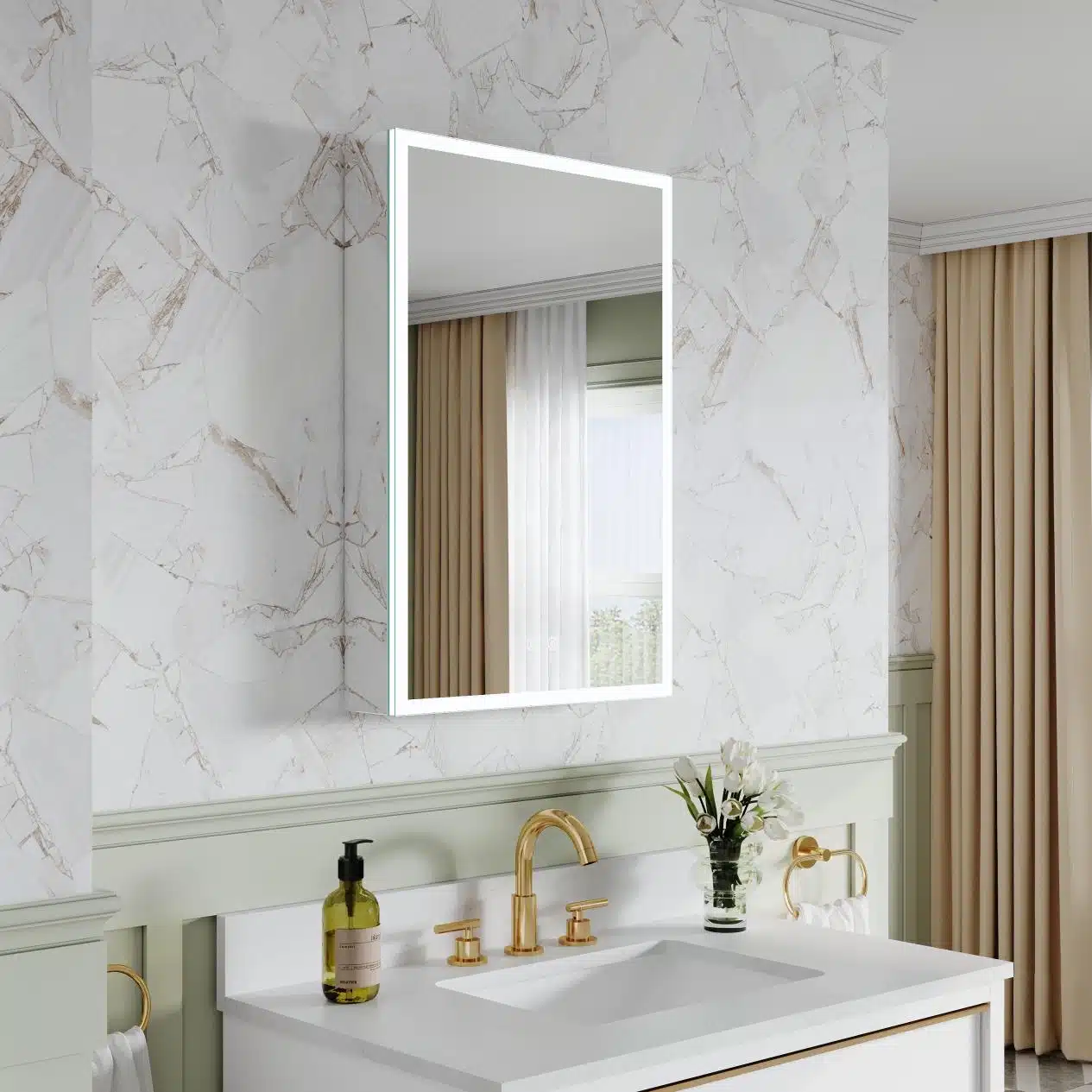

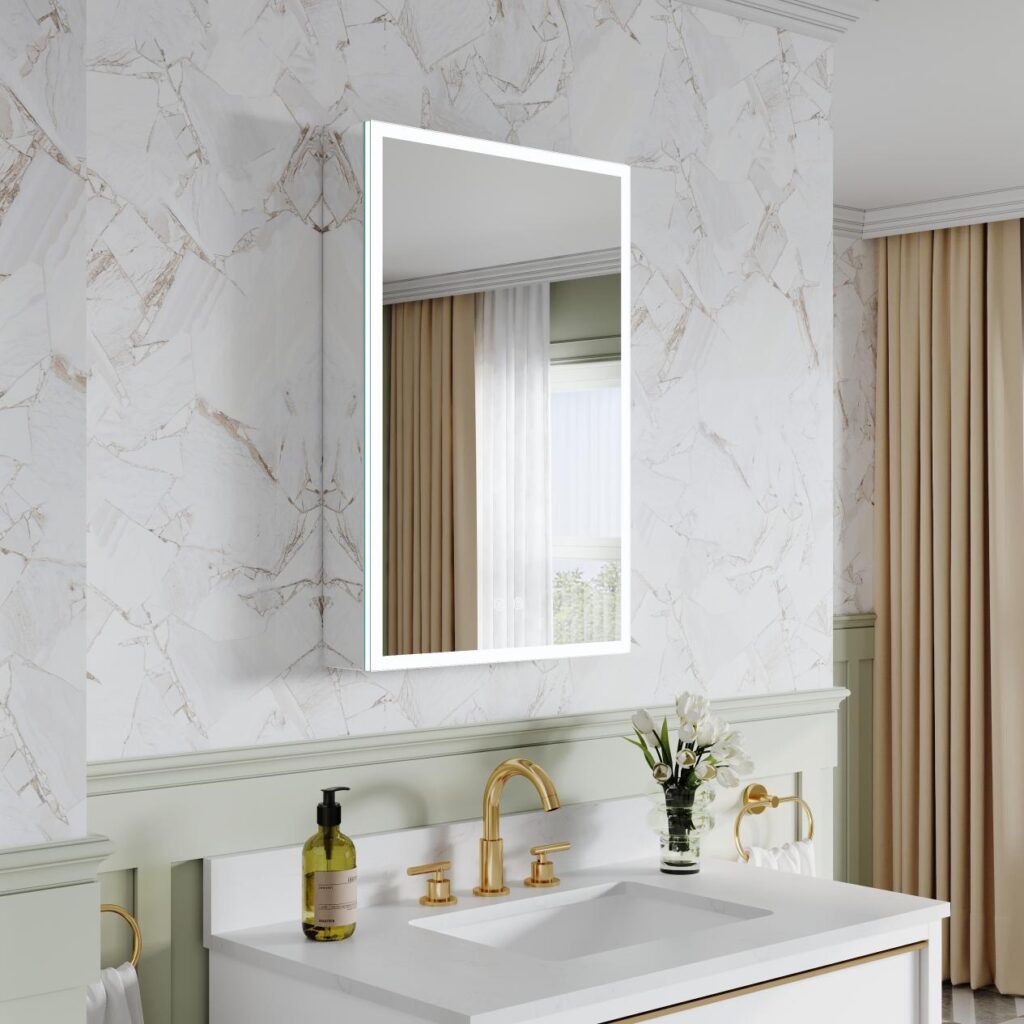
In home renovations and bathroom upgrades, bath medicine cabinet has always been a popular choice, combining functionality and aesthetics. Traditionally, it was believed that installing a built-in medicine cabinet required cutting into the wall and avoiding the stud; otherwise, a “hidden” effect could not be achieved.
However, with advancements in product design and installation technology, consumers can now install medicine cabinets without cutting into the stud, while still achieving the desired visual appeal and storage experience.
This article will comprehensively analyze this issue from multiple perspectives, including industry standards, installation methods, structural safety, and market trends.
1. Why Does Traditional Medicine Cabinet Installation Require Cutting Wall Studs?
In residential structures, walls are typically framed with timber joists (2×4 or 2×6 studs), with a center-to-center spacing of 16 inches or 24 inches. This means:
Limited internal space within the walls
Structural studs bear the load
Arbitrary cutting of wall studs may affect structural safety
According to building codes and finishing recommendations, such as design principles proposed by the National Kitchen & Bath Association (NKBA), any installation involving structural alterations must be carefully evaluated, especially at load-bearing wall locations.
Therefore, traditional built-in medicine cabinet installation often requires:
Locating the wall stud locations
Drilling holes between the two studs
Adjusting the dimensions to match the cabinet
If the dimensions do not match, cutting or reinforcing the wall studs may be necessary, significantly increasing construction costs.
2. Can a medicine cabinet be installed without cutting wall columns? The answer is yes.
There are three main installation methods in the modern market that do not require cutting wall columns:
Surface Mount
This is the simplest and most common method.
Features:
Directly fixed to the wall’s plasterboard or tile surface
No need to drill holes in the wall
Short installation time (usually 30–60 minutes)
Suitable for rental properties or renovation projects
Many high-end medicine cabinets are now designed to be very slim, and the visual effect of a surface mount is close to that of a built-in cabinet.
Industry data shows that sales of surface-mount medicine cabinets have continued to grow on online retail platforms in recent years, precisely because of their ease of installation.
Semi-Recessed Installation
This method is between surface and built-in:
Only a shallow hole is drilled in the wall.
No wall columns are cut.
Part of the cabinet is integrated into the wall.
Advantages:
A more upscale appearance
Visually reduced thickness
Moderate construction difficulty
Many designers believe this is “the best balance solution without structural modifications.”
Choose a narrow-sized built-in medicine cabinet
There are medicine cabinet models on the market specifically designed for 16-inch column spacing, such as:
14–15-inch wide cabinets
Designed specifically for stud spacing
Can be built in without cutting columns
This solution is especially popular in new home renovations.
3. Structural Safety: Why Cutting Wall Columns is Not Recommended?
According to building safety regulations, specifically the International Residential Code (IRC) developed by the International Code Council, structural alterations to walls must meet load-bearing requirements.
Arbitrary cutting of wall columns may lead to:
Wall deformation
Cracks in doors and windows
Long-term structural risks
Home insurance issues
Professional contractors typically only modify wall columns under the following circumstances:
Non-load-bearing walls
Structural reinforcement measures are in place
Permitted
Therefore, for ordinary households installing medicine cabinets, not cutting wall columns is a safer and more economical choice.
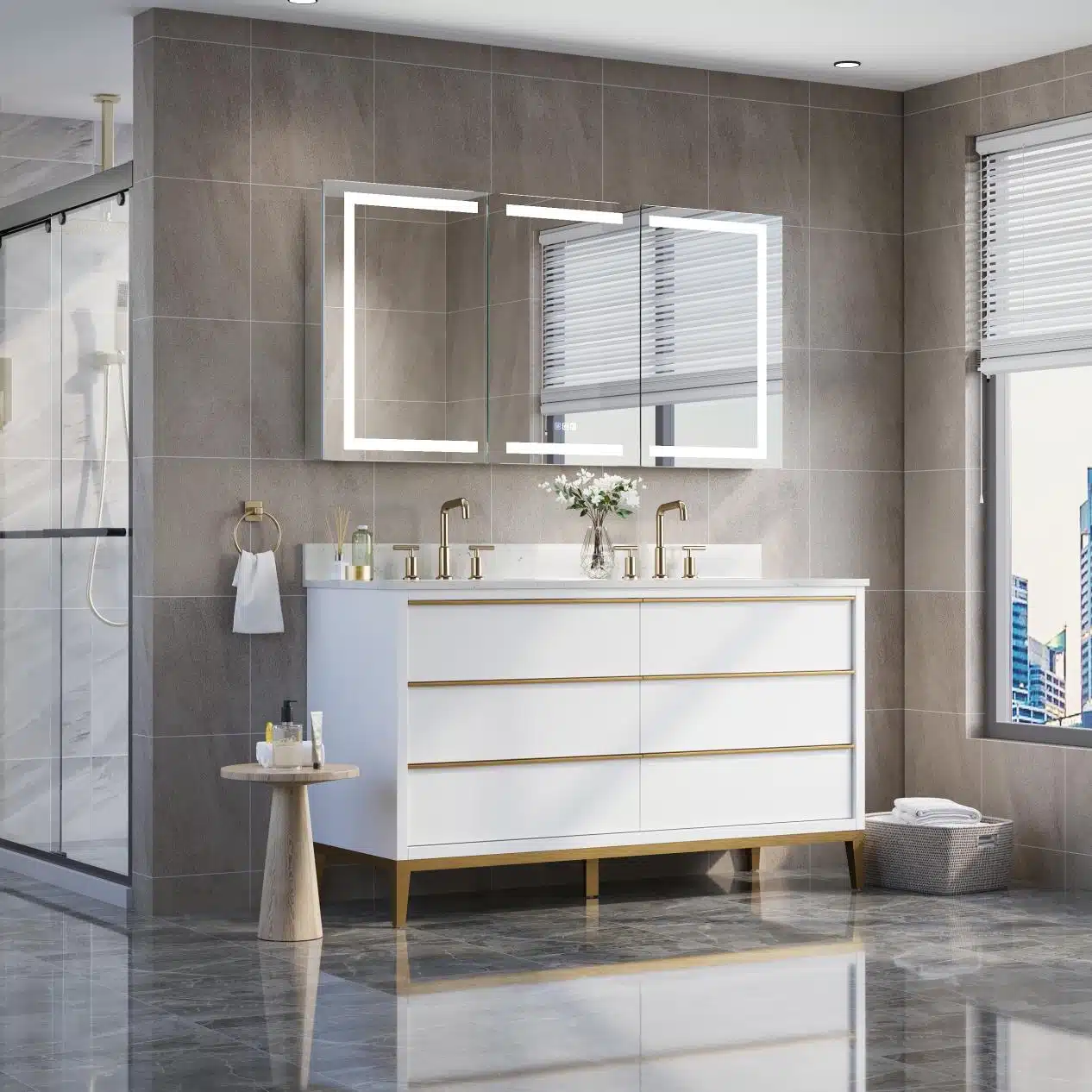
4. Power Supply Factors: What about medicine cabinets with lights or defoggers?
Modern LED medicine cabinets are becoming increasingly popular, and many consumers are concerned:
Can a medicine cabinet with electrical functions be installed without cutting into the wall?
The answer is yes.
Common solutions include:
Concealing the external power cord behind the cabinet.
Running the wiring from the ceiling or side wall.
Using the existing power box location.
As long as the electrician plans the wiring in advance, there is no need to cut into the wall or pillars.
5. Market Trends: Wall-Opening-Free Installation Becomes Mainstream
According to the 2024–2025 Home Improvement Industry Trends Report, several significant changes are emerging in bathroom storage products:
✔ Increased Demand for DIY-Friendly Products
Consumers are increasingly inclined to install them themselves, reducing labor costs.
✔ Rising Demand for Apartment and Older Home Renovations
Many residences do not allow for large-scale structural alterations.
✔ E-commerce Sales Drive Standardized Sizes
Manufacturers are launching more products that adapt to stud spacing.
✔ Upgraded Design Styles
Ultra-thin mirror cabinets make surface installation less “bulky.”
Industry experts generally believe that:
The future medicine cabinet market will shift from “embedded-in priority” to “flexible installation priority.”
6. When is it necessary to cut walls?
While it’s generally not necessary, the following scenarios may still require cutting walls:
Extra-large custom-made medicine cabinets
Depth exceeding 4 inches
Achieving a completely frameless, concealed effect
New residential construction phase
Even then, it’s usually done by adjusting the space between columns, rather than simply cutting the structural columns.
7. Installation Cost Comparison (Market Reference)
The advantages of not cutting walls and columns lie not only in safety but also in cost:
Surface Installation:
Labor Cost: $0–$150 (DIY or simple installation)
Time: Under 1 hour
Embedded Installation by Cutting Walls:
Labor Cost: $300–$800
May involve wall repair and painting
Time: Half a day to a day
The cost difference is significant.
8. Professional Advice: How to Choose the Most Suitable Installation Method?
Designers typically offer the following advice:
If you are:
✔ Renting or living in an apartment – Choose surface mounting
✔ Renovating an old house – Choose semi-recessed
✔ New house construction – Consider recessed mounting
✔ DIY enthusiast – Surface mounting is the most user-friendly
✔ Want a high-end look – Semi-recessed mounting is best
The key principle is simple:
Prioritize avoiding structural alterations.
9. Conclusion: Bathroom medicine cabinets can be installed without cutting wall columns.
Based on industry experience, the answer is clear:
Yes, you can absolutely install a bathroom medicine cabinet without cutting wall columns.
In most cases, this is the recommended solution.
Modern product design has made installation more flexible, safe, and economical, allowing consumers to obtain both aesthetically pleasing and practical bathroom storage space without incurring structural risks.