

Why Your Hip Hurts at Night (AKA: Why Your Bed Is Suddenly Your Enemy) And What Actually Helps
If your hip waits until you’re finally cozy, horizontal, and emotionally attached to your pillow… and then starts throbbing like it has a personal vendetta? You’re not alone.
A lot of nighttime hip pain is boringly simple: pressure + position + tight muscles that have been shortened all day (hello, sitting). The good news is that you can usually make a meaningful difference with a few very specific tweaks no dramatic life overhaul required.
Let’s get you sleeping without feeling 87 years old in the morning.
Why hip pain feels worse the second you lie down
During the day, you’re moving. Your muscles are helping hold your pelvis steady, your joints get “lubricated” by motion, and your weight is spread out.
At night? You plant yourself in one position for hours like a rotisserie chicken that never gets flipped. That can mean:
- Side sleeping pressure right on the outside “bony knob” of your hip (the greater trochanter). If that spot gets cranky, the tendons/bursa around it can get irritated (often called GTPS).
- Hip flexors staying shortened if you’re curled up. If you sit a lot and then sleep in a tight little shrimp position… your hip flexors basically never get a break.
Signs it’s your hip flexors (and not just “getting older”)
If you wake up with:
- Front of hip or groin stiffness
- Lower back pain that eases after 15-20 minutes of moving around
- That “I can’t stand up straight yet” feeling first thing
- Pain that’s worse after long drives or flights
…then yes, your hip flexors may be the drama club president here.
Step one: match your pain to the right sleep setup (don’t overcomplicate it)
Pick the description that sounds like your pain, then try the matching setup for 7 straight nights before you change five other things. (If you change everything at once, you’ll have no idea what helped and you’ll feel personally betrayed by pillows.)
- Outer hip pain (worse when you lie on that side): stop lying on it. I know, groundbreaking. Sleep on your back or the other side with good pillow support.
- Pain in the “top” hip (the one not against the mattress): your pelvis is probably twisting. You need the side sleeper pillow sandwich (details below).
- Front of hip/groin pain: back sleeping usually wins here because it puts the hip in a gentler, less pinched position.
- Pain that clearly starts in your low back: focus on a neutral spine on your back (again: details below).
The “gold standard” setup: back sleeping (even if you hate it at first)
I used to be a dedicated side sleeper, so I’m saying this with love: back sleeping can feel weird for about a week. Like you’re attending a very stiff sleep seminar. But it’s often the fastest way to calm down cranky hips because your weight is evenly distributed.
Here’s the setup that matters:
- Put a pillow under your knees (not under your lower back).
- Your knees should be slightly bent so your hips aren’t pulled into a tight position.
- Your low back should keep its natural curve think “small space,” not “flattened like a pancake.”
Hack if you keep rolling over: hug a pillow to your chest, or wedge a body pillow beside you like a soft little guardrail. No shame. We do what we must.
Side sleeping, but make it hip friendly (the pillow sandwich)
If back sleeping is a hard no (sleep apnea, pregnancy, you simply can’t), you can still side sleep just don’t let your body fold and twist itself into modern art.
Do this:
- Put a pillow between your knees AND your ankles (yes, both your ankle alignment matters more than you think).
- Aim for a pillow around 3-4 inches thick for most people (enough to keep your top leg from yanking your pelvis forward).
- Keep your top knee stacked over the bottom knee not drifting across your body like it’s trying to escape.
- Bonus: tuck a body pillow behind your back to keep you from rolling into the danger zone.
This is the difference between “restful side sleeper” and “why does my hip feel like it got jumped in an alley.”
Two positions I would like to gently (but firmly) ban
1) Stomach sleeping
Sleeping face down is chaos. It twists your neck, tips your pelvis forward, and tends to load your hips unevenly. If you absolutely can’t quit it tonight, put a thin pillow under your hips as a temporary “harm reduction” move while you work toward literally any other position.
2) The tight fetal position
I get it. It feels cozy and safe, like your body is trying to self-soothe. But it keeps hip flexors shortened for hours. If you need to curl up, do it for a few minutes to settle, then shift into a supported side sleep setup or onto your back.
Pregnant and your hips are yelling at you? (Yep, common.)
Later pregnancy pretty much forces side sleeping, and hip pain often tags along uninvited.
My favorite setup:
- A full length body pillow that goes between your knees, supports your belly, and sits behind your back.
- Many people feel better with a slight forward tilt, not perfectly stacked like a board.
You’re basically building yourself a pillow nest. And honestly? Respect. Do what you need.
Quick reality check: is your mattress sabotaging you?
Your mattress can absolutely be part of the problem:
- Too soft: your hips sink like you’re sleeping in a hammock, twisting your spine.
- Too firm: it creates a pressure point right on the outer hip (especially for side sleepers).
If you’ve tried the position fixes consistently and you’re still miserable after 1-2 weeks, do a simple test:
- Sleep on a different surface for 2-3 nights (guest bed, hotel bed, even a camping pad).
- If you feel noticeably better, your mattress is probably the villain.
A 2-3 inch topper can be a cheaper fix than replacing the whole mattress (especially if you’re under ~200 lbs), and rotating the mattress can help if it has body impressions.
A simple bedtime routine that helps (no 45 minute wellness ceremony required)
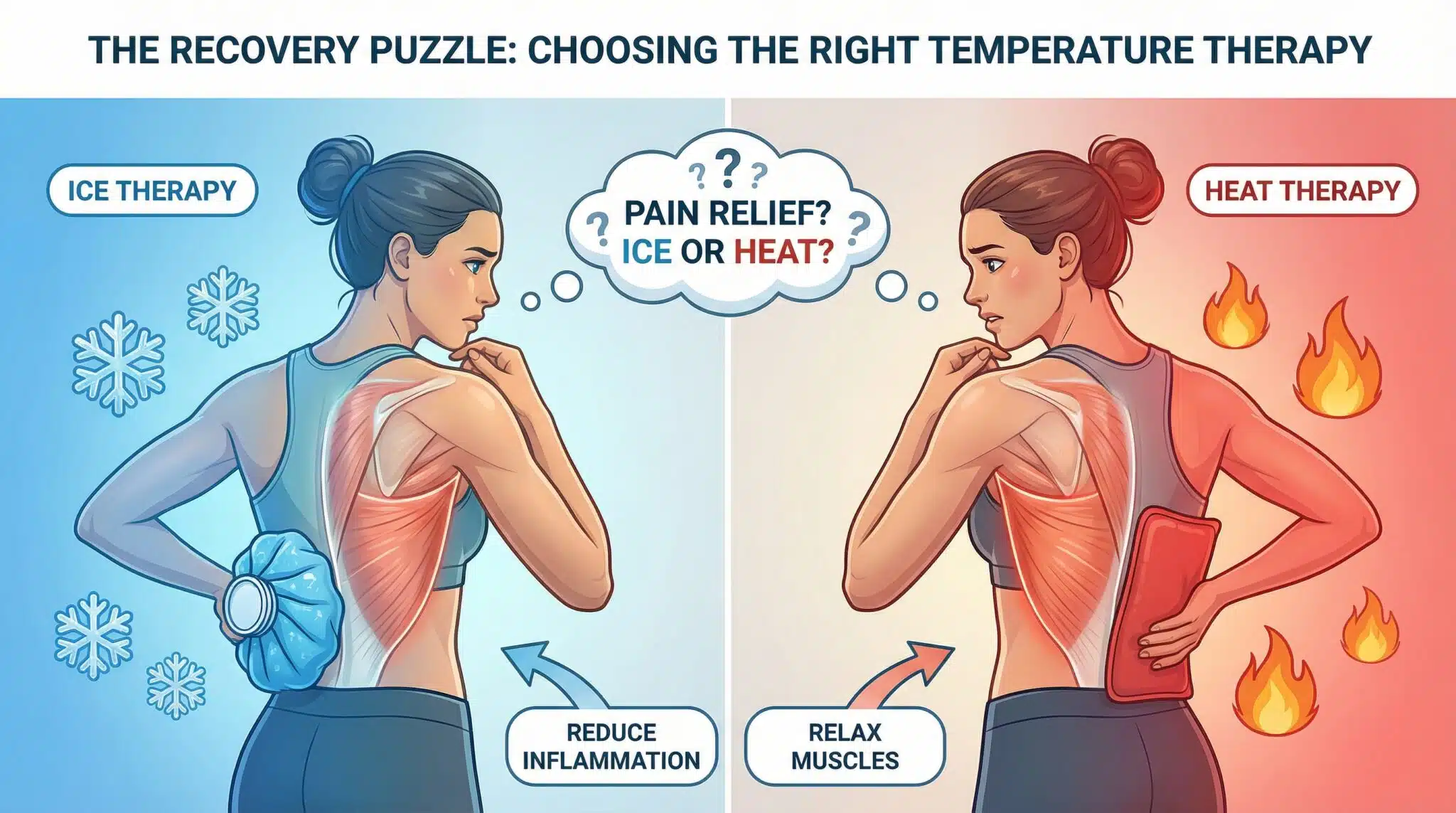
Ice vs. heat
Pick one based on what you’ve got going on:
- New pain (last 48 hours) or swelling: ice for 15-20 minutes before bed.
- Chronic stiffness/arthritis-y ache: heat helps muscles relax. A warm bath (around 92-100°F) for 30-60 minutes can be magic.
Important: don’t sleep with a heating pad on (burn/fire risk). I’m not trying to be dramatic this is a real safety thing.
Three moves I like before bed (quick, gentle, effective)
Do these 15-20 minutes before sleep, not as you’re actively passing out.
- 90/90 stretch: 30-60 seconds each side, gentle forward lean.
- Posterior pelvic tilt: on your back, knees bent slightly, flatten low back into the floor. Hold 10-15 seconds, repeat 5-10 times.
- Glute bridges: 10-15 reps, squeeze at the top (no need to launch into the stratosphere).
Consistency beats intensity here. This is not the moment to “stretch aggressively” and then wonder why you’re worse tomorrow.
When to stop DIY-ing it and call a professional
If your pain is mostly positional (worse lying down, better once you’re up and moving), give your sleep changes a fair test for 2-4 weeks. Not “sometimes.” Actually do it.
But book an appointment sooner if you have any of these:
- Hip pain disrupts sleep 3+ times/week for 2+ weeks
- No sleeping position is comfortable
- Pain at rest while lying down (not just with activity)
- Sharp catching/clicking/grinding/locking
- Groin or buttock pain that travels down the thigh
- Limping or noticeable changes getting in/out of bed
- Numbness, tingling, or weakness in the leg/hip
Seek immediate care if you have:
- Pain with fever, night sweats, or unexplained weight loss
- Severe pain at rest with inability to move the hip
- Sudden severe pain after a fall/trauma
- Inability to bear weight
The plan for tonight (because you want sleep, not homework)
- Decide what kind of pain you have (outer hip, top hip twist, front/groin, or low back led).
- Pick one sleep setup (back sleeping with knees supported, or side sleeping with the knee/ankle pillow sandwich).
- Stick with it for 7 nights before you start experimenting like a sleep scientist.
- If you want a bonus, add heat or ice + a couple gentle moves before bed.
Your hip doesn’t need a motivational speech. It needs better angles, less pressure, and a break from that one knee up posture for eight hours. Try the setup tonight and see what changes by morning.