
Choosing bedroom rug placement feels unnecessarily complicated when most guides show perfectly centered beds in magazine-worthy rooms.
Real bedrooms? Beds shoved against walls, doors that swing inward, nightstands blocking rug edges. I created this guide to cut through the styling advice and focus on what works in actual bedrooms.
It breaks down how to choose bedroom rug placement based on room layout, not trends. It covers which sizes match different bed types, when the “go bigger” rule doesn’t apply, and the mistakes that make rugs look awkward.
I will cover placement strategies for tight and spacious rooms, size recommendations by bed type, functional rug ideas like layering and material selection, common mistakes, and a quick decision checklist.
Bedroom Rug Placement
Bedroom rug placement determines whether a rug feels intentional or looks like an afterthought. The right position makes mornings more comfortable, soft landings when feet hit the floor, and pulls a room together without looking overly styled.
Most advice assumes centered beds in spacious rooms, which rarely matches reality. Beds against walls, awkward door swings, and tight spaces change the rules completely.
The goal isn’t perfection or matching magazine spreads. It’s choosing a strategy that works with the bedroom’s actual layout, makes daily movement easier, and fits within the budget.
Three main approaches handle most bedrooms, with a few alternatives for tricky layouts. But before that, one must know their surroundings and the size they are working with.
Bedroom Rug Size Recommendations by Room and Bed Size
Rug size depends on bed dimensions and placement choice, covering the most common bedroom layouts in small, medium, and large spaces.
| Bed Size | Small Room | Medium Room | Large Room | Placement Notes |
|---|---|---|---|---|
| Twin/Full | 5×7 or 6×9 | 6×9 or 8×10 | 8×10 | Extend rug 18 inches beyond bed’s foot and sides. Don’t go smaller than 5×7 even in tight spaces. |
| Queen | 6×9 or 8×10 | 8×10 or 9×12 | 9×12 | 8×10 works for most queen bed setups. Use 9×12 if nightstands sit on rug for full under-bed placement. |
| King | 8×10 (tight) | 9×12 | 10×14 | King beds need larger rugs to avoid looking undersized. Prioritize side coverage over foot if budget-limited. |
These serve as starting points, not strict rules; adjust based on furniture placement, primary walk zones, and personal floor coverage preference.
Rug Partially Under the Bed
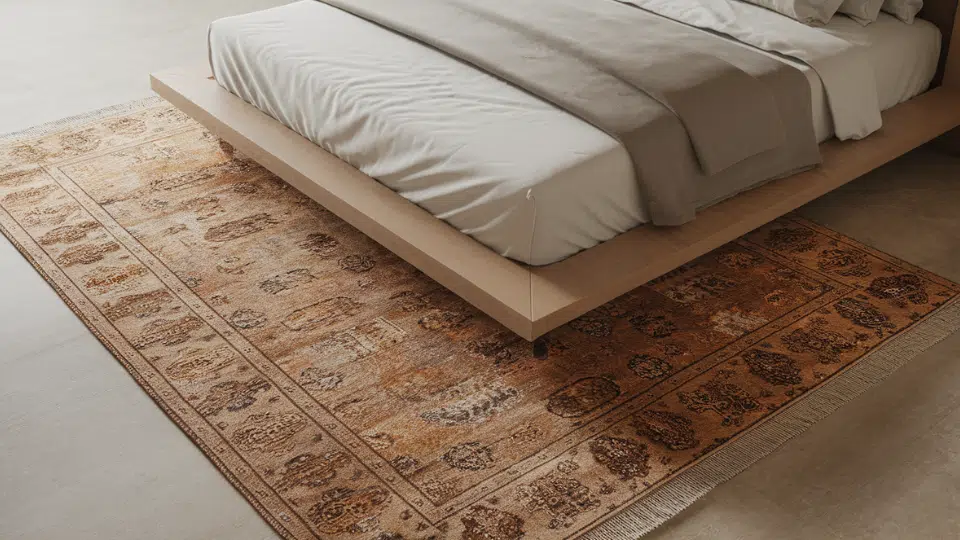
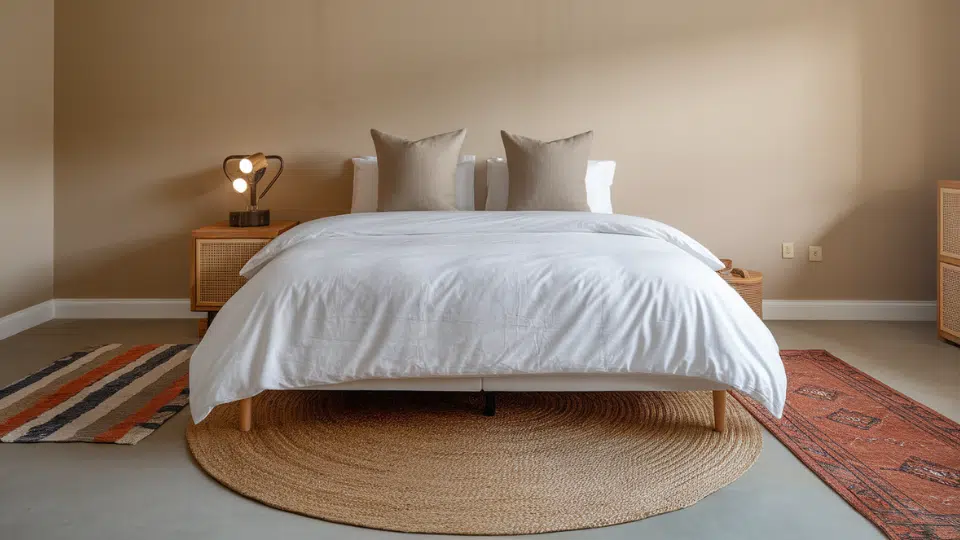
This placement works for most bedrooms, especially small to medium spaces. The rug extends from under the bed’s foot, covering where feet land when exiting the bed.
How much coverage:
- Rug extends 18-24 inches beyond bed’s sides and foot
- Leaves floor exposed near walls and headboard
- Bed visually anchors the rug
Why it’s practical: Requires less rug than full coverage, meaning lower costs and easier furniture moves. The bed anchors the rug, so it doesn’t look undersized despite exposed floor.
Pro Tip: This works until the rug gets too small. A 5×7 under a queen bed leaves excessive bare floor and makes the rug feel decorative rather than functional.
Best for: Small to medium bedrooms, renters, budget-conscious setups, rooms where furniture might shift.
Rug Fully Under the Bed
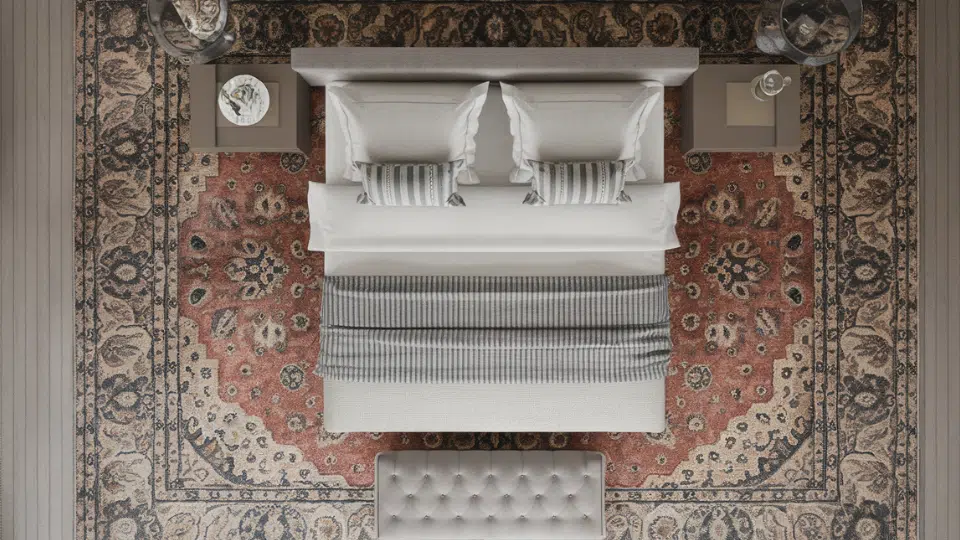
Full under-bed placement works in large bedrooms with generous floor space. The rug extends 24-36 inches beyond all bed sides, including the headboard.
The tradeoffs: This maximizes soft surface area and creates visual cohesion. But large rugs cost significantly more, and moving furniture becomes harder when everything sits on the rug.
When it makes sense:
- Bed centered in a spacious room
- Furniture won’t move frequently
- Budget allows for 9×12 or larger rugs
When it fails: Looks disproportionate in smaller bedrooms where rug edges sit too close to walls. Many guides recommend this by default, it’s often impractical for real-world sizes and budgets.
Alternative Placement Options
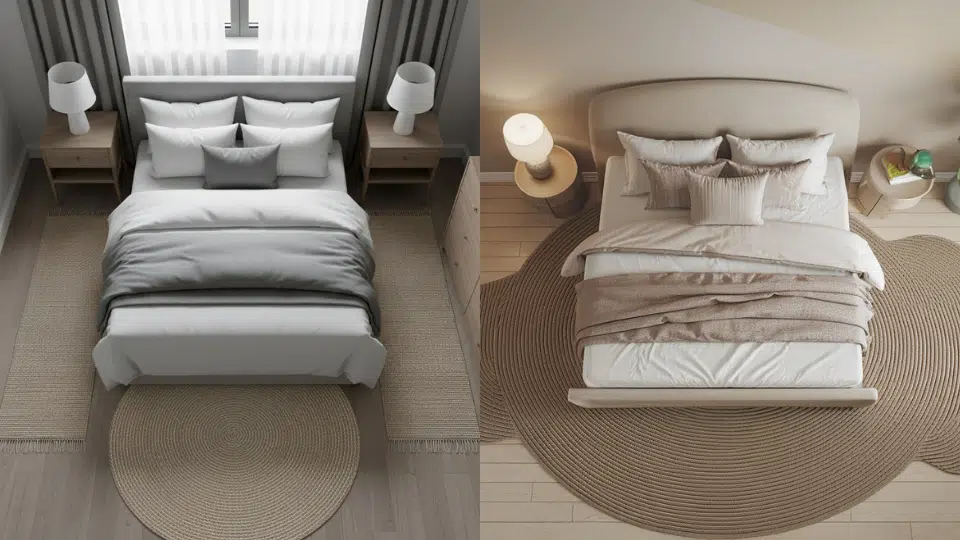
Some bedrooms don’t accommodate standard under-bed placement.
Side runners (2.5’x8′ minimum): Platform beds with storage prevent sliding rugs underneath. Runners along bed sides work where feet land. Best for narrow rooms or blocked under-bed access.
Round rugs (6′ diameter minimum): Soften awkward room shapes or tight corners where rectangular rugs feel stiff.
Offset placement: Rug positioned at bed’s foot rather than centered. Suits beds against walls where symmetry doesn’t matter.
Use these when standard placement fails, not as design experiments.
Bedroom Rug Ideas That Improve Function
These three ideas solve specific bedroom challenges when standard rug placement doesn’t work due to budget, layout, or furniture constraints limiting typical options.
Layering Rugs for Budget Coverage
- A 5×8 jute rug ($60-80) combined with a 4×6 patterned rug ($80-100) offers more coverage than a single 4×6.
- Budget constraints prevent buying a proper size now, so layering is temporary until an upgrade is affordable.
- Renters can reuse the top rug when moving, leaving the inexpensive base behind. This setup offers flexible, temporary coverage that adapts to furniture changes or future purchases.
- Layering isn’t usually polished outside styled photos; treat it as a functional workaround rather than a style goal.
Using Multiple Small Rugs for Flexible Coverage
- Two 3×5 rugs flanking the bed instead of one 8×10 rug makes cleaning easier, allows independent movement, and adjusts as furniture shifts over time.
- Each rug can move independently when rearranging furniture, unlike a large rug that requires moving the entire bed and nightstands to reposition it properly.
- Works particularly well in asymmetric bedrooms, corner bed placements, or temporary living situations where layout changes frequently and flexibility matters most.
Common Bedroom Rug Placement Mistakes to Avoid
These four mistakes cause the most frustration with bedroom rug placement, but each one has a straightforward fix that improves both function and appearance.
| Issue | Fix |
|---|---|
| A 5×7 rug under a queen bed leaves bare floor on all sides, making it decorative rather than functional. | Extend rug minimum 18 inches beyond bed’s foot and sides. Size up when between two sizes. |
| Placing the rug in the center creates walk zones on the bare floor, with the rug covering empty space. | Position rug under the bed, not in the room center; it follows bed placement. |
| Ignoring door swing clearance causes rug bunching, daily frustration, and potential door damage from friction. | Measure door clearance before buying. Choose low-pile rugs under 0.5 inches to avoid trimming doors. |
| Buying only styled photos can be misleading, as magazine layouts don’t show realistic furniture, door placements, or budget limits. | Mentally plan test placement by measuring floor space, mapping furniture, and considering daily movement. |
Avoid these by measuring actual space, considering daily movement, and prioritizing function over appearance in styled photos or design magazines.
Final Thoughts
Getting bedroom rug placement right comes down to understanding actual layout and movement patterns. The strategies here prioritize function, where feet land, which furniture stays, what budget allows.
Partial under-bed works for most bedrooms. Full coverage suits large rooms. Alternatives solve specific constraints like blocked under-bed access.
Size matters, but placement matters more. A well-positioned smaller rug outperforms a poorly placed large one. The mistakes section shows what to avoid. The checklist simplifies decisions.
Bedroom rug ideas like layering or material selection add flexibility when standard approaches don’t fit. Choose placement first, size second. Trust practical instincts over trend-based rules.
Specific layout challenges or questions? Drop a comment, always happy to help troubleshoot tricky bedroom setups.