European Tilt & Turn windows are showing up more often in American conversations about better building. They are known for a different operating system, strong sealing, and a clean, modern look.
At the same time, the category is still misunderstood in the U.S. Many objections come from comparing European systems to familiar American window types instead of looking at how OKNOPLAST Tilt & Turn windows are engineered and used in real projects.
This article clarifies the most common misconceptions and explains what matters in practice. It is written for builders, architects, and homeowners who want straightforward answers without hype.
What People Get Wrong Most Often
The five myths below shape how the category is perceived. Each one is followed by a practical correction and a simple explanation of why it matters on a real job site.
Top 5 Myths and Facts
| MYTH | FACT | WHY IT MATTERS |
| “uPVC is just plastic, basically the same as standard U.S. vinyl.” | European uPVC systems are engineered for rigidity and dimensional stability, typically using plasticizer-free formulations designed for compression sealing and long-term shape retention. | The window holds its geometry over time. That supports reliable sealing, fewer adjustments, and fewer service issues. |
| “Tilt & Turn windows are too modern for typical American homes.” | Tilt & Turn can be specified to match a wide range of U.S. styles through size, proportion, grille options, and finish choices. | Builders can offer higher performance without forcing a “European look.” It fits remodels and traditional architecture as well as modern builds. |
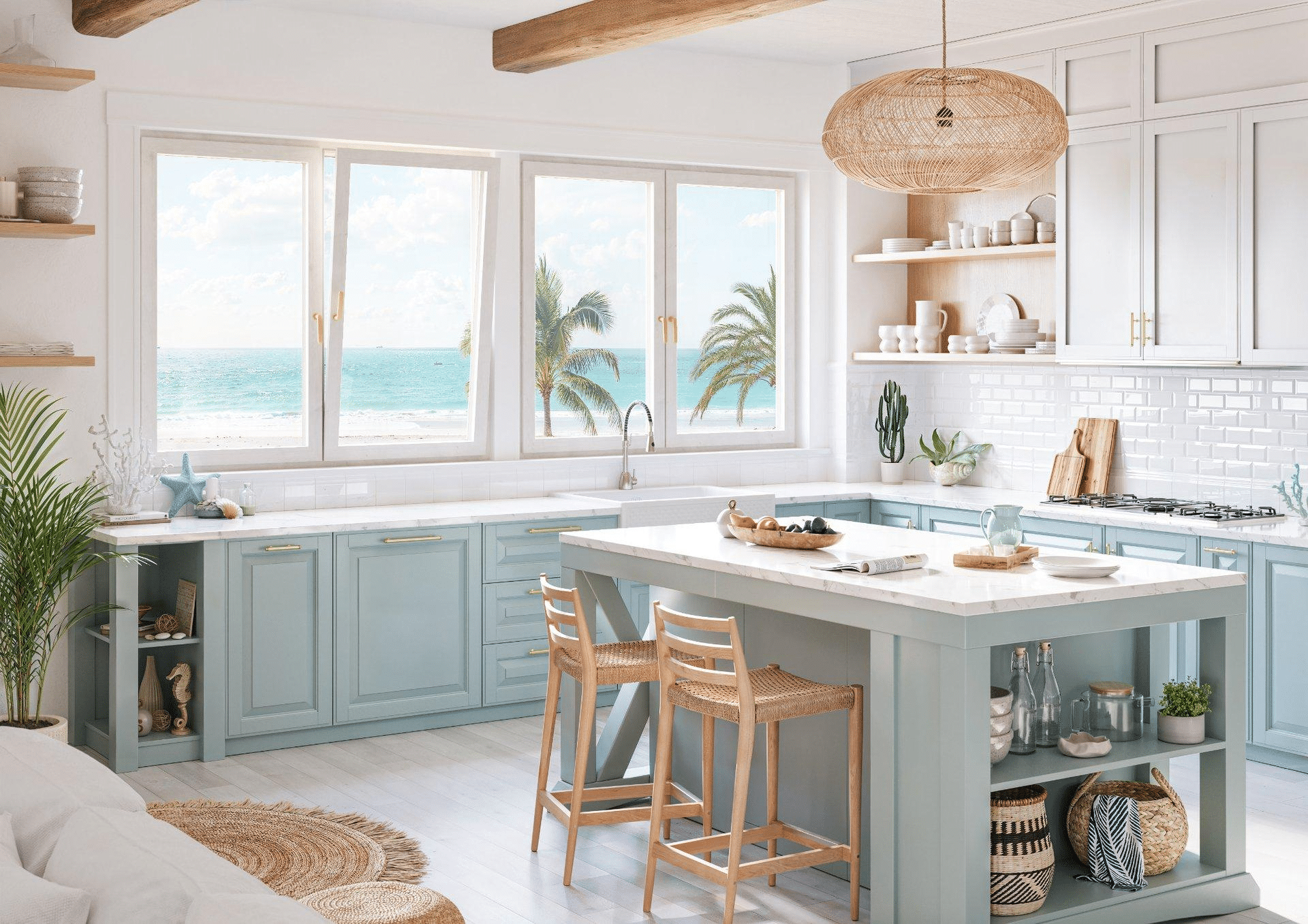
| “Tilt & Turn operation is complicated.” | One handle controls two clear modes: tilt for controlled ventilation, and turn for full opening. The user experience is simple. | Easier homeowner adoption means fewer objections during selection and fewer “how do I use this?” calls after install. |
| “European windows cannot handle U.S. climate extremes.” | High-quality European systems are tested for thermal cycling, UV exposure, and demanding weather conditions, and are used in hot and cold regions worldwide. | You can specify Tilt & Turn in a broad range of U.S. climates without treating it as a niche product. |
| “Installation is difficult because the units are heavy.” | Tilt & Turn windows allow staged installation. The sash can be removed so the frame is set first, then the sash is reinstalled and adjusted. | Lighter handling improves safety and precision. Better alignment helps protect long-term air and water performance. |
A Design Shift: More Freedom, More Control
Tilt & Turn is often introduced as a performance upgrade, but it is also a design tool. OKNOPLAST windows systems are commonly specified with slimmer sightlines and deeper frames that support large glazed areas.
That translates into more daylight and a cleaner facade. Projects can also benefit from broader finish flexibility, including interior and exterior personalization. For architects, this opens up options. For builders, it supports differentiation in a competitive market. For homeowners, it simply looks and feels like a step up.
Performance that Shows up in Everyday Living
The strongest argument for Tilt & Turn windows is not a single feature. It is the way the system works together. Multi-point locking distributes pressure around the sash, which supports consistent gasket compression. That helps reduce drafts and improves comfort. When the building enclosure is tighter, the home is quieter, temperature swings are smaller, and HVAC systems do not have to fight uncontrolled leakage.
This is where the category often changes minds. People expect the difference to be technical only. In reality, it is something you feel.
Two Quick Myths Worth Clearing Up
- Myth: “If the window opens inward, wind-driven rain will end up inside.”
Fact: Proper Tilt & Turn systems use engineered drainage paths and gasket layers that manage water under dynamic pressure. - Myth: “Tilt & Turn windows are mainly for commercial or multifamily projects.”
Fact: The system is widely used in single-family housing and is increasingly specified in U.S. custom homes and remodels.
Why this Matters Now
U.S. clients are more informed than they were five years ago. They ask about comfort, noise, durability, and the overall quality of the enclosure, not just U-factor or a brochure claim.
Builders and architects who can explain Tilt & Turn clearly can position it as a practical upgrade, not a novelty. Over the past few years, OKNOPLAST has focused on educating the U.S. market by showing how Tilt & Turn systems actually perform in real homes and real projects, helping teams move from assumptions to practical, build-ready decisions.
Just as important, Tilt & Turn windows are not limited to European-inspired architecture. They can fit typical American homes, including colonial, craftsman, ranch, farmhouse, and contemporary styles. With the right specification and the right partner, they become an accessible option across many project types.
OKNOPLAST brings European manufacturing experience and system thinking to the U.S. market, helping teams specify and deliver Tilt & Turn windows with confidence.