
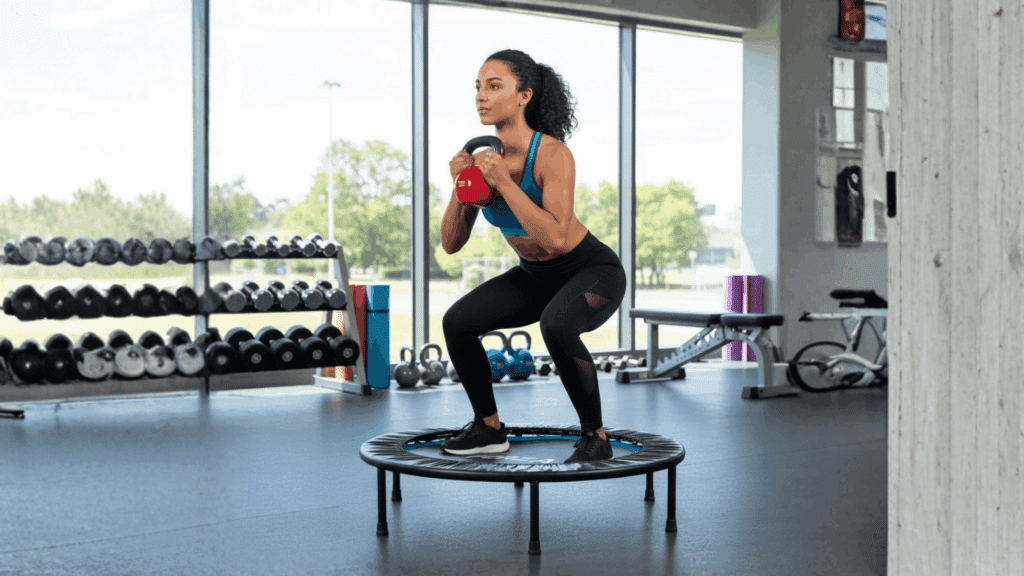
Rebounding exercise may seem almost too simple at first. It is just bouncing on a mini trampoline, but that gentle up-and-down motion can do a lot for the body.
Many people start rebounding because it feels fun and easy, and they continue when they notice real results, including improved heart health, weight management, stronger muscles, and better balance.
Understanding the benefits of rebounding exercise shows why it works for so many people.
With the right approach, it can be a safe, enjoyable way to stay active, build strength, and improve overall well-being.
What is Rebounding Exercise?
Rebounding is a workout done on a mini trampoline, also called a rebounder. I like that it can be as easy or as intense as needed. Some days, a light bounce or a simple march is enough to get moving.
Other days, jogging in place, quick jumps, or full-body moves can turn it into a real sweat session.
What makes rebounding feel different is the surface under your feet. Instead of hitting a hard floor, the trampoline mat absorbs a lot of the impact.
That’s why it often feels gentler on the joints. At the same time, I’ve noticed the muscles still work hard, and the heart rate can climb fast. It’s a smooth workout that still challenges the body.
How Rebounding Works in the Body?
When you bounce on a rebounder, your body goes through gentle acceleration as you rise and deceleration as you land. That up-and-down motion is what makes rebounding effective without feeling harsh.
Unlike running on hard surfaces, the trampoline mat absorbs much of the impact, so your joints aren’t taking the full force each time you land.
At the same time, muscles, joints, and connective tissues stay active to keep you stable. This movement also encourages fluid flow in the body, including lymph, which relies on motion to circulate.
The Major Benefits of Rebounding Exercise
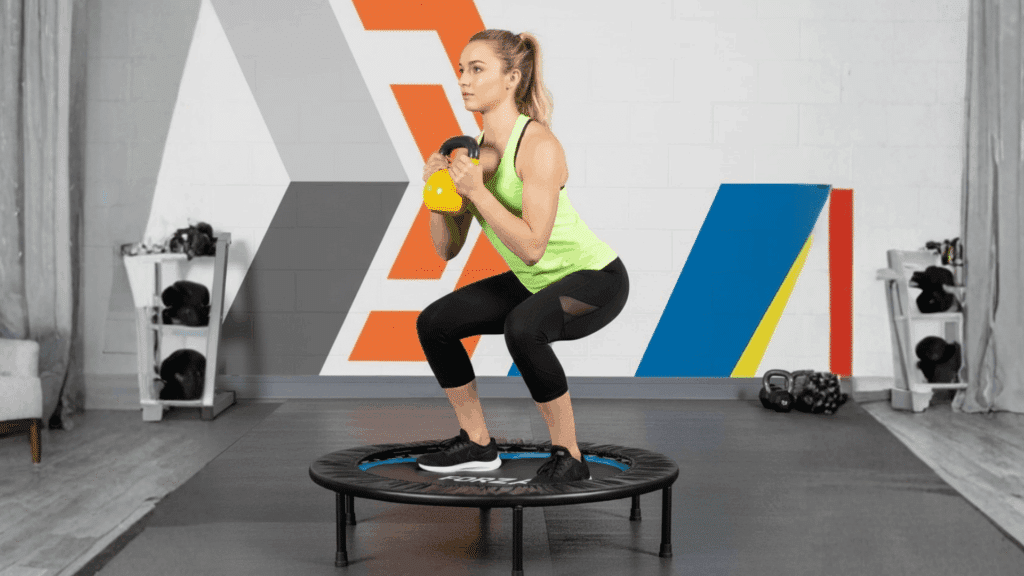
Here’s the short version: rebounding helps the heart, supports fat loss, strengthens muscles, improves balance, and feels easier to stick with than many workouts.
Now let’s break it down.
1. Weight Loss and Calorie Burn
A lot of people try rebounding for weight loss, and it makes sense. It keeps you moving nonstop. Your legs push into the mat, your core works to steady you, and your heart rate climbs fast.
It can feel easier than running, even when it’s doing real work. That’s great for consistency.
It helps burn fat by using big muscles and letting you go longer. Start with 5–10 minutes daily, then build to 20–30.
2. Heart and Lung Health
Rebounding is cardio, plain and simple. Even a gentle bounce gets your heart pumping and your breathing a bit faster.
Do it regularly and your heart and lungs get stronger, so everyday stuff, stairs, walking, and chores feel easier.
The best part is you control the intensity. Start with a slow, soft bounce. When you’re ready, add a light jog or higher knees, and you’ll be sweating fast. Over time, you may notice more stamina and quicker recovery.
3. Lymphatic Support
The lymphatic system helps clear waste, extra fluid, and germs, but it relies on movement to do its job.
Since the heart is irreplaceable, excessive sitting can reduce circulation. Rebounding is frequently associated with lymph support because its gentle up-and-down movement may facilitate the flow of lymph.
It works like a soft squeeze and release, easy on the body, but helpful when done regularly.
4. Kind to Joints While Still Strengthening the Body
Running and jumping on hard floors can beat up your ankles, knees, hips, and lower back. Rebounding feels way different because the trampoline mat absorbs a lot of the impact.
So your joints usually take less stress, even though your muscles are still working. That’s a big plus if you want cardio without the soreness or “wear and tear.”
The mat reduces shock, the motion stays smooth and easy to control, and you can keep it low-impact while still getting a solid workout.
5. Full-Body Toning and Better Body Shape
Rebounding isn’t just cardio. Your body has to make tiny adjustments to stay steady on that bouncy surface, and those little corrections wake up stabilizer muscles you might not train much otherwise.
Plus, many routines add squats, twists, lunges, side steps, and arm moves, so it turns into a full-body workout—not just bouncing in place.
With consistent sessions, you can build stronger legs and glutes, improve muscle tone, and move with better balance and coordination.
6. Stronger Core and Improved Posture
Here’s a fun truth: the core turns on automatically during rebounding. The body has to stabilize with every bounce. That means the deeper core muscles can work without endless crunches.
A stronger core often leads to better posture because the torso stays more supported. It can also help protect the lower back during everyday movement.
This is one of those benefits of rebounding exercise that surprises people because it doesn’t feel like “core training,” but it often acts like it.
7. Bone Strength and Healthy Aging
Bones get stronger when you do weight-bearing movement, and that matters more as you get older. Rebounding counts as weight-bearing exercise, but it’s softer than many other options.
You still get gentle, rhythmic “loading” from bouncing, which may support bone health, especially if you also strength train and eat well.
Start with low bounces to maintain bone strength, try to stay consistent 3–5 times a week to help reduce bone loss risk, and pair it with protein and calcium-rich foods for the best support overall.
8. Better Balance, Coordination, and Athletic Performance
Rebounding puts you on an unstable surface, so your body has to coordinate each move more carefully.
That’s why it can help improve balance. In real life, that can mean feeling steadier on stairs, catching yourself on uneven ground, or stepping off a curb without that “whoa” moment.
Athletes also use rebound-style training for coordination and joint stability. Over time, many people notice better control during movement, more confidence with quick direction changes, and improved stability in the ankles and knees.
9. Mental Health Benefits: Stress Relief That Doesn’t Feel Like a Chore
A lot of workouts feel like work, but rebounding can feel more like play. And that’s a big deal, because enjoyment is what helps you stick with it.
Many people say it helps lower stress, boost mood, and make exercise feel more doable day to day.
Even a short bounce can feel refreshing, especially if you throw on your favorite music or follow a quick guided video. When it’s fun, it’s easier to build a routine that lasts.
10. Easy on Beginners and All Fitness Levels
One reason rebounding works for so many people is how beginner-friendly it is. You don’t need fancy moves or perfect form to get started.
A simple health bounce already gets the body moving. As strength and confidence grow, intensity can increase naturally.
This makes rebounding feel welcoming instead of intimidating, which helps people stay consistent without feeling overwhelmed.
11. Time-Efficient Workouts for Busy Days
Rebounding packs a lot into a short session. Because it keeps the heart rate up and muscles engaged, even 10–15 minutes can feel effective.
That’s helpful on busy days when longer workouts feel unrealistic. You can squeeze in a session before work, during a break, or at night.
Short, consistent workouts often add up better than long ones you skip.
12. Supports Better Circulation and Energy Levels
The rhythmic bouncing motion helps keep blood moving through the body.
Better circulation means oxygen and nutrients reach muscles more efficiently, which can support energy levels throughout the day.
Many people notice they feel more awake after rebounding, not drained. Instead of that heavy post-workout feeling, sessions often leave you feeling lighter and more refreshed.
13. Gentle Option for Active Recovery Days
Not every workout day needs to be intense. Rebounding works well on recovery days because it keeps the body moving without adding heavy stress.
Light bouncing can help loosen stiff muscles and promote blood flow after harder workouts. It’s a simple way to stay active while still giving joints and muscles a break from high-impact training.
14. Convenient Home Workout With Minimal Space
Rebounding fits easily into home routines. A rebounder doesn’t take much space and doesn’t require a full gym setup.
That removes common barriers like travel time or crowded fitness centers.
Being able to step on and bounce for a few minutes makes it easier to stay consistent, especially on days when motivation is low or time feels tight.
15. Builds a Habit That Feels Sustainable
One of the biggest benefits of rebounding is how doable it feels long term. It doesn’t require extreme effort, complicated planning, or long recovery.
Because sessions can be short, fun, and flexible, people are more likely to keep going.
Over time, that consistency often leads to better results than intense programs that feel hard to maintain.
Rebounder Benefits for Specific Groups
Rebounding isn’t a one-size-fits-all workout, and that’s actually the best part. You can keep it super gentle or make it more challenging based on what your body needs.
- Seniors: Rebounding is gentle on the joints while still keeping the body active. It can help with balance, circulation, and staying mobile without feeling too intense.
- Beginners: It’s easy to start with simple, low bounces and build up slowly. There’s no pressure to “keep up,” which makes it feel less intimidating.
- People with Joint Pain: The soft mat absorbs impact, so joints usually feel less stress compared to hard-floor workouts. You still get movement without the harsh pounding.
- Busy Professionals: Short sessions can be very effective, even 10–15 minutes. It’s an easy way to fit exercise into a packed schedule at home.
- Post-Injury (with Medical Clearance): Light rebounding can support gentle movement and circulation during recovery. Intensity can be adjusted to match where the body is that day.
And just to be clear, you don’t have to bounce hard to get benefits. A steady, controlled session is often more than enough.
Benefits of Rebounding vs. Running or Walking
If you’ve ever wondered how rebounding stacks up against walking or running, it mostly comes down to impact and efficiency. All three get you moving, but they feel very different in the body.
| Feature | Rebounding | Running | Walking |
|---|---|---|---|
| Joint impact | Very low, mat absorbs shock | High impact on joints | Low impact |
| Muscle engagement | Full body, stabilizers active | Mostly legs | Mostly legs |
| Calorie burn | High for time spent | High but harder on the body | Moderate |
Safety Tips for Rebounding Exercise
Rebounding is usually pretty gentle, but a few small safety habits make a big difference. Think of this as your “bounce smart” checklist.
- Choosing the Right Rebounder: Pick a sturdy, stable rebounder with a strong frame and quality springs or bungees. If it wobbles or feels flimsy, skip it.
- Proper Footwear or Barefoot Guidance: Many people go barefoot or use grip socks for better control. If you need more support, wear clean indoor trainers that feel stable.
- Warm-Up and Cooldown Importance: Start with 2–3 minutes of slow bouncing or marching. End with gentle bouncing and light stretching to help your body settle.
- Who Should Consult a Doctor First: Check in if you’re pregnant, recently injured or post-surgery, have heart or balance issues, or significant joint pain.
Once you’ve got the basics down, rebounding can feel safe, fun, and easy to stick with.
Common Myths About Rebounding
Rebounding sometimes gets a bad reputation because it looks simple or playful. But a few common myths don’t really hold up once you look closer.
Myth 1: It’s only for kids
Fact: While kids love trampolines, rebounders are designed for adult bodies. Many adults use them for low-impact cardio, balance, and strength.
Myth 2: It’s not a real workout
Fact: Even gentle bouncing raises the heart rate and activates muscles. Short sessions can feel surprisingly effective, especially when done consistently.
Myth 3: It’s unsafe for adults
Fact: When used correctly on a quality rebounder, rebounding is generally low-impact and joint-friendly. Like any exercise, safety comes down to proper setup, control, and listening to your body.
Final Thoughts
The benefits of rebounding exercise go way beyond “cardio on a trampoline.”
For me, it’s a low-impact way to support heart health, improve balance, and strengthen muscles while still keeping movement fun.
I also like that the rebounder benefits show up without putting extra stress on my joints, but I can still work up a good sweat when I want to.
The best part is how easy it is to start. I’ve found that even a few minutes a day can help build a routine that actually sticks.