


You get into bed, turn onto your left side, and there it is again, that annoying hip pain. If you’ve ever said, “My left hip hurts when I sleep on it,” it’s a really common sleep complaint, and it can wreck your sleep fast. I’ve dealt with it too, so I know how frustrating it feels.
You might be wondering why it shows up at night, or if something is wrong. Often, it’s caused by pressure on the joint, tight muscles, inflammation, or poor alignment while you sleep.
The good news is that once you pinpoint the cause, the fix is usually simple. In this guide, I’ll walk you through the most common reasons and the easiest ways to get comfortable again.
Causes of Left Hip Pain While Sleeping
Understanding why your hip hurts at night can help you match your symptoms to the right remedies.
Below are the most common reasons your hip becomes painful when you lie on your side, explained in a clear, reader-friendly blog format.
1. Sleep Position and Pressure on the Left Hip
Sleeping on your side can place direct pressure on the bursa, tendons, and surrounding muscles.
When your top leg naturally falls forward, it twists your lower back and hip out of alignment, increasing strain throughout the night. This subtle misalignment becomes a major discomfort trigger when held for several hours.
2.Hip Bursitis and GTPS (Greater Trochanteric Pain Syndrome)
Hip bursitis happens when the bursae, small fluid-filled cushions, become inflamed from activities like running, long stair climbing, or arthritis.
GTPS, a related condition, occurs when weak glutes and irritated tendons create persistent pain on the outer side of your hip. This makes lying on the affected side especially uncomfortable and often worsens nighttime pain.
3. Hip Osteoarthritis and Other Arthritis Types
Osteoarthritis causes cartilage breakdown in the hip joint, leading to morning stiffness, deep groin pain, buttock discomfort, and even popping or grinding sensations.
Other forms of arthritis, such as rheumatoid, psoriatic, and septic, can flare at night, creating inflammation that disrupts sleep.As joints age, this nighttime pain becomes increasingly common.
4. Tendon Problems: Gluteal Tendinopathy and Hip Flexor Strain
Tendons around the hip can become irritated from overuse, repetitive motions, or sudden increases in exercise intensity.
Inflamed gluteal tendons and hip flexor strains often cause sharp or aching pain that intensifies when you lie on the injured side. These tendons are used constantly for standing, walking, and balance, which makes them vulnerable to strain.
5. Sciatic-Piriformis Syndrome and Referred Pain
When the piriformis muscle tightens, it can compress the sciatic nerve, sending pain down into your hip and leg.
Lower back problems, such as herniated discs or spinal stenosis, can also radiate pain into the hip, making it feel like a hip issue even when the joint itself is healthy.This explains burning, tingling, or numbness that worsens at night.
6. Pregnancy-Related Hip Pain
During pregnancy, your body carries more weight, and your ligaments loosen to prepare for delivery. These changes create instability in the hip joints, leading to nighttime discomfort.
Less common causes include labral tears or hernias that develop from increased abdominal pressure or altered posture as the belly grows.
7. Exercise Overload, Injury, and Other Risk Factors
High-impact workouts, sudden training changes, and falls can all trigger hip pain. Age-related factors such as menopause affect bone density and joint stability.
Excess body weight puts added stress on the hips, while old injuries may create long-term weakness. Over time, these combined factors make nighttime hip pain more likely.
Where Exactly Does It Hurt? Location Clues From Your Hip Pain
Hip pain can show up in different spots, and each location gives you useful hints about what might be going on.
When you pay attention to where the pain starts, how it feels, and what activities make it worse, you can narrow down the possible cause.
- Outer hip pain: often points to bursitis or GTPS. It feels tender when touched, gets worse when you lie on that side, and may flare during walking or climbing stairs.
- Deep groin or front-hip pain: is common with arthritis or a hip flexor strain. The ache feels deep inside the joint and may move down the front of the thigh.
- Buttock pain with burning or tingling: suggests sciatic or piriformis issues. You may feel numbness down the back of your thigh, which signals nerve irritation rather than joint trouble.
- Morning stiffness that eases as you move: often ties back to arthritis or tendon irritation. The hip feels tight when you first wake up, but improves within 15–30 minutes.
These patterns help you understand whether the pain is coming from the hip joint, soft tissue, or even nerves in the lower back.
This makes it easier to decide whether simple home care, rest, or a checkup might be the next step.
Immediate Remedies If Your Left Hip Hurts in Bed
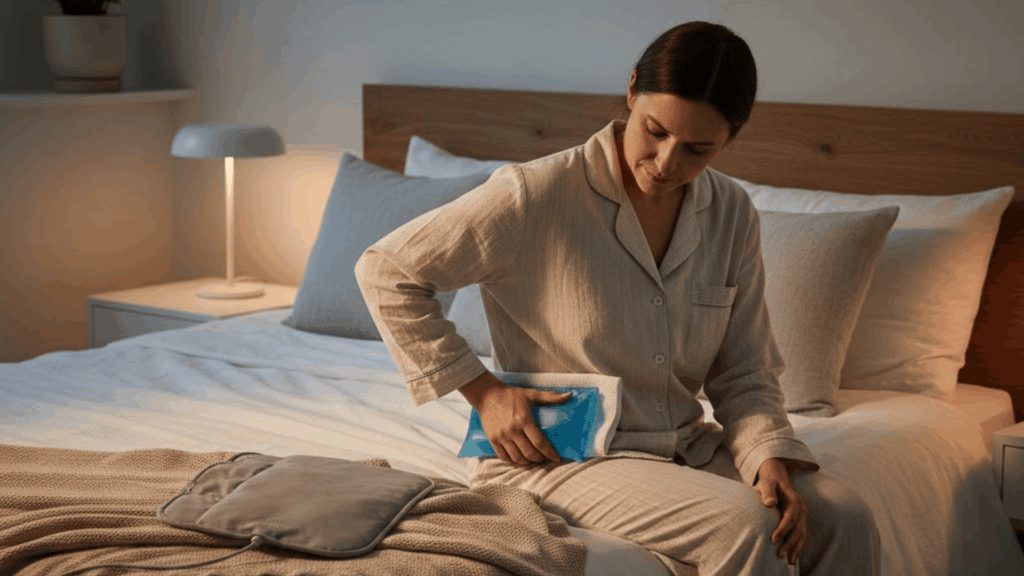
If your left hip bothers you at night, the quick fixes below can help reduce pressure, ease tightness, and make sleep more comfortable.
| Remedy | How It Helps | When to Use | Time Needed |
|---|---|---|---|
| Sleep Position Fix | Aligns spine and reduces hip pressure by switching to the right side or back with pillow support | Every night during pain flare-ups | 2-3 minutes |
| Pillow Alignment Fix | Prevents twisting and reduces strain using pillows between knees, under the waist, or behind the back | Nightly for side sleepers | 3-5 minutes |
| Ice or Heat Fix | Calms inflammation (ice) or relaxes stiff muscles (heat) applied for 15-20 minutes | Before bed, when pain is active | 15-20 minutes |
| Medication Fix | Eases pain with acetaminophen, NSAIDs, or topical gels; check for drug interactions | When pain disrupts sleep | 5 minutes |
| Stretching Fix | Releases tight muscles with knees-to-chest, figure-4, or hip flexor stretches | 30-60 minutes before bed | 5-10 minutes |
These compact remedies can help your hip feel more supported at night and make it easier to settle into sleep.
Home Treatments and Lifestyle Changes for Long-Term Relief
Creating supportive daily habits can make a big difference in how your hip feels over time.
The following long-term remedies help improve mobility, reduce inflammation, and support healthier hips in a simple, practical way.
- Move More With Low-Impact Activity: Low-impact exercises keep your hips mobile without adding strain. Walking, swimming, cycling, tai chi, and water aerobics reduce stiffness and improve strength. Aim for 20–30 minutes most days to keep the joint comfortable.
- Strengthen the Glutes and Core: Strong glutes and core muscles support proper hip alignment. Try glute bridges, clamshells, and side-lying leg lifts, starting with 10–15 reps and increasing gradually for better stability and less pressure on the hip.
- Maintain Flexibility With Daily Stretching: Tight hip flexors, hamstrings, and piriformis muscles can worsen pain. Stretch these areas daily for 20–30 seconds each. Warming up and cooling down helps prevent strain and keeps your hips moving smoothly.
- Manage Weight and Pace Your Activities: Maintaining a healthy weight lowers stress on your hips. Increase activity levels slowly to avoid inflammation from sudden intensity changes. Small, steady progress protects your joints better.
- Follow Anti-Inflammatory Eating Habits: Omega-3 foods, leafy greens, berries, olive oil, and turmeric help reduce inflammation. Limit processed foods and added sugars, which can worsen joint discomfort.
- Adopt Sleep Habits That Support Healing: A consistent sleep schedule helps your body recover and reduces pain sensitivity. Build a relaxing bedtime routine and avoid relying on sleeping pills. Quality rest lets the hip repair overnight.
Together, these habits create steady, long-term support for your hips, helping you move comfortably and rest with less pain each night.
What to Do Tonight (Fast Plan Before Sleep)
If you keep thinking “my left hip hurts when I sleep on it,” start with this quick plan. It takes under 30 minutes and can help tonight.
- Switch your sleep position: Sleep on your right side or back to remove pressure from the left hip and lower night pain quickly today.
- Set up pillows to stop twisting: Put a pillow between your knees, plus a small one behind your back, to stop twisting and keep your hips aligned overnight.
- Use ice or heat for 15–20 minutes: Use ice for sharp soreness or heat for stiffness, for 15 to 20 minutes right before bed tonight, only once.
- Do one gentle stretch: Do one gentle figure four or hip flexor stretch for 20–30 seconds, then settle in and relax slowly afterward, too.
When to See a Doctor?
Get emergency care if you can’t walk, your hip looks out of place, you have sudden, severe swelling, or you notice fever, warmth, redness, or severe pain that comes on fast.
Also, get urgent help after a fall or injury, especially if you can’t put weight on the leg, hear a pop, or the pain is intense. These signs can point to a fracture, infection, or another serious problem.
Book a routine appointment if hip pain lasts more than two weeks, wakes you at night, limits daily movement, causes ongoing stiffness, or keeps returning even after rest, pillows, stretching, and basic pain relief. A doctor can check the cause and guide treatment.
Wrapping It Up
When you find yourself saying, “my left hip hurts,” the pain may come from side-sleep pressure, stiff tissues, or poor hip and spine alignment overnight. Small changes can help.
Set up your pillows to reduce strain, try gentle stretching before bed, and keep up low-impact movement during the day to support the joint.
I hope this guide helped you connect your symptoms to likely causes and gave you a few steps to try right away. If the pain keeps returning, gets worse, or changes how you walk or talk with your doctor.