
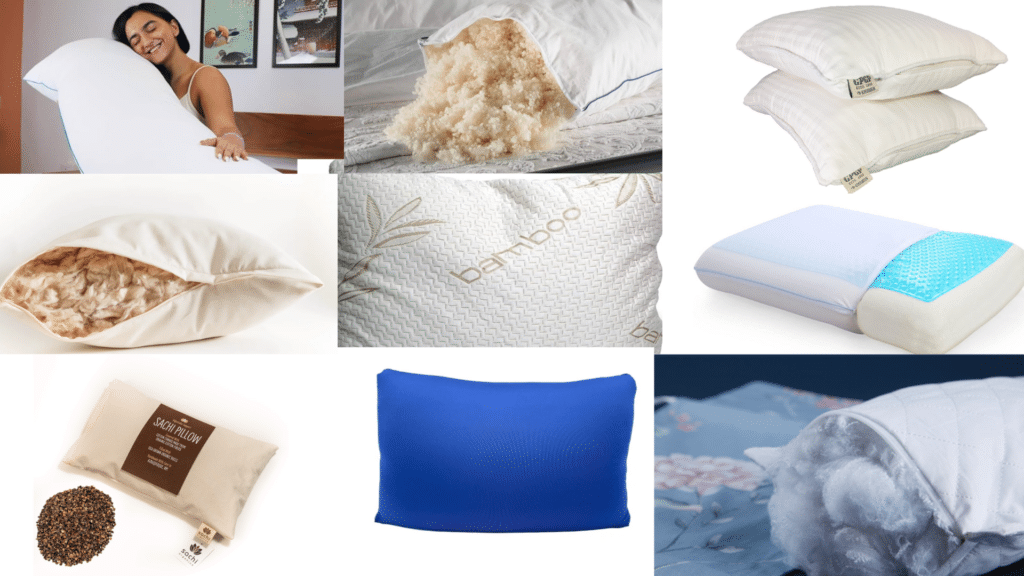
I used to think one pillow could work for anyone, until my neck proved me wrong. If you are shopping for different types of pillows, the choices can feel confusing fast.
One looks plush but goes flat. Another feels cool but sits too high. The truth is, your sleep position, shoulder width, and mattress firmness all change what “right” feels like.
In this blog, I will help you pick a pillow that keeps your head level and your neck supported, without wasting money on the wrong fill.
You will also see quick matchups for pain, heat, and allergies, plus a simple way to test fit for different types of pillows.
Quick Answer (Best Pillow for Your Need)
Need a pillow fast? Use this quick picker to match sleep position and common problems with the right options today.
Best by Sleep Position
Start with how you sleep most nights; loft and firmness should keep your neck level with your spine, always first.
- Side sleepers: Pick medium firm, high loft (4–6 in), shredded memory foam or latex, contour, body pillow. Avoid low-loft, very soft flat fills.
- Back sleepers: Pick medium loft (3–5 in), medium feel, latex or memory foam, light contour support. Avoid extra high loft that pushes the head forward.
- Stomach sleepers: Pick low loft (under 3 in), soft, down or down alternative, thin cotton. Avoid firm, thick foam that strains the neck.
- Combo sleepers: Pick adjustable shredded fill, medium loft range, easy reshaping, steady support. Avoid fixed loft pillows that collapse or stay too tall.
If the pick still feels off, change loft first, then firmness, and only then switch materials or shapes entirely next.
Best by Common Issues
If pain or heat shows up, choose pillows that support alignment, reduce pressure, and move air through them better overnight.
- Neck pain: Pick contour or cervical style, adjustable loft, memory foam, or latex. Avoid pillows that force the chin up or drop it.
- Shoulder pain: Pick a higher loft for side sleep, a cutout shoulder shape, and a body pillow for arm support. Avoid hard edges and low loft.
- Hot sleeping: Pick latex, buckwheat, wool, gel-infused foam, breathable cover. Avoid solid foam without airflow and thick polyester.
- Allergies: Pick latex, down alternative, washable cover, sealed protector. Avoid feathers or down if they trigger symptoms.
- Reflux/GERD (elevation): Pick a wedge pillow or a gentle incline support. Avoid stacking many pillows that bend the neck.
For medical symptoms that persist, talk with a clinician; pillows help comfort, but they cannot treat every cause safely alone.
How to Choose a Pillow (5-Step Method)

Step 1: Start with your sleep position. Side needs higher lift, back needs medium lift, stomach needs low lift to reduce neck strain.
Step 2: Match the loft to your shoulder and neck. Broad shoulders need more loft, petite frames need less, and long necks need lift.
Step 3: Adjust for mattress firmness. Soft beds sink more, so use slightly higher loft; firm beds need lower loft; medium stays balanced.
Step 4: Pick the feel you like. Foam feels steady, latex feels springy, down feels soft, buckwheat feels firm, and shredded feels adjustable.
Step 5: Decide if you need an adjustable loft. Choose adjustable fill if you change positions, share pillows, or struggle to match height.
The Types of Pillows (What They’re Best For)
These pillow types cover the most common fills and shapes, so you can match support, loft, and comfort to sleep needs.
1. Memory Foam Pillow (Solid)
A solid memory foam pillow gives steady support and holds a set shape through the night. It contours with heat and pressure, so your neck stays supported when you stay mostly in one position.
It often suits back and side sleep, especially if you want a stable surface that does not shift much. Some models sleep warm, and some have a light foam smell at first, so airflow and a washable cover matter.
| Category | Details |
|---|---|
| Feel | Close contour, slow response, firm to medium feel options |
| Best For | Back sleepers, side sleepers, and neck support needs |
| Watch Outs | Heat buildup, initial foam smell, fixed loft limits, fine-tuning |
| Loft Tip | Choose medium loft for the back, higher loft for the side |
| Care Note | Use a removable cover; foam core is often spot-clean only |
2. Shredded Memory Foam Pillow (Adjustable)
Shredded memory foam uses small pieces of foam, so you can move fill around and often remove some to change height. It gives contour without feeling as stiff as a solid slab, and it can fit combo sleep better because you can reshape it fast.
Many options include a zipper for loft changes. Some pillows arrive overstuffed, and low-quality foam can feel uneven, so fill quality and cover stitching matter.
| Category | Details |
|---|---|
| Feel | Moldable, medium support, easier reshaping than solid foam |
| Best For | Combo sleepers, side sleepers needing loft control |
| Watch Outs | Uneven feel if fill is poor, mild foam smell, needs occasional refluff |
| Loft Tip | Remove fill until your head stays level with your spine |
| Care Note | Wash cover often; keep extra fill in a clean bag |
3. Latex Pillow (Solid)
A solid latex pillow feels springy and supportive, pushing back more than memory foam. It tends to keep its shape well, so it works for people who want a lift that does not sink too much.
Latex usually sleeps cooler than solid memory foam because it is more ventilated, depending on the design. It often suits back and side sleep. It may feel too high for stomach sleep unless the loft is low, and it can feel heavy.
| Category | Details |
|---|---|
| Feel | Responsive, buoyant, steady support |
| Best For | Back sleepers, side sleepers, and hot sleepers need support |
| Watch Outs | Can feel too tall, heavier, and higher cost in many models |
| Loft Tip | Choose medium loft for the back, higher loft for the side |
| Care Note | Use a protector to reduce sweat and oil buildup |
4. Shredded Latex Pillow (Adjustable)
Shredded latex keeps latex’s springy support but adds more shape control. Many models include a zipper so you can remove fill and change the loft. It can be a strong choice if you like lift and airflow but still want a pillow you can “tune.”
It often suits combo sleep and side sleep, and some back sleepers like it too. It can feel less uniform than a solid latex core if the fill shifts, so regular smoothing helps.
| Category | Details |
|---|---|
| Feel | Springy, airy, easy to reshape |
| Best For | Combo sleepers, side sleepers, hot sleepers |
| Watch Outs | Fill can shift, may feel uneven without smoothing |
| Loft Tip | Start higher, then remove fill in small amounts |
| Care Note | Shake and pat to keep filling spread evenly |
5. Down Pillow
A down pillow feels very soft and light because it relies on trapped air for loft. It compresses easily, so it can work for stomach sleep and some back sleepers who like a gentle feel.
Many side sleepers need more lift than some down pillows can hold, unless the fill is high and the pillow is built to stay lofty. Down can trigger allergies for some people, and it often needs fluffing to stay puffy.
| Category | Details |
|---|---|
| Feel | Soft, airy, easy to squish |
| Best For | Stomach sleepers, back sleepers who like soft support |
| Watch Outs | Frequent fluffing, allergy triggers, and higher prices in many options |
| Loft Tip | Lower loft for stomach, medium for back |
| Care Note | Use a tight cover to reduce feather escape |
6. Feather Pillow
Feather pillows use outer feathers, so they usually feel more structured than down. They can be moldable, and they suit back sleep for many people who like a soft pillow that still has some support.
Some styles mix feathers and down for a softer top feel. Quills can poke through if the shell fabric is thin, and feathers can flatten without fluffing. If allergies are an issue, choose a sealed cover and a washable protector.
| Category | Details |
|---|---|
| Feel | Soft with structure, moldable |
| Best For | Back sleepers, some side sleepers who like soft lift |
| Watch Outs | Quills poking, flattening, and allergy triggers |
| Loft Tip | Medium loft works best for back sleep in many cases |
| Care Note | Pair with a sturdy pillowcase and protector |
7. Down Alternative Pillow
Down alternative uses polyester fibers made to feel like down, but it is usually easier to wash and often costs less. It can suit back and side sleep, depending on the loft and firmness.
It is a common pick for allergies because it avoids animal fill, though it can still collect dust without regular washing. Some versions flatten and clump faster than higher quality options, so stitching, fill amount, and return policy matter.
| Category | Details |
|---|---|
| Feel | Soft and fluffy, lighter support than foam |
| Best For | Allergies, guest beds, back sleepers, some side sleepers |
| Watch Outs | Clumping, flattening over time, heat buildup in cheaper fills |
| Loft Tip | Higher loft for side, medium loft for back |
| Care Note | Wash and fully dry to prevent lumps |
8. Cotton Pillow
Cotton pillows feel breathable and natural, and they often suit people who do not want foam. They can work well for stomach sleep because cotton can stay fairly low loft once broken in.
The tradeoff is that cotton compresses and can get firm as it packs down, so it may not keep enough lift for side sleep unless it is built thicker. Cotton can be a comfortable option in warm climates, but it needs regular fluffing and careful washing.
| Category | Details |
|---|---|
| Feel | Soft at first, then firmer as it compresses |
| Best For | Stomach sleepers, people avoiding foam |
| Watch Outs | Flattening, less neck shaping, can feel dense over time |
| Loft Tip | Low loft for stomach; avoid too low for side sleep |
| Care Note | Follow wash labels to avoid hard clumps |
9. Wool Pillow
Wool pillows help with temperature control because wool manages moisture well. They often feel firm and supportive, with a springy, dense feel rather than a sink-in feel. Wool can suit hot sleepers and people who sweat at night.
Many wool pillows can feel flatter and less moldable than down or shredded foam, so side sleepers may need a higher fill level. Some options allow adding or removing fill for loft changes.
| Category | Details |
|---|---|
| Feel | Firm, springy, stable surface |
| Best For | Hot sleepers, allergy-sensitive sleepers, back sleepers |
| Watch Outs | Can feel dense, less squishy, may clump if not cared for |
| Loft Tip | Medium loft for back; higher loft if you sleep on your side |
| Care Note | Use a protector; the core often needs gentle care |
10. Buckwheat Pillow
Buckwheat pillows use hulls that shift to fit your neck and head, giving strong support and high airflow. They can work well for back and side sleep when you need a stable, adjustable shape.
You can remove hulls to lower the loft, which helps with fit. The drawbacks are weight and noise, since hulls can rustle with movement. If you wake easily from sound, that can be a dealbreaker.
| Category | Details |
|---|---|
| Feel | Firm, adjustable, structured support |
| Best For | Back sleepers, side sleepers, and hot sleepers needing airflow |
| Watch Outs | Noise, heavy feel, too firm for some people |
| Loft Tip | Remove hulls until your neck feels supported, not pushed up |
| Care Note | Keep dry; replace hulls when they wear down |
11. Kapok Pillow
Kapok is a plant fiber that feels light and fluffy, often closer to down in feel than cotton. It can suit back and stomach sleep if you want a soft pillow that is not animal-based.
Some kapok pillows have adjustable fill, which helps with loft fit. Kapok can compress over time and may need fluffing to keep its shape. If you need firm neck support, kapok may feel too soft unless it is mixed with a supportive inner core.
| Category | Details |
|---|---|
| Feel | Soft, airy, light, and bouncy |
| Best For | Back sleepers, stomach sleepers, and people wanting plant-based fill |
| Watch Outs | Compressing, needs fluffing, may feel too soft for side sleep |
| Loft Tip | Keep the loft low for the stomach; medium for the back |
| Care Note | Use a protector and fluff regularly |
12. Microbead Pillow
Microbead pillows contain tiny beads that move easily, so the pillow molds around small pressure points. They are common for travel and short-term neck support because they can conform to tight spaces.
For full-night sleep, many people find them less durable, and the beads can shift away from where you need support. Some versions sleep warm, and the fill is plastic-based, which matters if you avoid synthetic materials.
| Category | Details |
|---|---|
| Feel | Squishy, moldable, shifting support |
| Best For | Travel use, brief neck support, lounging |
| Watch Outs | Fill shifting, lower durability, and synthetic fill concerns |
| Loft Tip | Keep the loft low and use mainly for targeted support |
| Care Note | Treat gently to avoid tears and bead leaks |
13. Polyester Fiberfill Pillow
Polyester fiberfill is a common budget fill found in many stores. It feels soft to medium, depending on how tightly it is packed. It can work for guest beds and short-term use, and some stomach sleepers like the softer, flatter feel after break-in.
The downside is that many fiberfill pillows flatten quickly and form lumps. If you need stable neck support, this type often falls short unless you replace it more often.
| Category | Details |
|---|---|
| Feel | Soft to medium, pillow feel varies by fill amount |
| Best For | Guest rooms, budget buys, short-term use |
| Watch Outs | Flattening fast, lumps, less support over time |
| Loft Tip | Choose a higher loft if you sleep on your side, but expect settling |
| Care Note | Washable in many cases; fully dry to reduce clumps |
14. Gel Pillow (Gel or Gel-Infused Foam)
Gel pillows aim to reduce heat by using gel layers or gel-infused foam. Some feel cool at first touch, then warm up through the night, depending on room temperature and cover fabric.
Support level varies a lot because “gel” can mean a gel pad, gel memory foam, or a foam core with gel features. It can suit hot sleepers and people who like a firmer surface, but it may feel too stiff for side sleep.
| Category | Details |
|---|---|
| Feel | Often firmer, cooler touch at first |
| Best For | Hot sleepers, back sleepers, and people wanting a firmer pillow |
| Watch Outs | Cooling may fade, weight, and fixed loft in many designs |
| Loft Tip | Match loft to position; do not rely on gel to fix poor height |
| Care Note | Wash cover; foam core usually stays dry and protected |
15. Bamboo Pillow (Bamboo Cover + Shredded Fill)
“Bamboo pillow” usually means a bamboo-derived fabric cover paired with shredded foam fill. The cover can feel cooler and manage moisture better than some basic fabrics.
The shredded fill can be adjustable if there is a zipper and extra fill. It can suit combo sleep because you can reshape it and change the loft. Some people notice a light foam smell at first, and some pillows feel bulky, so loft tuning matters.
| Category | Details |
|---|---|
| Feel | Moldable, medium support, cooler cover feel |
| Best For | Hot sleepers, combo sleepers, people wanting loft control |
| Watch Outs | Bulky feel, foam smell early on, fill shifting |
| Loft Tip | Remove fill until your head is level in your main position |
| Care Note | Wash cover often; keep core protected with a liner |
16. Contour Pillow (Shape-Based)
A contour pillow has a shaped surface designed to support your neck curve, often with a dip for the head and raised edges. It can help keep alignment steady for back and side sleep, especially if you wake with neck stiffness.
The shape can feel “locked in,” which some people love, and others dislike. Fit matters a lot, so choose height based on shoulder width and neck length, not just the label.
| Category | Details |
|---|---|
| Feel | Shaped support, steady neck placement |
| Best For | Back sleepers, side sleepers, and neck support needs |
| Watch Outs | The wrong size feels uncomfortable, less flexible for position changing |
| Loft Tip | Side sleepers generally need a higher contour than back sleepers |
| Care Note | Use a washable cover; the core is often not machine washable |
17. Body Pillow (Full-Body Support)
A body pillow is long and supports more than your head, helping your knees, hips, and shoulders stay aligned. Side sleepers often place it between their knees and hug it to reduce shoulder pull.
Many people also use it during pregnancy for extra support. Fill type changes the feel, so you can find soft fiberfill versions or firmer foam versions. It takes up space and needs a fitted case, so bed size matters.
| Category | Details |
|---|---|
| Feel | Full-body support; feel depends on fill type |
| Best For | Side sleepers, pregnancy support, hip, and knee comfort |
| Watch Outs | Takes space, harder to clean, case sizing issues |
| Loft Tip | Use it to support knees and arms, not just the head |
| Care Note | Choose a washable cover and follow the drying steps carefully |
When to Replace Your Pillow (Clear Signs)
Most pillows wear down slowly, so you may not notice until your neck starts feeling off.
As a rough timeline, plan on replacing polyester fiberfill and microbead pillows in about 6–18 months, down or down alternative in 1–3 years, cotton and kapok in 1–2 years, memory foam in 2–3 years, and latex in 3–4 years.
Buckwheat can last longer if you replace the hulls as they break down.
Replace sooner if you feel lumps you cannot smooth out, your pillow stays flat and will not hold loft, an odor returns after airing it out, neck pain increases after waking, or allergies flare up more in bed.
Common Pillow Mistakes
- Picking loft by “feel” instead of spine alignment, so your neck bends up or down all night.
- Using a too-high pillow for back sleep, pushing your head forward, and stressing your neck.
- Using a too-low pillow for side sleep, letting your head drop and loading your shoulder.
- Choosing a firm, thick foam pillow for stomach sleep, forcing your neck to twist sharply.
- Keeping an old pillow that is flat or lumpy, then blaming your mattress for the pain.
- Stacking two pillows to fix reflux, which bends your neck instead of lifting your upper body.
- Ignoring mattress firmness, even though softer beds need slightly higher loft than firm beds.
- Buying “cooling” features to fix heat, while using a thick cover that traps warmth.
- Choosing fill without checking allergies, then dealing with sneezing, itching, or congestion nightly.
- Washing a foam core or drying on high heat breaks down the support and shortens the lifespan.
- Using a pillow protector rarely, so sweat and oils soak in and the pillow wears out faster.
- Switching materials too fast, instead of adjusting the loft first for a quicker, cheaper fix.
Conclusion
By now, you have a clear way to match pillow loft and feel to how you sleep. You also saw which fills stay cool, which ones help with allergies, and which shapes support neck and shoulders better.
If your choice still feels off, fix the loft first, then adjust firmness, then switch materials. That order saves time and helps you avoid repeat buys.
I also shared the warning signs that mean a pillow is past its best, like lumps, odor, and rising neck pain. Keep these checks in mind when comparing different types of pillows.
If you want more help, check out my other blogs on sleep comfort and bedroom basics, and tell me what you are shopping for next.