


I used to toss and turn for what felt like hours, my mind racing through tomorrow’s to-dos while my body begged for rest. Building a consistent night routine changed everything for me, and it can for you, too.
When you dedicate time each evening to wind down intentionally, you’re not just preparing for bed; you’re training your body and mind to recognize it’s time to let go.
Research shows that regular bedtime rituals significantly improve sleep quality and help you fall asleep faster.
Tonight, let’s walk through simple, soothing steps that turn those restless evenings into peaceful transitions, so you can finally give yourself the deep, restorative sleep you deserve.
Why a Night Routine Works?
Your body runs on an internal clock called your circadian rhythm, and it craves predictability.
When you repeat the same calming activities each night, you’re essentially sending a gentle signal: “Hey, it’s safe to power down now.” This consistency strengthens the connection between your routine and sleep, making it easier to drift off naturally.
Think of it as training your brain. Each time you dim the lights, sip herbal tea, or slip into cozy pajamas at the same hour, you’re reinforcing a powerful habit loop.
Your body learns what’s coming next, and that predictability is incredibly soothing for both your mind and nervous system.
The 10–3–2–1–0 Rule
Before we walk through your step-by-step routine, let me share a simple framework that sets you up for success. The 10–3–2–1–0 rule is like a countdown to better sleep.
Each number represents hours before bed when you should avoid certain activities. It takes the guesswork out of timing and helps you create natural boundaries for your evening.
- 10 Hours Before Bed: Cut off caffeine so it doesn’t linger in your system and disrupt deep sleep.
- 3 Hours Before Bed: Finish eating large meals to give your digestive system time to work before rest.
- 2 Hours Before Bed: Stop working and give your mind permission to shift from productivity to relaxation.
- 1 Hour Before Bed: Turn off screens since blue light signals your brain to stay alert instead of winding down.
- 0 Times Hitting Snooze: Skip the snooze button in the morning to avoid fragmented sleep and grogginess.
Follow this countdown, and you’ll notice how much easier it becomes to honor your body’s natural need for rest.
9-Step Night Routine

Now let’s build your personalized evening ritual. Whether you have a full hour or just thirty minutes, these nine steps will guide you toward calmer nights and deeper rest.
Adjust the timing to fit your lifestyle, and remember that consistency matters more than perfection.
1. Set and Protect a Consistent Bedtime
Your body thrives on rhythm. Choosing a specific bedtime and sticking to it, even on weekends, strengthens your internal clock and makes falling asleep feel effortless. This anchor habit is the foundation of everything else.
Start by picking a bedtime that allows for seven to nine hours of sleep, then work backward to plan your routine. If you’re a shift worker, aim for the same sleep duration at consistent times relative to your work schedule.
Parents with young children can set a target wind-down time after the kids are settled, creating predictability even when life feels chaotic.
2. Finish Big Meals and Alcohol Earlier
Eating heavy meals or drinking alcohol close to bedtime forces your body to focus on digestion instead of repair and restoration.
Here’s how to time it right:
- Finish dinner at least three hours before bed so your body isn’t processing food when it should be winding down.
- Skip late-night alcohol since it disrupts REM sleep and leaves you feeling groggy, even if it initially makes you drowsy.
- Choose lighter evening snacks like a banana or a handful of nuts if you need something small closer to bedtime.
3. Wind Down: Stop Work and Stressful Tasks
Your brain needs time to shift gears from productivity mode to rest mode.
Stop checking work emails, tackling to-do lists, or engaging in difficult conversations at least two hours before bed. This mental decoupling is essential.
Instead, spend this time on activities that feel soothing and low-stakes. If you work evenings or shifts, create a clear boundary by changing clothes, turning off notifications, or moving to a different room to signal that work time is over.
4. Dim Lights and Reduce Blue Light
Bright lights, especially blue light from screens, tell your brain it’s still daytime.
Start dimming your home lighting about sixty to ninety minutes before bed to support natural melatonin production:
- Switch to warm lamps or use dimmers to create a softer, more calming atmosphere in your space.
- Enable blue-light filters on your phone and computer, or better yet, put devices away entirely during this window.
- Consider amber-tinted glasses if you absolutely must use screens in the evening for work or caregiving responsibilities.
5. Gentle Movement or Stretching
Light stretching or gentle yoga for ten to fifteen minutes helps release physical tension without revving up your energy.
Focus on slow, relaxing movements like forward folds, gentle twists, or legs-up-the-wall pose. Avoid intense workouts close to bedtime since they raise your heart rate and body temperature.
If you’re a parent, squeezing this in after bedtime stories, even five minutes of stretching on the floor beside your bed, counts. The goal is relaxation, not exercise.
6. Rituals: Hygiene, Skincare, and Teeth
This is your signal that the day is officially over. Brush your teeth, wash your face, and go through your skincare routine with intention.
These small acts of self-care tell your body it’s time to rest:
- Make it mindful by focusing on each step rather than rushing through it on autopilot.
- Use calming scents like lavender in your face wash or lotion to deepen the relaxation.
- Keep it simple if you’re tired; even just washing your face and brushing your teeth reinforces the routine.
7. Mind-Body Calm: Journaling or Breathing
Offload the mental clutter before your head hits the pillow. Spend five to fifteen minutes journaling your thoughts, worries, or tomorrow’s to-do list to clear your mind.
Alternatively, try simple breathing exercises like the 4-7-8 technique: inhale for four counts, hold for seven, exhale for eight.
Research shows that journaling reduces bedtime worry and helps you fall asleep faster. If you’re a shift worker, this step is especially valuable for processing unusual schedules or stress from work.
8. Create a Cool, Dark, Cozy Sleep Environment
Your bedroom should feel like a sanctuary. Keep the temperature between 16 and 20 degrees Celsius for optimal sleep, use blackout curtains to eliminate light, and layer comfortable bedding:
- Invest in breathable sheets and a supportive pillow that suits your sleep position.
- Block out noise with earplugs, a white noise machine, or a fan if you live in a noisy area.
- Remove distractions like bright alarm clocks, charging phones, or clutter that creates visual stress.
9. Bedtime: Reading, Music, or Meditation
As you settle into bed, choose a calming activity that signals sleep is near. Read a few pages of a physical book, listen to soft instrumental music, or follow a guided sleep meditation.
Keep the lights low and avoid anything too stimulating or emotionally charged.
If sleep doesn’t come within twenty minutes, get up and do something quietly relaxing until you feel drowsy again. This teaches your brain that bed is for sleep, not frustration or tossing around.
Quick Routines for Specific Needs
Not everyone’s evening looks the same, and that’s perfectly okay. Your night routine should adapt to your lifestyle, not the other way around.
| Your Situation | Adapted Routine | Key Focus |
|---|---|---|
| Parents with young children | 5-minute steps; piggyback on kids’ bedtime; keep supplies within reach for quick transitions. | Efficiency over duration; 20 focused minutes beats an hour of interrupted time. |
| Shift workers | Anchor to wake time, not clock time; use blackout curtains and white noise; maintain consistent sleep duration. | Same sequence and length, different hours; your body adapts to the pattern, not the time. |
| Anxious minds or racing thoughts | Extended journaling (15-20 min); longer meditation (10-15 min); brain dump worries onto paper first. | Offload mental clutter before bed; give anxiety a place to land outside your head. |
| Frequent travelers | Portable kit: eye mask, earplugs, lavender spray, journal; repeat the same 3-4 core steps anywhere. | Familiar sensory cues signal sleep regardless of location; consistency through anchors. |
Research confirms that adapting your routine to fit your life, rather than abandoning it entirely, still delivers significant sleep benefits. The key is keeping your personal anchor habits intact, even when circumstances shift.
Common Mistakes and What to Ditch?
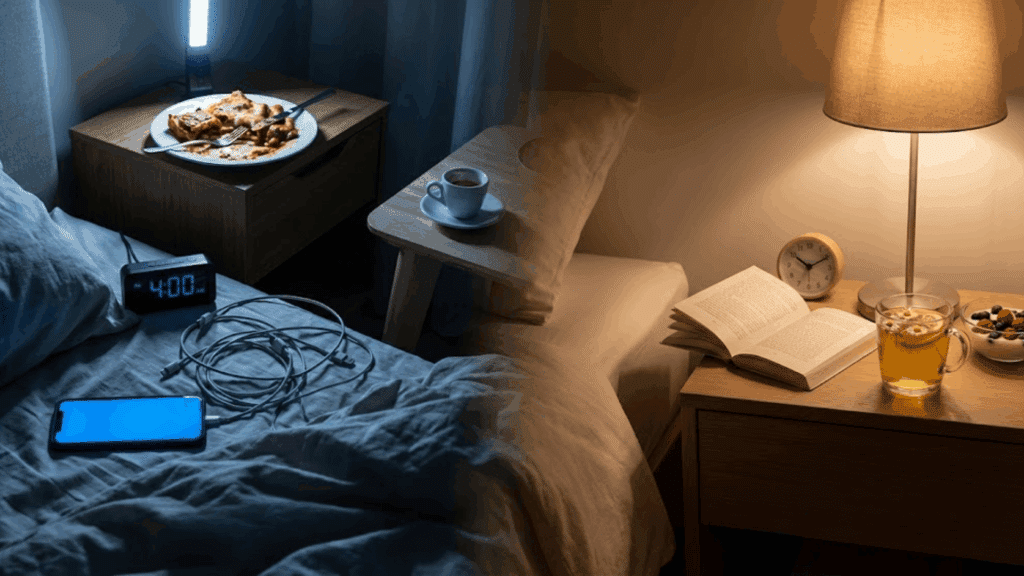
Even with the best intentions, small missteps can sabotage your sleep. Let’s address the most common routine killers and give you simple swaps that actually work.
Recognizing these patterns is the first step toward breaking them.
- Late Caffeine: Ditch that 4 PM coffee and swap it for herbal tea, warm water with lemon, or decaf options that won’t keep you wired at midnight.
- Heavy Late Meals: Stop eating large dinners close to bedtime and instead have your main meal earlier, saving light snacks like yogurt or fruit for evening hunger.
- Inconsistent Wake Times: Sleeping in on weekends feels tempting, but it confuses your circadian rhythm; stick to the same wake time daily, even on days off.
- Excessive Screen Time: Replace scrolling before bed with a physical book, journaling, or listening to calming music or podcasts with your eyes closed.
- Over-Scheduling Your Routine: Trying to fit too many steps creates stress and defeats the purpose; choose three to five core practices you can realistically maintain.
Small adjustments make a massive difference. When you remove what’s working against you and replace it with sleep-friendly habits, rest becomes natural instead of something you have to chase.
Sample Routine in the Night
Want a ready-made plan you can start tonight?
I’ve created two sample schedules that take the guesswork out of timing. Whether you have a full hour or need something quicker, these templates show you exactly when to do each step.
Download the PDF below to print or save on your phone, then customize the times to match your ideal bedtime.
Having a visual guide makes it so much easier to stay consistent, especially during those first few weeks when you’re building the habit.
Tools & Products that can be a Part of Your Routines in the Night
You don’t need fancy gadgets to sleep well, but a few thoughtful tools can make your routine easier and more enjoyable.
| Category | Tool/Product | How It Helps |
|---|---|---|
| Apps | Guided meditation apps (Headspace, Calm) | Structured relaxation exercises and sleep stories that calm racing thoughts. |
| Blue-light filters (f.lux, Night Shift) | Automatically reduce screen brightness and blue light in the evening. | |
| White noise apps (myNoise, Noisli) | Mask disruptive sounds with consistent, soothing audio backgrounds. | |
| Bedroom | Blackout curtains or sleep masks | Block external light completely for uninterrupted darkness. |
| Smart bulbs (Philips Hue, LIFX) | Gradually dim lighting on schedule to mimic a natural sunset. | |
| Cooling pillows or breathable sheets | Maintain optimal sleep temperature and prevent overheating. | |
| Lavender essential oil diffuser | Create calming scents that signal your brain it’s time to rest. |
The right tools support your routine but never replace it. Start with one or two items that address your biggest sleep challenge, then build from there as needed.
How Long Until You See Results?
Be patient with yourself. Most people notice they’re falling asleep faster and waking up more refreshed within one to three weeks of following a consistent night routine.
Your body needs time to recognize the new patterns and adjust its internal rhythm accordingly. Some improvements, like feeling calmer at bedtime, might show up within just a few days.
However, if you’ve been struggling with chronic insomnia or severe sleep issues for months, a routine alone may not be enough.
If sleep problems persist beyond a month of consistent effort, reach out to a healthcare provider or sleep specialist for personalized support.
Closing Note
Creating a night routine that actually works has been one of the most loving things I’ve ever done for myself. Those restless nights I mentioned at the start? They’re rare now.
My mind settles faster, my body knows what’s coming, and sleep feels like the natural ending to my day instead of a battle I have to win.
You don’t need to overhaul your entire life tonight. Pick two or three steps that resonate most, commit to them for just one week, and pay attention to how your body responds.
I’d love to hear which part of your night routine you’re most excited to try. Share in the comments what sleep struggle you’re ready to finally solve.