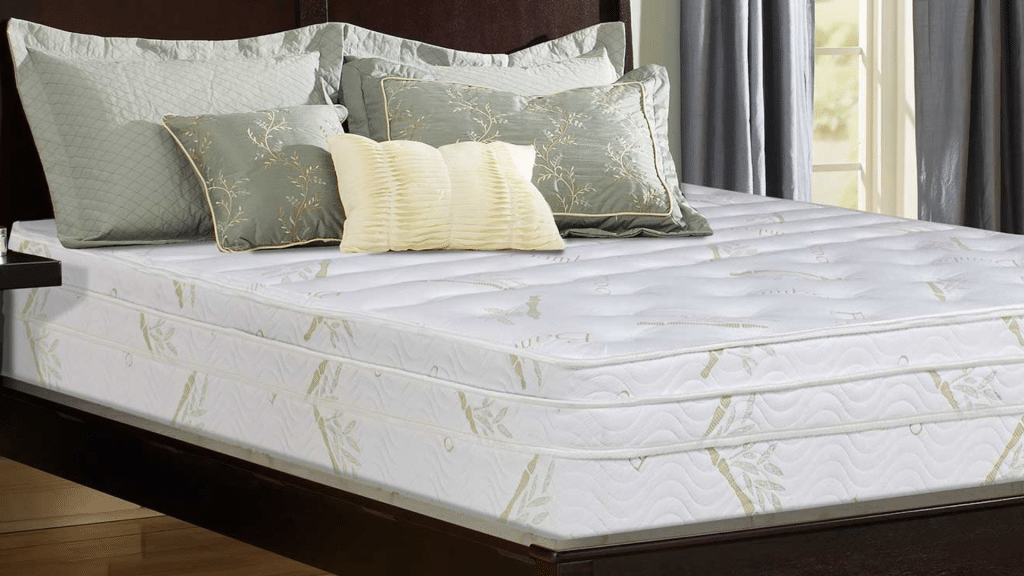


A good night’s sleep starts with a bed that feels comfortable. But when shopping for a new mattress, even familiar terms like double and full can lead to unexpected surprises.
Understanding the difference between a double vs full bed can save you from buying the wrong mattress and regretting it later.
If you’ve been searching for what size is a double bed or comparing double bed dimensions with other mattress sizes, you’re in the right place.
Double vs Full Bed: Are They the Same Size?
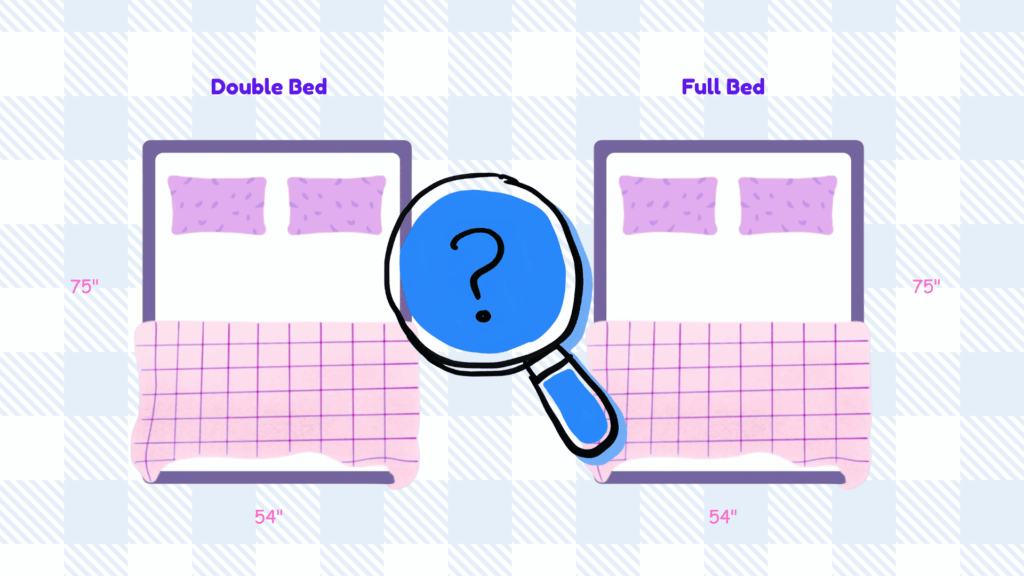
Yes, a double bed and a full bed are two different names for the same standard mattress size in the United States.
The terms come from the way mattress sizes have evolved over time.
Traditionally, beds were often described as single or double, based on whether they were intended for one person or two.
In the American market, the term “twin” became common for single beds, while “full” became another name for a double bed.
As sleeping needs changed, larger options such as queen and king beds also became popular. Today, full and double are used interchangeably, with no difference in standard US mattress dimensions.
What Size is a Double Bed?

A double bed mattress is about 54 inches wide and 75 inches long.
In metric, that is approximately 137 × 191 cm. Multiply the two numbers, and you get a total sleeping surface of 4,050 square inches.
Keep one point in mind: these figures describe the mattress, not the whole bed.
A frame adds its rails, legs, headboard, or footboard, so the outside measurement is usually a few inches wider and longer. Check the frame’s listed dimensions before you buy, especially if your room is small.
A UK double is commonly specified as 135 × 190 centimeters. When shopping across countries, compare actual measurements rather than assuming the names guarantee a compatible fit.
How a Full Bed Compares With Other Mattress Sizes
Use the table below to see if you need additional width, length, or both. These are common U.S. nominal dimensions; individual products may differ slightly.
Mattress size | Width | Length | Main reason to consider it |
|---|---|---|---|
Twin | 38 inches | 75 inches | Compact sleeping space for one person |
Twin XL | 38 inches | 80 inches | Extra legroom without extra width |
Full/Double | 54 inches | 75 inches | More width for a solo sleeper |
Queen | 60 inches | 80 inches | Additional space for sharing |
King | 76 inches | 80 inches | More personal space for two adults |
California King | 72 inches | 84 inches | Greater length for tall sleepers |
Compared with a standard full, a queen adds 6 inches of width and 5 inches of length. A twin XL takes a different approach. It preserves a narrower footprint while providing more legroom.
Who Does a Full Bed Suit Best?
A full often works well for one adult, a teenager, or a guest room. It can feel cramped for two adults or for anyone over about 6 feet tall.
1. Adults Who Want More Room Than a Twin
A twin bed is 38 inches wide, which can feel tight for an adult. A full bed adds 16 inches of width, so you can roll over, sprawl out, and change positions without hitting an edge.
It also costs less than a queen and takes up less floor space.
If you live by yourself and want a bed that feels roomy but does not swallow the bedroom, a full is a smart, simple choice.
2. Teens and Growing Kids
Kids grow fast, and a twin bed can feel too small by the teen years.
A full bed gives them extra width and enough length for most teens, so you will not need to replace it in a couple of years.
It also leaves room for a friend to crash during a sleepover. Many families buy one full mattress and keep it through high school.
3. Guest Rooms and Studio Apartments
Space is often the biggest limit in a guest room or studio. A full bed fits in a room as small as about 10 by 12 feet and still leaves space to walk.
It sleeps one guest well and two guests in a pinch. Plus, sheets and frames come in standard sizes and are easy to find, which helps if the room only gets used a few times a year.
4. Couples: Only If You Both Like to Sleep Close
A full bed gives each person about 27 inches of width. That is close to the width of a crib mattress.
Some couples love the cozy fit, especially if both are average height and do not toss much.
Others feel crowded fast. If either of you is tall, moves a lot at night, or shares the bed with a pet, a queen is the better pick. It adds 6 inches of width and 5 inches of length.
5. Tall Sleepers
The 75-inch length works well for people up to about 6 feet. Once you pass 6’2″, your feet may hang off the end, or your head may press against the headboard.
Tall sleepers have two good options. A Full XL keeps the same 54-inch width but adds 5 inches of length, though it is harder to find.
A queen is 80 inches long, gives you extra width too, and is much easier to shop for.
Pros and Cons of a Double Bed
A double bed offers a good balance between sleeping space and room efficiency. However, it also has some limitations to consider.
Advantages of a full bed | Limitations to consider |
|---|---|
More width than a twin for one sleeper | Restricted space for two adults |
Smaller footprint than a queen | Limited legroom for taller people |
Practical for rooms serving more than one purpose | Less room when pets or children join |
Can preserve space for other furniture | May need replacing if sleeping arrangements change |
How Much Room Does a Full Bed Need?
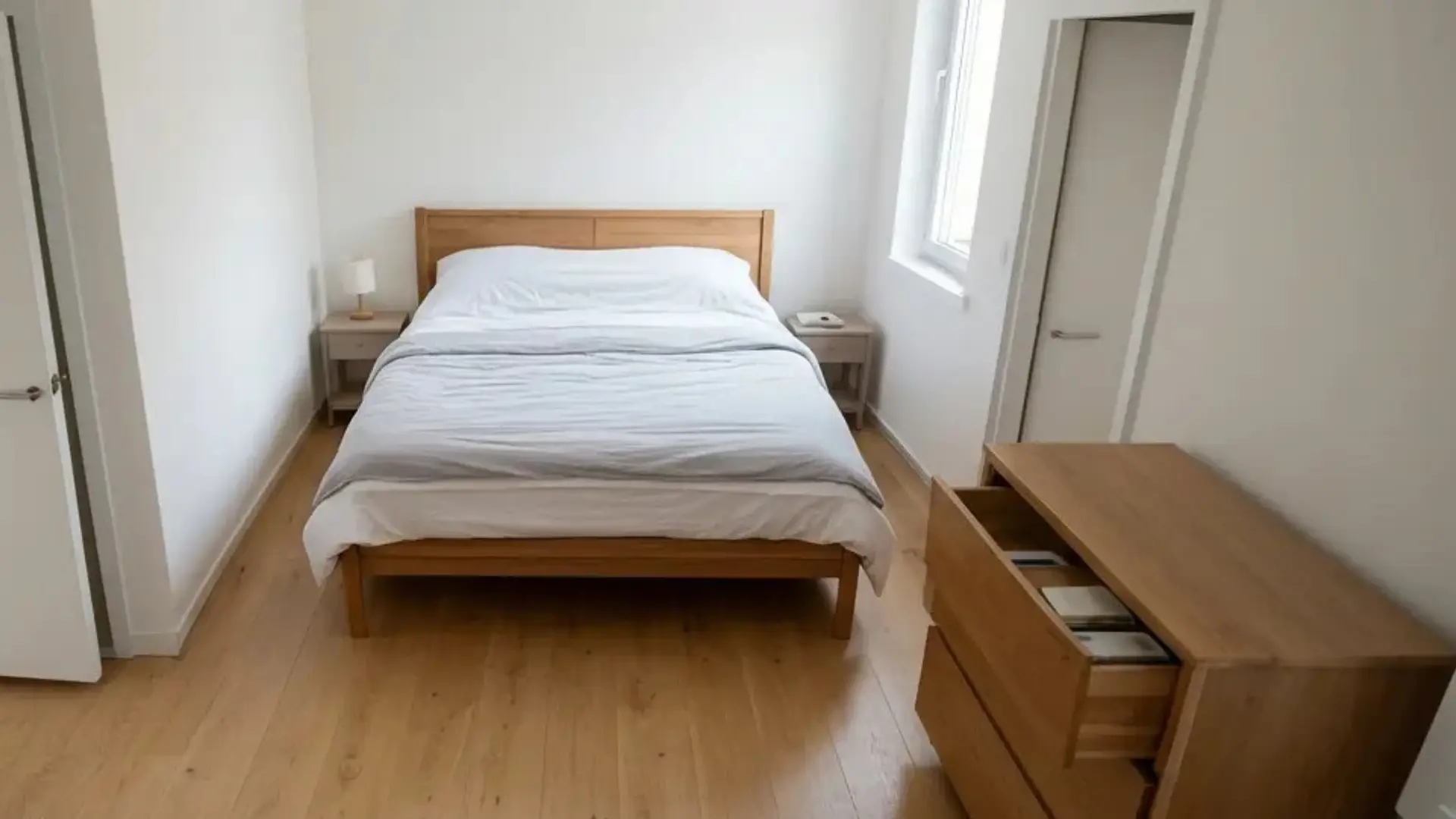
Plan for the bed frame’s outside dimensions plus roughly 24-36 inches of walking space along the sides you use and at the foot.
Treat this as a planning target, rather than a universal minimum or an accessibility standard.
A Practical Room-Size Example
Consider a room measuring 9 × 10 feet, or 108 × 120 inches. Place a bare 54 × 75-inch mattress with its head against the 108-inch wall, centered horizontally:
Each side: 27 inches remaining.
Foot: 45 inches remaining.
Those measurements exclude the frame and every other furnishing, and the sides are already well under that space.
The room may look workable on paper, but a dresser opposite the bed needs space for open drawers and someone standing in front of them.
Bedroom and closet doors also need unobstructed opening space. Check those movements before treating the remaining inches as usable walking room.
Check the Layout Before Ordering
Use painter’s tape to mark the complete frame footprint on the floor. Add the dimensions of bedside tables, a dresser, and any other furniture you intend to keep.
Walk through the arrangement and open every door and drawer. If the frame includes storage drawers, mark how far they extend.
Finally, measure the delivery route through hallways, stairs, and doorways. A bed that fits the bedroom still needs to reach it.
Choosing a Compatible Frame and Bedding
Before buying, check that the frame and bedding match your mattress’s measurements.
Bed frame: Choose a frame that accommodates the mattress’s width and length. Check the manufacturer’s requirements for slat spacing, center support, and foundation type.
Fitted sheets: Match the sheet’s pocket depth, meaning how deep the corner pockets are, to your mattress height, including any topper, to help prevent loose corners or bunched fabric.
Comforter: Compare actual dimensions rather than relying only on “full” or “full/queen” labels. Consider mattress thickness, your preferred overhang, and coverage for anyone sharing the bed.
Bottom Line
Remember, a double bed and a full bed are the same size. That size offers plenty of room for one person, fits well in smaller bedrooms, and leaves space for other furniture.
Think about your comfort, room dimensions, and future needs before making your decision. The best mattress is one that helps you wake up feeling refreshed.
Still weighing sizes for your bed? Measure your room and compare a full with a queen before you decide, and comment down below.
Frequently Asked Questions
Does a Double Bed Require a Box Spring?
Not necessarily. A double bed can work with a platform bed, slatted base, adjustable foundation, or box spring, depending on the mattress manufacturer’s requirements.
How Long Does a Double Mattress Typically Last?
A double mattress generally lasts around 7-10 years, although its lifespan depends on the materials, construction, usage, and maintenance.
Can You Use an Adjustable Bed Base With a Double Mattress?
Yes, provided the adjustable base is specifically designed for a full-size mattress. Check the mattress manufacturer’s compatibility guidelines, as some traditional innerspring mattresses may not bend properly on adjustable bases.